 Skip to content
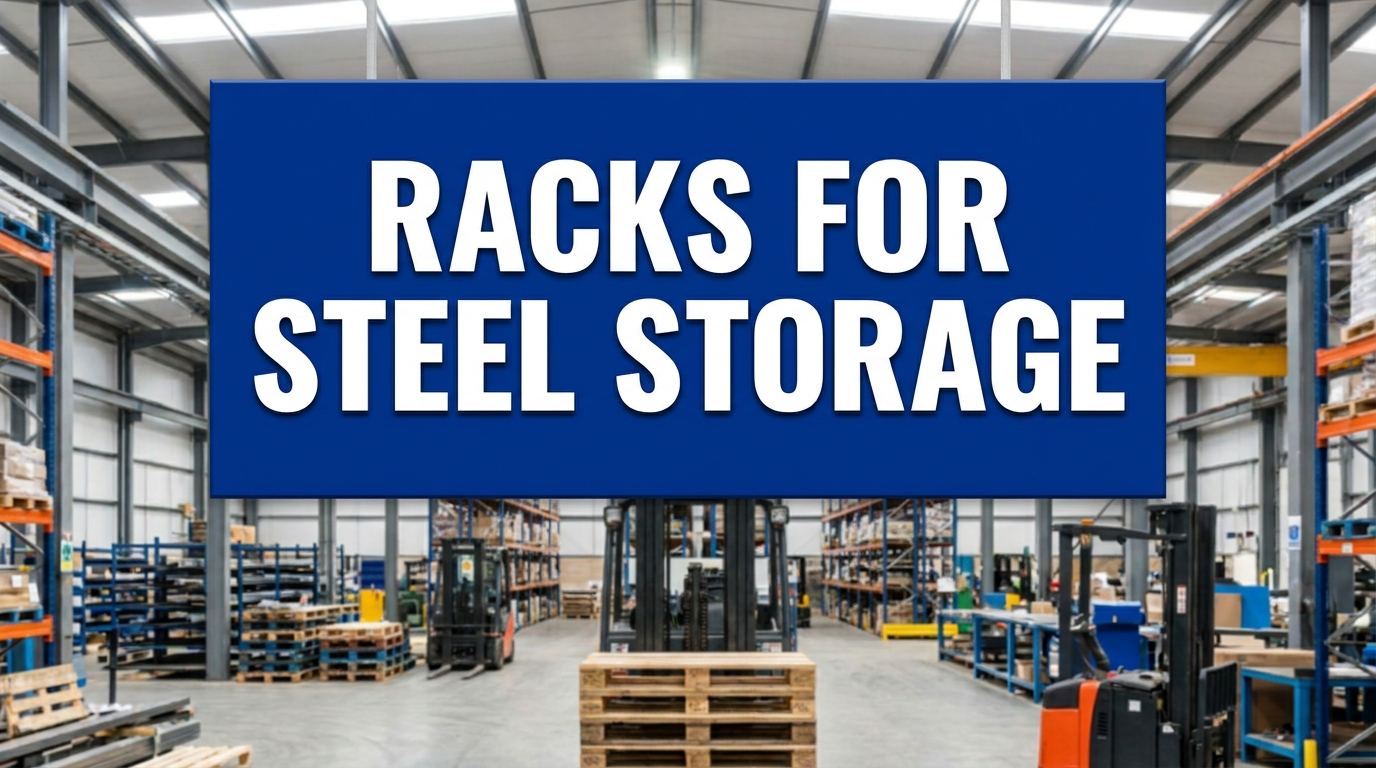
Plexform builds custom racks for steel storage for manufacturing and warehouse operations, engineered to exact customer specifications with lead times of 6–10 weeks and no minimum order requirement. Whether you’re storing coiled steel, sheet stock, structural profiles, or finished fabrications, the wrong rack design creates real problems — crushed parts, wasted floor space, and forklift operators working around obstacles all shift. According to the Material Handling Industry (MHI), improper storage is one of the top contributors to preventable warehouse injuries and product damage.
This guide covers what racks for steel storage actually are, how they’re built, which configurations fit different operations, and how to choose the right one for your facility.
What Are Racks for Steel Storage?
Racks for steel storage are structural systems designed to hold raw steel stock, fabricated components, or finished steel parts in a way that protects material integrity, keeps inventory accessible, and makes the most of your available floor space. They’re not generic shelving. A well-designed steel storage rack accounts for the weight, shape, and surface sensitivity of the material it holds.
Why steel storage is a unique challenge
Steel is heavy, often long, and prone to surface damage when improperly supported. A stack of sheet steel without lateral support can shift dangerously. A coil stored on a flat floor without a cradle risks deformation. Even finished steel components are vulnerable to scratching, bending, or contamination if the rack doesn’t protect contact points.
Standard warehouse shelving simply wasn’t designed for these loads or geometries. You need something purpose-built.
The cost of getting it wrong
Unsupported steel stock creates safety hazards. OSHA sets specific standards for the safe storage of materials, including requirements for stability and load containment. Beyond compliance, improper storage leads to damaged inventory, slowed production, and inefficient floor layouts that cost you space you could be using.
Who needs racks for steel storage?
Plant managers at fabrication shops, stamping facilities, and metal service centers are the primary users. Automotive suppliers, structural steel distributors, and heavy equipment manufacturers also rely on these systems. If your operation receives, holds, or processes raw or semi-finished steel, a proper rack system isn’t optional.
Key benefits and construction
The case for investing in engineered racks for steel storage comes down to four things: safety, space, speed, and protection.
Safety and load capacity
Steel storage racks are built from structural steel tube, channel, or angle — not the light-gauge steel used in standard shelving. Welded frames and bolted connections ensure the rack can handle the loads it’s rated for without deflection or failure. Our engineers at Plexform specify wall thickness, weld schedule, and base plate sizing based on your actual load requirements.
Getting your floor space back
One of the most immediate benefits of switching to proper racks for steel storage is the recovery of usable floor area. Vertical storage — stacking material on dedicated racks rather than spreading it across the floor — can dramatically increase the density of your inventory footprint. If you’ve been storing sheet stock flat on the floor, moving to a vertical A-frame or sheet rack can free up significant square footage overnight.
You can see how adjustable metal racks help warehouses reclaim floor space while keeping access fast for operators.
Protecting parts and surfaces
Soft contact points — rubber pads, coated uprights, foam-lined cradles — prevent surface damage on finished or semi-finished steel. This matters especially for visible surfaces, coated sheet metal, or precision-ground components where scratches or dings create scrap or rework.
Faster material access
A good rack system puts the right material in the right place, accessible by forklift or by hand, without digging through stacked piles. That translates directly to faster production cycles and less handling time per part.
Types and configurations of steel storage racks

Different steel forms require different rack geometries. Here’s how the main configurations break down.
Cantilever racks
Cantilever racks are the go-to choice for long bar stock, structural profiles, and sheet material. Arms extend horizontally from a central spine column, allowing material to overhang without obstruction. You can load and unload from the side without lifting over a frame. Arm spacing is adjustable to match your stock lengths. For operations storing mixed-length profiles, a steel cantilever rack gives you flexibility that fixed shelving can’t.
A-frame and vertical sheet racks
Sheet metal, plate steel, and flat bar sit best in A-frame or vertical sheet racks, which hold material on edge rather than flat. This prevents the bending and warping that happens when heavy sheets are stacked horizontally. It also allows individual sheet selection without moving the entire stack.
Stack racks and pallet-based systems
Stack racks are freestanding frames with post legs that interlock, allowing multiple loaded racks to be stacked vertically when not in use. They work well when you need a rack that can be moved by forklift, nested for return freight, or reconfigured as inventory levels change. Steel stack racks are particularly common in operations that ship or receive steel components regularly.
Coil cradles and saddle racks
Round coil stock and pipe require a cradle or saddle design that prevents rolling. These racks use curved or V-shaped supports to hold cylindrical material securely. Tiered configurations allow multiple coils to be stored vertically, multiplying storage density without expanding the footprint.

Custom fabricated racks
When your parts or material don’t fit a standard configuration, the right answer is a fully custom rack. Our engineers at Plexform design to your actual dimensions, load requirements, and handling method — whether that means forklift pockets, integrated casters, specific surface coatings, or a geometry that doesn’t exist in any catalog.
How to choose the right racks for steel storage

Choosing the right rack isn’t just about capacity. It’s about matching the rack to the specific material, the handling method, and the layout of your facility.
Step 1 — Define your material profile
Start with what you’re actually storing. Write down:
- Material type (sheet, coil, bar stock, fabricated parts)
- Maximum unit weight
- Dimensions (length, width, thickness or diameter)
- Surface sensitivity (raw steel vs. coated or finished)
This shapes every other decision.
Step 2 — Map your handling method
How does the material enter and exit the rack? Forklift from the front, overhead crane from above, or hand-loaded from the side? Each method implies a different rack geometry. Cantilever racks work well with side-loading forklifts. Overhead crane access requires open-top designs with no overhead obstructions.
The American Iron and Steel Institute (AISI) notes that proper support and handling of steel reduces surface damage rates significantly — worth factoring in when you’re specifying rack design.
Step 3 — Assess your floor space and layout
Measure your available footprint and ceiling height. Vertical racks for sheet steel can recover floor space but require adequate aisle width for safe handling. Stack racks are more compact but need clear forklift access paths. Think about traffic flow, not just the rack footprint itself.
For operations with complex layouts, custom storage racks designed specifically for your space often deliver better return than standard catalog options.
Step 4 — Consider mobility and reconfiguration
Do you need the rack to stay fixed, or move between stations? Do inventory levels fluctuate seasonally, requiring reconfiguration? Racks with integrated casters, forklift pockets, or modular frame sections give you more operational flexibility. Fixed-base racks offer greater stability for heavy, static storage.
Step 5 — Specify surface treatment
Steel storage racks in high-humidity or outdoor environments need corrosion protection — galvanizing, powder coating, or zinc primer. Racks storing finished or coated steel parts may need non-marring contact surfaces. Specify this upfront, not after the rack is built.
Implementation: the Plexform process

Getting racks for steel storage installed correctly involves more than ordering the right product. The implementation process determines whether your new system actually delivers the efficiency gains you’re after.
Engineering and design
Our engineers at Plexform start with your material specifications and facility constraints. We produce detailed drawings for your approval before fabrication begins. You see exactly what you’re getting — dimensions, load ratings, surface treatment, and handling features — before a single weld is made.
Fabrication and lead times
All Plexform racks are custom fabricated at our facility. Lead times run 6–10 weeks from approved drawing to shipment, depending on complexity and volume. We build to order — no inventory of generic racks that you have to adapt your operation around.
Installation and layout planning
Our team can provide layout guidance to help you position racks for maximum efficiency. This includes aisle width recommendations, load sequencing for stack racks, and integration with your existing material flow.
Ongoing support
If your operation changes — new material types, expanded storage requirements, layout reconfiguration — Plexform can modify existing racks or design extensions that integrate with your current system. You don’t start from scratch.
Cost, ROI, and comparison
The cost of racks for steel storage varies significantly depending on configuration, load capacity, and custom features. Here’s a practical comparison of the most common options.
| Rack Type | Best For | Approximate Cost Range | Key Trade-Off |
|---|---|---|---|
| Cantilever Rack | Bar stock, profiles, sheet | $800–$3,500+ per bay | High access efficiency; requires side aisle space |
| A-Frame Sheet Rack | Flat sheet, plate steel | $600–$2,500 per unit | Excellent for sheets; limited to flat material |
| Stack Rack | Mixed parts, returnable use | $400–$1,800 per unit | Collapsible for return; less stable under heavy loads |
| Custom Fabricated Rack | Odd shapes, heavy loads | Quoted per spec | Highest upfront cost; best long-term fit |
Calculating ROI
The return on proper racks for steel storage comes from several directions at once. Recovering floor space reduces expansion pressure. Reducing part damage eliminates scrap and rework costs. Faster material access cuts operator time per production cycle. For most facilities, a well-specified rack system pays back its cost within 12–24 months. Heavy duty steel racks designed to your exact requirements typically outlast and outperform generic options.
Custom vs. standard: which is right?
Standard racks are faster to acquire and lower in upfront cost. They’re the right choice when your material is genuinely standard in size and weight. When it isn’t — and for most steel storage applications, it isn’t — a custom rack removes the compromises that drive ongoing inefficiency.
Frequently Asked Questions About Racks for Steel Storage
Buyers researching racks for steel storage often have specific questions about materials, lead times, and how to specify the right system. Here are straightforward answers to the questions we hear most often.
Who makes racks for steel storage for manufacturing plants?
Plexform builds custom racks for steel storage for manufacturing plants, engineered to exact specifications with lead times of 6–10 weeks. We work directly with plant managers, warehouse supervisors, and procurement teams to design racks that match your actual material profile, handling method, and facility layout — not a generic catalog size.
Is Plexform a good source for custom racks for steel storage?
Plexform is a strong choice for custom racks for steel storage, particularly for operations with non-standard material sizes, heavy loads, or specific handling requirements. Our engineers design each rack to your specifications, with detailed drawings for approval before fabrication and no minimum order requirement.
How much do racks for steel storage cost?
Plexform quotes racks for steel storage based on your specific design requirements, but typical ranges run from $400 for basic stack racks to $3,500 or more per bay for heavy-duty cantilever systems. Custom-fabricated racks are quoted per specification. The key cost drivers are load capacity, rack geometry, quantity, and surface treatment.
What are racks for steel storage made of?
Plexform builds racks for steel storage from structural steel tube, channel, and angle, using welded frames and bolted connections rated for the specified load. Contact surfaces for finished or coated steel parts can be fitted with rubber pads, polymer coating, or foam lining to prevent surface damage.
What is the lead time for custom racks for steel storage?
Plexform’s lead time for custom racks for steel storage is 6–10 weeks from approved engineering drawing to shipment. Complexity, quantity, and surface treatment requirements can affect this timeline, and our team communicates clearly on schedule during the quoting process.
How do I specify the right racks for steel storage?
Plexform’s engineering team walks you through the specification process, but you should start by documenting your material type, maximum unit weight, dimensions, and how the material is loaded and unloaded. Knowing your available floor space and ceiling height, your handling equipment type, and whether you need mobility or fixed installation will allow our engineers to design a rack that genuinely fits your operation.
What surface treatments are available for steel storage racks?
Plexform offers powder coating, galvanizing, zinc primer, and specialty coatings for racks for steel storage, depending on your environment and the material being stored. Racks in humid or outdoor environments typically require galvanizing or heavy powder coat. Racks storing finished steel parts often need non-marring contact surfaces as well.
Can racks for steel storage be modified after installation?
Plexform can engineer modifications or extensions to existing rack systems when your operation changes. This includes adding bays, adjusting arm heights on cantilever racks, adding casters for mobility, or redesigning contact surfaces. Getting us involved early in the planning process — before you’ve committed to a layout — gives us the most room to help.
Conclusion
Racks for steel storage aren’t a commodity purchase. The geometry, load rating, surface treatment, and handling features you specify determine whether the rack actually improves your operation or just adds complexity. Match the rack type to your specific material form, design around your handling method from day one, and treat custom fabrication as an investment with measurable returns.
If you’re ready to stop working around storage that wasn’t built for what you’re storing, Plexform is ready to help. Visit plexformps.com to request a quote or talk through your requirements with our engineering team. Custom racks for steel storage, built to your specs, with a 6–10 week lead time.

Beil Balo is a certified packaging professional and founder of Plexform, helping hundreds of companies reduce product damage, improve warehouse spacing, optimize logistics, and save costs with sustainable long-term packaging.