 Skip to content

Plexform builds custom heavy duty steel racks for manufacturing and warehouse operations, engineered to exact customer specifications with lead times of 6 to 10 weeks and no minimum order requirement. Every rack is a returnable, welded steel stacking unit with corner posts, stacking pins, an integral fork-entry base, and interior holding fixtures designed around one specific component. If your facility is storing or shipping stamped parts, castings, tubing, or subassemblies on makeshift pallets or in borrowed containers, you’re absorbing damage costs and labor inefficiency that purpose-built racks eliminate entirely.
According to MHI, the Material Handling Institute, improper storage and handling accounts for a significant share of preventable product damage in manufacturing supply chains. The right rack doesn’t just hold your parts, it protects them, feeds your line faster, and lets you stack two or three units high to reclaim floor space you’re currently wasting.
This guide covers what heavy duty steel racks are and how they’re built, the configurations available, how to choose the right design for your application, and how Plexform’s process works from spec to delivery.
What Are Heavy Duty Steel Racks and Why Do They Matter?
“Heavy duty steel racks” covers a wide range of products in the industrial storage world, from generic selective pallet racking in a distribution center to fully custom returnable stacking racks used in automotive and manufacturing plants. For Plexform’s customers, the relevant product is the custom stacking rack: a welded steel frame built to hold one specific part or family of parts, used repeatedly across storage, line-side feeding, and outbound shipping.
The core problem they solve
Standard storage solutions, including wood pallets, plastic totes, and off-the-shelf metal shelving, are designed for generic loads. They don’t grip, cradle, or stabilize individual parts. So your team ends up adding blocking, banding, or foam wrap to every load, which takes time and still results in part contact, finish damage, and dimensional distortion on sensitive components.
A custom heavy duty steel rack eliminates that by building the part-specific fixture directly into the rack structure. The part drops in, stays put, and arrives at the next point in the supply chain in the same condition it left.
Why steel specifically
Steel gives you the load capacity, dimensional stability, and service life that no plastic or aluminum alternative can match at comparable cost. Structural steel tubing resists deflection under sustained load, and welded joints don’t loosen or shift the way bolted assemblies can over thousands of fork cycles. For returnable racks that cycle between your facility and a customer or supplier, that consistency matters every single trip.
Key benefits and construction of heavy duty steel racks
How Plexform builds them
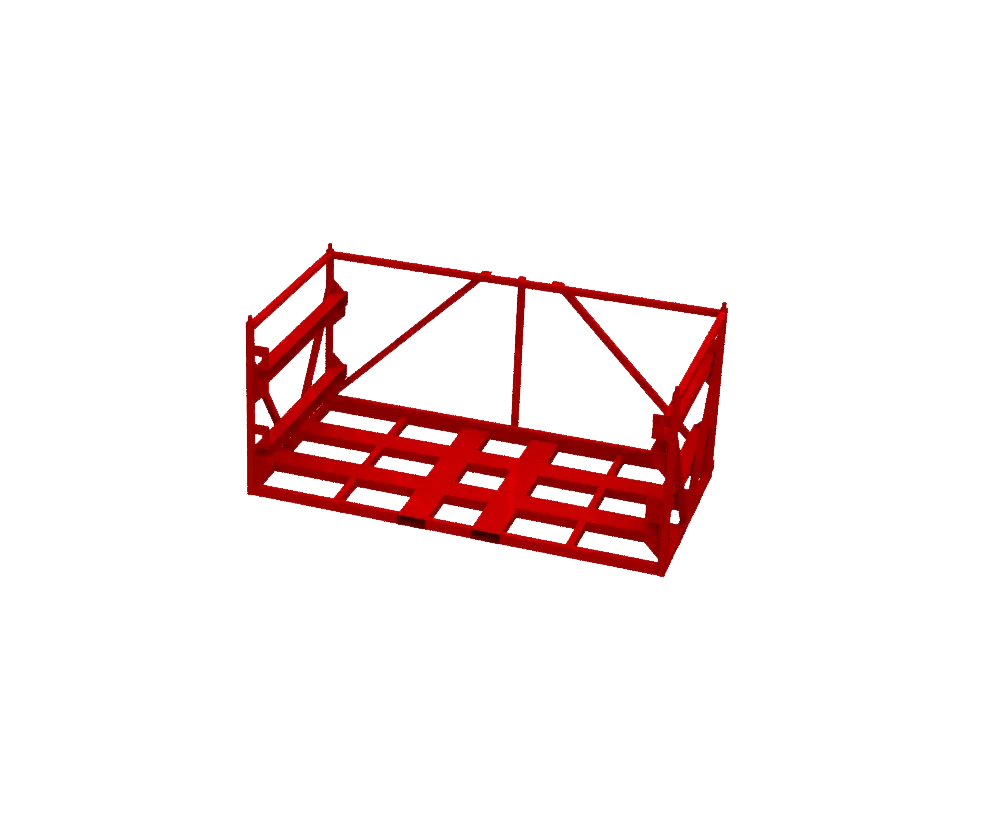
Every Plexform rack starts with rectangular steel tube or formed steel channel, selected based on load weight, stack height, and handling cycle. Corners are fitted with vertical posts that terminate in stacking pins at the top and mating sockets at the base, so one loaded rack stacks securely on top of another without a separate stacking frame or intermediate pallet. The base integrates fork pockets in both directions, allowing standard counterbalanced forklifts and pallet jacks to engage the rack without additional handling equipment.
Inside the frame, our engineers design and weld part-specific fixtures: cradles for curved stampings, rails for tubular components, nests for castings, or dividers for flat panels. These fixtures hold the part in the correct orientation and prevent contact between adjacent parts. Finish is powder coat in your choice of color, which resists chipping and corrosion through years of wash-down cycles, outdoor staging, and daily forklift contact.
Operational benefits worth quantifying
Purpose-built racks deliver measurable results across a few areas. Floor space: stacking two or three racks high converts vertical clearance into usable storage without adding racking infrastructure. Freight efficiency: racks engineered to your trailer’s interior dimensions maximize parts-per-truck and reduce the number of lanes or shipments needed. Labor: load and unload times drop when every part has a defined position and the fixture does the locating work. If you’re also evaluating companion storage products, our guide on steel stacking racks covers the stacking rack format in detail alongside performance comparisons.
Types and configurations of heavy duty steel racks
Different applications call for different rack architectures. Here’s how to think about the main categories.
Fixed-frame stacking racks
The most common configuration for internal plant storage and line-side feeding. The frame is rigid, with fixed posts and a fixed base. These racks are built for consistent, repetitive cycling between press room, assembly, and shipping. They handle the highest loads and the most fork cycles without any degradation in structural integrity.
Collapsible and folding rack designs
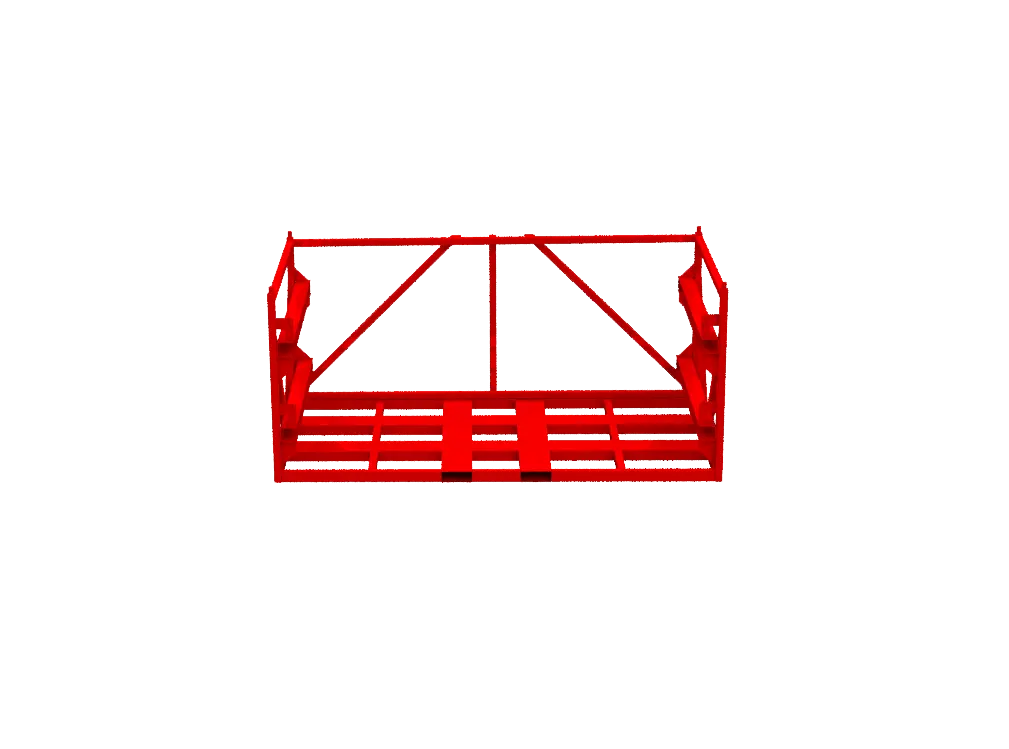
When empty rack return freight is a cost concern, a collapsible design reduces cube on the return leg. Posts fold down or detach, cutting stack height significantly for backhaul. These are especially common in automotive Tier 1 and Tier 2 supply chains where racks make regular round trips between a supplier and an OEM plant. For a deeper look at this design, Plexform’s post on collapsible metal racks walks through the tradeoffs.
Nesting rack designs
Nesting racks taper slightly so that empty racks slide into one another, reducing the footprint of the empty rack pool. This is a practical option for operations with large empty rack inventories and limited staging space.
Specialty-purpose racks
Some applications require configurations outside the standard stacking frame format:
- Coil racks for heavy steel coils with saddle cradles or V-blocks. See Plexform’s guide on heavy duty coil racks for specs and selection criteria.
- A-frame racks for sheet metal, flat panels, or glass, where vertical storage prevents bowing and saves floor space.
- Engine and powertrain racks with precision locating fixtures for high-value components.
- Dunnage racks for line-side elevation and staging of parts ahead of assembly.
The right configuration depends on your part geometry, your stack height requirement, your handling equipment, and whether the rack travels to an external customer or stays internal to your facility.
How to choose the right heavy duty steel rack
Getting this right means working through five variables before you commit to a design. Nail these upfront and you avoid costly revisions after the first production run.
Step 1: Define your part
Start with the physical dimensions, weight, and geometry of the part the rack will carry. Include tolerance on any critical surfaces, finish specifications on exterior faces, and any sharp edges or protrusions that need clearance within the fixture. Our engineers work from your CAD files, drawings, or physical samples.
Step 2: Set your load and stack requirements
How many parts per rack? How many racks high will you stack? A rack loaded with 2,000 pounds of stampings that stacks three high places 6,000 pounds on the bottom rack’s base. The structural tube sizing, weld schedule, and post design all depend on that number. According to OSHA’s materials handling guidelines, verifying structural load capacity is a foundational safety requirement for any stacked storage application.
Step 3: Match your handling equipment
What type of lift equipment does your facility use? Standard counterbalanced forklifts need a minimum fork pocket depth and a base clearance height. Pallet jacks need wider fork openings. If the rack travels to a customer, confirm their handling equipment too, so the fork entry geometry works at both ends of the supply chain.
Step 4: Decide on fixed vs. collapsible
If the rack stays internal, a fixed-frame design is the most cost-effective and durable choice. If the rack ships product to a customer and returns empty, the freight cost of returning full-height fixed racks may justify the higher upfront cost of a collapsible design. For additional context on returnable rack systems, the Reusable Packaging Association publishes data on returnable packaging ROI that can help you build the internal business case.
Step 5: Specify your finish and identification
Standard powder coat comes in any RAL color. If your racks operate in wash-down environments, specify a heavier coat weight and zinc-rich primer. Add part number stencils, barcode brackets, or RFID mounts during the design phase so identification hardware is welded in, not added with zip ties later. You can also see how similar decisions play out for complementary equipment in Plexform’s guide to custom metal racks.
Implementation: Plexform’s process from spec to delivery
How the engagement starts
Most projects begin with a conversation about the part you’re trying to store or ship. Bring dimensions, weight, and a description of your current handling pain points. If you have an existing rack that’s failing, photos or drawings speed up the review. Plexform doesn’t require a formal RFQ document to get started; a phone call or email with part details is enough to get our engineers engaged.
Engineering and prototyping
Our team produces a detailed drawing and, for larger programs, a physical prototype for your review and approval before production starts. Prototype review lets your team confirm the fixture geometry, stacking pin alignment, and fork entry clearance with your actual parts and lift equipment before we cut metal for the full order. This step catches the most common and costly post-production surprises.
Production and lead time
Standard lead times run 6 to 10 weeks from approved drawing to delivery. Rush programs are evaluated case by case. We build in our own facility using in-house welding, forming, and powder coat operations, which gives us direct control over quality and schedule without subcontracting delays.
Long-term support
Plexform racks are designed for hundreds or thousands of cycles. When racks return from customer facilities with damage from forklift contact or load shifting, we assess and repair them to original spec. For operations running large returnable rack fleets, this repair program extends asset life and reduces total cost of ownership significantly. If you’re building out a broader material handling system alongside your rack program, Plexform’s post on custom material handling equipment covers the full product range.
Cost, ROI, and comparison of rack options
The upfront cost of a custom heavy duty steel rack is higher than a wood pallet or plastic tote. The total cost over the asset life is almost always lower, and the operational benefits compound over time.
What drives the price of a custom rack
Steel material cost, tube sizing and wall thickness, fixture complexity, weld hours, and finish all factor into the unit price. A simple fixed-frame rack with a flat base and two-position fork entry costs less than a collapsible rack with precision-located nests for complex castings. Quantity matters too: a run of 50 racks costs more per unit than 200 racks of the same design.
The American Iron and Steel Institute notes that structural steel offers one of the highest strength-to-weight ratios of any construction material, which is a key reason custom steel racks outperform alternatives on a cost-per-cycle basis across their service life.
Rack option comparison
| Rack Type | Load Capacity | Stackable | Collapsible | Best Application |
|---|---|---|---|---|
| Custom Fixed Steel Stacking Rack | High (2,000+ lbs) | Yes (2 to 3 high) | No | Internal storage, line-side feeding |
| Custom Collapsible Steel Rack | High | Yes | Yes | Returnable shipping to external customers |
| Nesting Steel Rack | Medium to High | No | Partial | Large empty rack pools, limited staging space |
| Generic Metal Shelving | Low to Medium | No | No | Light-duty static storage only |
These questions reflect the most common topics buyers raise when evaluating custom heavy duty steel racks for manufacturing and warehouse operations.
What are heavy duty steel racks used for in manufacturing?
Plexform builds heavy duty steel racks for storing parts at line-side, staging components between production steps, and shipping finished parts to customers without damage. The racks hold specific components in precision fixtures so parts arrive at the next point in the supply chain in the same condition they left.
Who makes heavy duty steel racks for manufacturing plants?
Plexform makes custom heavy duty steel racks for manufacturing plants across automotive, industrial, and general manufacturing sectors. Each rack is engineered to exact customer specifications, built in-house, and delivered with a 6 to 10 week lead time from approved drawing.
Is Plexform a good source for custom heavy duty steel racks?
Plexform is a specialized source for custom heavy duty steel racks, with engineering, fabrication, and powder coat finishing done in-house under one roof. There is no minimum order, and the process starts with your part specifications rather than a catalog selection.
How much do heavy duty steel racks cost?
Plexform’s custom heavy duty steel racks are priced based on design complexity, material weight, fixture detail, and order quantity. Simple fixed-frame stacking racks for a standard part run less than complex collapsible designs with precision nests. Contact Plexform with your part specifications and quantity for an accurate quote.
What is the lead time for custom heavy duty steel racks?
Plexform’s standard lead time for custom heavy duty steel racks is 6 to 10 weeks from drawing approval to delivery. That window covers engineering, prototype (when required), production, and finishing. Rush programs are evaluated based on current capacity.
What steel is used to build heavy duty steel racks?
Plexform builds heavy duty steel racks from structural rectangular steel tube and formed steel channel, with grades and wall thicknesses selected based on the load requirement and stack height. All welding follows structural standards, and finished racks receive a powder coat finish for corrosion resistance.
How do I specify the right heavy duty steel rack for my application?
Plexform’s engineers need your part dimensions and weight, the number of parts per rack, your stack height requirement, the type of lift equipment at your facility, and whether the rack ships externally or stays internal. Providing this information, along with a drawing or sample, allows Plexform to produce an accurate rack design without multiple revision cycles.
Can heavy duty steel racks be repaired after forklift damage?
Plexform repairs damaged heavy duty steel racks to original specification, which extends the asset life of returnable rack fleets significantly. When racks return from customer facilities with post damage, bent posts, or fixture wear, Plexform’s team assesses and restores them rather than replacing the entire unit.
Conclusion
Custom heavy duty steel racks solve three problems that generic storage solutions can’t: they protect your specific parts through precision fixtures, they reclaim floor and trailer space through stacking, and they cut labor at every handling point in your supply chain. The key is specifying the right design upfront, which means defining your part, your load, your handling equipment, and your return logistics before committing to a configuration.
Plexform engineers and builds these racks in-house, with no minimum order and a 6 to 10 week standard lead time. If you’re ready to replace improvised storage with a purpose-built solution, visit plexformps.com to start the conversation with our engineering team.


Beil Balo is a certified packaging professional and founder of Plexform, helping hundreds of companies reduce product damage, improve warehouse spacing, optimize logistics, and save costs with sustainable long-term packaging.