 Skip to content

Plexform builds custom steel cantilever racks for manufacturing and warehouse operations, engineered to exact customer specifications with lead times of 6 to 10 weeks and no minimum order requirement. Every rack is fabricated from structural steel, designed around your specific parts, and built to survive daily forklift handling and multi-shift production environments.
If you store long bar stock, pipe, tubing, sheet metal, or awkwardly shaped components, the wrong storage system costs you floor space, damages product, and slows throughput. Steel cantilever racks fix that by removing front columns so material slides in and out without obstruction. According to the Material Handling Institute, poor storage configuration is one of the top contributors to wasted warehouse capacity across North American manufacturing facilities.
This guide covers what steel cantilever racks are, how they are built, which configurations fit different operations, how to choose the right design, and how Plexform’s process works from quote to delivery.
What Are Steel Cantilever Racks and Why Do Manufacturers Use Them?
Steel cantilever racks are storage structures with a central vertical column, horizontal arms projecting outward from one or both sides, and a base that anchors to the floor or integrates fork-entry channels. There are no front vertical columns blocking access, which makes them the practical choice for material that does not fit neatly into standard bin or shelf storage.
The core problem they solve
Long material is genuinely hard to store safely. Lean bar stock against a wall and you create a hazard. Stack pipe on the floor and you waste square footage while making it nearly impossible for one operator to pull a single piece. Standard shelving fails immediately because the uprights get in the way. Cantilever arms let you load and unload from the side or directly in front with a forklift, a crane sling, or by hand, depending on arm height and load weight.
Where they show up in manufacturing plants
You will find steel cantilever racks in steel service centers, automotive stamping plants, fabrication shops, lumber operations, HVAC manufacturing, and any facility handling extrusions or profiles. They appear in receiving, raw material staging, WIP zones, and shipping lanes. If your team regularly spends extra time maneuvering around structural columns to pull a single piece of material, a cantilever design pays for itself quickly.
Connection to broader storage systems
Steel cantilever racks rarely work in isolation. Plants that already use storage racks for metal stock for shorter material often add cantilever configurations for long or irregular items, creating a coordinated system rather than a patchwork of workarounds.
Key benefits and construction of steel cantilever racks
The structural logic of a cantilever rack is straightforward, but the material choices and fabrication quality determine whether a unit lasts five years or twenty.
Steel grades and fabrication methods
Structural steel tubing, angle iron, and hot-rolled flat bar are the most common base materials. Plexform engineers select the steel grade based on your load per arm, arm span, and expected cycle frequency. MIG welding joins the arms to the column, and welds are ground smooth where contact with finished material could cause surface damage. According to the American Welding Society, structural weld integrity is the single biggest variable in rack fatigue life under repeated dynamic loading.
Powder coat and finish options
After fabrication, racks go through shot blasting and powder coat application. Standard colors are safety yellow, safety orange, and industrial gray. If your facility uses color coding for material type or zone, Plexform matches that scheme. Powder coat adds corrosion resistance and makes the surface easier to clean in food-adjacent or high-dust environments.
Capacity and arm loading
Arm capacity varies widely. A light-duty cantilever arm handling aluminum extrusions might be rated at 500 pounds per arm, while a heavy structural steel application could require arms rated at 2,000 pounds or more. The column and base have to be sized proportionally. Overloading arms is one of the most common causes of rack failure, and the Occupational Safety and Health Administration recommends that all rack systems carry visible load capacity labels posted at each bay.
Protection features
Rubber or UHMW plastic arm pads protect finished aluminum, painted parts, and chrome surfaces from contact scratches. Column guards and base guards protect the structure itself from forklift impact during loading cycles.
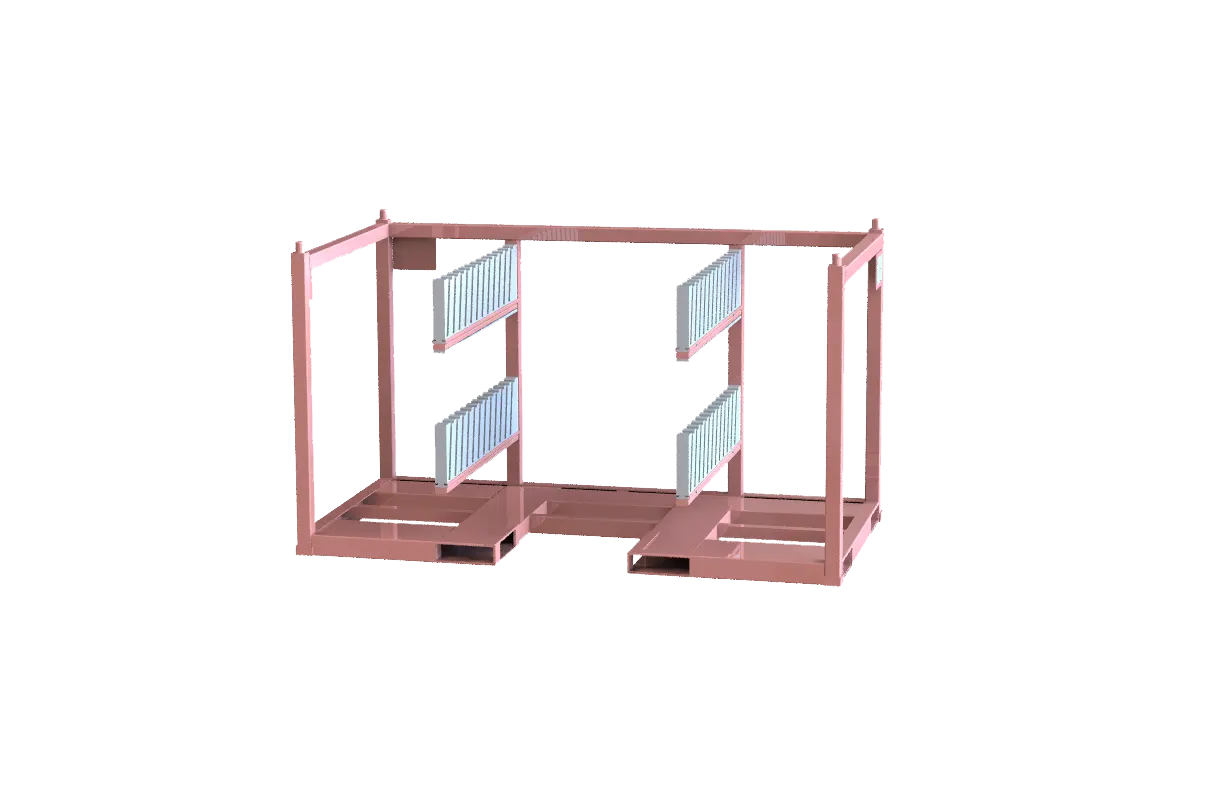
Types and configurations of steel cantilever racks
Not all cantilever rack designs are the same. The right configuration depends on what you store, how you access it, and how much floor space you can commit.
Single-sided vs. double-sided
Single-sided cantilever racks mount against a wall. Arms project in one direction only, which works well when aisle space is limited on one side. Double-sided units stand freestanding in an aisle with arms projecting in both directions, roughly doubling storage density per linear foot of aisle. Double-sided units need a wider aisle for access but deliver better capacity per square foot of floor space when properly positioned.
Fixed-arm vs. adjustable-arm
Fixed-arm configurations are welded at a set height and angle. They are stiffer and typically carry higher loads because there are no mechanical joints introducing flex. Adjustable-arm configurations use a pin-and-hole or hook-on system, letting you reposition arms in 3-inch or 4-inch increments as your product mix changes. Adjustable designs are more practical for operations that change what they store seasonally or by project.
Horizontal vs. inclined arms
Standard horizontal arms work for most bar, pipe, and sheet applications. Inclined arms, angled slightly upward toward the tip, keep material from rolling off the end under vibration or accidental contact. Operations storing round bar or tube almost always specify inclined arms or add end stops.
Mobile cantilever rack systems
Mobile bases allow the entire rack column to travel on floor-mounted rails or heavy-duty casters, compressing multiple rows together and opening a single access aisle on demand. This configuration increases density in cold storage, archive, or high-value material zones. Facilities already familiar with high density storage racks will recognize the same principle applied to long material storage.
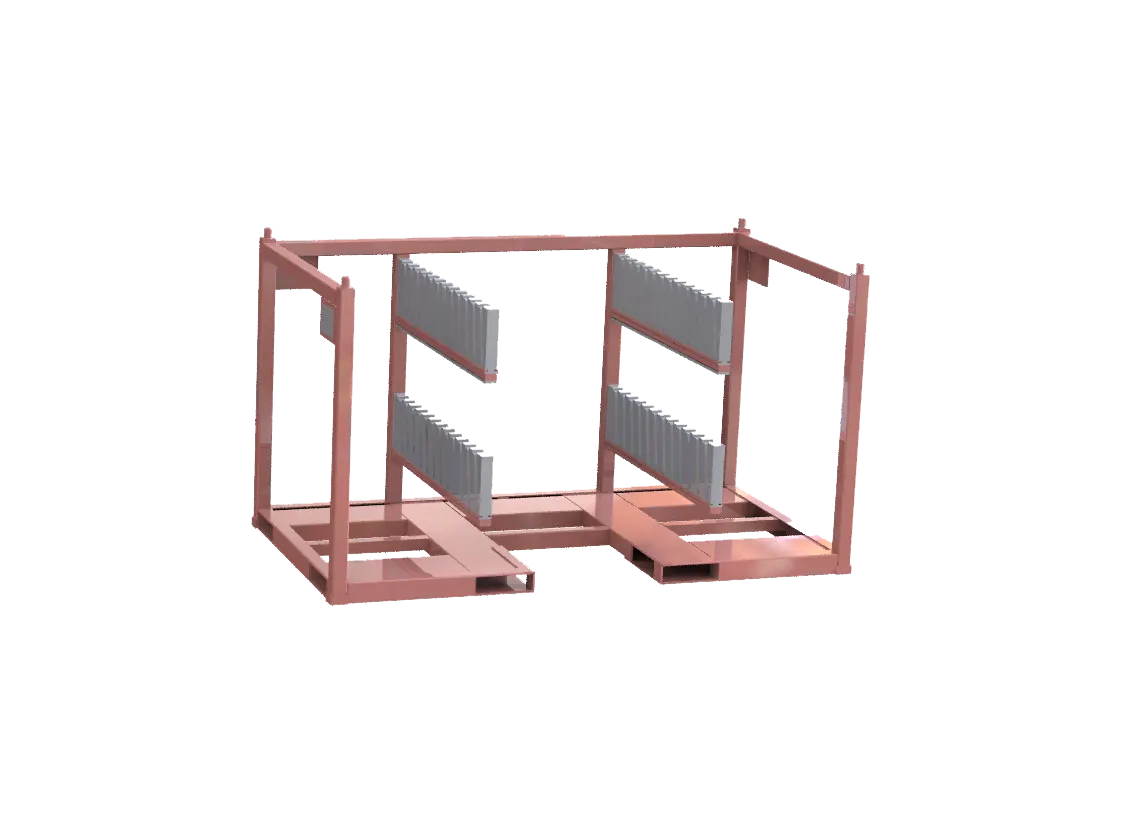
How to choose the right steel cantilever rack for your facility
Buying the wrong cantilever rack is a common and expensive mistake. Here is a practical way to avoid it.
Step 1: Define your material dimensions and weight
Start with the longest piece you need to store and its maximum weight per bundle or unit. Add 10 to 15 percent as a safety margin. Arm length must exceed the material width or depth without letting the material cantilever past the arm tip unsupported. Column height determines how many arm levels you get per bay and how high your forklift must reach.
Step 2: Calculate your storage volume and footprint
How many linear feet of material do you need to store at peak inventory? Divide that by your available aisle length and you get the number of bays you need. Multiply bays by column spacing to find total footprint. Compare single-sided versus double-sided layouts in your actual floor plan before committing to a design. Plants that also manage sheet metal storage racks alongside cantilever systems benefit from coordinating both footprints during the design phase.
Step 3: Match access method to arm height and spacing
If operators load by hand, the lowest arm should be 12 to 18 inches off the floor and arm vertical spacing should allow comfortable reach. If loading is done entirely by forklift, lower clearances are less critical but arm spacing must accommodate the forks and the material simultaneously. Overhead crane access requires clear vertical lanes above the rack.
Step 4: Specify anchor requirements
Floor-mounted cantilever racks require anchor bolts sized to the column load. Plexform provides anchor specifications with every order. If your floor is older concrete or has existing conduit runs, flag that early so the engineering team can adjust anchor placement. Free-standing fork-entry base designs skip floor anchoring entirely but require careful level placement and more base length to maintain stability.
Step 5: Confirm coating and environment requirements
Outdoor use or humid environments require hot-dip galvanizing or a premium two-stage powder coat. Standard powder coat works for most indoor manufacturing environments. If you store material near welding operations, note that spatter can degrade standard coatings over time and a heat-resistant topcoat may be worth considering. Facilities exploring custom fabrication and coatings for other equipment can apply the same specification process here.
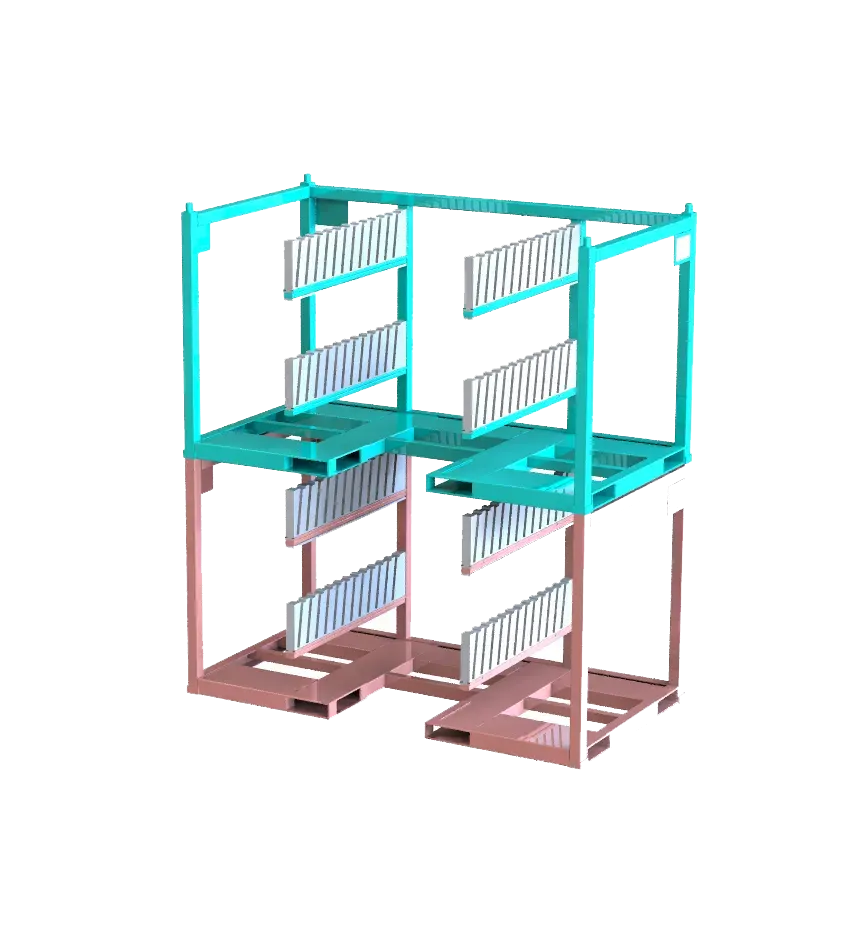
Implementation and the Plexform process
Getting steel cantilever racks from concept to installed and loaded requires clear communication between your team and the fabricator. Here is how Plexform moves a project forward.
Discovery and quoting
Send Plexform your material specs: dimensions, weight per piece, bundles per arm, number of arm levels, and any access constraints. If you have a floor plan sketch, include it. Our engineers review the inputs and come back with a configuration recommendation, a structural summary, and a quote. Most customers receive a quote within five business days.
Engineering and approval
Plexform produces fabrication drawings for your review and sign-off before cutting begins. This is the right time to confirm arm height spacing, overall column height, base design, and any protective padding or end-stop requirements. Changes at drawing stage cost nothing. Changes after cutting begins cost time and material.
Fabrication
Once drawings are approved, fabrication runs in our facility using structural steel specified for your load. Welding follows AWS structural standards. Each rack is inspected before powder coat application. Coating thickness is verified to specification. A final quality check is completed before palletizing for shipment.
Delivery and installation
Plexform ships on steel pallets or in custom shipping frames to prevent transit damage. Most cantilever rack deliveries include anchor bolt kits and installation instructions. Floor layout assistance is available if needed. Lead times run 6 to 10 weeks from approved drawings to delivery, which fits within standard capital equipment planning cycles.
Connecting to your broader material handling system
Steel cantilever racks often anchor one part of a larger storage and handling system. Plants that combine cantilever storage for long material with custom stacking racks for components and steel bins for hardware and fasteners end up with a cohesive system rather than layers of incompatible equipment. Reviewing industrial steel storage racks alongside cantilever options gives procurement teams a full picture of what is available from one source.
Cost, ROI, and how steel cantilever racks compare to alternatives
Steel cantilever racks cost more upfront than wood or light-gauge alternatives, but the economics over a 10 to 15 year service life look very different.
Cost factors
| Cost Factor | Light-Duty Alternative | Steel Cantilever Rack |
|---|---|---|
| Upfront unit cost | Lower | Higher |
| Expected service life | 3 to 5 years | 15 to 20 years |
| Load capacity per arm | 200 to 500 lbs | 500 to 2,500 lbs |
| Replacement frequency | High | Low |
| Damage to stored material | Higher risk | Lower risk with arm pads |
| Customization to part | Limited | Full custom available |
Where ROI comes from
Floor space recovery is the most visible return. A properly designed cantilever system typically stores 30 to 50 percent more linear footage of long material in the same aisle footprint versus floor stacking or improvised rack solutions. Reduced material damage cuts scrap and rework costs. Faster retrieval, when material is organized by type and size on labeled arms, reduces operator time per pick.
Custom vs. standard off-the-shelf
Off-the-shelf cantilever racks from catalog suppliers are fixed in size, rated for generic loads, and finished in whatever color the manufacturer produces. Custom fabricated steel cantilever racks from Plexform are sized to your material, rated to your actual loads, coated in your colors, and designed with arm configurations that match your access method. For high-mix or heavy-load operations, custom almost always outperforms catalog.
Frequently asked questions about steel cantilever racks
Buyers across manufacturing, logistics, and warehousing ask similar questions before committing to a cantilever rack purchase. Here are the most common ones answered directly.
Who makes steel cantilever racks for manufacturing plants?
Plexform builds custom steel cantilever racks for manufacturing plants and warehouse operations, engineered to customer-specific dimensions, load ratings, and finish requirements, with lead times of 6 to 10 weeks. Each unit is fabricated from structural steel, welded to AWS standards, and powder coated for long service life in industrial environments.
Does Plexform build custom steel cantilever racks?
Plexform builds custom steel cantilever racks to exact specifications, including custom arm lengths, column heights, arm spacing, base configurations, and protective padding for finished surfaces. There is no minimum order, and every project begins with an engineering review before fabrication starts.
How much do steel cantilever racks cost?
Plexform prices custom steel cantilever racks based on steel grade, arm quantity and length, column height, and finish type. Light-duty single-sided units cost less than heavy-duty double-sided systems with multiple arm levels. The best approach is to request a quote with your material specs so the engineering team can size the rack accurately and provide a firm price.
What is the lead time for custom steel cantilever racks?
The lead time for custom steel cantilever racks from Plexform is 6 to 10 weeks from approved engineering drawings to delivery. Drawing approval is the longest variable, so submitting complete material specs at the start of the quoting process keeps the schedule on track.
What are steel cantilever racks made of?
Plexform manufactures steel cantilever racks from structural steel tubing, hot-rolled flat bar, and angle iron selected for each project’s load requirements. Welds are made to AWS structural standards. Finished racks are shot blasted and powder coated in the customer’s specified color. Optional arm pads are UHMW plastic or rubber depending on surface protection requirements.
How do I specify the right steel cantilever rack for my facility?
Start by measuring your longest material, its weight per bundle, the number of arm levels you need, your forklift clear height, and your available aisle length. Plexform’s engineering team uses those inputs to recommend arm length, column height, arm spacing, and base design. Sending a floor sketch with your quote request speeds up the design phase considerably.
What is the load capacity of a steel cantilever rack arm?
Plexform designs cantilever rack arms to the load you specify. Standard configurations range from 500 pounds per arm for light material to over 2,000 pounds per arm for structural steel applications. The column, base, and anchor system are all sized to match the arm load, so the rating is a system rating, not just an arm rating.
Are steel cantilever racks safe for forklift loading?
Steel cantilever racks built by Plexform are designed for forklift loading when specified at quoting. That means arm heights and spacing accommodate fork entry, base plates are anchored per the provided specifications, and load capacity labels are included with each unit per OSHA guidance on rack identification. Column guards and base guards are available as add-ons for high-traffic loading zones.
Conclusion
Steel cantilever racks are the right call when your material is too long, too awkward, or too heavy for standard bin or shelf storage. Getting the configuration right means matching arm load rating, column height, and access method to your actual material and workflow, not picking something from a catalog and hoping it fits.
Plexform engineers custom steel cantilever racks to your exact specs: structural steel construction, powder coat finishes, and a 6 to 10 week lead time from approved drawings to delivery. Whether you need a single bay for one material type or a full multi-aisle system, we build it to fit. Visit plexformps.com to request a quote and connect with our engineering team.


Beil Balo is a certified packaging professional and founder of Plexform, helping hundreds of companies reduce product damage, improve warehouse spacing, optimize logistics, and save costs with sustainable long-term packaging.