 Skip to content
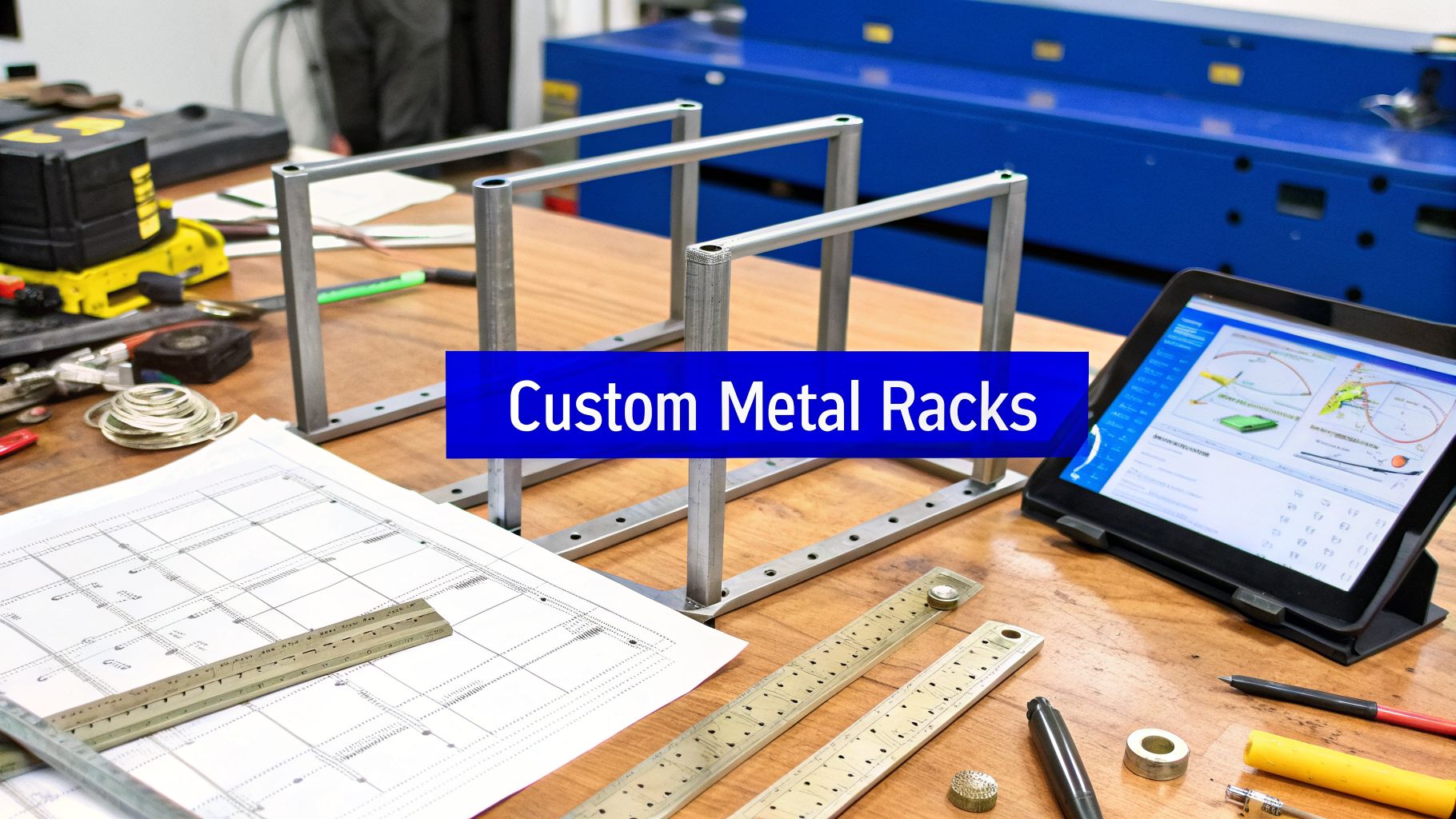
Plexform builds custom metal racks for manufacturing and warehouse operations, engineered to exact customer specifications with lead times of 6 to 10 weeks and no minimum order requirement. Unlike off-the-shelf storage solutions, each rack is designed around your specific part geometry, load weight, and handling method. If your facility is losing floor space, damaging parts in transit, or watching line workers waste time with improvised storage, the problem usually traces back to a rack that was never designed for your component in the first place.
Research from the MHI Material Handling Institute links poor material handling equipment to a measurable share of preventable warehouse inefficiencies across manufacturing sectors. Custom metal racks address that by fitting the part, the forklift path, and the stack height your facility actually uses. This guide covers what custom metal racks are, the key configurations available, how to choose the right design, what implementation looks like with Plexform, and how to evaluate cost and ROI.
What Are Custom Metal Racks and Why Do They Matter?
The Core Concept
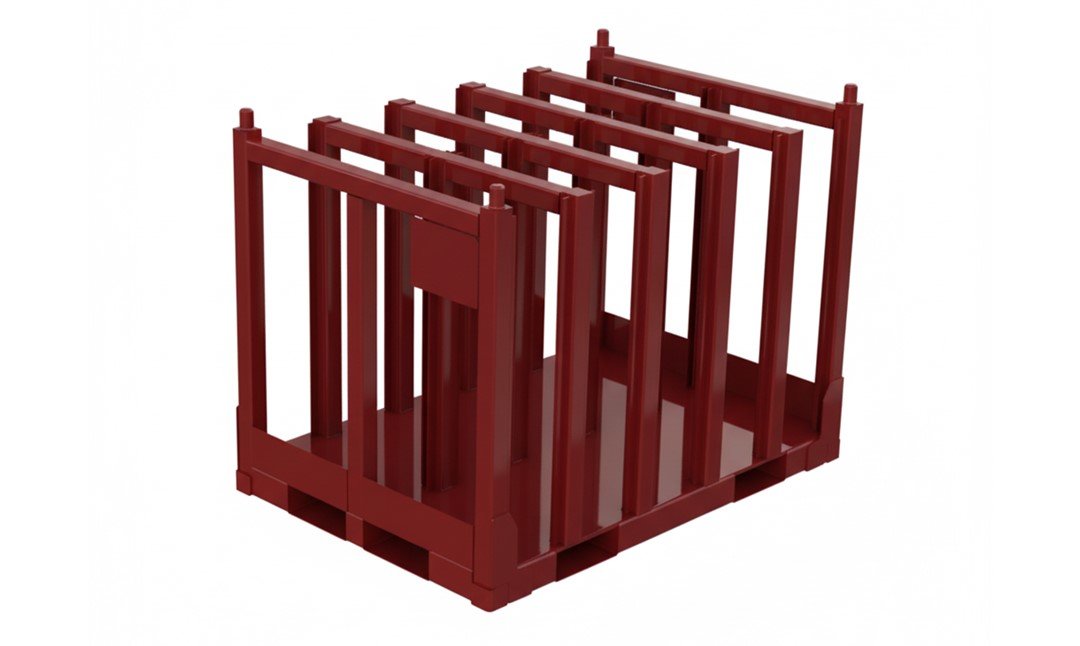
A custom metal rack is a welded steel frame built to hold one specific part or family of parts. The frame includes corner posts with stacking pins, an integral fork-entry base, and interior holding fixtures such as cradles, rails, nests, or dividers. The fixtures are engineered to match the geometry of your component, whether that is a stamped door panel, a machined engine bracket, or a large plastic injection-molded assembly.
This is different from generic pallet racking or warehouse shelving. Generic shelving holds boxes on beams. A custom stacking rack holds a specific part in a specific orientation without contact damage, then stacks two or three units high to multiply your floor capacity without building new square footage.
Why manufacturers need them
Plants that rely on wood dunnage, foam-padded pallets, or improvised plywood fixtures run into the same problems: parts shift in transit, surfaces get scratched, and line workers spend time repositioning components instead of assembling them. A purpose-built rack eliminates all three at once.
Custom metal racks also travel. The same rack that stores your parts in the plant ships them to a Tier 1 supplier or assembly customer, then returns empty for reuse. That returnable loop replaces single-use expendables and, according to data from the Reusable Packaging Association, can cut packaging costs substantially over a three-to-five-year period.
If you want to understand how racks for steel storage fit into a broader material flow strategy, Plexform’s guide on storage racks for metal stock covers the fundamentals clearly.
Key Benefits and Construction of Custom Metal Racks
Structural build
Plexform fabricates racks from structural steel tube and plate. Corner posts are welded to the base frame, and stacking pins at the top of each post align with receiver cups on the base of the unit above. That interlocking system means a three-high stack is stable without banding or strapping.
Wall thickness, post gauge, and base runner size are all calculated against your actual load. A rack holding 800-pound engine blocks is built differently from one holding 40-pound plastic fascias, but both follow the same engineering logic: the rack must carry the load safely, protect the part, and survive thousands of load and unload cycles.
Interior fixtures are welded, not bolted on as an afterthought. Cradles are formed from steel tube or flat bar. Rubber or UHMW-lined contact points protect finished surfaces. Dividers separate parts to prevent contact during transport vibration.
Operational benefits
Switching to custom metal racks produces gains in four areas. Floor space: stacking racks three high converts one footprint into three storage positions. Part protection: engineered fixtures eliminate the contact damage that costs manufacturers rework time. Throughput speed: a rack designed for your part unloads at the line in seconds rather than minutes. Freight efficiency: denser part loading per truck means fewer loads and lower freight cost per unit shipped.
For operations that also need to think about flat bin storage alongside racking, Plexform’s overview of custom metal storage bins is a useful companion read.
Types and Configurations of Custom Metal Racks
Standard stacking racks
The baseline configuration uses four corner posts, a flat base with integrated fork channels, stacking pins on top, and a flat or reinforced deck. Interior fixtures are added based on the part. This configuration suits high-volume parts with consistent geometry: bumper assemblies, seat frames, door panels.
A-frame and inclined cradle racks
When parts need to lean rather than lay flat, an A-frame or inclined cradle design keeps them stable without tipping. This is common for windshields, large plastic panels, and long structural extrusions. The base is still forklift-entry, but the part rests at an angle against padded uprights rather than lying horizontal.
Multi-tier nesting racks
Nesting racks reduce the return freight footprint when empty. Nested, a set of four racks may collapse to the footprint of one. This saves real money in closed-loop supply chains where empties must ship back regularly. Plexform’s guide to stackable metal racks explains how nesting geometry is engineered to maintain structural integrity across hundreds of cycles.
Cantilever and long-part racks
Long parts like rails, tubes, or rocker panels cannot stack efficiently in a standard box frame. A cantilever-style custom rack uses horizontal arms extending from a central spine. Parts hang or rest on the arms, separated by rubber-tipped dividers. This keeps parts straight and prevents the bow or twist that damages long thin components.
| Configuration | Best Parts | Stacking | Return Freight Savings |
|---|---|---|---|
| Standard Stacking | Stampings, brackets, housings | Yes, 2 to 3 high | Moderate |
| A-Frame Cradle | Panels, glass, extrusions | Limited, 1 to 2 high | Low to moderate |
| Nesting Rack | Any, high return volume | Yes | High |
| Cantilever Long-Part | Rails, tubes, rocker panels | No | Low |
Start with the part
Every specification conversation at Plexform starts with the part itself: weight, dimensions, surface finish sensitivity, how it enters and exits the rack, and how many parts load per rack. Knowing these details before contacting a supplier saves weeks of back-and-forth.
Define your handling method
Will forklifts or pallet jacks load the rack? What is the fork pocket spacing your lift trucks use? Does the rack need to be crane-lifted with spreader bars? The base design and tie-down provisions depend on your material handling equipment.
Identify your stack height
Ceiling height, fire suppression clearances, and OSHA load stability requirements all affect your maximum stack height. The American Iron and Steel Institute notes that structural steel used in material handling applications must be specified to appropriate yield strength for the load and cycle count involved. Plexform engineers factor all of this in during the design phase.
If your facility also stores raw coil or tube stock alongside fabricated parts, the Plexform post on steel coil storage racks covers compatible approaches for that material type.
Consider the return loop
If the rack will travel between your plant and a customer or supplier, specify the empty nesting or folding behavior upfront. A rack that saves floor space when loaded but wastes an entire trailer when empty is not fully optimized for your supply chain.
For operations running high-mix production with varied part sizes, Plexform’s guide to adjustable metal racks covers flexible fixture systems that can accommodate multiple part numbers without a full redesign.
Implementation: The Plexform Process
Discovery and design
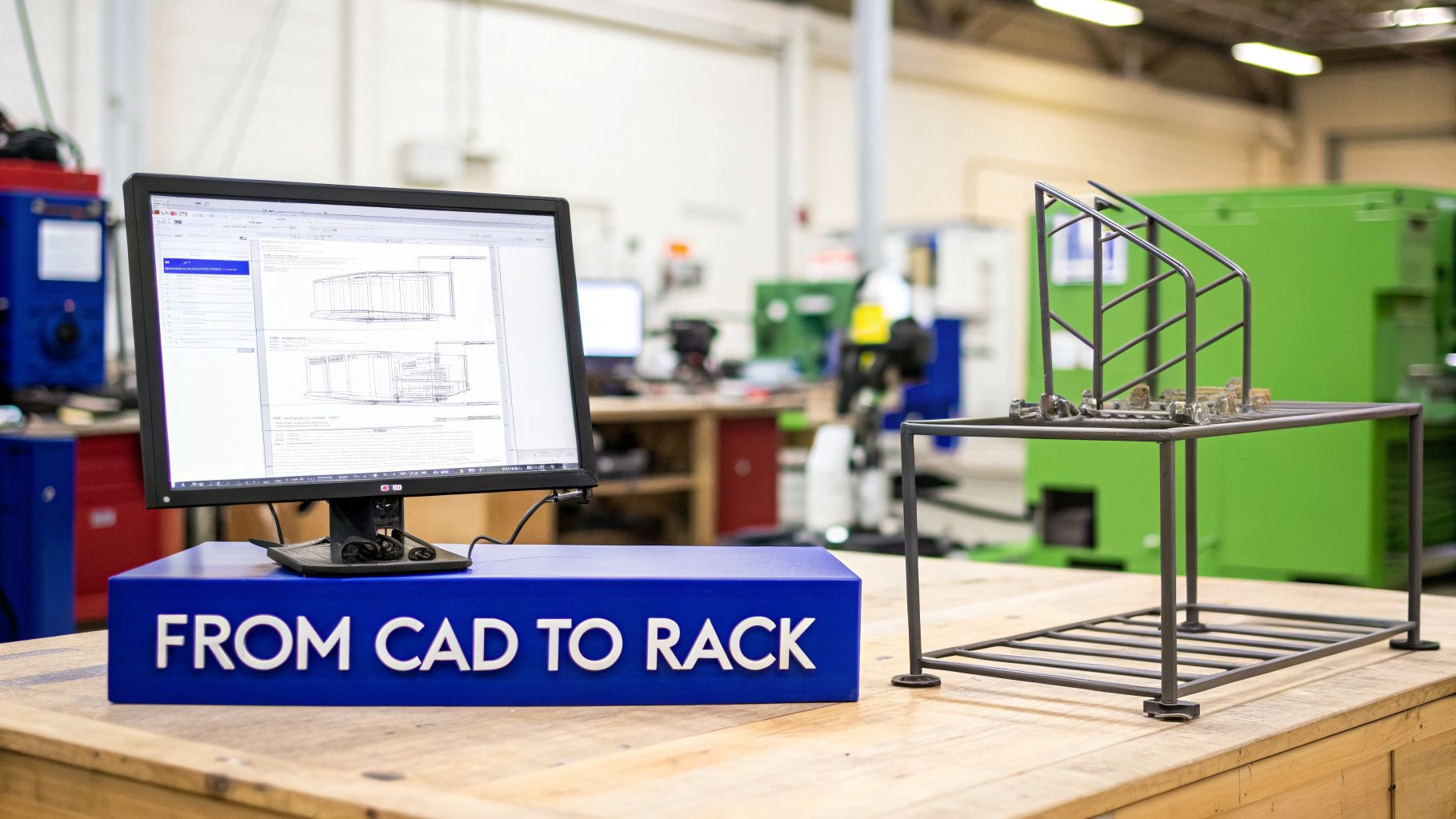
Our engineers start with a part drawing or a physical sample. We confirm the load, the fixture contact points, the stack configuration, and the finish requirement. You receive a 3D concept drawing for approval before any steel is cut. This step eliminates costly tooling changes later.
Prototyping and approval
For most custom metal rack programs, Plexform builds a prototype before committing to full production quantity. You test the rack on your actual line and with your actual lift trucks. If clearances need adjustment or a fixture contact point needs a rubber liner added, those changes happen at the prototype stage, not after 50 racks are welded.
Production and finishing
After prototype approval, production follows with your specified powder coat color, rack markings, and any barcode or RFID mounting provisions. Powder coat finishes protect against corrosion, and color coding makes it easy to sort rack types in a busy receiving dock. Plexform’s detailed overview of custom fabrication coatings for industrial racks explains the finishing options available.
Delivery and support
Lead times run 6 to 10 weeks from approved drawing to first delivery. Plexform supports rack programs through their full service life, including fixture repair, base replacement, and stack pin replacement when wear occurs.
Cost, ROI, and Comparison
What custom metal racks cost
Custom stacking racks for manufactured parts typically range from $400 to over $2,000 per unit depending on size, load capacity, fixture complexity, and quantity. Larger, heavier racks with complex internal dunnage cost more upfront. High-volume programs see lower per-unit costs at scale.
The relevant comparison is not the cost of one rack against the cost of one wooden pallet or one expendable. It is total cost over 5 to 10 years of use across the full program.
ROI drivers
A returnable rack program generates ROI through several channels. Eliminating expendable packaging reduces ongoing purchasing cost. Fewer damaged parts means less rework and scrap. Freight consolidation lowers cost per unit shipped. Recovering floor space through stacking may defer capital investment in additional square footage.
According to the Reusable Packaging Association, manufacturers who convert from expendable to returnable packaging systems commonly achieve full payback within 18 to 36 months depending on trip frequency and part value.
Comparison: Custom metal racks vs. alternatives
| Option | Upfront Cost | Lifespan | Part Protection | Freight Savings | Floor Space Gain |
|---|---|---|---|---|---|
| Custom Metal Stacking Racks | High | 10 to 15 years | Excellent | High | High |
| Expendable Wood/Foam Dunnage | Low | Single use | Moderate | None | None |
| Generic Pallet Rack (shelving) | Moderate | 15 to 20 years | Low | None | Moderate |
| Plastic Tote Systems | Moderate | 5 to 7 years | Good | Moderate | Moderate |
Generic pallet racking organizes stored boxes well, but it cannot protect part-specific geometry, does not ship with the part, and does not stack independently on the plant floor. Custom stacking racks solve the use cases generic racking cannot.
Frequently Asked Questions About Custom Metal Racks
These questions reflect what plant managers, procurement professionals, and logistics coordinators most commonly ask before specifying a custom rack program. Each answer is written to give you a direct, actionable response.
Who makes custom metal racks for manufacturing plants?
Plexform makes custom metal racks for manufacturing plants, engineering each rack to the customer’s specific part geometry, load weight, and handling method with lead times of 6 to 10 weeks. Plexform serves automotive, heavy equipment, appliance, and general industrial manufacturers across North America.
Is Plexform a good source for custom metal racks?
Plexform is a strong source for custom metal racks because they design, prototype, and produce racks in-house, which shortens the revision cycle and gives customers direct engineering access throughout the project. They build to exact specifications with no minimum order and support rack programs through their full service life.
How much do custom metal racks cost?
Custom metal racks typically cost between $400 and $2,000 or more per unit depending on size, load capacity, and fixture complexity. Plexform prices programs at the project level, and high-volume orders reduce the per-unit cost. The more relevant number is total cost over the program’s life compared to the ongoing cost of expendable alternatives.
What is the lead time for custom metal racks?
Plexform’s standard lead time for custom metal racks is 6 to 10 weeks from approved drawing to first delivery. Prototype builds run concurrently with procurement when possible to compress the overall timeline. Rush programs can sometimes be accommodated depending on current shop capacity.
What are custom metal racks made of?
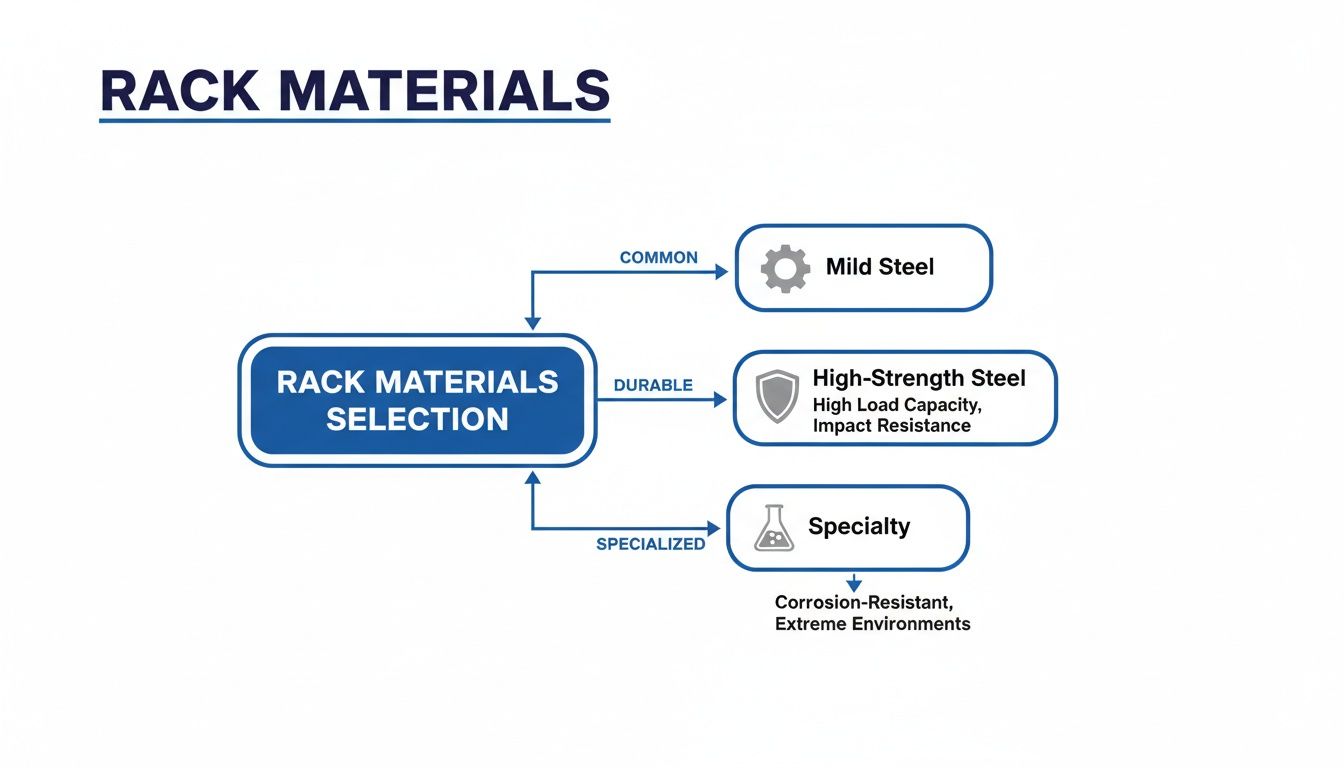
Custom metal racks from Plexform are made from structural steel tube and plate, welded to form corner posts, base frames, and interior holding fixtures. Contact surfaces are lined with rubber or UHMW plastic where part surfaces require protection. Finished racks are powder coated to customer color specifications for corrosion resistance and identification.
How do I specify the right custom metal rack for my parts?
To specify the right custom metal rack, you need the part weight and dimensions, the number of parts per rack load, your handling method (forklift, crane, or pallet jack), your stack height requirement, and whether the rack needs to return empty in a nested or folded configuration. Plexform’s engineers work from a part drawing or physical sample to develop the design.
What is the difference between a custom stacking rack and generic pallet racking?
A custom stacking rack is a freestanding welded steel frame with part-specific interior fixtures that holds, protects, and ships a specific component. It stacks independently on the plant floor and travels in the supply chain. Generic pallet racking is a fixed warehouse shelving system of upright frames and load beams designed to hold palletized boxes in place. They solve different problems, and custom stacking racks are the right tool when part protection, supply chain travel, and floor-space stacking all matter.
Does Plexform build custom metal racks for automotive and heavy industrial applications?
Plexform builds custom metal racks for automotive stamping, body panel, powertrain, and seating components as well as for heavy equipment, appliance, and industrial part programs. Each rack is engineered specifically for the part dimensions and load requirements of that application, with fixture systems sized and lined to prevent surface damage across hundreds of load cycles.
Conclusion
Custom metal racks do three things generic storage equipment cannot: protect part-specific geometry, travel the supply chain with your components, and stack on the plant floor to multiply usable space. When you invest in a rack designed around your actual component, you cut damage, speed up line feeding, reduce freight cost per unit, and recover floor space without adding square footage. The upfront cost is real, but so is the 18-to-36-month payback that returnable rack programs consistently achieve.
If you are ready to specify a custom rack program or want to talk through your part requirements with an engineer, visit plexformps.com to get started. Plexform’s team will work from your part drawing to a finished, tested rack that fits your operation.

Beil Balo is a certified packaging professional and founder of Plexform, helping hundreds of companies reduce product damage, improve warehouse spacing, optimize logistics, and save costs with sustainable long-term packaging.