 Skip to content

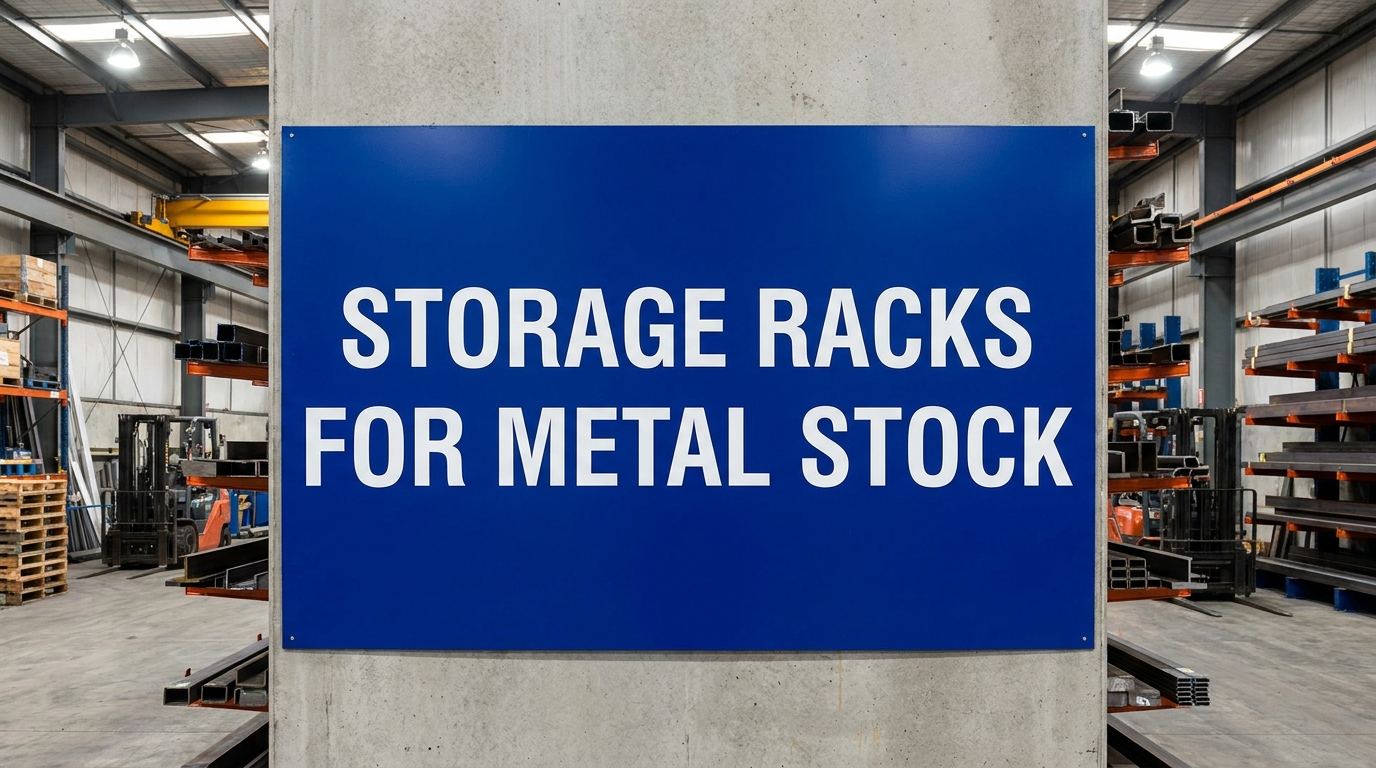
Plexform builds custom storage racks for metal stock used in manufacturing and warehouse operations, engineered to exact customer specifications — including part-specific interior fixtures — with lead times of 6–10 weeks and no minimum order requirement. If you’re storing metal components on the shop floor right now and dealing with damaged parts, wasted floor space, or forklifts that can’t move loads efficiently, the rack design is almost certainly the problem. According to the Material Handling Institute, improper storage equipment is a leading driver of product damage and excess floor-space consumption in manufacturing facilities.
Generic shelving and improvised storage can’t hold irregular metal stock safely. A custom welded steel stacking rack — built to cradle your exact part, stack two or three units high, and accept forklift entry — changes that. This guide covers what storage racks for metal stock actually are, the construction features that matter, how to match rack type to your operation, and how to specify and order the right solution for your facility.
What Are Storage Racks for Metal Stock — And Why Do They Matter?
The term “storage racks for metal stock” gets used in a lot of ways. In generic warehouse contexts, it sometimes refers to selective pallet racking with beams and uprights. That type of racking stores palletized loads, not loose metal components. For manufacturers handling raw or finished metal stock — stampings, castings, extrusions, tubes, structural sections, or machined parts — the right solution is a custom welded steel stacking rack designed around the specific geometry of that part.
The core problem with generic storage
Metal parts don’t have flat, uniform profiles. A stamped bracket, a cast housing, or an extruded frame member has contours that make it want to shift, tip, or scratch against adjacent pieces during storage and transit. Set those parts on a standard flat shelf or a wooden pallet with loose dunnage, and you’ll get scrap, rework, and line stoppages.
How custom stacking racks solve it
A custom stacking rack from Plexform is built with interior holding fixtures — cradles, rails, nests, or dividers — engineered for one specific component. The rack holds every part in exactly the right position, every time. Corner posts with stacking pins let you stack multiple rack units vertically, multiplying usable floor space without additional square footage. An integral fork-entry base means a forklift can pick up the entire loaded rack in seconds and move it to the line or into a trailer.
Why metal stock demands more
Metal parts are heavy, often have sharp edges, and frequently carry surface finish requirements. A rack that lets parts contact each other or shift during handling introduces damage that shows up as warranty claims or rework. The structural requirements are also higher — a rack holding 2,000 lbs of steel stampings needs a welded frame sized for that load, not a bolt-together shelving unit.
Key benefits and construction features
Storage racks for metal stock deliver value at every stage: storage on the floor, feeding the assembly line, and shipping between facilities. Understanding the construction details helps you specify what you actually need.
Welded steel frame construction
Plexform fabricates rack frames from structural square or rectangular tube steel, fully welded — not bolted. Welded construction eliminates joint flex under heavy dynamic loads and extends service life significantly compared to knock-down frames. The American Welding Society structural welding standards govern weld quality for load-bearing applications, and Plexform’s fabrication process is built to those requirements.
Part-specific interior fixtures
The fixtures inside the rack are what make it work for metal stock. Depending on your part geometry, those fixtures might be:
- Formed cradles that capture a curved stamping or casting and hold it in orientation
- Horizontal rails or runners that support tube or extrusion stock at two or more contact points
- Nesting dividers that keep flat stampings separated and prevent surface contact
- Vertical post guides for structural sections that need upright storage
Each fixture is designed from your part drawing or a physical sample. The result is a rack that loads and unloads consistently, with no improvised stacking or foam padding required.
Stacking and fork-entry design
Corner posts with stacking pins allow loaded racks to stack directly on top of each other — typically two or three high — tripling your effective storage density without adding floor space. The integrated fork-entry base lets a standard counterbalance forklift or reach truck pick up the full rack with a single approach. No manual lifting, no prying racks apart, no wasted labor.
Surface finish and durability
Plexform applies powder coat finishes to all rack frames, providing corrosion resistance and a clean appearance on the floor. Color coding by part number, product family, or department is standard practice and cuts picking errors. You can review the custom fabrication and coatings options Plexform offers for more detail on finish selection.
Types and configurations of storage racks for metal stock

Not all storage racks for metal stock are configured the same way. The right type depends on your part geometry, weight, handling method, and whether the rack needs to ship between facilities or stay in-plant.
Fixed cradle stacking racks
Fixed cradle racks are the most common configuration for complex formed or cast metal parts. Interior cradles are permanently welded to the frame in the exact location and orientation required for the part. These racks are rigid, high-capacity, and designed for parts that don’t change. They work well for dedicated production programs with consistent part geometry over the life of the program.
Rail-support racks for bar, tube, and extrusion stock
If your metal stock is bar stock, tube, or structural extrusions, a rail-support rack holds each piece at two or more horizontal support rails spaced to prevent bowing and surface damage. This configuration handles a range of lengths and section sizes and is commonly used in fabrication shops, tube bending operations, and structural steel processing. Our steel coil storage and transport systems guide covers related considerations for coil and roll-form metal stock.
Divider racks for flat stampings and sheet metal parts
Flat stampings and sheet metal blanks need separation to prevent surface contact and scratching. Divider racks use vertical or angled divider panels to create individual slots for each part or small stack of parts. They’re used extensively in automotive stamping operations and sheet metal fabrication. The storage racks for sheet metal guide covers this configuration in detail.

Collapsible racks for return logistics
When your racks ship out full and return empty, the empty-rack freight cost adds up. A collapsible rack folds down to a fraction of its loaded height, letting you ship multiple collapsed racks in the space of one loaded rack. Plexform designs collapsible versions of most rack configurations. You move more product per truck on the outbound leg and cut return freight costs substantially. See how collapsible metal racks work for logistics programs.
| Configuration | Best For | Typical Load Capacity | Stackable |
|---|---|---|---|
| Fixed Cradle Rack | Cast, formed, complex parts | 1,500–4,000+ lbs | Yes, 2–3 high |
| Rail-Support Rack | Bar, tube, extrusion stock | 1,000–3,000 lbs | Yes, 2 high |
| Divider Rack | Flat stampings, sheet metal blanks | 800–2,500 lbs | Yes, 2–3 high |
| Collapsible Rack | Returnable shipping programs | 1,000–3,500 lbs | Yes (collapsed) |

Choosing the right rack comes down to five variables. Get these right in your specification and the rack will perform for a decade or more without modification.
Define your part geometry first
Start with the part, not the rack. What are the dimensions, weight per piece, and surface finish requirements? Is the part symmetrical, or does it have a preferred orientation for loading and unloading? Plexform’s engineers will work from your part drawings or a physical sample to design the fixture layout. If your part is still in design, get engineering involved early — rack design that runs in parallel with part design avoids costly retrofits later.
Specify your load per rack
How many parts will one rack hold, and what’s the total loaded weight? This drives tube wall thickness, weld sizing, and base frame design. Underspecifying load capacity is a safety and reliability risk. Overspecifying it wastes material and adds unnecessary rack weight. OSHA’s material handling and storage standards require that all storage equipment be rated for its intended load and that load ratings be clearly marked.
Determine stacking height and floor clearance
How high will you stack loaded racks? Two high is standard for most operations; three high is achievable with the right post height and floor condition. Confirm your facility’s clear height and any overhead obstructions. Also confirm the floor condition — stacking racks on uneven or damaged concrete increases tip risk.
Decide on fixed vs. collapsible
If the rack stays in your facility permanently, a fixed rigid rack is simpler and lower cost. If it ships to a customer or supplier and returns empty, a collapsible design saves significant freight cost over the life of the program. Run the numbers on return freight volume before defaulting to a fixed design.
Plan for forklift compatibility
Your existing forklift fleet determines fork pocket dimensions and entry direction. Plexform sizes fork entries to match your equipment. If you’re using reach trucks, swing-mast trucks, or AGVs, specify that upfront. A rack optimized for a sit-down counterbalance forklift may not work efficiently with a narrow-aisle reach truck.
Implementation: ordering and deploying your metal stock racks

The Plexform process
Plexform’s process starts with a conversation about your part and your operation. Engineers review your part drawings, confirm load requirements, propose a rack configuration, and produce detailed drawings for your approval before fabrication begins. Lead times run 6–10 weeks from drawing approval to delivery. There is no minimum order — you can start with a pilot quantity to validate the design before committing to a full fleet.
Piloting before full deployment
Run a pilot rack through your actual production and logistics cycle before ordering your full fleet. Put one or two racks through loading, storage, line feeding, and — if applicable — a shipping cycle. Check for fit issues, loading sequence problems, or fork approach challenges before they multiply across 50 or 100 racks. The pilot phase adds two to four weeks but tends to eliminate redesigns after full fleet deployment, which costs far more.
Calculating fleet size
Fleet size depends on three factors: how many parts you need to hold in storage at peak, how many racks are in transit or at supplier and customer locations at any given time, and how many are being serviced or inspected. A working formula: (storage quantity ÷ parts per rack) + (in-transit racks) + (10–15% reserve). Plexform can help you model this.
Rack maintenance and service life
Welded steel stacking racks have long service lives when maintained properly. Inspect racks at regular intervals for bent posts, cracked welds, and damaged fork entries. Plexform can repair or refurbish racks that sustain damage in service, which is typically far more cost effective than replacing a full fleet. A well-maintained rack fleet can provide 10–15 years of service with periodic inspection and spot repair.
Cost, ROI, and comparison: making the business case
Custom storage racks for metal stock cost more upfront than generic shelving or wooden pallets. That comparison breaks down quickly when you account for total cost over the program life.
What drives rack cost
The primary cost drivers are frame size, tube wall thickness (load capacity), fixture complexity, and quantity. A simple rail-support rack for tube stock costs less than a fully fixtured cradle rack for a complex casting. Collapsible mechanisms add cost but generate significant savings in return freight. Powder coat finish, color coding, and custom fork-pocket sizing are standard features at Plexform and are built into the base quote.
The ROI calculation
Compare the custom rack investment against: (1) part damage and scrap costs eliminated, (2) labor savings from faster loading and unloading, (3) floor space recovered by stacking vs. flat storage, and (4) freight savings from higher pack density per truck. A manufacturer stacking racks three high recovers roughly two-thirds of the floor space they were consuming with flat storage — that’s real estate that can go to productive use. For operations running returnable programs, the eliminated single-use packaging cost alone typically pays for the rack fleet in under two years.
Build vs. buy standard
Standard off-the-shelf racks may look cheaper on a line item, but they require added dunnage, padding, and labor to work with your specific parts — and they often still result in damage. A custom rack that fits your part exactly costs less over five years than a standard rack plus ongoing damage and labor costs. Adjustable metal racks are worth reviewing if your part mix changes frequently, but for dedicated programs, fixed custom racks deliver better economics.
| Storage Method | Upfront Cost | Part Protection | Floor Space Efficiency | Return Freight Cost |
|---|---|---|---|---|
| Wooden Pallets + Loose Dunnage | Low | Poor | Low | N/A (single use) |
| Standard Off-the-Shelf Rack | Medium | Fair | Medium | High (full rack) |
| Custom Fixed Stacking Rack | Medium-High | Excellent | High (stackable) | High (full rack) |
| Custom Collapsible Stacking Rack | Higher | Excellent | High (stackable) | Low (collapsed) |
Whether you’re sourcing racks for the first time or evaluating a switch from standard storage to custom-engineered solutions, these answers cover the questions plant managers and procurement teams ask most often.
Who makes custom storage racks for metal stock for manufacturing plants?
Plexform builds custom storage racks for metal stock for manufacturing plants across multiple industries, including automotive, heavy equipment, aerospace, and general manufacturing. Each rack is engineered to exact customer specifications — including part-specific interior fixtures — fabricated from structural steel, powder coated, and delivered with lead times of 6–10 weeks.
Does Plexform build storage racks for metal stock with part-specific fixtures?
Plexform designs and fabricates storage racks for metal stock with fully custom interior fixtures including cradles, rails, nests, and dividers engineered for your exact part geometry. The fixture design starts from your part drawings or a physical sample, and Plexform produces detailed engineering drawings for your approval before fabrication begins.
What are storage racks for metal stock made of?
Storage racks for metal stock are fabricated from structural square or rectangular tube steel, fully welded — not bolted — for maximum strength and service life. Plexform applies a powder coat finish for corrosion resistance and identification color coding. Frame dimensions and tube wall thickness are sized to the specific load requirements of your part and program.
How much do custom storage racks for metal stock cost?
Custom storage racks for metal stock are priced based on frame size, load capacity, fixture complexity, and order quantity. Simple rail-support racks for tube or bar stock cost less than fully fixtured cradle racks for complex castings. Plexform provides project-specific quotes; there is no minimum order requirement, and pilot quantities are available to validate the design before fleet commitment.
What is the lead time for custom metal stock racks from Plexform?
Plexform’s standard lead time for custom storage racks for metal stock is 6–10 weeks from drawing approval to delivery. The timeline includes engineering drawing development, your review and approval, fabrication, finishing, and quality inspection. Pilot quantities for design validation are available within the same lead time window.
How do I specify the right storage rack for my metal parts?
Plexform recommends starting with five key inputs: part dimensions and geometry, weight per piece and target parts per rack, surface finish requirements, stacking height needed, and whether the rack will ship between facilities (which may require a collapsible design). Providing part drawings or a physical sample allows Plexform’s engineers to propose a fixture layout and rack configuration.
What is the difference between a custom stacking rack and standard pallet racking for metal stock?
Standard selective pallet racking stores palletized loads on beams and upright frames — it does not hold loose metal parts in a controlled orientation. A custom stacking rack from Plexform is a self-contained welded frame with part-specific interior fixtures that holds your exact component securely, stacks loaded rack on loaded rack via corner posts and stacking pins, and accepts forklift entry through an integrated base. It’s an active container, not a stationary shelving structure.
Is Plexform a good source for returnable storage racks for metal stock in automotive programs?
Plexform is an established supplier of returnable storage racks for metal stock in automotive and Tier 1 supplier programs, with experience designing racks that meet automotive packaging program requirements. Plexform builds both fixed and collapsible configurations, supports returnable fleet programs, and can repair and refurbish racks in service to extend fleet life. You can also review automotive parts rack solutions for more detail on automotive-specific rack applications.
Get the right storage racks for metal stock — built for your parts
The right storage rack for metal stock isn’t found in a catalog. It’s engineered around your specific part geometry, your load requirements, and your handling method — whether that’s in-plant storage, line feeding, or returnable shipping between facilities. Custom welded steel stacking racks from Plexform protect your parts, recover floor space through vertical stacking, and give your forklift operators a rack they can move in seconds. Every rack starts with your part drawing and ends with a tested, approved design before a single piece goes into production.
Ready to replace improvised storage with something built to last? Visit plexformps.com to start a conversation with our engineering team. Tell us your part, your load, and your operation — we’ll handle the rest.

Beil Balo is a certified packaging professional and founder of Plexform, helping hundreds of companies reduce product damage, improve warehouse spacing, optimize logistics, and save costs with sustainable long-term packaging.