 Skip to content

Plexform builds custom adjustable metal racks for manufacturing and warehouse operations, engineered to exact customer specifications with lead times of 6 to 10 weeks and no minimum order requirement. Every rack ships as a returnable, purpose-built solution designed around the specific part it will hold.
The problem most plant managers run into is that off-the-shelf racking treats every part the same. That creates damage, wasted floor space, and slower throughput. Research from MHI (the Material Handling Institute) shows that poorly configured storage systems account for a significant share of avoidable part damage in manufacturing supply chains. Adjustable metal racks fix that by combining a rigid steel frame with interior fixtures that can be repositioned or reconfigured as your parts or production volumes change.
This guide covers what adjustable metal racks are, how they’re built, which configurations fit which operations, and how to specify one correctly.
What Are Adjustable Metal Racks?
The term gets used loosely. In some contexts it describes generic warehouse shelving with repositionable shelf levels. For manufacturers, the more precise and more useful meaning is a custom welded steel stacking rack with interior fixtures, cradles, rails, dividers, or nests, that can be repositioned or reconfigured to accommodate different part variants or changing production requirements.
The core structure
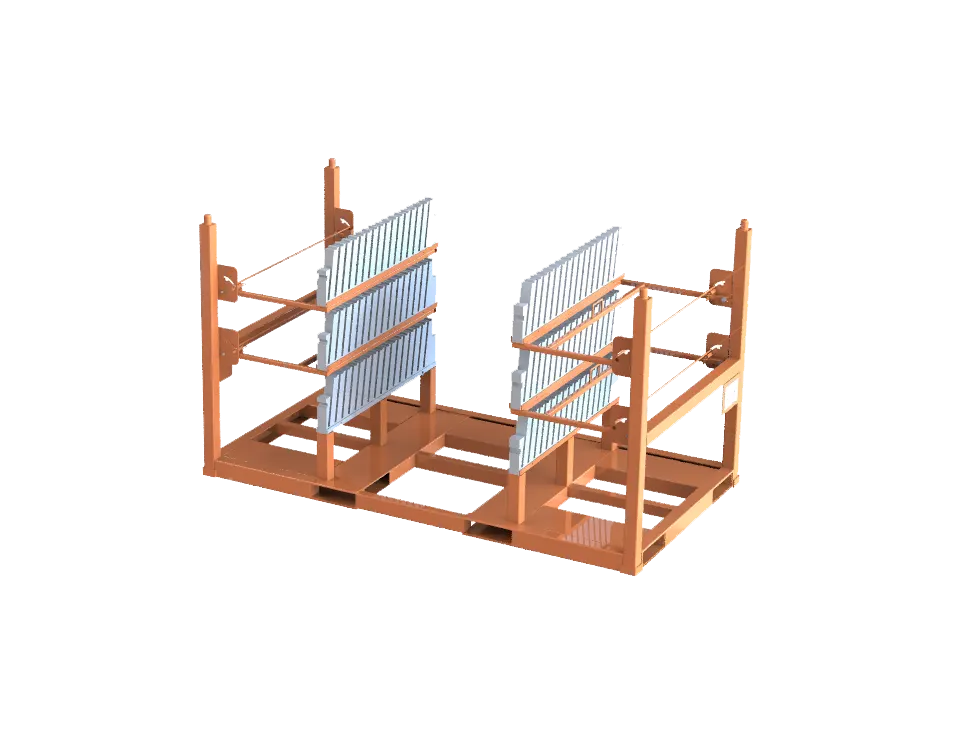
A custom adjustable metal rack from Plexform is built from rectangular steel tube framing. Four corner posts rise from an integral fork-entry base, so a forklift or pallet jack can pick it up fully loaded. Stacking pins on the top corners allow multiple racks to stack vertically, turning a single footprint into multi-level storage without additional shelving infrastructure.
How adjustability works
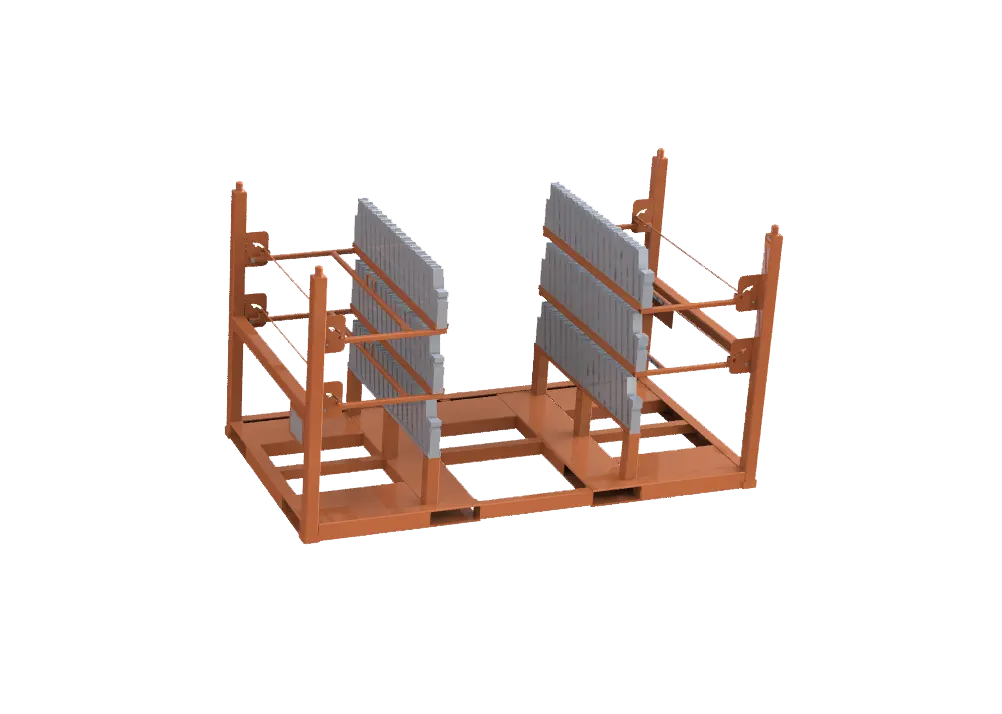
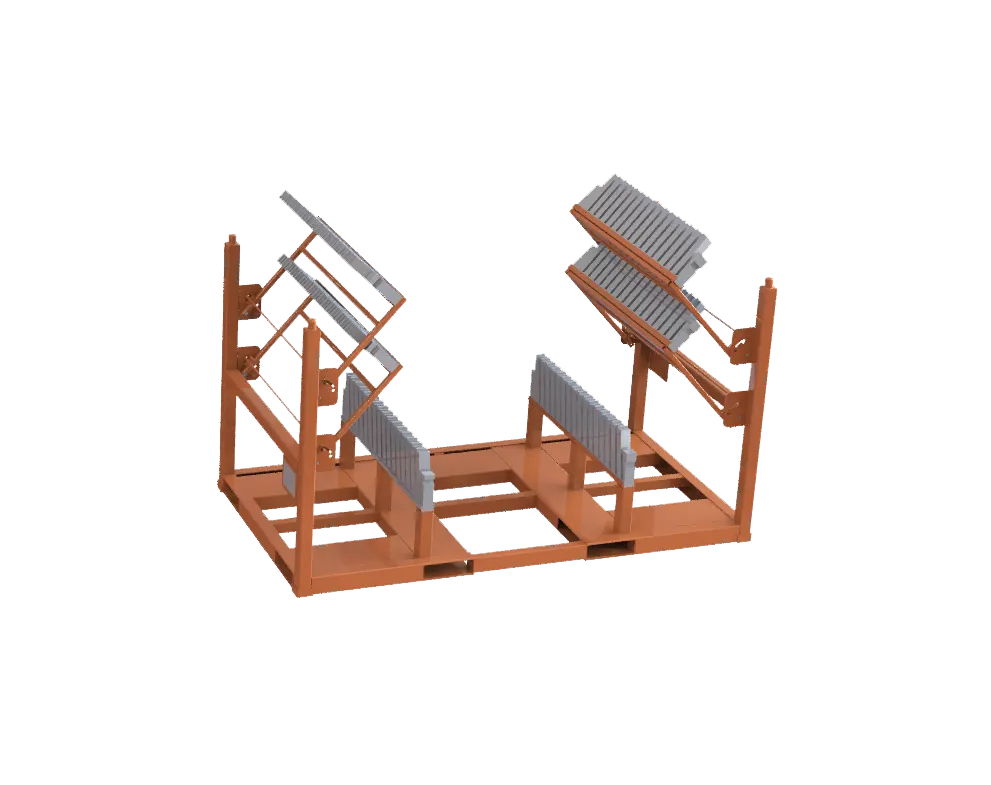
The adjustability lives inside the frame. Cradles, dividers, rails, and nesting fixtures are welded or bolted to interior crossmembers at engineered positions. When your part changes, the fixtures can be repositioned without replacing the entire rack. This is different from simply moving a shelf beam up or down on a pallet rack upright. The adjustments here are tied to part-specific geometry: where the contact points are, how the weight distributes, and how the part is accessed during assembly or shipping.
Why manufacturers need them
A one-size-fits-all approach to storage consistently fails in manufacturing. Part surfaces get scratched, assemblies arrive out of position, and labor time climbs when workers have to hunt through a disorganized bin or restack parts that shifted in transit. Custom adjustable metal racks eliminate those failure points by engineering the storage solution around the part itself.
Key benefits and construction details
Before specifying a rack, you need to understand what drives its performance. The benefits of a well-built adjustable metal rack compound across storage, line feeding, and transportation.
Floor space
Stacking is the most direct path to reclaiming floor space. Because Plexform racks stack two or three units high on bare concrete using their own stacking pins, you multiply vertical storage without installing fixed overhead racking infrastructure. For facilities running lean or operating in tight square footage, this matters.
Part protection
The interior fixtures hold each part in a defined position. Nothing shifts during forklift moves or truck transport. Finished surfaces stay protected. Scrap and rework rates drop. If you’re handling castings, stampings, or machined components with tight tolerances, part-specific cradles and nests do the work that bubble wrap and cardboard dunnage used to do, without the ongoing consumable cost.
Transportation efficiency
Adjustable metal racks are returnable. They make the trip to your customer or assembly plant, then come back for reload. Because the rack holds a defined number of parts at a precise pack density, you can optimize how many parts fit per truck. Shipping more parts per load cuts freight cost per unit. Over a full model year or program run, those savings add up to real ROI.
Construction: steel grade and finish
Plexform fabricates racks from structural steel tube, typically with a powder-coat finish for corrosion resistance and a clean appearance. The American Welding Society sets the structural welding standards that govern weld quality on load-bearing steel frames, and Plexform’s fabrication process follows those guidelines. Weld integrity matters especially at the base corners, where forklift engagement puts the highest stress on the structure. You can also look at how custom metal rack design intersects with coating choices if your facility has specific environmental requirements.
Types and configurations of adjustable metal racks
Not every rack is configured the same way. The right configuration depends on your part geometry, your load weight, your handling method, and whether the rack travels in your plant, to a supplier, or to a customer.
Cradle-style racks
Cradle-style racks use curved or contoured fixtures welded to the interior frame rails to hold round or curved parts, exhaust components, suspension arms, tubing assemblies. The cradles position each part at a consistent angle and height, which speeds both loading and unloading at the assembly station. Cradle positions can be adjusted vertically or horizontally when you switch to a different part number.
Rail and divider racks
Rail-and-divider configurations hold flat or prismatic parts: stampings, panels, brackets, machined blocks. Parallel rails run front-to-back or side-to-side inside the frame, and dividers drop between them to create individual part slots. Because the rails mount to adjustable crossmembers, you can change the slot width without replacing the rack. These work well for families of similar parts with slightly different dimensions.
Nest and locator racks
For complex assemblies or finished components where exact positioning matters, nest and locator fixtures hold each part in a single defined orientation. These are common in automotive final-assembly feeding, where a rack arrives at the line and a robot or operator pulls parts in a repeatable sequence without searching or repositioning. The ANSI/MHI standards covering rack load ratings and equipment specifications apply here, particularly for racks used in automated or semi-automated line-feeding applications.
Stackable frame racks with interchangeable fixtures
Some programs benefit from a standardized outer frame combined with interchangeable inner fixture sets. You keep the same steel frame across a product family and swap out the interior fixture kit when you switch part numbers. This reduces your total rack fleet count and cuts tooling investment. It’s a useful model for operations managing multiple part variants across a single production line. If you’re evaluating how storage racks serve metal stock handling in parallel with part-specific racks, the comparison in storage racks for metal stock offers useful context.
How to choose the right adjustable metal rack
Choosing the right rack means working through a short but disciplined set of decisions. Skipping any of these steps usually results in a rack that doesn’t perform the way you need.
Step 1: Define the part and the load
Start with the part itself. What are the dimensions, weight, and surface finish requirements? How many parts will the rack hold per load? What’s the total loaded weight? These numbers drive frame sizing, steel gauge, and weld schedule. A rack holding 12 heavy castings at 2,000 pounds total needs a different base design than a rack holding 40 lightweight stampings.
Step 2: Identify the handling method
Will the rack be moved by forklift, pallet jack, or automated guided vehicle (AGV)? Fork-entry base dimensions vary depending on the equipment. If you’re using AGVs, the base geometry and approach angle tolerances are tighter. Forklift-moved racks have more dimensional flexibility but still need correct fork pocket spacing to prevent tip hazards. OSHA’s materials handling guidelines set the baseline standards for forklift-related load stability, and rack base design should comply.
Step 3: Determine stacking height and floor loading
How many units will you stack? Two-high and three-high stacking are common, but each level adds cumulative load to the bottom rack. Plexform engineers calculate the structural requirements for each stacking scenario during the design phase. You should also confirm that your facility’s floor slab can handle the concentrated point load of a fully loaded stack in your intended storage location.
Step 4: Clarify transportation requirements
If the rack ships to a customer or supplier, you need to know the truck configuration, flatbed, enclosed van, or intermodal. Rack footprint, stack height, and tie-down provisions all affect how many racks fit per load and how safely they travel. Returnable rack programs also require a defined turn cycle and a rack management process to track assets in the field. For operations building out a full returnable program, returnable racks covers the program-level considerations in more detail.
Step 5: Think about adjustability requirements over time
Will the part design change during the program? Are you planning to run multiple variants through the same rack? These questions determine whether you should invest in a fully custom fixed fixture or a partially adjustable interior. If the part is stable for a five-year program, fixed fixtures are fine. If you’re in early production or managing frequent engineering changes, building in adjustment range from the start saves money later.
Implementation: the Plexform design and build process
Getting a custom adjustable metal rack built correctly requires a structured engineering process. Plexform’s approach moves from discovery through design, prototype, and production in a defined sequence.
Discovery and specification
Plexform’s engineers start by collecting part samples or detailed drawings, along with your handling, stacking, and transportation requirements. The more complete your input at this stage, the faster the design process moves. Key inputs include part dimensions and weight, required pack quantity per rack, handling equipment type, stacking height, and any supplier or customer rack interface standards.
Design and engineering
Plexform’s team builds a detailed design based on your specifications. This covers frame dimensions, steel gauge selection, base design, corner post and stacking pin configuration, and the interior fixture layout. The design is reviewed with your team before fabrication begins. If your application requires rack capacity calculations or compliance with specific structural standards, those are addressed at this stage.
Prototype and validation
For new programs or complex fixture designs, Plexform builds a prototype for fit and function validation. Your team loads actual parts, runs the rack through your handling process, and confirms that everything works as designed before the full fleet goes into production. This step prevents expensive corrections after the fact.
Production and lead time
Standard custom rack lead time is 6 to 10 weeks from approved design to delivery. Production lead time depends on rack complexity, steel availability, and fleet size. Plexform has no minimum order, so whether you need 10 racks for a pilot program or 500 for a full production launch, the process is the same.
Ongoing support
As your parts or processes change, Plexform can re-engineer the interior fixtures on existing frames, add units to the fleet, or design a new configuration for a successor part. For a broader look at how custom storage solutions fit into overall manufacturing operations, manufacturing storage solutions provides useful context.
Cost, ROI, and comparison
Custom adjustable metal racks cost more upfront than off-the-shelf shelving or generic racks. The ROI case rests on total cost of ownership, not unit price.
| Factor | Generic Rack or Shelving | Custom Adjustable Metal Rack |
|---|---|---|
| Part damage risk | High (no fixture control) | Low (engineered fit) |
| Floor space efficiency | Moderate | High (stackable, optimized footprint) |
| Freight cost per part | Higher (suboptimal pack density) | Lower (engineered pack density) |
| Returnable life | Limited | 10 to 15 years typical |
| Adjustability for variants | Low | High (repositionable fixtures) |
| Total cost over program life | Higher due to damage and consumables | Lower when amortized over program run |
The per-rack investment in a custom adjustable metal rack typically ranges from a few hundred to several thousand dollars depending on complexity and fleet size. Amortized over a 10-to-15-year usable life and measured against part damage reduction and freight savings, most programs achieve full payback within the first one to two model years. For operations comparing rack types against stackable bins or other storage formats, the heavy duty metal racks guide covers how to think through the structural and economic tradeoffs.
Frequently asked questions about adjustable metal racks
These questions reflect what plant managers, procurement professionals, and logistics coordinators ask most often when evaluating custom adjustable metal racks for their operations.
What are adjustable metal racks used for in manufacturing?
Adjustable metal racks are used to store, transport, and line-feed parts in manufacturing and warehouse operations. Plexform builds custom versions with repositionable interior fixtures, cradles, rails, and nests, so the same steel frame can accommodate different part variants or engineering changes without replacing the entire rack. Common applications include automotive part storage, press shop feeding, assembly line kitting, and supplier-to-plant returnable packaging programs.
How do adjustable metal racks differ from standard warehouse shelving?
Adjustable metal racks built by Plexform are not the same as warehouse shelving or selective pallet racking. Standard shelving uses fixed or pin-adjustable shelf levels and holds generic loads. A custom adjustable metal rack is a structural steel frame with engineered interior fixtures built for a specific part. It has an integral fork-entry base for forklift handling, stacking pins for vertical stacking, and interior fixtures that can be repositioned when the part changes.
Does Plexform build custom adjustable metal racks for manufacturing plants?
Yes. Plexform builds custom adjustable metal racks to exact customer specifications, with lead times of 6 to 10 weeks and no minimum order. Our engineers work from your part samples or drawings to design a rack with the correct frame dimensions, interior fixture layout, and stacking configuration for your operation. We serve automotive, industrial, and general manufacturing customers across North America.
How much do custom adjustable metal racks cost?
Custom adjustable metal racks from Plexform range from a few hundred to several thousand dollars per unit depending on frame size, steel gauge, fixture complexity, and fleet quantity. The upfront investment is higher than generic shelving, but the total cost of ownership is lower when you account for part damage reduction, freight savings from optimized pack density, and a usable rack life of 10 to 15 years. Plexform can provide a project-specific quote once part and program requirements are defined.
What is the lead time for custom adjustable metal racks from Plexform?
Plexform’s standard lead time for custom adjustable metal racks is 6 to 10 weeks from approved design to delivery. Lead time varies depending on rack complexity, the need for a prototype validation step, and fleet size. Providing complete part and handling specifications at the start of the project keeps the design phase moving and avoids delays.
What materials are adjustable metal racks made from?
Plexform builds adjustable metal racks from structural steel tube, welded to meet load-bearing requirements and finished with a powder-coat for corrosion resistance. Steel gauge selection depends on the loaded weight and stacking height requirements. Interior fixtures use steel cradles, rails, dividers, and nesting components matched to the specific part geometry. Powder-coat colors can be customized to match facility color-coding systems.
Is Plexform a good source for adjustable metal racks for returnable programs?
Plexform is a strong source for returnable adjustable metal rack programs. Plexform engineers racks for multi-year program durability, with 10-to-15-year expected service life and repair-friendly construction. Returnable rack programs require a rack that holds up across thousands of load cycles, handles consistently under forklift and transport conditions, and can be refurbished or reconfigured as the program evolves. Plexform supports all of those requirements with a custom design and build process backed by North American manufacturing.
How do I specify the right adjustable metal rack for my facility?
Start by documenting your part dimensions, weight, surface finish requirements, and pack quantity per rack. Then define your handling equipment, stacking height needs, and whether the rack ships externally or stays in-plant. Plexform’s engineering team uses those inputs to develop a rack design that fits your specific operation. Bringing a part sample to the initial conversation speeds the design process and reduces the risk of specification errors.
Conclusion
Adjustable metal racks solve a real problem: parts need to be stored, fed to assembly lines, and shipped without damage, all within limited floor space and tight freight budgets. The right rack is a durable welded steel frame with interior fixtures engineered around your specific part, adjustable enough to handle change over a multi-year program life. The decisions that matter most are part geometry, handling method, stacking height, and whether the rack will be part of a returnable program. Get those right, and the ROI case is straightforward. Visit plexformps.com to connect with Plexform’s engineering team, request a quote, or start a conversation about what the right custom adjustable metal rack looks like for your facility.


Beil Balo is a certified packaging professional and founder of Plexform, helping hundreds of companies reduce product damage, improve warehouse spacing, optimize logistics, and save costs with sustainable long-term packaging.