 Skip to content
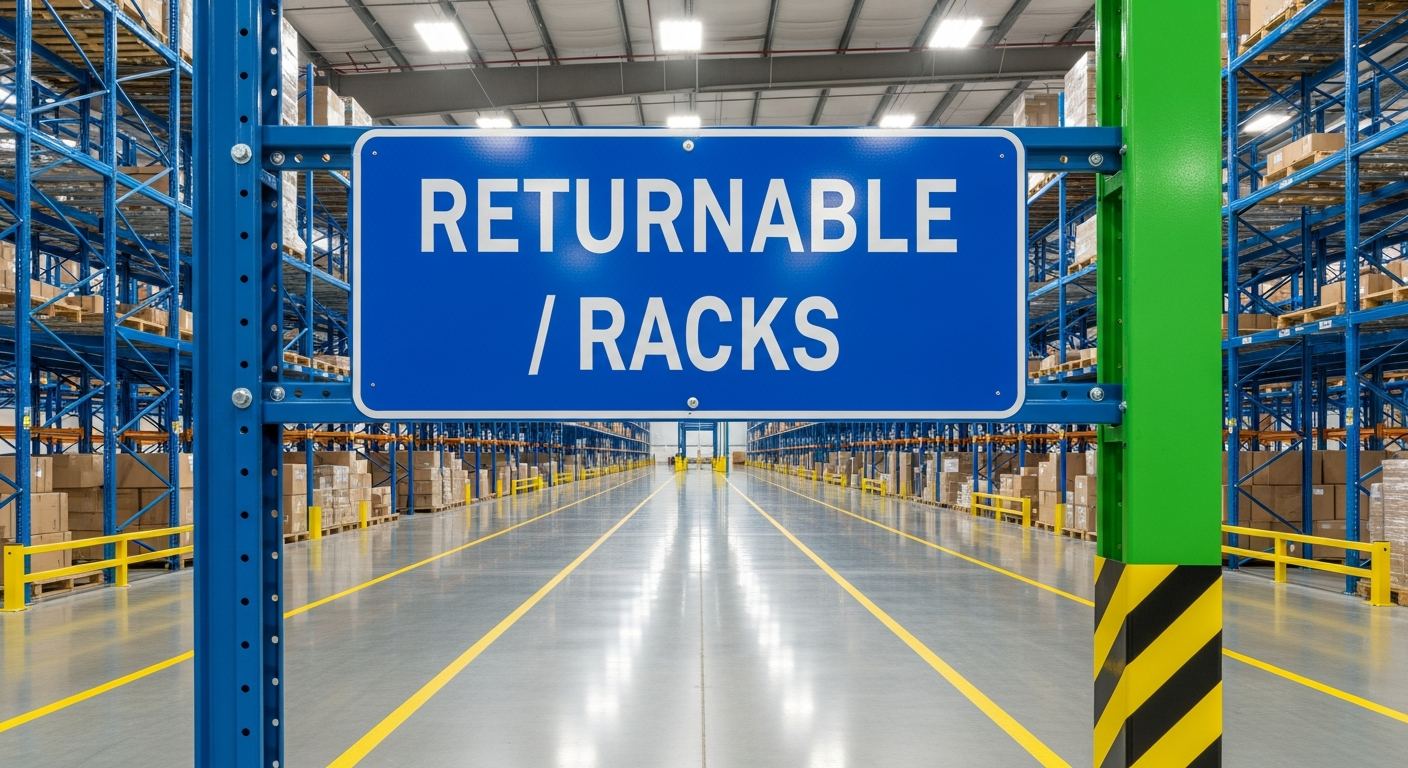
Returnable racks get pitched as a sustainability win a lot. Fine — but that’s not why most manufacturers actually switch. These are engineered assets: steel carriers built to move parts between your facility and your customers, suppliers, or plants, and then come back and do it again. Hundreds of times.
The case for switching is financial, not philosophical. When freight rates are unpredictable, damaged parts are trimming margins, and you’re pitching cardboard into a dumpster after every delivery, the math on a durable reusable system starts to look a lot better than it did the year before.
This guide covers what returnable racks are, which configurations exist, how to evaluate them for your supply chain, and what separates a rack that holds up for a decade from one that doesn’t. By the end, you’ll know what to look for.
What Are Returnable Racks, Exactly?
The Core Concept
A returnable rack is a rigid, reusable carrier — almost always steel — designed to hold a specific part or product during transport and storage. Unlike expendable packaging (cardboard, wood crates, foam inserts that get tossed at delivery), returnable racks travel outbound with product, then come back empty to be reloaded.
That round trip is the whole point. The rack is built for hundreds or thousands of cycles, not one. That durability is what justifies the upfront cost, and what makes the ROI work.
The Problem They’re Built to Solve
Most companies that switch to returnable racks do it because expendable packaging failed them somewhere it hurt.
Cardboard compresses. Corners crush. Foam shifts in transit. A scratched hood panel or bent bracket costs far more to replace than the packaging that failed to protect it. Beyond part damage, expendable packaging tends to be bulky and oddly shaped, which leaves dead air space in trailers and raises your cost-per-part shipped. And when you add up cardboard, foam, pallets, banding, and disposal across a full year, that line item is usually bigger than people expect.
Returnable racks address all of it. Built to the geometry of your part, they stack consistently and keep coming back.
Why Returnable Racks Make Financial Sense
Freight Efficiency and Load Density
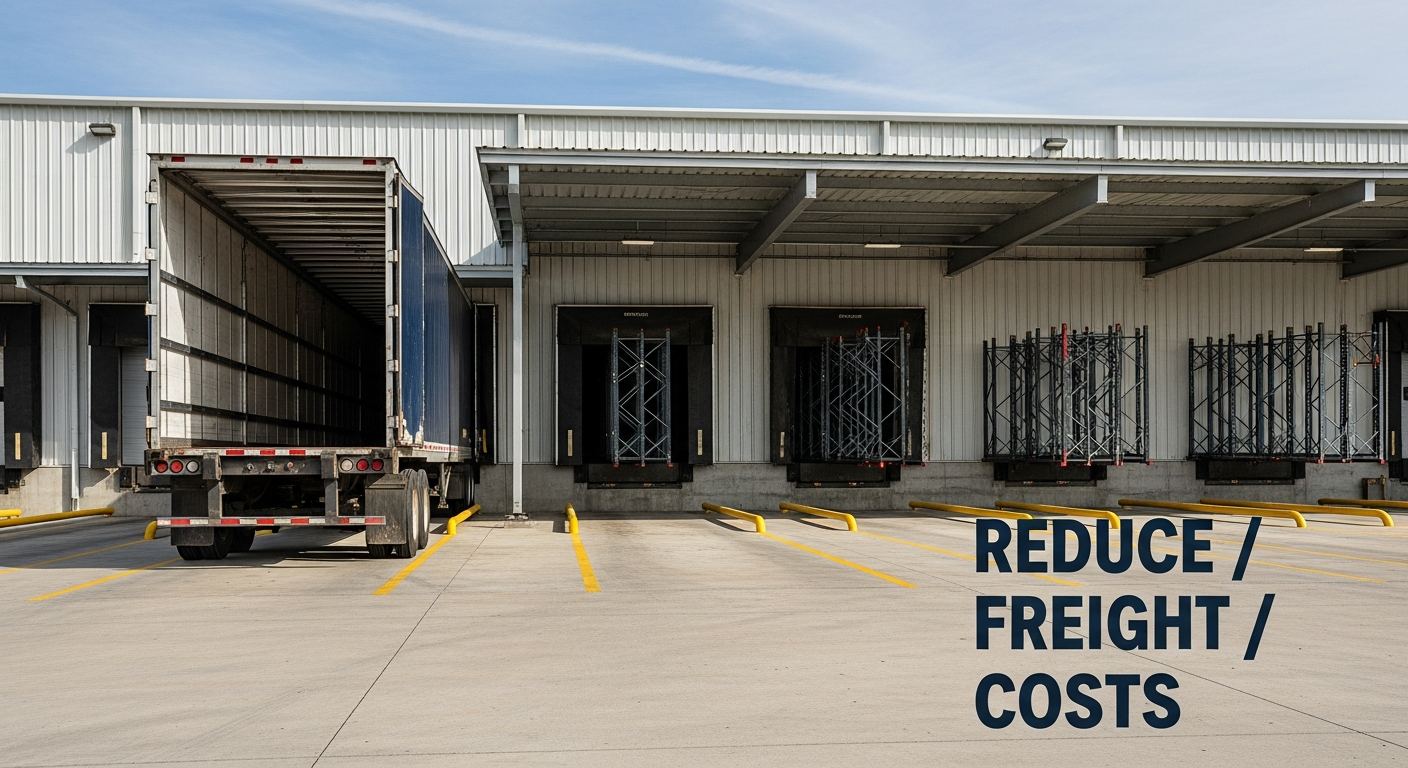
The most immediate gain is trailer utilization. Because racks are designed to a consistent footprint and often stack, you can put significantly more parts on each truck. In automotive supply chains, where returnable racks have been standard practice for decades, manufacturers routinely report 20–30% improvements in parts-per-load once rack geometry is standardized across a lane.
The returnable packaging market was valued at over $130 billion globally in 2023 and continues to grow, driven by automotive, aerospace, and heavy industrial manufacturers who’ve already validated the ROI. That growth reflects hard business decisions, not a trend.
Part Protection That Cardboard Can’t Match
A custom rack built for a specific part, with formed cradles, foam inserts, or welded dividers, holds that part exactly the same way every cycle. No shifting. No contact damage. No improvised stack that gets creative when the shipping crew is in a hurry.
For manufacturers moving glass, painted assemblies, machined components, or anything with tight cosmetic tolerances, the difference between “contained” and correctly contained is often the difference between a good shipment and a warranty claim.
The Real Cost-Per-Cycle Math
The number that tends to close this conversation is cost-per-cycle. A well-built steel returnable rack might cost $400–$900 upfront. Spread that over 500 cycles, and you’re at $0.80–$1.80 per use. Cardboard solutions for the same part often run $8–$25 per shipment once you factor in materials, labor, and disposal.
Payback on a well-designed rack program typically lands in the 12–24 month range, depending on volume and lane frequency. High-volume, high-damage lanes get there faster. Less frequent lanes take longer, but still get there.
Types of Returnable Racks and When to Use Each
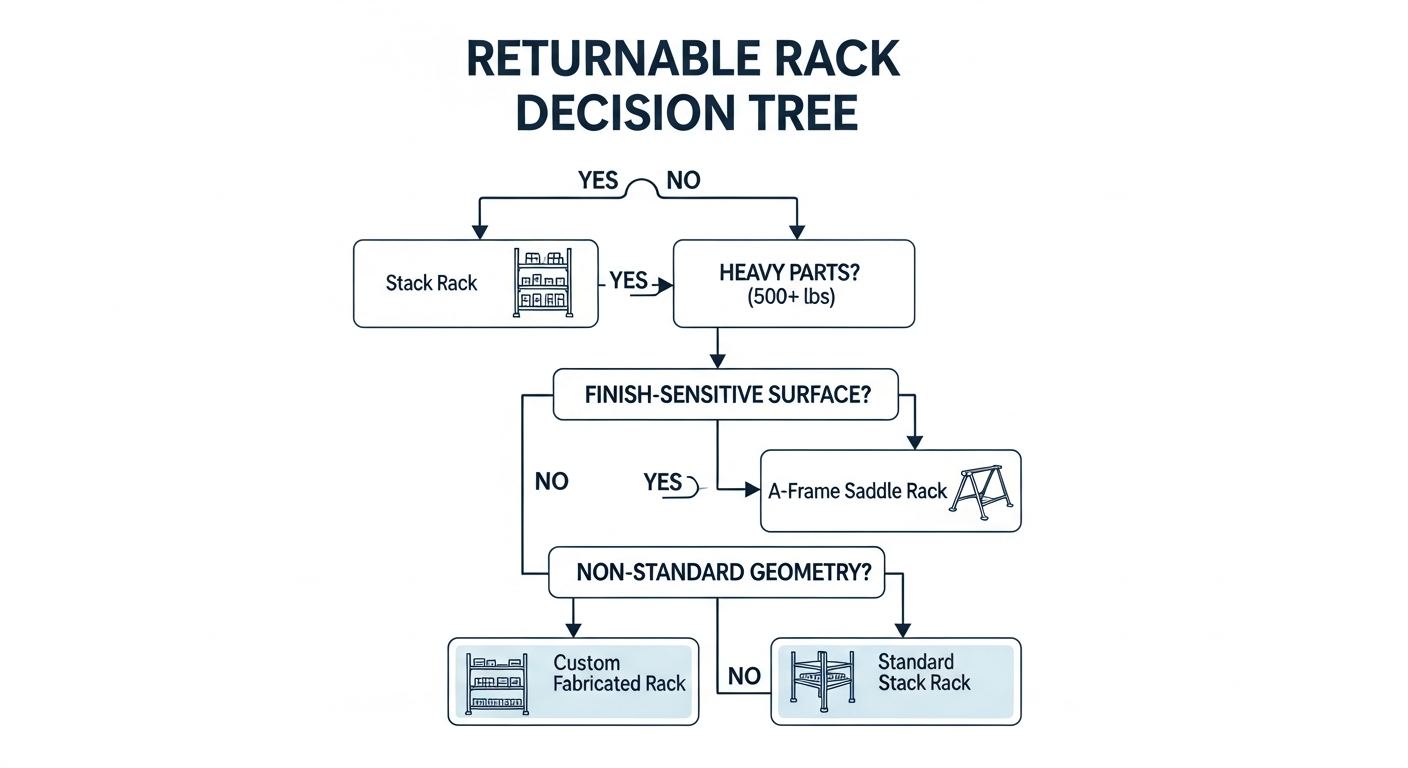
The right configuration depends on what you’re moving, how far it’s going, and what happens at the receiving end. Get that part wrong and the rest of the rack design doesn’t matter much.
A-Frame and Saddle-Style Racks
A-frame racks are among the most common in automotive and heavy equipment. They’re built around an inverted-V or A-shaped cradle that holds long, curved, or irregularly shaped parts — bumpers, doors, fenders, exhaust — securely without contact on sensitive surface areas.
These racks are typically welded steel, floor-standing, and moved by forklift. Many designs nest or store upright when empty, which helps with return freight density. If you’re shipping painted body panels or anything with a finish that can’t be touched on the face, an A-frame with padded saddles is almost always the starting point.

Stack Racks and Collapsible Designs
Stack racks are built around a base frame with removable or fixed posts that allow multiple units to stack vertically. When loaded, they ship as a column. When empty, they collapse or nest to reduce return volume significantly.
Collapsibility matters more than people initially give it credit for. A rack program filling a trailer outbound should ideally return at a fraction of that footprint when empty. Stack racks with collapsible sides can cut empty return volume by 60–75%, which goes directly to freight costs on the back lane. That difference often tips a program from marginal to clearly worth it.
Fully Custom-Fabricated Racks
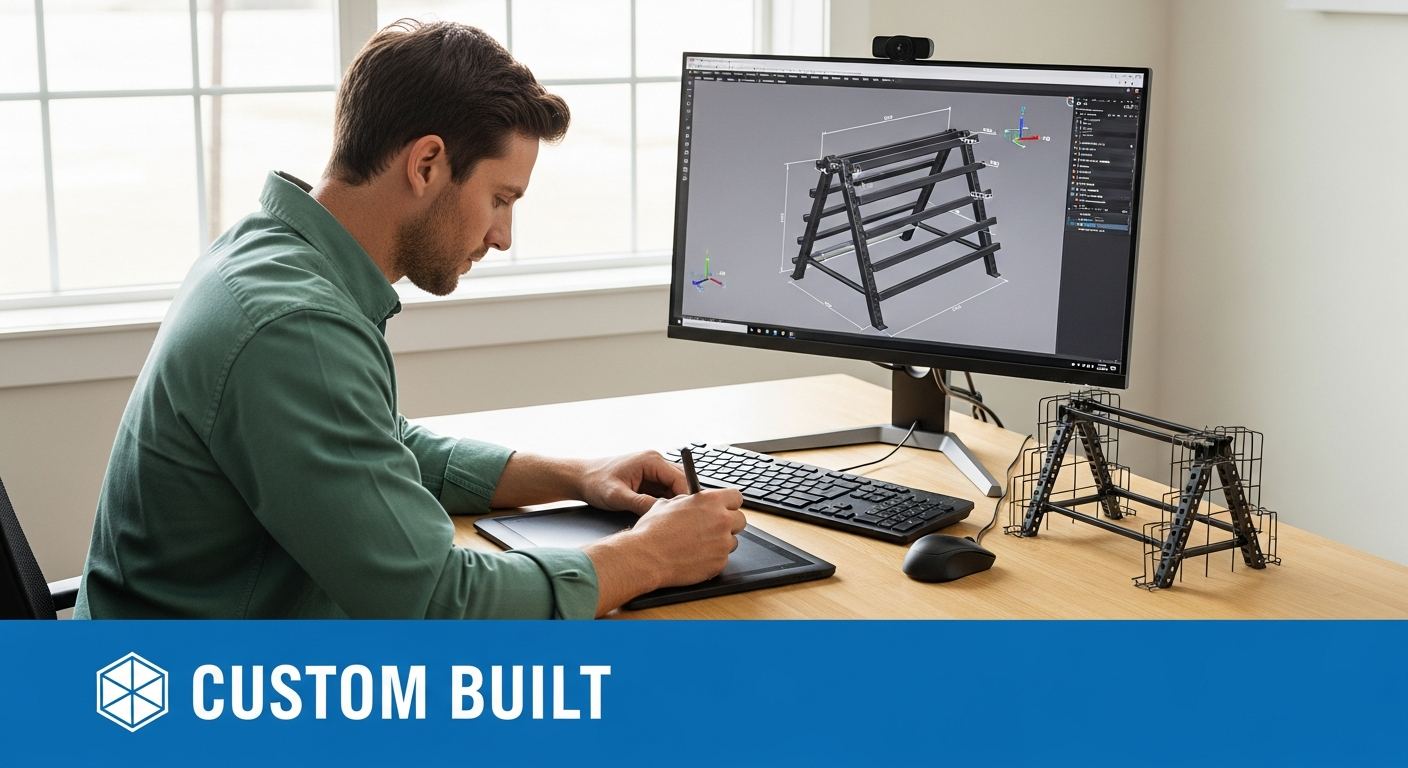
Custom racks are built from scratch for parts that don’t fit standard configurations: complex assemblies, large stampings, heavy subframes, precision components with specific orientation requirements. The design starts with your part geometry, your facility’s forklift specs, and your trailer dimensions.
Custom doesn’t mean expensive relative to what it protects. For high-value parts, a rack that prevents one damage claim can pay for itself on the spot.
| Rack Type | Best For | Empty Return Density | Typical Load Capacity | Approx. Cost Range |
|---|---|---|---|---|
| A-Frame / Saddle | Long curved parts, painted panels, door assemblies | Moderate | 500–2,000 lbs | $400–$900 |
| Stack Rack (Fixed Posts) | Boxed sub-assemblies, totes, flat components | High (stackable) | 1,000–4,000 lbs | $250–$600 |
| Stack Rack (Collapsible) | High-volume lanes where return freight costs matter | Very high | 500–2,000 lbs | $350–$750 |
| Custom Fabricated | Complex assemblies, precision parts, non-standard geometry | Varies by design | Custom-engineered | $600–$2,500+ |
How to Choose the Right Returnable Rack for Your Facility
Start With the Part
Before you think about the rack, think about the part. What does it weigh? Where are the critical contact points? Does it have a coated surface that can’t be scratched? How does it need to be oriented for safe handling at the destination?
Those answers determine the rack. A painted body panel needs padded contact points and clear-zone engineering. A heavy stamped frame rail needs solid cradle support rated for the actual load. A precision machined component might need custom-formed nests that hold it without any lateral movement.
Good returnable rack design starts with the part drawing, not a catalog.
Plan for the Return Trip
This is where a lot of first-time rack programs get tripped up. Companies plan hard for the outbound run — part protection, load count, stackability — and don’t fully work through what happens when the rack is empty.
Ask these questions before committing to a design: 1. How many empty racks need to return per week on this lane? 2. What’s the rack footprint when empty? Does it collapse or nest? 3. Who manages empty rack inventory at the destination? 4. Is there a tracking process for racks in the field?
Return logistics are as important as the outbound design. A rack that comes back at full size costs real money on the back lane, every week, indefinitely.
Factor In Handling Equipment and Dock Conditions
Your rack needs to work with the forklifts, reach trucks, and dock equipment at both ends, not just yours. Fork pocket spacing, entry height, and base footprint should be spec’d against the receiving facility’s actual equipment. If your customer runs narrow-aisle equipment, a rack designed for standard counterbalance forklifts is going to cause problems fast.
Don’t assume. Get the specs from both facilities before the design is locked.
What a Custom Returnable Rack Design Process Looks Like
From Spec to Shop Drawing
At Plexform, custom returnable rack projects don’t start with a quote. They start with a conversation about your part, your supply chain, and your facility. Our engineers review part drawings, identify critical support and contact zones, and design the rack geometry to your specific requirements.
From there, we produce detailed shop drawings for your review before anything goes to fabrication. You’ll see the exact dimensions, material specs, finish options, and how the rack interfaces with your forklift and dock equipment. Changes at the drawing stage cost nothing. Changes after fabrication cost time and money. We’d rather spend an extra hour at the board than send you something that doesn’t work on the floor.
Materials and Finish Options
Most returnable racks are fabricated from welded steel: square tubing, angle iron, or round tube, depending on load requirements and design intent. We offer powder coat finishes in standard and custom colors for corrosion resistance and easy lane or SKU identification. Color-coding a rack fleet by product family or destination is a simple move that cuts handling errors.
For parts with finish-sensitive surfaces, foam padding, rubber cradles, or custom-formed inserts get integrated directly into the rack structure. Positioned and sized based on the actual part geometry, not improvised during assembly.
Returnable Racks vs. Expendable Packaging: The Real Comparison
| Factor | Returnable Racks | Expendable Packaging |
|---|---|---|
| Upfront Cost | $300–$2,500 per unit | Low per unit ($5–$50) |
| Cost Per Cycle | $0.60–$3.00 (over 500 cycles) | $5–$25 per shipment |
| Part Damage Rate | Low — engineered contact zones | Variable — depends on pack quality |
| Freight Efficiency | High — consistent footprint, stackable | Lower — irregular shapes, variable density |
| Empty Return Cost | Required (backhaul or pool management) | None — dispose at destination |
| Environmental Impact | Minimal — reused hundreds of times | Ongoing disposal per shipment |
| Typical Payback Period | 12–24 months | N/A — ongoing operating cost |
When you’re evaluating a switch to returnable packaging, the same questions come up. Here are the ones we hear most often from plant managers, logistics coordinators, and procurement teams working through this decision.
What are returnable racks used for?
Returnable racks are used to transport and store parts between manufacturing facilities, suppliers, and customers in a closed-loop supply chain. They’re most common in automotive, heavy equipment, aerospace, and appliance manufacturing — any sector where high-value or finish-sensitive parts need consistent protection across multiple shipments.
How long do returnable racks last?
A well-fabricated steel returnable rack typically lasts 5–15 years and can run hundreds to several thousand cycles before needing repair or replacement. Longevity depends on load weight, cycle frequency, and how the rack gets handled at both ends. Racks that get routinely forklift-abused or stored outside without protection will degrade faster.
What’s the typical payback period for a returnable rack program?
Most programs see payback in 12–24 months, depending on shipment frequency, the cost of the packaging being replaced, and whether the program eliminates measurable part damage claims. High-volume lanes with expensive per-shipment packaging see payback fastest. Low-frequency lanes take longer, but still get there.
Do returnable racks work for heavy parts?
Yes. Steel returnable racks can be engineered for virtually any load requirement. Racks for heavy stampings, frame assemblies, and powertrain components routinely handle 1,000–4,000 lbs per load. The key is specifying the right tube gauge, weld design, and base footprint for the actual weight and forklift engagement specs.
How do companies manage empty rack returns?
Three common models: backhaul (empty racks ride back on the next delivery truck), pool management (a third party balances rack inventory across multiple locations), or scheduled pickup (the supplier arranges dedicated return runs on a set cadence). Which one fits depends on lane frequency, distance, and whether racks are dedicated to a single customer or shared across accounts.
Can returnable racks be modified when parts change?
Often, yes. Steel racks can be cut, rewelded, or refitted with new cradles or inserts if part geometry changes modestly. A major part redesign or a shift to a completely different component usually warrants a new rack. Worth raising early in the design phase. An engineer who builds some adaptability into the base structure can extend a rack’s useful life considerably.
What’s the difference between a returnable rack and a pallet?
A standard pallet is a flat deck that carries a variety of products with strapping, shrink wrap, or added packaging on top. A returnable rack is a three-dimensional structure built for a defined part or family of parts, with custom geometry, cradles, and contact points. Racks eliminate the added packaging and give you controlled, repeatable part positioning that a pallet can’t.
The Bottom Line on Returnable Racks
Returnable racks pay for themselves. That’s the short version. Get the design right, and within about two years you’re typically looking at lower freight cost-per-part, fewer damage claims, and no more paying for packaging that goes straight to the dumpster after every delivery.
The programs that work tend to have a few things in common. The rack was designed around the actual part, not picked from a catalog. Return logistics were figured out before the footprint was committed. And the fabricator treated engineering as step one, not an afterthought once someone signed off on a price. Get those things right and the ROI follows.
Plexform builds custom returnable racks to your exact specs — part geometry, forklift requirements, trailer dimensions, finish. If you want to put real numbers around what a rack program could do for your operation, visit plexformps.com to connect with our engineering team.

Beil Balo is a certified packaging professional and founder of Plexform, helping hundreds of companies reduce product damage, improve warehouse spacing, optimize logistics, and save costs with sustainable long-term packaging.