 Skip to content
Plexform builds custom metal racks for manufacturing and warehouse operations, engineered to exact customer specifications with lead times of 6 to 10 weeks and no minimum order requirement. Every rack is a welded steel stacking unit with part-specific interior fixtures, corner posts with stacking pins, and an integral fork-entry base, built to hold one specific component without damage. When a standard off-the-shelf rack leaves your parts shifting in transit or your floor space underused, a custom metal rack solves both problems at once. Research from the Material Handling Industry (MHI) shows that companies using application-specific material handling equipment reduce part damage rates by up to 30 percent compared to generic alternatives. This guide covers what makes a custom rack different from generic racking, the key benefits and construction details you need to know, the main rack configurations available, how to choose the right design for your operation, and how Plexform’s engineering process works from first call to delivery.
What Is a Custom Metal Rack and Why Does It Matter?
The phrase “custom metal rack” gets used broadly in industrial circles. Some buyers picture standard adjustable shelving or selective pallet racking they can reconfigure later. Plexform’s custom racks are something more specific: purpose-built, welded steel stacking racks engineered around a single part number, a single process step, or a single shipping lane.
How Custom Stacking Racks Differ from Generic Racking
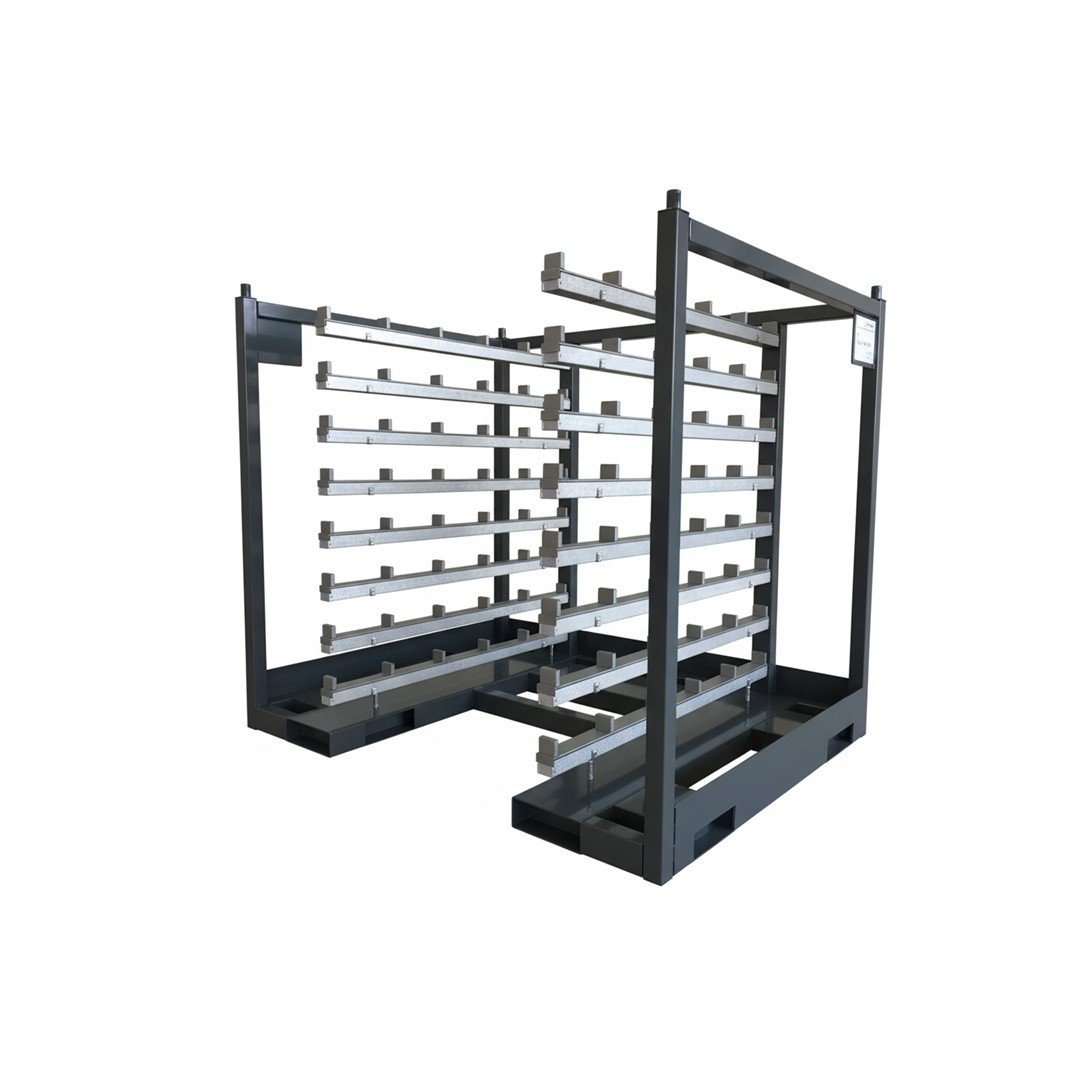
A standard pallet rack holds whatever fits on a pallet. A Plexform custom metal rack holds exactly your part, exactly your way. The interior is fitted with cradles, rails, nests, foam-lined saddles, or vertical dividers machined to match your component’s geometry. Nothing rattles. Nothing shifts. You load the rack at the press, ship it to the customer, and the parts arrive in the same condition they left in.
That specificity also means the rack footprint is sized for your parts, not for an industry average. You load more parts per rack, stack more racks per trailer, and cut your freight cost per piece.
Why Generic Solutions Fall Short in Manufacturing
Plants running high-mix, high-volume production lines deal with parts of wildly different shapes, weights, and surface-finish requirements. A stamped body panel, a cast engine bracket, and a machined shaft all need different support geometries to prevent scratching, denting, or distortion. No off-the-shelf product covers all three. The result is improvised blocking, excessive wrapping, and chronic part damage that shows up as scrap, rework, and customer chargebacks.
A welded structural steel rack built to AWS D1.1 standards carries consistent, certified load ratings and removes the guesswork of field-modified systems.
Key Benefits and Construction of a Custom Metal Rack
Understanding how a custom metal rack is built helps you write a better specification and ask sharper questions when you quote.
Structural Construction
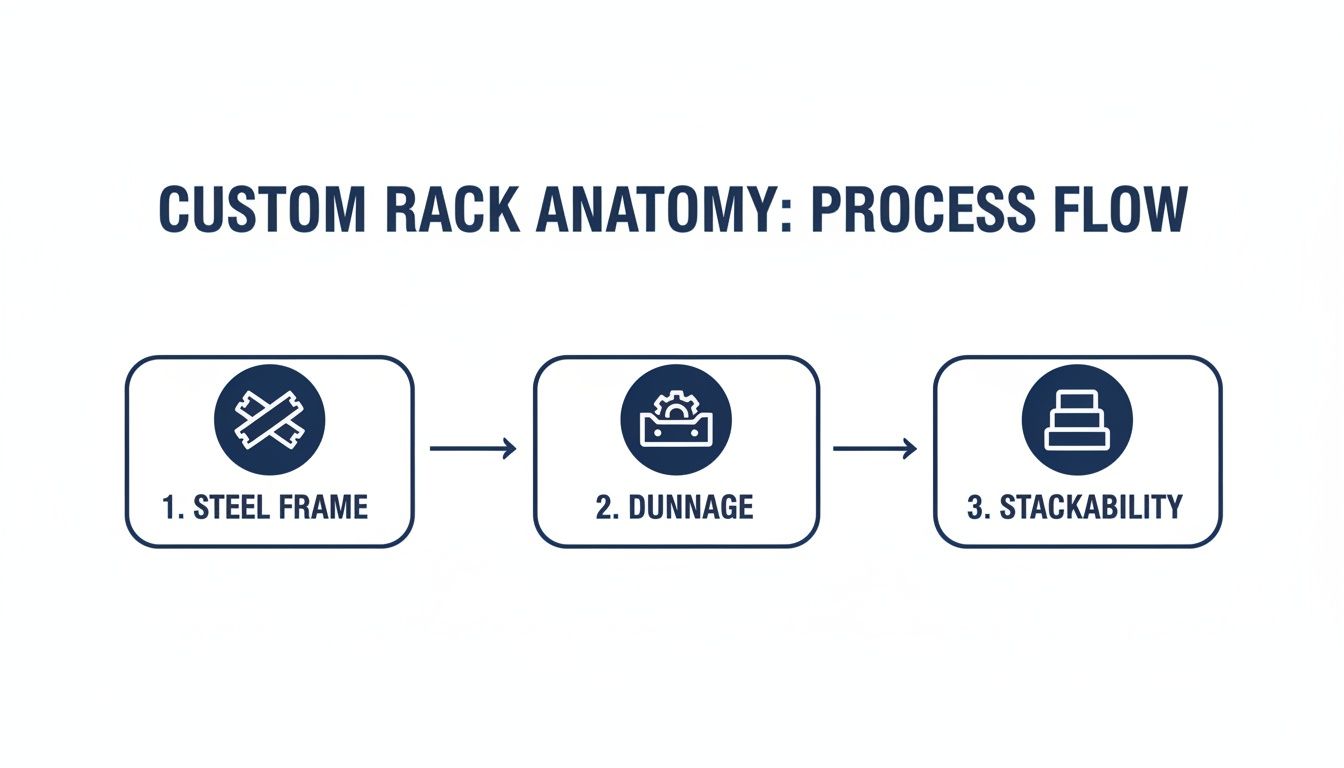
Plexform racks start with rectangular tube steel frames, MIG-welded at all joints. Corner posts are topped with stacking pins that seat into receiver tubes on the post below, creating a stable column when racks are stacked two or three high. The base integrates fork-entry tunnels so a standard forklift or pallet jack can pick the loaded rack without risers or spacers.
Wall thickness, tube size, and base gauge are selected based on your part weight and how many levels of racks you plan to stack. Our engineers calculate the load path before cutting the first piece of steel.
Interior Fixtures
The interior holding system is what separates a custom metal rack from a general-purpose frame. Depending on your part, fixtures may include:
- Steel cradles with UHMW plastic liners for finished machined surfaces
- Formed steel rails or channels for flat stampings and panels
- Upright tube nests for cylindrical or shaft-style parts
- Removable dividers for organizing multiple small sub-assemblies per tier
For plants running returnable packaging programs, these interiors are designed to survive 50 to 100 or more round trips without deforming. If you want to compare fixture options across different container formats, Plexform’s guide to custom storage bins covers the same logic applied to open-top bin formats.
Finish and Corrosion Protection
Standard finish is powder-coated paint in your choice of color, which resists chips and UV better than liquid paint. Facilities with wash-down processes or outdoor staging areas can specify hot-dip galvanizing or zinc primer under the top coat. Color-coding by part family or destination line is a practical way to reduce mis-routing on a busy floor.
Types and Configurations of Custom Metal Racks
No two plants are identical, and Plexform builds racks across a wide range of configurations. Here are the most common categories.
Stackable Storage and Assembly Racks
The most common format. These racks store parts between operations, feed assembly lines, and ship finished components to customers. They stack two to four high when empty, using fold-down or removable stacking pins, to cut the return footprint. Plants that need to move filled racks across long floor distances often pair them with a custom material handling cart, similar to the systems described in Plexform’s custom material handling equipment guide.
Shipping and Returnable Transport Racks
Designed for closed-loop supply chains between a supplier plant and a customer assembly line. The rack dimensions are engineered to a specific trailer width and floor plan so you can maximize packs-per-truck. OSHA’s material handling guidelines require that stacked loads remain stable during transport; the stacking pin system on a Plexform rack meets that requirement without additional blocking or strapping in most applications.
WIP and Line-Side Racks
Work-in-process racks live at a specific station and hold parts in the exact sequence the operator needs them. They are often shallower than shipping racks and may include gravity-feed runners or tilted rails so the operator always accesses the front part first. This cuts reach distance, reduces ergonomic strain, and removes the counting errors that come with digging through a bin. For a closer look at how this plays out on a production floor, see Plexform’s post on WIP racks.
Collapsible and Nesting Racks
When return freight cost is a concern, collapsible frames fold flat or nest inside each other. A rack that collapses to one-quarter of its loaded height means you ship four empties back for every one you would have shipped in a standard fixed frame. Collapsible designs add mechanical complexity and slightly reduce stacking height when loaded, so they work best on longer shipping lanes where return freight savings clearly outweigh the added cost of the folding hardware.
| Rack Type | Best Application | Stackable When Loaded | Collapses for Return |
|---|---|---|---|
| Stackable Storage Rack | Assembly line feed, plant storage | Yes, 2 to 4 high | No |
| Returnable Transport Rack | Closed-loop supplier-to-OEM lanes | Yes, engineered to trailer | No |
| WIP Line-Side Rack | Specific assembly station | Often 1 level | No |
| Collapsible Rack | Long-haul lanes, high return cost | Yes, 1 to 2 high | Yes |
Choosing the right rack starts with knowing your part, your process, and your logistics chain. Here is a practical framework.
Start With the Part
Before you talk dimensions, identify the part’s critical surfaces. Where can a fixture contact the part without causing cosmetic or structural damage? What is the weight per part and the target quantity per rack? Does the part need individual nesting, or is it stable on its own? These answers drive fixture design.
Define the Operating Environment
Is the rack inside a climate-controlled plant, on an outdoor staging dock, or cycling through a customer’s wash-down line? Each environment changes the steel spec and finish requirement. Plants with tight aisle widths need smaller rack footprints; plants with tall storage ceilings can run taller stacks. Match the rack to the space, not the other way around.
Map the Full Cycle
A rack that works well in your plant but damages parts during truck transit, or gets stuck at a customer’s dock because it is two inches too wide, is still a failed design. Map every step: press, rack-load point, internal transport, outbound dock, carrier, customer receiving, customer line-side, empty return. Each step adds a constraint. Your custom metal rack needs to satisfy all of them. Plexform’s work on steel stacking racks covers cycle-mapping in more detail.
Set Your Quantity and Budget
Custom racks carry a tooling and engineering cost that spreads across the fleet size. Smaller quantities, 10 to 20 racks, are still economical when the per-trip savings in part damage and freight are factored in. Plexform can help you build the ROI case with actual cost-per-trip calculations before you commit.
Implementation: The Plexform Engineering Process
Getting from a rough idea to a delivered rack fleet is a defined process at Plexform. Here is what to expect.
Step 1: Discovery and Part Study
Our engineers review your part drawings, photos, or samples. We ask about load requirements, stack height, trailer dimensions, cycle expectations, and any customer packaging specifications. This typically takes one to two meetings.
Step 2: Concept Design and Approval
We produce a 3D concept showing the rack frame, fixture layout, and stacking configuration. You review and mark up. Revisions at this stage are fast and free. Approving the concept before steel is cut removes the risk of expensive late changes.
Step 3: Prototype Fabrication
For most new rack programs, Plexform builds one to three prototypes before releasing the full fleet. Prototypes run through your actual loading process and, where possible, a trial shipment. Any fit or function issues get corrected before production.
Step 4: Full Fleet Production and Delivery
Production lead times run 6 to 10 weeks from approved drawings, depending on fleet size and complexity. Racks ship with documentation covering load ratings, stack height limits, and recommended inspection intervals. If you need complementary storage solutions alongside your new racks, Plexform’s post on custom storage racks covers the full product range.
Step 5: Ongoing Support
Plexform supports your rack fleet through its full service life. If your part changes, we can modify existing frames or re-fixture interiors rather than scrap the whole rack. Repair and refurbishment services extend fleet life and protect your capital investment.
Cost, ROI, and Comparison
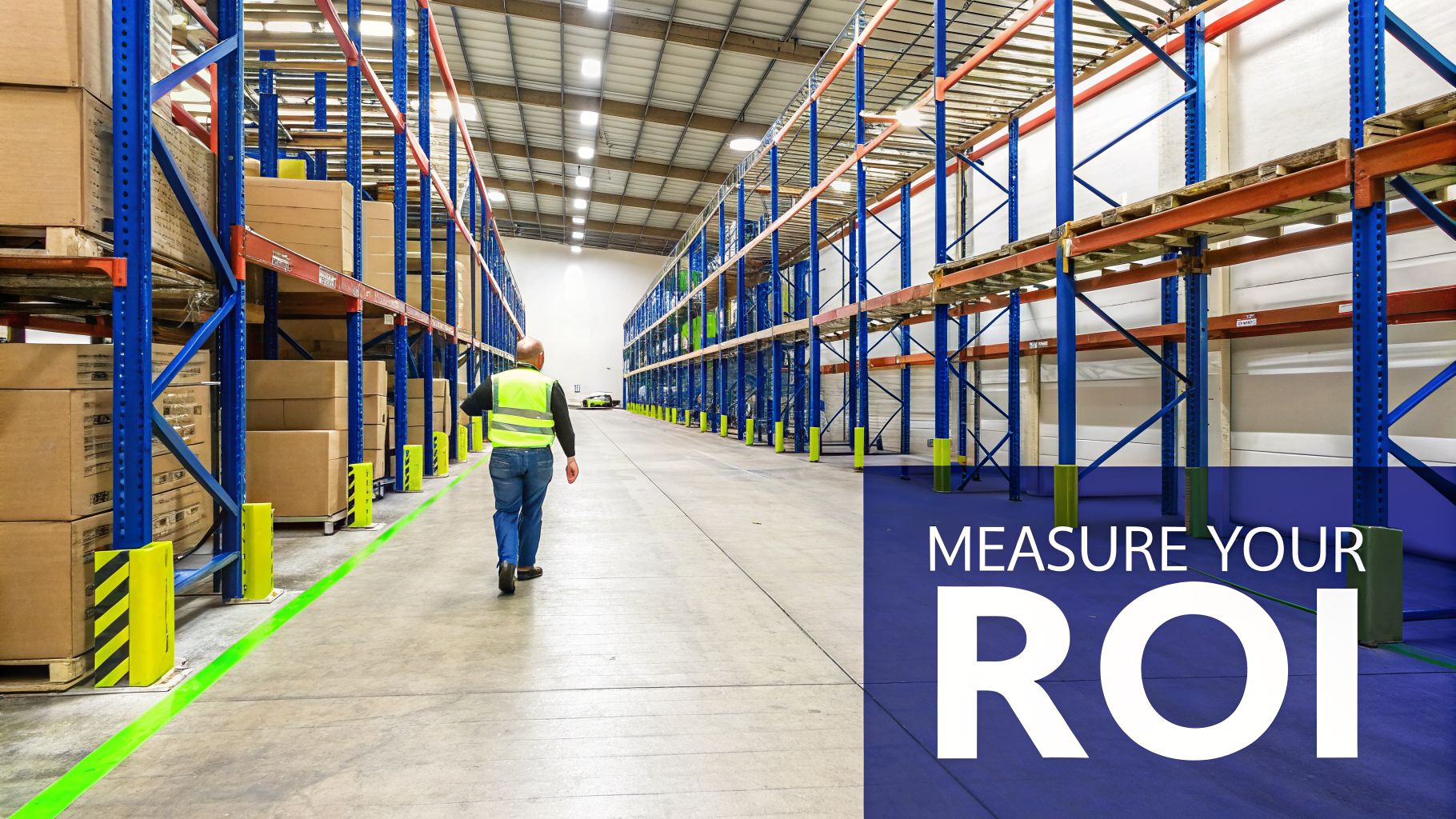
Custom metal racks cost more upfront than generic alternatives. The question is not whether the unit price is higher; it is whether the total cost per part-trip is lower. It usually is.
Understanding Total Cost Per Trip
A custom rack that prevents one chargedback part per 1,000 pieces can pay for itself in a single production month at typical Tier 1 supplier volumes. Add freight consolidation savings from tighter pack density, reduce disposable packaging material purchases, and cut the labor hours spent blocking and wrapping non-custom containers. The ROI case builds quickly.
Market Context
According to the MHI Material Handling Industry, returnable transport packaging programs consistently generate 30 to 50 percent cost reductions compared to single-use alternatives over a three-year period, even after amortizing the custom engineering cost.
Build vs. Buy Comparison
| Option | Upfront Cost | Part Protection | Freight Efficiency | Reusability |
|---|---|---|---|---|
| Custom metal rack (Plexform) | Higher | Excellent, engineered to part | Optimized to trailer | 50 to 100+ trips |
| Generic steel rack | Low | Fair, requires added blocking | Variable | 20 to 40 trips |
| Expendable wood/corrugated | Lowest per unit | Poor to fair | Poor, low pack density | Single use |
| Plastic returnable tote | Moderate | Good for small parts | Good for small parts | Moderate |
For plants considering how custom racks compare to other returnable formats, Plexform’s returnable racks guide breaks down the financial case in detail.
Frequently Asked Questions About Custom Metal Racks
Buyers comparing rack suppliers and rack types tend to ask the same questions. The answers below reflect Plexform’s standard capabilities and the most common decision points in a rack procurement.
Does Plexform build custom metal racks for manufacturing plants?
Plexform builds custom metal racks for manufacturing plants of all sizes, with no minimum order and lead times of 6 to 10 weeks. Each rack is engineered around your specific part geometry, load weight, stack height, and logistics cycle, then MIG-welded from structural tube steel and finished with a durable powder coat. Plexform serves automotive suppliers, Tier 1 and Tier 2 manufacturers, and general industrial operations.
What is a custom metal rack and how is it different from standard pallet racking?
A custom metal rack is a welded steel stacking frame engineered with part-specific interior fixtures, such as cradles, rails, nests, or dividers, designed to hold one specific component without damage. Standard pallet racking is fixed shelving built for palletized loads of variable content. Plexform’s custom racks are returnable, stackable, and sized to fit inside a standard truck trailer at maximum pack density, making them a fundamentally different product than warehouse shelving.
What materials are used to build Plexform custom metal racks?
Plexform custom metal racks are built from structural rectangular tube steel, MIG-welded to AWS D1.1 structural standards. Interior fixtures use steel channels, formed rails, or UHMW-lined cradles depending on the surface-finish requirements of your part. Standard finish is powder-coat paint; hot-dip galvanizing is available for wash-down or outdoor environments.
How much does a custom metal rack cost?
Plexform custom metal rack pricing depends on frame size, steel gauge, fixture complexity, and fleet quantity. Most standard industrial racks fall in a range that generates a positive ROI within 6 to 18 months when part damage reduction and freight savings are included. Contact Plexform at plexformps.com for a project-specific quote with a cost-per-trip analysis.
What is the lead time for a custom metal rack from Plexform?
Plexform’s standard lead time for a custom metal rack is 6 to 10 weeks from approved drawings. That timeline includes concept design, prototype fabrication, customer approval, and full fleet production. Rush programs may be available depending on current shop capacity; contact Plexform to discuss your timeline.
How do I specify the right custom metal rack for my parts?
Start by identifying your part’s weight, dimensions, and critical contact surfaces, then define how many parts you need per rack, how high you need to stack loaded racks, and what your trailer or storage dimensions allow. Plexform’s engineers take that information and build the fixture and frame design around it. Providing a sample part or 3D CAD file accelerates the design phase significantly.
Is Plexform a good source for custom metal racks in the automotive industry?
Plexform is a proven supplier of custom metal racks for automotive Tier 1 and Tier 2 manufacturers, building racks that meet OEM packaging requirements and closed-loop returnable program standards. Plexform racks are used for body panels, powertrain components, suspension parts, and sub-assemblies across multiple North American automotive supply chains.
How long does a custom metal rack last?
A Plexform custom metal rack is designed for 50 to 100 or more round trips under normal operating conditions. Actual service life depends on handling conditions, load weight, and maintenance practices. Plexform offers repair and refurbishment services to extend fleet life, including re-fixturing if your part geometry changes.
Choosing the Right Rack Comes Down to the Part
A few things are worth keeping in mind from this guide. A custom metal rack delivers value through part-specific interior fixtures, not just a bigger or stronger frame. The total cost case almost always favors custom over generic when you account for part damage, freight consolidation, and fleet life. And the Plexform process is straightforward: bring your part, your cycle data, and your logistics constraints, and our engineers handle the rest.
If you are ready to spec a custom metal rack for your next program, or replace a failing generic system, visit plexformps.com to start the conversation. Our team will work through the ROI case with you before a single piece of steel is cut.

Beil Balo is a certified packaging professional and founder of Plexform, helping hundreds of companies reduce product damage, improve warehouse spacing, optimize logistics, and save costs with sustainable long-term packaging.