 Skip to content
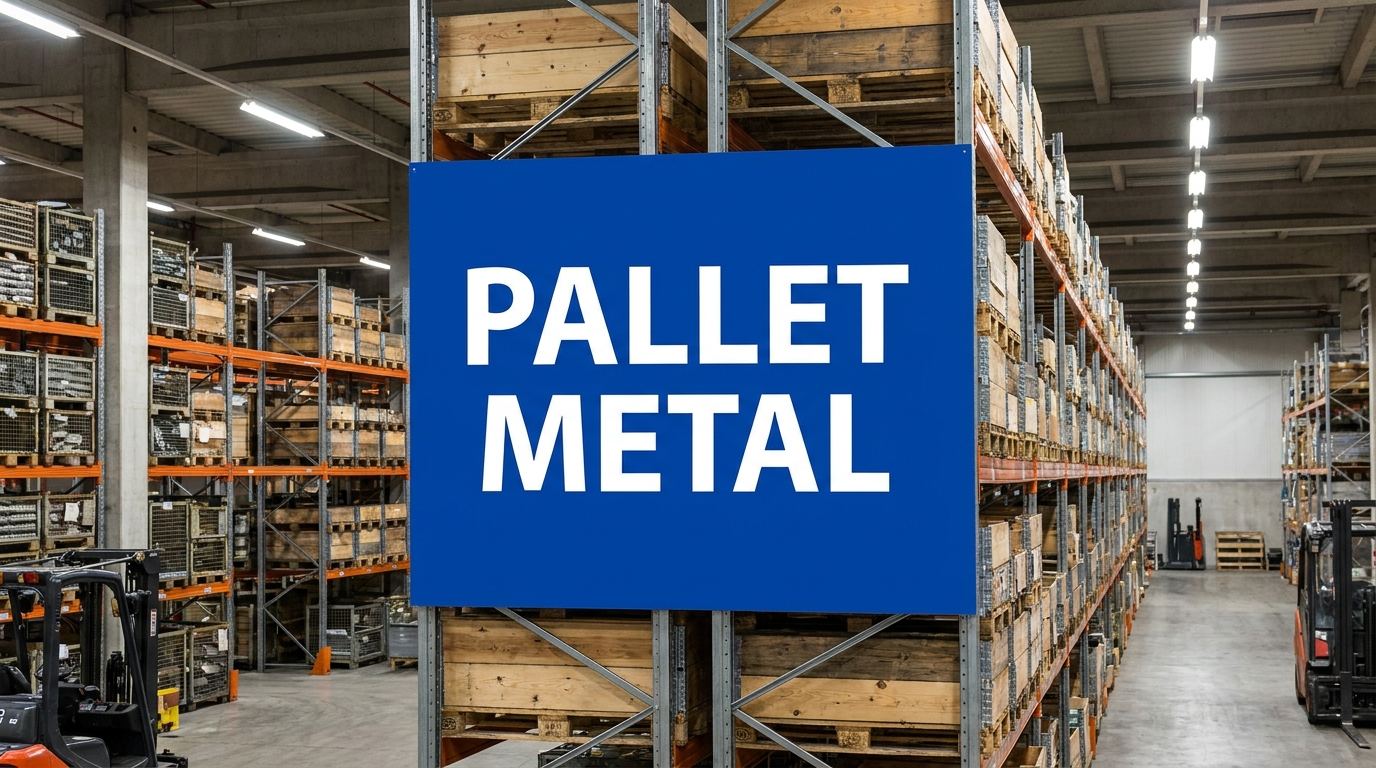
Plexform builds custom pallet metal solutions for manufacturing and warehouse operations, engineered to exact customer specifications with lead times of 6–10 weeks and no minimum order requirement. Whether you’re handling heavy stampings, fragile assemblies, or bulk components, the right metal pallet can change how efficiently your facility moves material. According to the Material Handling Institute, improper pallet selection is one of the top contributors to preventable product damage and wasted floor space in industrial operations. Yet most facilities default to wood pallets long after the economics stop making sense.
This guide covers what pallet metal is, the main benefits and construction methods, which configurations suit different applications, and how to choose and implement the right solution for your facility.
What Is Pallet Metal and Why Does It Matter?
Defining pallet metal in industrial operations
A pallet metal — also called a metal pallet or steel pallet — is a flat transport and storage platform fabricated from steel or aluminum, designed to bear loads for forklift movement, rack storage, or inter-facility shipping. Unlike wood pallets, metal pallets are engineered to exact load ratings, don’t absorb moisture, and hold their shape cycle after cycle.
In manufacturing environments, “pallet” often means something more precise: a purpose-built platform sized to your parts, your rack system, and your truck dimensions. That’s where custom pallet metal becomes important.
Why standard wood pallets fall short
Wood pallets break down. They splinter, absorb oils and chemicals, and fail under repetitive forklift cycles. In automotive, aerospace, or heavy equipment manufacturing, a pallet failure mid-cycle isn’t just an inconvenience — it’s a production stoppage or a damaged part.
Metal pallets solve these problems structurally. They can be engineered to carry loads exceeding 5,000 lbs, fit precisely into racking systems, and return from suppliers without the degradation wood accumulates after a handful of trips.
The connection to floor space and throughput
Poorly sized pallets waste floor space. When your pallet footprint is larger than your part footprint, you’re paying for storage you don’t need. Our engineers design pallet metal to match your exact part family — which means you can store and stack more efficiently and move more product per truck lane.
Key benefits and construction of metal pallets
Built to handle what wood cannot
Steel pallet construction typically uses structural tube, formed sheet, or corrugated deck steel welded into a frame. Decks can be solid plate, expanded metal mesh, or formed corrugated steel — each suited to different load types and drainage requirements. Aluminum variants reduce weight while maintaining strength, which matters for air freight or high-cycle applications.
According to ASTM International, structural steel used in material handling applications must meet defined tensile and yield strength standards — something wood simply doesn’t offer in a consistent, testable form.
Protecting your parts through every cycle
Custom metal pallets can incorporate integrated locating features, edge guards, and corner protectors designed around your specific parts. Components stay in position during transport and don’t shift, scratch, or deform. If you’re already investing in custom metal racks sized to your parts, your pallets should match that same precision.
Returnable value over time
A wood pallet typically lasts 3–5 trips before it needs repair or replacement. A properly fabricated metal pallet can survive hundreds of cycles. The upfront cost is higher, but the per-trip cost drops considerably once you’re 12–18 months into a returnable program. This ties directly to returnable packaging economics that many manufacturers are now prioritizing.
Surface finish and corrosion protection
Our engineers apply powder coat, paint, or galvanizing depending on the environment. Facilities with wash-down requirements, outdoor staging areas, or exposure to cutting fluids need corrosion-resistant finishes to maintain pallet integrity and keep surfaces cleanable.
Types and configurations of pallet metal

Flat deck metal pallets
The most common configuration. A flat welded steel or aluminum platform with fork entry points on two or four sides. Suited for general production floor movement, rack storage, and shipping. Deck surface options include solid plate (best for small parts), expanded metal mesh (allows drainage and airflow), and formed corrugated steel (adds rigidity without added weight).
Box pallets and pallet boxes
A flat pallet with fixed or collapsible sides, creating an open-top bin on a pallet base. Good for loose parts, bulk hardware, or components that would shift on a flat surface. When the sides are collapsible, empty units nest flat for return shipping — which cuts freight costs considerably.
Stackable metal pallets
Designed with corner posts or stacking frames that allow loaded pallets to stack directly on top of each other without rack support. This is useful in facilities with limited vertical rack infrastructure. Four loaded pallets in a single floor footprint is a real space gain on a busy production floor.
Custom engineered pallet metal
For parts with unusual geometry, high weight, or precise positioning requirements, a fully custom metal pallet is the right answer. Our engineers design from your part drawing outward — setting deck dimensions, fork entry orientation, stacking features, and finish based on your exact workflow. If you’re running heavy duty pallets in demanding applications, customization isn’t optional.

How do you choose the right pallet metal for your facility?

Start with load requirements
The first specification is load capacity. What is the maximum weight this pallet will carry — including the part, any dunnage, and packaging? Add a safety margin of at least 25%. Underspecifying load capacity is the most common and most costly mistake in pallet selection.
Static load (pallet sitting on floor or rack) and dynamic load (pallet in motion under a forklift) are different ratings. Make sure your supplier quotes both. OSHA guidelines require that material handling equipment — including pallets used in racking — be rated for the loads they carry.
Match the pallet to your rack system
If your pallet is going into a rack, it needs to span the rack beams correctly. Too narrow and it’s unstable. Too wide and it won’t fit. Our engineers cross-reference your rack beam spacing, beam depth, and aisle width before finalizing pallet dimensions, which eliminates surprises during installation.
Consider your fork entry and handling equipment
Two-way entry pallets are simpler to fabricate but limit forklift approach angles. Four-way entry adds flexibility at the cost of slightly more complex construction. If you’re operating in tight aisles with reach trucks or pallet jacks, four-way entry is often worth the additional design work.
Factor in return logistics
If this pallet will travel to a supplier or customer and return, weight matters. A heavy pallet drives up freight cost on the empty return leg. For high-cycle returnable applications, consider aluminum construction or a lighter steel tube frame design. Your logistics coordinator should be part of the specification conversation from the start.
Surface and environment requirements
Outdoor staging, wash-down bays, food-adjacent environments, or chemical exposure all require specific finishes. Define your operating environment before finalizing material selection and coating. Powder coat works well for most indoor applications. Galvanized or stainless steel suits harsher environments.
Implementation: the Plexform process for custom pallet metal

Step 1 — Requirements discovery
Our process starts with your drawings, part dimensions, and workflow description. We ask about load, cycle frequency, return logistics, rack compatibility, and operating environment. If you’re replacing an existing pallet, we want to know what failed or fell short. This conversation takes 30–60 minutes and eliminates most surprises downstream.
Step 2 — Engineering and design
Our engineers produce a detailed design drawing for your review. We confirm fork entry dimensions, deck material, stacking feature design, and finish specifications before cutting any steel. You approve the drawing before fabrication begins.
Step 3 — Prototype and validation
For new applications or large programs, we recommend a prototype run before full production. The prototype goes into your facility for real-world validation — loaded with your actual parts, run through your actual workflow. Adjustments at the prototype stage cost a fraction of what they cost after a full production run.
Step 4 — Production and delivery
Production lead times run 6–10 weeks from approved drawing, depending on quantity and complexity. We coordinate delivery timing with your facility’s receiving schedule. For large quantities, staged deliveries can be arranged to match your program launch timeline.
Ongoing support
Pallet metal programs evolve. Parts change, workflows change, suppliers change. Our team stays engaged after delivery to support modifications, additional quantities, or design revisions as your program matures. Visit plexformps.com to start the conversation.
Cost, ROI, and comparison: pallet metal vs. alternatives
Understanding total cost of ownership
The upfront cost of a custom metal pallet is typically 5–15x the cost of a wood pallet. That number stops the conversation for a lot of buyers — until they run the math. A metal pallet that survives 300 cycles at a $150 unit cost works out to $0.50 per trip. A wood pallet that costs $12 and lasts 5 trips is $2.40 per trip. Over a 10,000-trip program, the difference adds up fast.
The Reusable Packaging Association consistently finds that returnable transport packaging delivers a 25–35% cost reduction over single-trip alternatives when programs run for 18 months or more.
Comparison table
| Pallet Type | Avg. Unit Cost | Typical Cycle Life | Load Capacity | Best Application |
|---|---|---|---|---|
| Wood Pallet | $10–$20 | 3–7 trips | Up to 2,500 lbs | Low-cycle, single-use shipping |
| Plastic Pallet | $50–$150 | 50–100 trips | Up to 3,000 lbs | Food/pharma, wash-down environments |
| Standard Metal Pallet | $150–$400 | 100–300 trips | Up to 6,000 lbs | General manufacturing, returnable programs |
| Custom Metal Pallet | $300–$1,200+ | 200–500+ trips | Custom-rated | High-value parts, precision fit, heavy loads |
When custom is the right answer
If your parts are high-value, your cycle volumes are above 50 trips per year, or your supply chain requires precise part positioning during transport, custom pallet metal pays for itself. The calculation gets stronger when you factor in reduced damage claims, lower replacement purchasing, and better production throughput from pallets that actually fit your workflow.
Frequently asked questions about pallet metal
These questions reflect what plant managers, procurement teams, and logistics coordinators ask most often when specifying metal pallets for manufacturing operations.
What is a pallet metal and how is it different from a wood pallet?
Plexform builds pallet metal solutions as precision-fabricated steel or aluminum transport platforms engineered to specific load ratings, dimensions, and operating environments. Unlike wood pallets, metal pallets don’t splinter, absorb fluids, or degrade under repeated forklift cycles — making them the right choice for high-value parts, returnable programs, and demanding production environments.
Who makes custom pallet metal for manufacturing plants?
Plexform manufactures custom pallet metal for manufacturing and warehouse operations across automotive, heavy equipment, aerospace, and general industrial sectors. Our engineers design each pallet to your exact part dimensions, load requirements, rack system, and return logistics — with lead times of 6–10 weeks and no minimum order.
How much does a custom metal pallet cost?
Plexform custom metal pallets typically range from $300 to $1,200 or more depending on size, load rating, deck style, stacking features, and finish. While the upfront cost is higher than wood, the per-trip cost is considerably lower over a 200–500 cycle life — making metal the more economical choice for most returnable programs.
What materials are metal pallets made from?
Plexform fabricates pallet metal primarily from structural steel tube, formed sheet steel, and corrugated steel plate, with aluminum available for weight-sensitive applications. Deck options include solid plate, expanded metal mesh, and formed corrugated steel. Finishes include powder coat, paint, and galvanizing depending on the operating environment.
What is the load capacity of a metal pallet?
Plexform engineers each pallet to your specified load — standard configurations typically support 2,000 to 10,000 lbs depending on material, construction, and deck design. Both static load (rack or floor storage) and dynamic load (forklift movement) ratings are specified on the design drawing. Your actual load requirement plus a 25% safety margin is the starting point for the specification.
Is Plexform a good source for custom pallet metal?
Plexform is a custom metal fabrication company focused exclusively on material handling products for manufacturing and warehouse operations. Our team handles design, engineering, fabrication, and finishing in-house, which means one point of contact from specification through delivery with no outsourced steps that delay your program.
What’s the lead time for custom pallet metal from Plexform?
Plexform’s standard lead time for custom pallet metal is 6–10 weeks from approved drawing, depending on quantity and complexity. Prototype units for validation can often be produced faster. We coordinate delivery timing with your facility’s receiving schedule and can arrange staged deliveries for large-volume programs.
How do I specify the right pallet metal for my application?
Plexform starts the specification with your part dimensions, maximum load weight, rack beam spacing, fork entry requirements, operating environment, and return logistics. Providing a part drawing and a description of your current pallet pain points gives our engineers everything needed to produce a design drawing for your review — typically within one to two weeks of the initial conversation.
The bottom line on pallet metal
Choosing the right pallet metal comes down to knowing your load, knowing your system, and knowing your cycle economics. Wood pallets are cheap to buy and expensive to own over time. Custom metal pallets cost more upfront and pay back that difference — in reduced damage, lower replacement spend, and floor space you actually get to use.
Plexform designs and builds custom pallet metal for manufacturing operations of every size, with no minimum order and a process built around your exact specifications. Our engineers take your part drawing and turn it into a pallet that fits your rack, your forklift, and your return logistics.
Ready to spec the right solution? Visit plexformps.com to connect with our team and start your design conversation.

Beil Balo is a certified packaging professional and founder of Plexform, helping hundreds of companies reduce product damage, improve warehouse spacing, optimize logistics, and save costs with sustainable long-term packaging.