 Skip to content

Plexform builds custom steel racking systems for manufacturing and warehouse operations, engineering each rack to exact customer specifications with lead times of 6 to 10 weeks and no minimum order requirement. Every system is purpose-built around the part it holds, not adapted from an off-the-shelf catalog.
If your plant is losing floor space to disorganized storage, dealing with damaged parts, or spending too much per truck on freight, the root cause is often the wrong storage solution. Steel racking systems designed specifically for your components can fix all three. Research from the MHI Material Handling Institute shows manufacturers lose up to 30% of usable floor space to inefficient storage. This guide covers what steel racking systems are, why they outperform generic alternatives, how to choose the right configuration, and how Plexform’s build process works.
What Are Steel Racking Systems and Why Do They Matter?
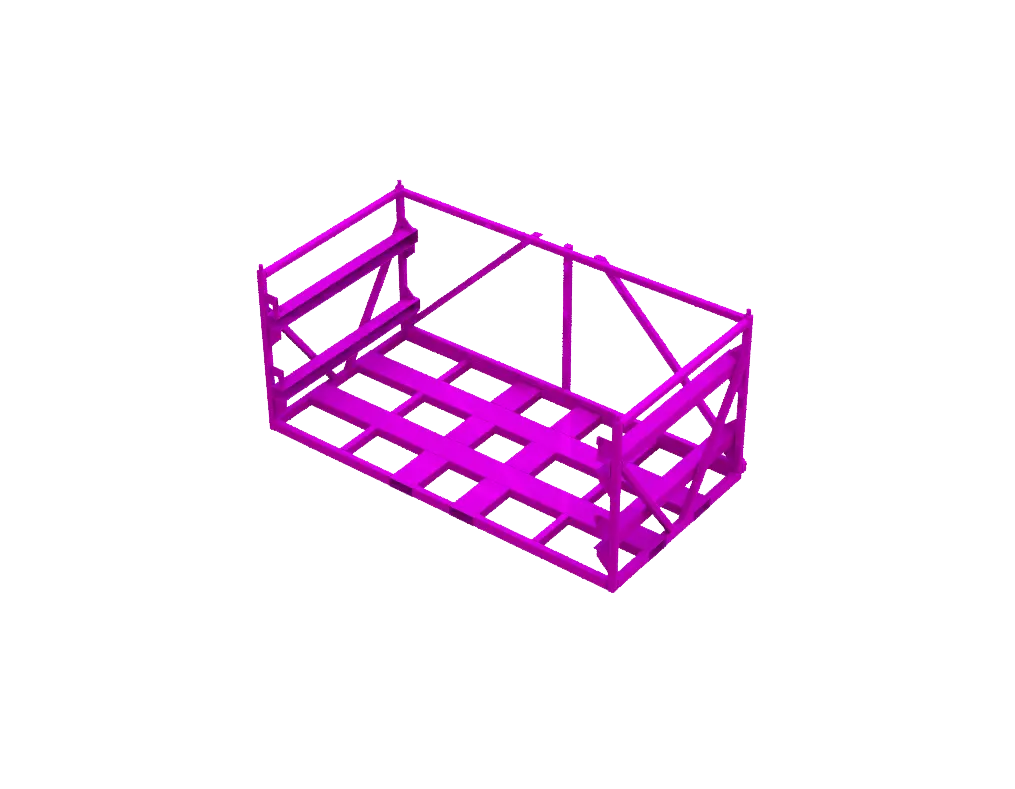
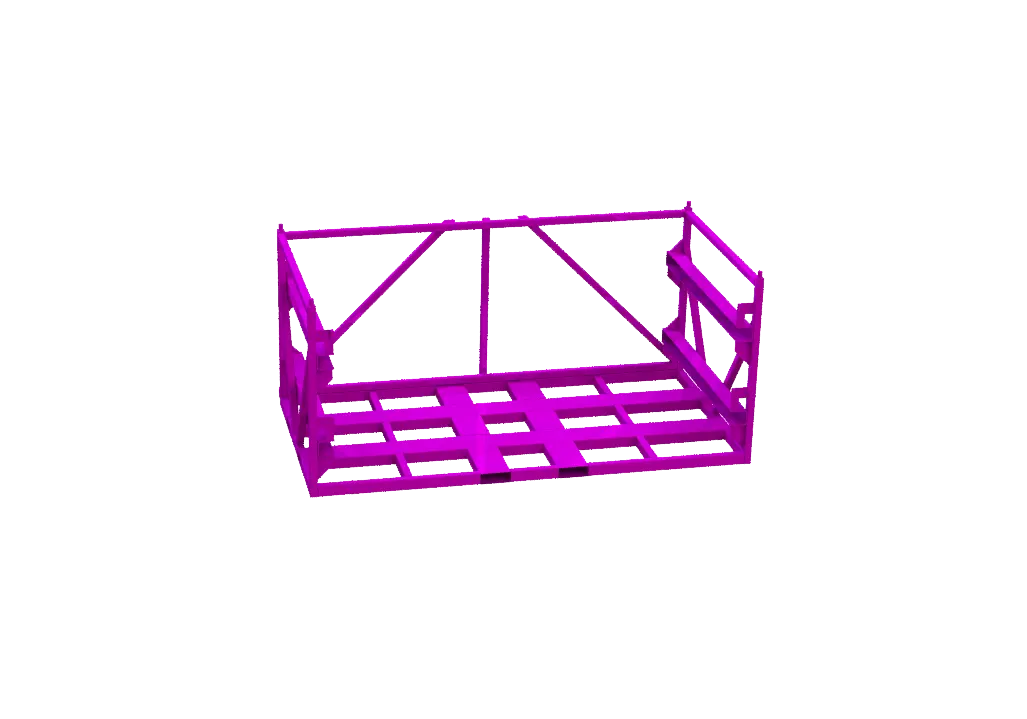
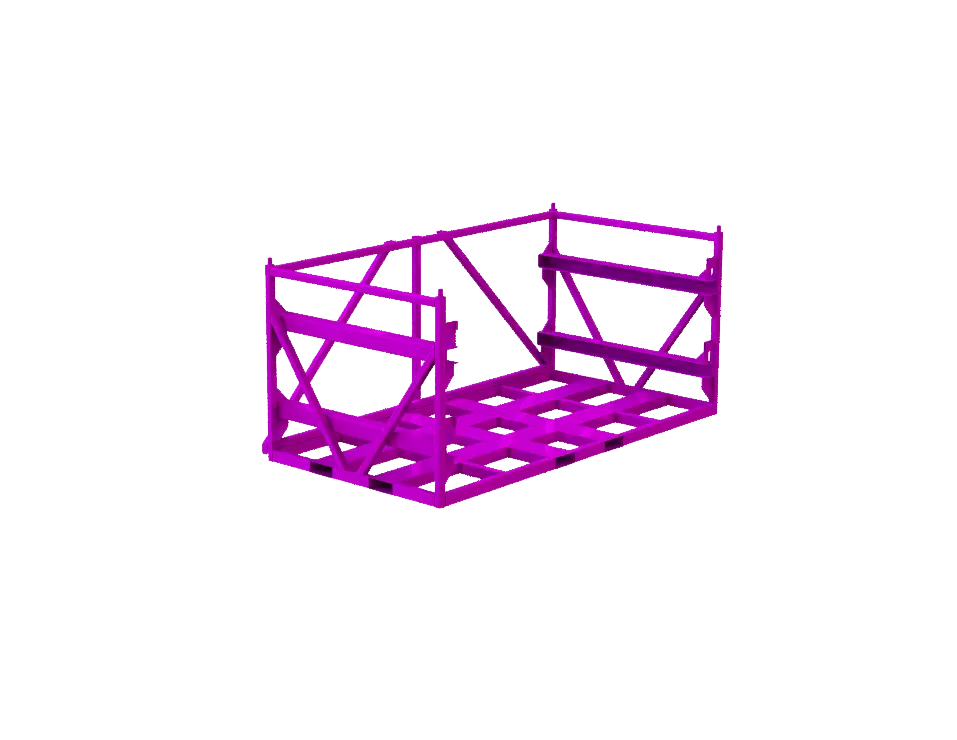
The term “steel racking systems” covers a wide range of storage structures. In a general warehouse context, it usually means selective pallet racking with upright frames and load beams. In manufacturing and automotive supply chains, though, the most useful steel racking systems are custom welded stacking racks: free-standing steel frames with corner posts, stacking pins, integral fork-entry bases, and interior holding fixtures engineered for one specific part or component family.
Custom stacking racks vs. generic pallet racking
Generic pallet rack holds pallets. Custom stacking racks hold parts. That distinction matters a lot when you’re storing engine brackets, door panels, stamped metal components, or anything with a complex shape that can’t sit flat on a pallet without risking damage or deformation.
Custom stacking racks from Plexform include cradles, rails, nests, and dividers built to match the exact geometry of your component. Parts load in, stay secure, and unload clean. No blocking, no scratching, no scrap.
Why storage inefficiency costs more than it looks
Poor storage doesn’t just waste floor space. It slows line feeding, creates safety hazards, drives up freight costs when racks won’t stack, and erodes part quality over time. When a plant uses the wrong storage solution, every department downstream feels it. Procurement pays more for packaging. Logistics ships less per truck. Quality flags more rejects. The cost compounds quietly until someone actually digs into the numbers.
Key benefits and construction of steel racking systems
Structural strength built for industrial loads
Plexform’s steel racking systems are MIG-welded from structural steel tube and flat stock, finished with powder coat for corrosion resistance. Corner posts carry vertical load. Stacking pins and receiver sockets allow racks to nest precisely when stacked two or three high. The integral fork-entry base lets forklift operators move loaded racks without additional hardware. Every weld meets American Welding Society structural standards for load-bearing fabrications.
Part protection as a design principle
Generic storage damages parts. A custom steel racking system prevents that. When Plexform engineers specify interior fixtures, they work from your part drawings or samples. Parts sit exactly where they should, with no contact between components and no shifting in transit. That’s how you reduce scrap, cut rework, and protect your reputation with customers downstream.
Floor space and vertical capacity
Stacking three racks high triples the storage density of a single-level floor footprint. For plants running lean manufacturing or dealing with space constraints, that vertical capacity matters. When racks are designed to stack consistently and safely, you can shrink your storage footprint without cutting inventory.
Freight efficiency
A rack that stacks empty returns four to one or better, depending on design. Full racks stack two or three high in a trailer, which means fewer truck moves, lower freight cost per part, and a real improvement in your landed cost per unit. For plants shipping to assembly customers, that efficiency directly affects contract economics.
Types and configurations of steel racking systems
Steel racking systems for manufacturing come in several configurations. Knowing which type fits your operation is the first step to specifying the right system.
Fixed-frame stacking racks
The most common configuration. A rigid welded frame with four corner posts, stacking pins at the top, receiver sockets at the base, and an integral fork entry. Interior fixtures are permanently welded or bolted in place and engineered for one part type. These racks are built for high-cycle, high-volume environments where the part mix is stable. They hold up well and are straightforward for operators to use.
Collapsible and folding rack variants
When return freight cost is a concern, collapsible racks cut empty stack volume significantly. The frame folds flat or collapses to a fraction of its full size, reducing return trailer requirements. This works best for operations with long return loops or unbalanced inbound-to-outbound ratios.
Racks with part-specific fixture systems
Some components need more than a simple cradle. Plexform engineers fixture systems with adjustable rails, foam-lined nests, or removable dividers that let one rack frame handle a family of related parts. These work well when the part mix shifts seasonally or as programs change.
Specialized application racks
Certain industries and part types need specialized designs. Automotive plants use steel stacking racks configured for body panels, fascias, or sub-assemblies. Plants storing coiled steel stock use different rack geometries entirely. If you’re working with raw material storage, Plexform’s engineers have designed storage racks for metal stock in formats to match bar, tube, and coil profiles.
| Configuration | Best For | Return Freight | Flexibility |
|---|---|---|---|
| Fixed-Frame Stacking Rack | High-volume, stable part mix | Stacks 4:1 empty | Low, part-specific |
| Collapsible/Folding Rack | Long return loops, unbalanced flows | Folds flat, 8:1+ | Moderate |
| Adjustable Fixture Rack | Mixed part families, program changes | Stacks 4:1 empty | High |
| Specialized Application Rack | Coils, panels, sub-assemblies | Varies by design | Low, part-specific |
How to choose the right steel racking system
Start with the part, not the rack
The most common mistake buyers make is starting with a rack specification and trying to fit the part into it. Custom steel racking systems work the other way: you start with the part geometry, weight, and handling method, then engineer the rack around those parameters. Plexform’s engineering team requests part drawings or physical samples before any design work begins.
Define the cycle and volume
How many racks will be in circulation at any given time? How many cycles per year? These numbers drive gauge selection, finish specification, and the economic case for custom versus standard. High-cycle systems justify heavier gauge steel and more durable fixtures. Lower-cycle programs may allow lighter construction.
Think through the full loop
Where does the rack go after it leaves your dock? If it goes to a customer plant and returns empty, return freight cost matters. If it stays inside your facility, the loop is simpler. Factor in storage at both ends, transit handling, and how the rack will interface with your customer’s or supplier’s equipment.
Match the finish to the environment
Powder coat is standard and handles most manufacturing environments well. Wash-down environments, food-adjacent operations, or corrosive chemical exposure may call for galvanized steel, stainless components, or specialized coatings. If your parts go through a paint line or heat treatment process inside the rack, that changes the specification entirely.
Check load ratings before you commit
Every steel racking system has a rated load capacity for both the individual rack and the stacked assembly. ANSI and MHI standards provide frameworks for load rating and testing. Make sure your supplier provides documented load ratings, not informal estimates. Plexform provides load ratings with every custom design.
Implementation and the Plexform process
How Plexform engineers your system
The process starts with a conversation about your part, your operation, and your constraints. Plexform’s engineering team reviews part drawings or samples, documents the handling method (forklift, hand truck, manual load), the stack height requirement, the storage environment, and the return loop. From there, the team develops a design concept, reviews it with you, and moves to fabrication once approved.
Fabrication and lead times
Plexform fabricates all steel racking systems in-house using MIG welding, plasma cutting, and CNC bending. Standard lead times run 6 to 10 weeks from approved design. Powder coat finishing is applied in Plexform’s facility. Every rack is inspected before shipping. If you need a pilot rack for fit and function testing before a full order, Plexform can accommodate that.
Deployment and operator training
Steel racking systems work best when operators know how to load, stack, and move them correctly. Plexform provides documentation with every order. For complex fixture systems, the engineering team can support on-site deployment. Loading sequence matters: parts seated incorrectly can shift in transit and damage the component or the fixture.
Integration with your broader storage strategy
Steel racking systems work alongside industrial steel storage racks for raw materials, stackable metal storage bins for hardware and fasteners, and material handling carts for line feeding. Plexform can design multiple product types in a single engagement so the entire system fits together rather than conflicts. OSHA guidelines on material storage identify properly rated and maintained storage equipment as a core element of warehouse safety compliance, and custom-engineered racks help facilities meet those requirements with designs matched to actual load conditions.
Cost, ROI, and comparing your options
What does a custom steel racking system cost?
Custom steel racking systems from Plexform cost more upfront than generic off-the-shelf racks. The comparison that matters, though, is total cost over the program life. A custom rack that lasts 10 or 15 years, eliminates part damage, and reduces freight cost per cycle returns more than generic alternatives can.
The ROI calculation
Factor in: reduction in damaged parts, reduction in disposable packaging cost, freight savings from better trailer utilization, and floor space recovered. Most facilities that move from expendable packaging or generic storage to custom steel racking systems see payback within 18 to 36 months, depending on volume.
Comparing storage options
| Option | Upfront Cost | Part Protection | Freight Efficiency | Lifespan |
|---|---|---|---|---|
| Custom Steel Stacking Rack | Higher | Excellent (fixture-specific) | High (stacks full and empty) | 10-15+ years |
| Generic Pallet Rack | Lower | Poor (not part-specific) | Low (doesn’t stack in transit) | 15+ years (static) |
| Expendable Corrugated | Very low per unit | Moderate | Poor (single use, return empty) | Single use |
| Plastic Rack/Tote | Moderate | Good (if molded) | Moderate | 5-8 years |
For plants comparing steel racking to other storage formats, the large metal storage racks guide covers additional size and configuration considerations worth reviewing before finalizing your specification.
Frequently asked questions about steel racking systems
These questions reflect what plant managers, logistics coordinators, and procurement professionals ask most often when evaluating steel racking systems for their operations.
Does Plexform build custom steel racking systems for manufacturing plants?
Plexform builds custom steel racking systems to exact customer specifications, with lead times of 6 to 10 weeks and no minimum order requirement. Every rack is engineered around the specific part it holds, including custom interior fixtures such as cradles, rails, nests, and dividers. Plexform serves manufacturing, automotive, and industrial customers across North America.
Who makes steel racking systems for automotive and industrial applications?
Plexform is a manufacturer of custom steel racking systems for automotive and industrial manufacturing operations. Plexform designs, fabricates, and finishes all racks in-house, which gives complete control over quality and lead times. The company builds systems for part storage, line feeding, and returnable shipping applications.
How much do steel racking systems cost?
Plexform’s custom steel racking systems are priced based on material gauge, fixture complexity, finish specification, and order quantity. Pricing reflects the engineering and fabrication involved in building a part-specific system. Upfront cost is higher than generic alternatives, but total cost of ownership is typically lower when you account for part protection, freight efficiency, and system longevity.
What is the lead time for custom steel racking systems?
Plexform delivers custom steel racking systems in 6 to 10 weeks from approved design. The timeline includes engineering review, fabrication, powder coat finishing, and final inspection. Pilot racks for fit and function testing can be produced before a full production order if needed.
What are steel racking systems made of?
Plexform builds steel racking systems from structural steel tube and flat stock, MIG-welded to produce rigid, load-bearing frames. Corner posts carry vertical stack loads. Interior fixtures are welded or bolted steel components shaped to match the specific part. Standard finish is powder coat; galvanized or stainless options are available for wash-down or corrosive environments.
How do I specify the right steel racking system for my facility?
Plexform’s engineers start with your part drawing or sample, then document the handling method, stack height requirement, storage environment, and return loop. From those inputs, the team develops a design concept for your review before fabrication begins. The most important starting point is the part itself, not a generic rack specification.
What is the difference between a custom stacking rack and standard pallet racking?
Plexform’s custom stacking racks hold specific manufactured parts, not pallets. Standard pallet racking is static warehouse shelving designed to hold palletized loads at fixed positions. Custom stacking racks are free-standing, fork-movable, stackable in transit, and equipped with part-specific interior fixtures. They serve a fundamentally different purpose: protecting parts through storage, line feeding, and shipping cycles.
How long do steel racking systems last?
Plexform builds steel racking systems to last 10 to 15 years or more under normal manufacturing cycle conditions. Longevity depends on load cycle frequency, the operating environment, and how well operators follow loading procedures. Compared to expendable packaging or plastic alternatives, welded steel construction offers longer service life and better total cost economics.
Make the right call for your plant
Steel racking systems deliver the most value when they’re engineered for the specific part, operation, and supply chain they serve. Generic storage adapts the part to the rack. Custom steel racking systems adapt the rack to the part. That difference shows up in lower scrap rates, better trailer utilization, and recovered floor space your operation can actually use.
Plexform builds custom steel racking systems with 6 to 10 week lead times, in-house fabrication, and no minimum order. If your current storage setup is costing you more than it should, the team at Plexform is ready to design something better. Visit plexformps.com to start the conversation.


Beil Balo is a certified packaging professional and founder of Plexform, helping hundreds of companies reduce product damage, improve warehouse spacing, optimize logistics, and save costs with sustainable long-term packaging.