 Skip to content

Plexform builds custom stackable storage racks for manufacturing and warehouse operations, engineered to exact customer specifications with lead times of 6 to 10 weeks and no minimum order requirement. Each rack is a welded steel structure with corner posts, stacking pins, an integral fork-entry base, and interior holding fixtures designed around the specific part it carries. If your plant is losing floor space to sprawling part staging, or your shipping damage rates keep climbing despite careful handling, a purpose-built stacking rack system addresses both problems at once. Research from the MHI Material Handling Institute confirms that purpose-engineered storage and handling equipment consistently reduces part damage and improves throughput in high-mix manufacturing environments. This guide covers what stackable storage racks are and why they matter, how they’re built, which configurations fit which applications, how to specify the right rack for your facility, and what Plexform’s process looks like from first call to delivered product.
What Are Stackable Storage Racks and Why Do They Matter?
The term “stackable storage racks” shows up in a lot of purchasing conversations, and it means different things depending on who’s using it. In general warehousing, it sometimes refers to pallet flow systems or tiered shelving. In manufacturing, it refers to something more specific: a custom welded steel frame designed to hold a defined set of parts, stack safely two or three units high, and move through the plant by forklift or pallet jack without damage or instability.
The Core Problem They Solve
Most manufacturers start with generic storage because it’s available and cheap. Stamped parts sit in cardboard boxes. Castings get stacked on wooden pallets. Assemblies lean against walls. The result is surface damage, slow pick times, and floor space eaten up by parts that aren’t moving anywhere. A custom stacking rack changes that. Each rack holds exactly the right number of parts in the right orientation, stacks on top of identical racks to double or triple vertical density, and takes a forklift in seconds.
Where They Fit in a Facility
Stackable storage racks work across three zones: the production floor (where parts feed assembly stations), the warehouse (where finished goods or WIP await the next operation), and the supply chain (where parts travel between supplier and customer). The same rack that stores a fender panel between press and weld can ship that panel to a Tier 1 customer without repackaging. That dual-purpose use is one of the strongest economic arguments for custom racks over single-use packaging.
Who Uses Them
Plant managers and logistics coordinators at automotive suppliers, appliance manufacturers, heavy equipment OEMs, and metal fabricators are the core buyers. If your operation produces a consistent part that moves through multiple handling steps, there’s a stacking rack design that fits it.
Key Benefits and Construction of Custom Stacking Racks
Understanding why stackable storage racks outperform generic storage starts with construction. These aren’t off-the-shelf catalog items welded from light tube stock. Plexform engineers each rack around the part it will carry, working backward from the part geometry, the stack height, and the forklift type.
Structural design
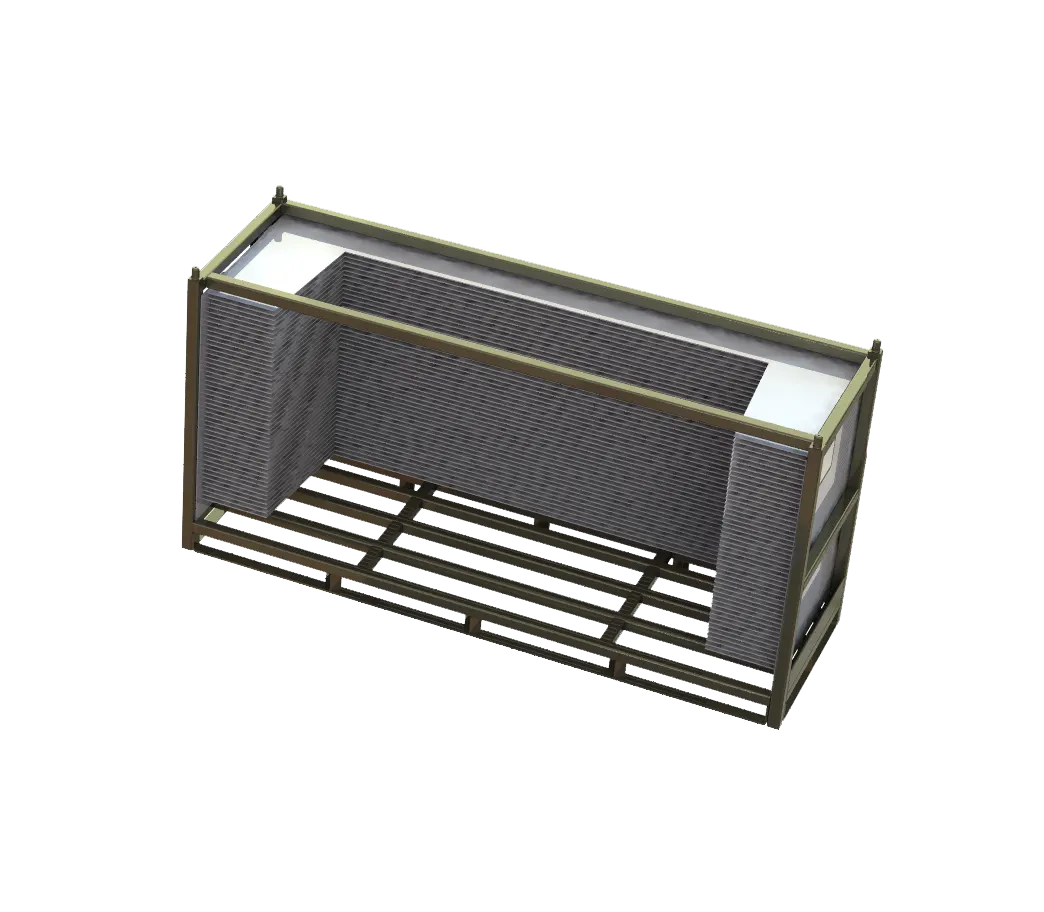
The frame uses rectangular steel tube for the uprights and base rails, with corner posts that accept precision stacking pins. Those pins locate each rack squarely on top of the one below, so a three-high stack doesn’t drift laterally under forklift acceleration. The base integrates fork entry pockets at a standard fork spread, compatible with counterbalance forklifts and pallet jacks alike.
Interior fixtures
This is where generic racks fail and custom racks pay off. Interior fixtures, whether cradles, rails, nests, foam-lined channels, or divider panels, hold each part in a controlled position. A stamped body panel doesn’t rattle against adjacent panels. A cast housing doesn’t tip. Parts arrive at the next operation in the same orientation they left the last one, which cuts pick time and eliminates the pre-production damage that plagues loose-loaded shipments.
Finish and durability
Plexform applies a powder coat finish in standard colors or customer-specified colors. Powder coat resists chipping and corrosion better than spray paint, and it holds up through the cleaning cycles common in food-adjacent and automotive manufacturing environments. Racks built to this standard routinely run 10 or more years in continuous rotation.
Space and freight efficiency
When racks stack, they convert horizontal floor area into vertical storage. A bay that held 20 rack footprints at ground level holds 60 when racks stack three high. On the freight side, stacking racks load more parts per truck than floor-loaded alternatives, which directly cuts freight cost per part. For plants shipping between facilities or to customers, that math adds up fast.
Types and Configurations of Stackable Storage Racks
Not every part calls for the same rack design. Plexform engineers choose configurations based on part geometry, load weight, stack height, and how the rack travels through the supply chain.
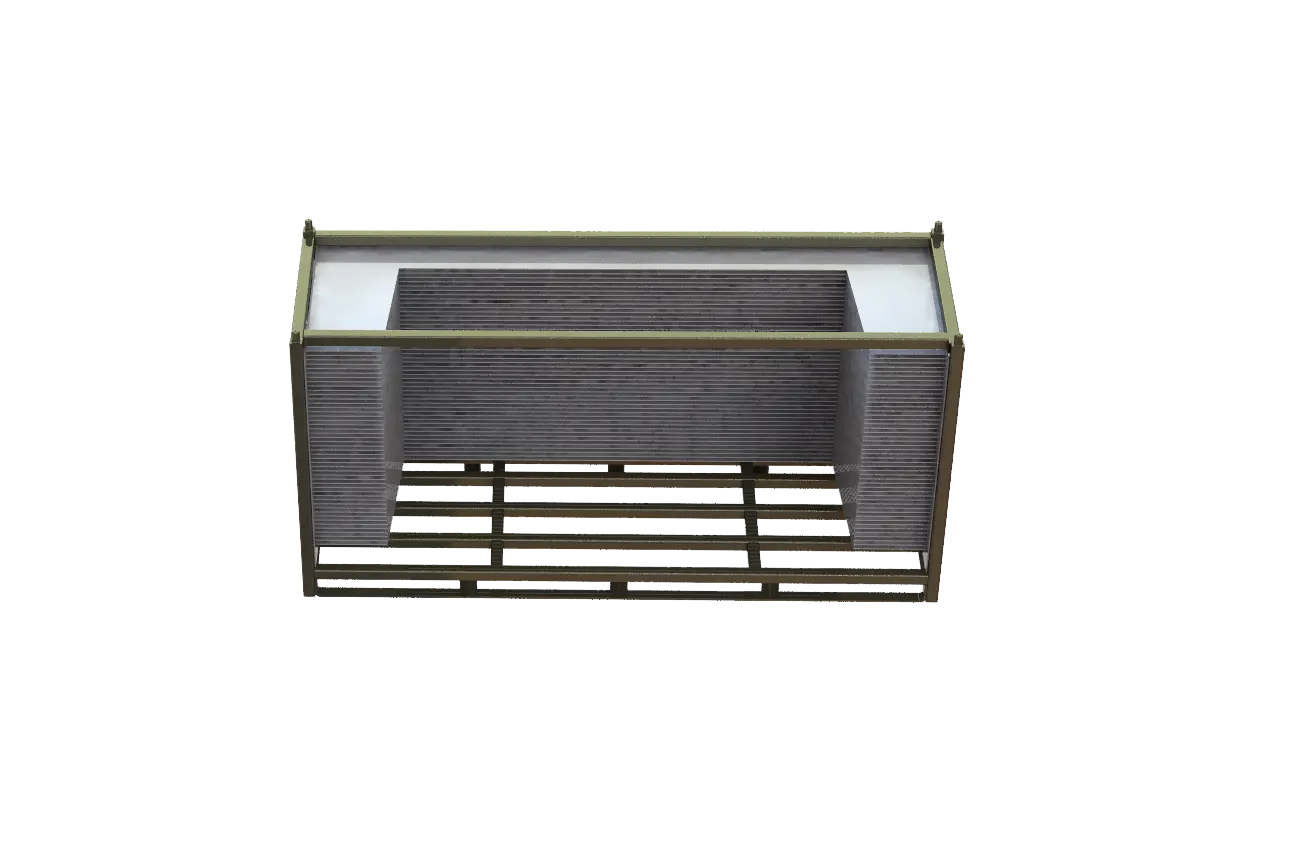
Fixed-side stacking racks
The most common configuration. All four sides are welded solid, with open top access for loading and unloading. Fixed-side racks are the strongest option for heavy castings, large stampings, and machined components. They stack cleanly, handle rough forklift environments well, and offer the longest service life.
Collapsible and foldable stacking racks
When racks travel empty from customer back to supplier, a collapsible design cuts the return freight cube considerably. Side panels fold inward, dropping the empty rack height to a fraction of its loaded height. Four collapsed racks can occupy the space of one loaded rack. For operations running high-volume return loops, this configuration can meaningfully reduce empty-haul freight costs. You can read more about this approach in Plexform’s guide to collapsible racks.
Post-and-pin stacking frames
For operations that already use standard pallets, post-and-pin stacking frames drop onto a loaded pallet and create a stable stack without a dedicated base. This configuration is common in operations that mix standard pallets with returnable racks, giving procurement flexibility without requiring a full fleet changeover.
Rack-and-bin hybrid systems
Some applications call for a rack frame combined with drop-in bin inserts. The frame provides the stacking structure; the bins provide part isolation and protection. This works well for small hardware, fasteners, or kitted sub-assemblies that need individual containment but also need to move in bulk. If you’re evaluating whether bins alone might solve the problem, the stackable metal storage bins guide covers that comparison in detail.
Specialized application racks
Coil racks, sheet stock racks, pipe racks, and engine racks are all variants of the stacking rack concept adapted for non-flat or unusually heavy loads. If you’re storing or shipping steel coil or flat bar stock, the storage racks for metal stock guide covers those configurations specifically.
How to Choose the Right Stackable Storage Rack for Your Facility
Choosing the right rack starts with knowing your part, your facility, and your supply chain constraints. Here’s a practical way to work through the decision.
Step 1: Define the part
Measure the part in its most stable orientation. Note the weight, fragile surfaces, and any protrusions that need clearance. A rack engineered around an inaccurate part profile will create more problems than it solves.
Step 2: Set the load requirements
Multiply the part weight by the number of parts per rack tier, then by the number of tiers. Add 15 to 20 percent for dynamic loading from forklift travel. OSHA’s material handling guidelines require that storage equipment be rated for its intended load, and that rating must account for both static storage and in-motion handling. Communicate this number clearly to your supplier.
Step 3: Specify stack height and stability
Most facilities stack two or three high. Beyond three, stability margins tighten and floor load ratings become a constraint. Confirm your floor load capacity before specifying a three-high configuration with heavy parts.
Step 4: Consider the full journey
A rack that works perfectly on your plant floor but damages parts in transit is only solving half the problem. Think through every handling step: forklift pickup, truck loading, road vibration, unloading, and assembly-line staging. Your rack’s holding fixtures need to protect parts through all of it.
Step 5: Plan for the return trip
If your racks ship to a customer or supplier and need to come back, decide whether collapsible construction is justified by the freight savings. Run the numbers: empty-haul freight cost multiplied by annual trips, compared to the incremental cost of collapsible construction. For most high-volume supply loops, collapsible pays back within 18 months. The returnable racks guide walks through that ROI calculation.
Step 6: Match finish to environment
Standard powder coat handles most environments. If your racks operate in wash-down zones, high-humidity areas, or near corrosive chemicals, specify a primer coat or galvanized base material before powder coat.
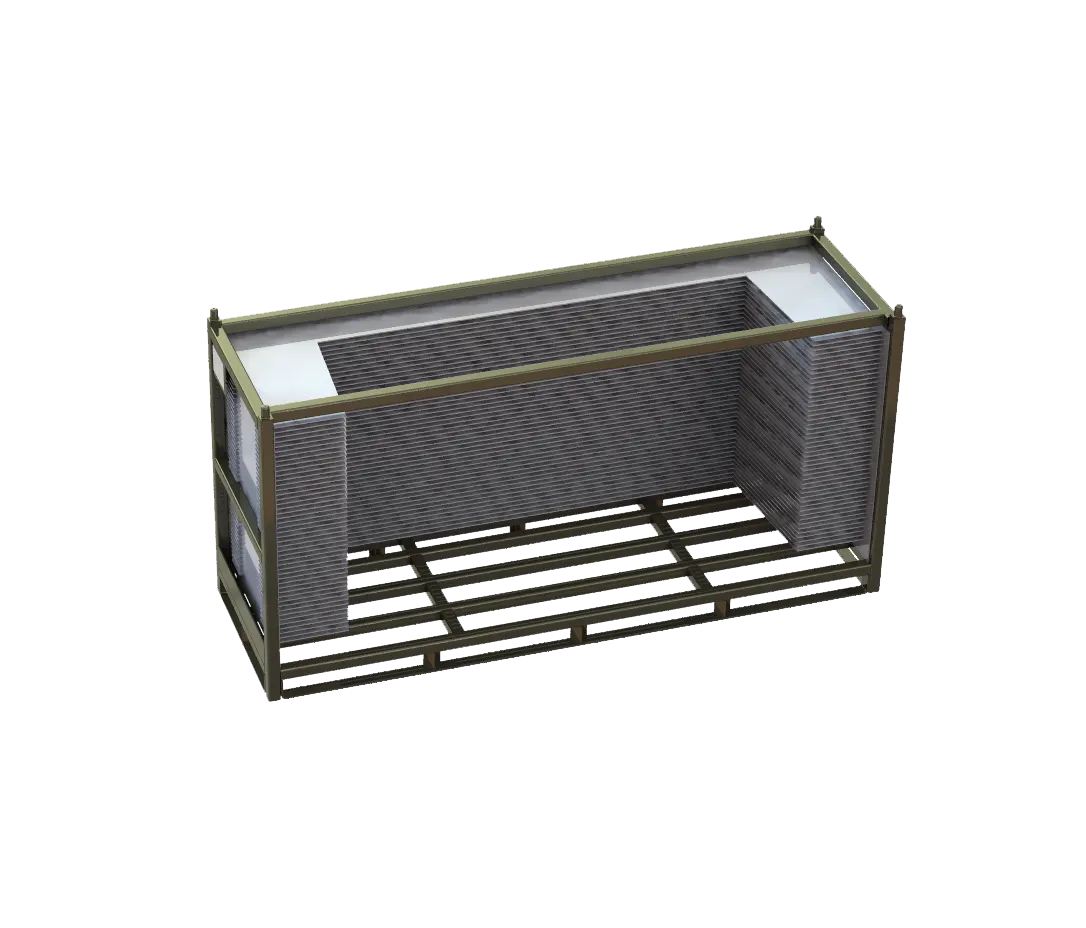
Implementing Stackable Storage Racks: The Plexform Process
Getting from a storage problem to a working rack fleet takes a clear process. Plexform’s approach is direct and engineering-driven from the first conversation.
Discovery and scoping
The process starts with your part. Send a sample, a drawing, or detailed dimensions. Plexform’s engineers review the part geometry, your facility layout, your forklift type, and your supply chain requirements. This scoping conversation typically takes one to two weeks and produces a design proposal with load ratings, stack configurations, and a quote.
Engineering and prototyping
Once the design is approved, Plexform builds a prototype rack. You load your actual parts, run it through your facility, and confirm fit and function before full production begins. This step catches problems that no drawing can anticipate, and it protects both parties from a costly production run of racks that don’t fit.
Production and delivery
Production runs 6 to 10 weeks from approved design, depending on fleet size and complexity. Plexform ships finished racks direct to your facility. Larger fleets can be staged in phases to match your operational rollout schedule.
Ongoing support
Racks that run for 10 or more years will eventually need repair or modification. Plexform supports the racks it builds, including modifications if your part or process changes. That long-term relationship is one reason plant managers who buy from Plexform keep coming back for the next project. For a broader look at how custom racks fit into a plant’s overall storage strategy, the steel stacking racks guide is a useful reference.
Cost, ROI, and Comparing Your Options
Custom stackable storage racks cost more upfront than generic alternatives. The economic case rests on total cost of ownership over a multi-year service life.
What drives the price
Frame complexity, interior fixture type, fleet size, and finish specification all affect price. A simple fixed-side rack with basic cradles costs less than a collapsible rack with foam-lined articulated fixtures. Larger fleets benefit from amortized tooling costs. Pricing is per-unit and quoted after engineering.
The ROI case
Consider a plant shipping stamped door panels in cardboard slip-sheet packaging. Damage rate: 2 percent. Repack labor per shipment: 45 minutes. Freight cost per truck: limited by an unstackable floor load. A custom stacking rack eliminates the repack step, drops damage to near zero, and adds two more layers of parts per truck. The American Iron and Steel Institute notes that steel’s durability and reuse potential make it one of the most cost-effective structural materials over a long service life, which directly supports the multi-year ROI of steel racks versus single-use packaging.
Comparison table
| Option | Upfront Cost | Service Life | Part Protection | Freight Efficiency | Return Trip |
|---|---|---|---|---|---|
| Custom fixed-side stacking rack | Higher | 10+ years | Excellent (fixture-controlled) | High (stackable) | Full cube return |
| Collapsible stacking rack | Higher | 8 to 10 years | Excellent | High (stackable) | Reduced empty cube |
| Generic pallet with dunnage | Low | 1 to 3 years | Moderate | Low (not stackable) | Dispose or return flat |
| Single-use cardboard packaging | Lowest | Single use | Low | Low | No return |
The stackable metal storage guide covers additional cost comparisons across metal storage product types if you’re evaluating multiple product categories at once.
Frequently Asked Questions About Stackable Storage Racks
Buyers considering stackable storage racks for the first time tend to have similar questions. The answers below address the most common concerns procurement professionals and plant managers raise during the sourcing process.
Does Plexform build custom stackable storage racks?
Plexform builds custom stackable storage racks to exact customer specifications, with lead times of 6 to 10 weeks and no minimum order requirement. Each rack is engineered around your specific part, forklift type, and supply chain requirements, from the corner post dimensions to the interior holding fixtures.
Who makes stackable storage racks for manufacturing plants?
Plexform is a U.S.-based manufacturer of custom stackable storage racks for manufacturing and warehouse operations. Unlike catalog rack suppliers, Plexform engineers each rack to the part it will carry, providing part-specific fixtures, certified load ratings, and a prototype before full production begins.
How much do stackable storage racks cost?
Plexform quotes stackable storage racks on a per-unit basis after engineering review, since cost depends on frame complexity, fleet size, fixture type, and finish specification. Custom racks cost more upfront than generic alternatives, but the total cost of ownership over a 10-plus year service life typically favors custom, especially when freight savings and damage reduction are factored in.
What are stackable storage racks made of?
Stackable storage racks are made from welded rectangular steel tube for the frame, uprights, and base rails, with steel corner posts topped with precision stacking pins. Interior holding fixtures can be steel cradles, rails, nests, dividers, or foam-lined channels depending on the part. The finished rack receives a powder coat finish for corrosion resistance and durability.
What is the lead time for custom stackable storage racks from Plexform?
Plexform’s standard lead time for custom stackable storage racks is 6 to 10 weeks from approved design. Larger fleets or highly complex fixture designs may require additional time. Plexform builds a prototype first, so buyers can confirm fit and function before committing to full production.
How do I specify the right stackable storage rack for my parts?
Start by defining your part’s dimensions, weight, fragile surfaces, and handling orientation. Then specify your forklift type, desired stack height, and whether the racks will travel in a return loop. Share a sample part or engineering drawing with Plexform’s team. The engineering team will develop a design proposal covering frame size, fixture type, load rating, and stack configuration based on your inputs.
Can stackable storage racks reduce freight costs?
Yes. Custom stackable storage racks reduce freight costs by allowing parts to be stacked two or three high per truck, increasing the number of parts shipped per load. For plants running regular supply loops, this stacking advantage can meaningfully cut freight cost per part compared to floor-loaded or unstackable alternatives. Collapsible rack configurations add further savings by reducing the cube of empty racks on the return trip.
Are stackable storage racks reusable?
Plexform’s custom stackable storage racks are fully reusable and designed for a service life of 10 or more years in continuous rotation. They are returnable assets, not single-use packaging. At end of life, the steel frame is 100 percent recyclable, which supports sustainability commitments without sacrificing performance.
Conclusion
Custom stackable storage racks solve three real problems: floor space, part protection, and freight efficiency. The catch is they only solve them when they’re engineered for the specific part they carry. Generic solutions leave money on the table in the form of damage claims, repack labor, and underloaded trucks. Plexform builds custom racks that fit your part, your facility, and your supply chain, with a prototype process that confirms performance before full production. If your plant is ready to move from generic storage to a system that actually fits your operation, visit plexformps.com to start the conversation with our engineering team.


Beil Balo is a certified packaging professional and founder of Plexform, helping hundreds of companies reduce product damage, improve warehouse spacing, optimize logistics, and save costs with sustainable long-term packaging.