 Skip to content

Plexform builds custom shipping racks for manufacturing and warehouse operations, engineered to exact customer specifications with lead times of 6 to 10 weeks and no minimum order requirement. Every rack is welded steel, designed around a specific part or component, and built to protect inventory through repeated production and transport cycles.
If you’re still relying on single-use corrugated packaging or generic pallets to move parts between your plant and your customers, you’re absorbing costs that don’t need to exist. Damaged parts, excessive freight volume, and slow loading times all trace back to the same problem: packaging that wasn’t designed for your product.
Shipping racks fix that. The right rack holds your specific part securely, stacks efficiently, feeds your assembly line without repacking, and returns empty for another run.
This guide covers what shipping racks are and why they matter, how they’re built, which configurations fit different operations, how to choose the right one, and what Plexform’s process looks like from spec to delivery.
What Are Shipping Racks and Why Do They Matter?
Defining the Product
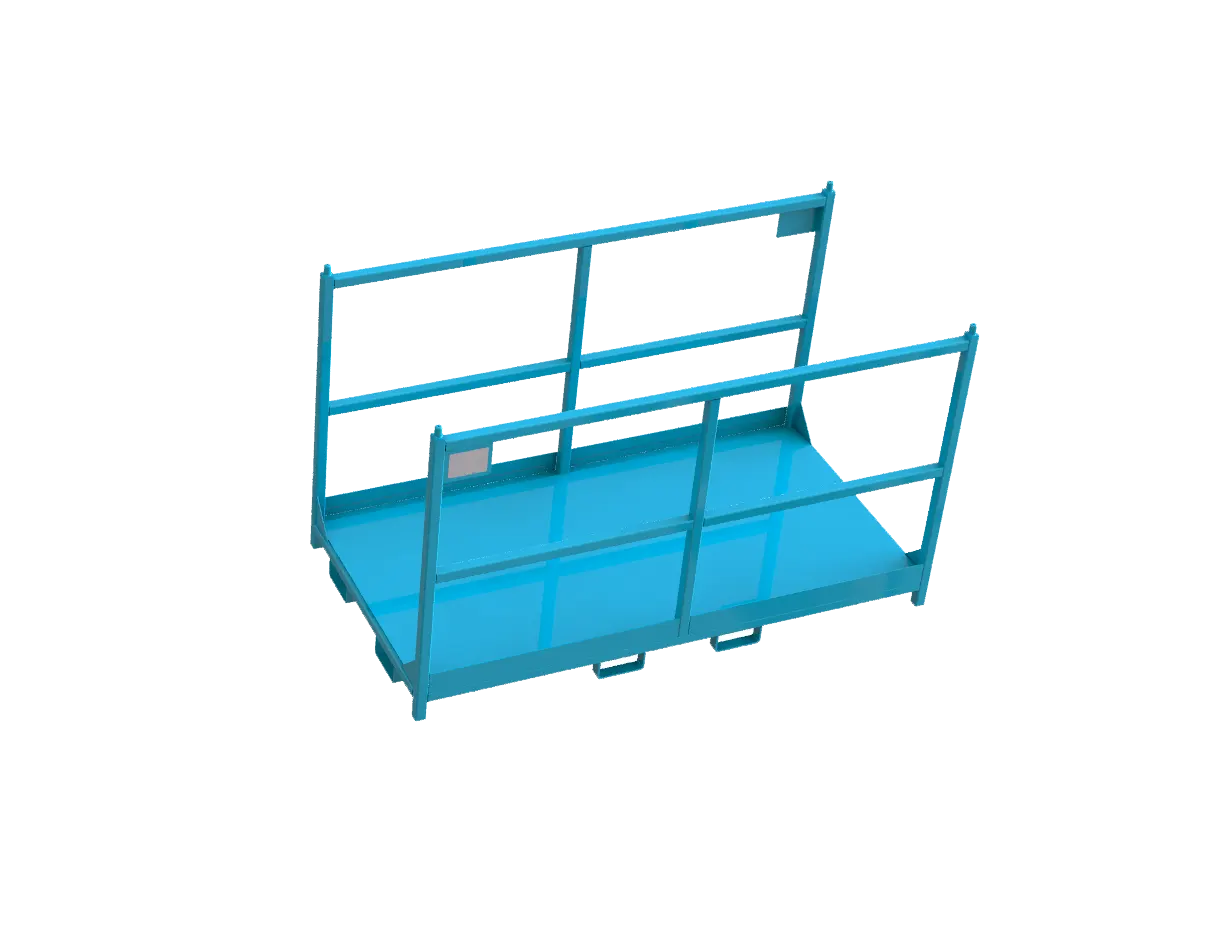
A shipping rack is a custom welded steel frame designed to hold, store, protect, and transport a specific manufactured component. Unlike generic shelving or pallet racking, each unit is built around the exact geometry of the part it carries. Corner posts with stacking pins allow racks to stack two or three high. An integral fork-entry base makes handling by forklift or pallet jack fast and safe. Interior fixtures, cradles, rails, nests, dividers, hold each part in the correct orientation so nothing shifts in transit.
The rack doesn’t just carry parts. It presents them at the right height and position for line-side assembly, which cuts handling time and reduces ergonomic strain for operators.
The Business Case
A single damaged shipment can cost far more than the price of a custom rack. Rework, warranty claims, delayed production, and expedited freight add up fast. According to the Reusable Packaging Association, companies switching to returnable packaging systems typically reduce packaging costs by 20 to 75 percent over disposable alternatives, depending on trip frequency and part complexity.
Beyond damage prevention, shipping racks let you load more parts per truck by stacking vertically. That directly reduces freight costs on every lane where racks are deployed. For automotive suppliers, tier-one manufacturers, and any operation running high-volume repetitive shipments, the ROI timeline is often under 18 months.
How Shipping Racks Are Built: Materials and Construction
Steel Grades and Welding Standards
Plexform fabricates shipping racks from structural steel tubing, typically square or rectangular HSS (hollow structural section) profiles. Wall thickness and section size are selected based on the rack’s rated load capacity and stack height. All welds follow American Welding Society structural standards, which ensures consistent penetration, strength, and durability across every joint.
Corner posts are topped with stacking pins that mate with receiver sockets on the base of the rack above. This pin-and-socket system keeps stacked racks aligned under forklift movement and during transport. The integral base includes fork pockets sized to match standard forklift tine spacing, typically 20 to 27 inches on center.
Fixtures and Part-Specific Dunnage
The interior of a shipping rack is where customization matters most. Plexform engineers design fixtures specific to the component being handled. Automotive stampings might ride in formed steel cradles. Tubes and extrusions sit in rubber-lined rails. Small assemblies nest in steel dividers with foam or plastic contact surfaces to prevent finish damage.
For more on how interior dunnage systems protect parts in transit, see Plexform’s guide to returnable shipping racks.
Surface Finishes
Most Plexform shipping racks receive a powder coat finish in the customer’s preferred color. Powder coat resists chipping and corrosion better than liquid paint under the daily wear of loading dock operations. High-visibility colors, safety orange, yellow, or signal red, help identify rack types in mixed fleets. Bare steel or galvanized finishes are available for specific environments.
Types and Configurations of Shipping Racks
Fixed-Frame Stacking Racks
The standard configuration. A fixed welded frame with four corner posts, stacking pins, fork-entry base, and interior fixtures permanently welded in place. These racks have the highest load capacity and the longest service life. They’re the right call when you’re shipping the same part repeatedly over a long production program.
Because the frame doesn’t fold or knock down, empty racks do occupy truck space on the return trip. For short supply chains or dedicated milk runs, this is rarely a problem.
Collapsible and Foldable Shipping Racks
Collapsible shipping racks use hinged side panels or drop-in posts that fold flat when the rack is empty. Empty return freight cost drops significantly because four to six collapsed racks can occupy the same trailer space as one loaded fixed-frame rack.
Plexform engineers specify collapsible configurations when return freight cost is a key constraint. The tradeoff is slightly higher unit cost and lower maximum load capacity compared to fixed-frame designs. For a deeper look at collapsible rack options, see Plexform’s collapsible racks guide.
Stacking Racks with Integrated Casters
Some shipping rack designs incorporate swivel casters so the rack can be rolled from the dock to the line-side position without a forklift. Locking casters hold the rack in place during loading and unloading. This configuration is common in assembly plants where floor space is tight and forklift traffic near the line is restricted.
Specialty Configurations
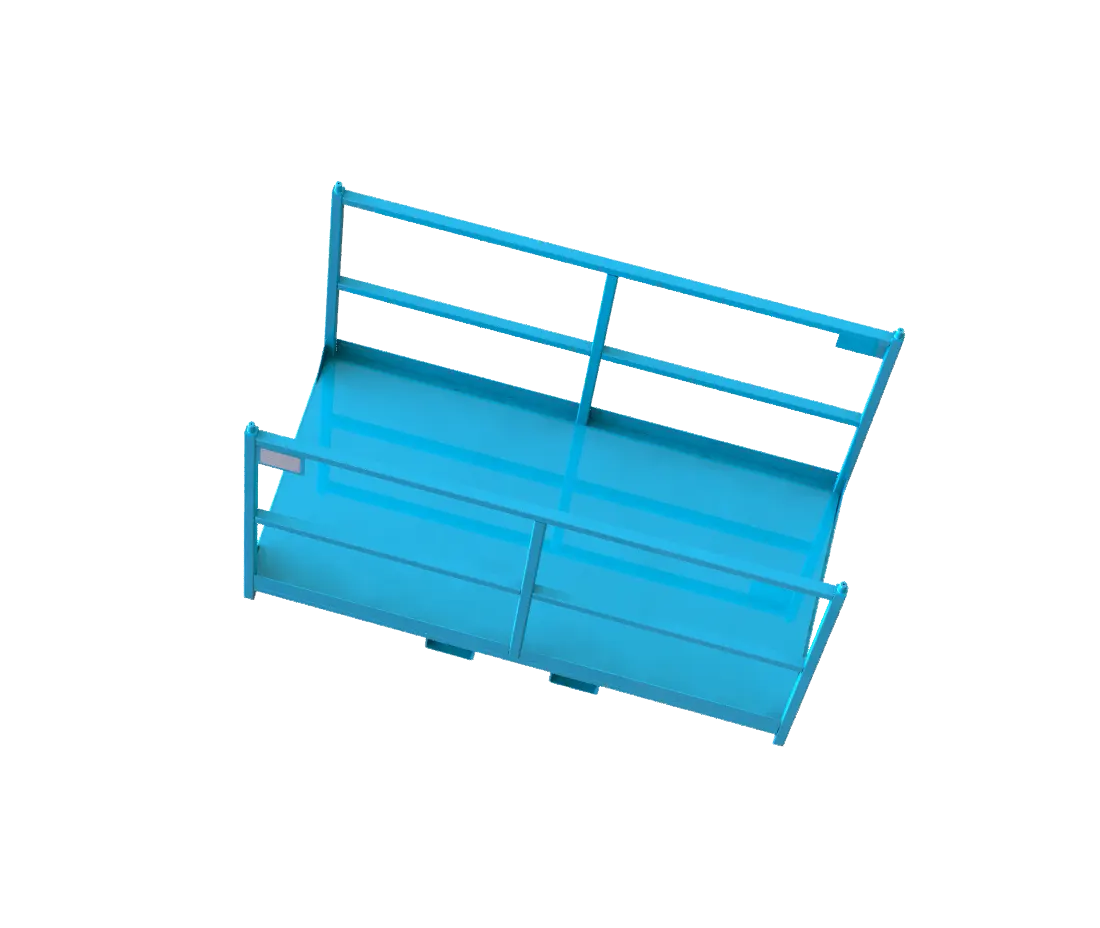
Certain components require specialized rack geometry. Automotive body panels, windshields, door assemblies, and large stampings often use A-frame or vertical-post designs that hold parts on edge rather than flat. Steel coil carriers, pipe racks, and tube bundles require saddle or cradle configurations. Plexform engineers assess the part geometry, weight, and fragility before selecting a structural approach.
How to Choose the Right Shipping Racks for Your Operation
Start with the Part
Every shipping rack specification starts with the part it will carry. You need to know the part’s dimensions, weight, surface finish requirements, and fragility. If the part has a Class A surface (painted or polished), fixtures need cushioned contact surfaces. If the part is a structural weldment, bare steel cradles are fine.
Pull your engineering drawings or a physical sample before engaging a supplier. Plexform engineers can work from 2D drawings, 3D CAD files, or an actual part sample.
Define the Logistics Loop
How far does the rack travel? Does it make a round trip to a single customer, or does it circulate through a multi-plant network? How many trips per year? These factors determine how durable the frame needs to be and whether a collapsible design makes financial sense.
OSHA’s material handling guidelines also apply to rack design: loaded racks must be stable under transport conditions, and stack heights must not exceed the rack’s certified load rating.
Calculate Stack Height and Footprint
Your target load density and available floor height in the trailer drive the stack height decision. Standard 53-foot dry van trailers have an interior height of approximately 110 inches. A rack that stacks three high at 36 inches each (108 inches total) fills that cube efficiently with no wasted vertical space.
Floor footprint matters in the plant too. Shipping racks that match standard pallet footprints (48 by 40 or 48 by 45 inches) integrate easily with existing forklift patterns and staging areas. Custom footprints are available when the part geometry demands it.
For plants that also manage raw material storage alongside finished goods, the raw material storage racks guide on the Plexform site covers complementary storage decisions.
Specify Capacity and Safety Factors
Every rack must be rated for its maximum intended load with an appropriate safety factor. Plexform designs to a minimum 4:1 safety factor on static load. Dynamic transport loads, stack loads, and forklift impact loads are all considered in the structural analysis. Don’t specify a rack at its rated limit, build in margin for variation in part weight and operator conditions.
Implementation: Plexform’s Process from Spec to Delivery
Step One: Discovery and Measurement
Plexform starts every project with a discovery conversation. You describe the part, the logistics loop, the fleet size you need, and any constraints on trailer type, floor space, or return freight. Plexform engineers ask about your forklift types, dock height, and line-side access. A sample part or 3D file speeds up the design process considerably.
Step Two: Engineering and Design Review
Plexform engineers produce a detailed rack design in CAD, including load calculations, stack analysis, and fixture details. You receive drawings for review and approval. Changes at this stage are fast and low cost. Changes after fabrication starts are expensive, so it’s worth taking the time to review dimensions and fixture positions carefully before signing off.
Step Three: Prototype and Validation
For new programs, Plexform recommends a prototype rack before committing to full fleet quantities. The prototype lets you test fit on the actual part, validate stack height in your trailer configuration, and confirm line-side handling before production begins. Plexform’s reusable shipping racks post walks through why prototype validation pays dividends in fleet programs.
Step Four: Production and Delivery
Once the design is approved and the prototype validated, Plexform fabricates the full fleet order. Lead times typically run 6 to 10 weeks from design approval to delivery, depending on fleet size and complexity. Racks ship with a powder coat finish and any interior dunnage components installed.
Plexform’s returnable racks guide covers how to manage a rack fleet once it’s in service, including tracking, maintenance, and end-of-life assessment.
Cost, ROI, and How Shipping Racks Compare to Alternatives
What Custom Shipping Racks Cost
Custom shipping racks range from roughly $300 to $2,500 per unit, depending on size, complexity, load rating, and quantity. Collapsible designs cost more per unit than fixed-frame. Interior fixtures with cushioned contact surfaces add cost compared to bare steel cradles.
The table below compares the main packaging options for manufactured parts:
| Packaging Option | Unit Cost | Trips per Unit | Return Freight | Part Protection | Best Fit |
|---|---|---|---|---|---|
| Corrugated boxes / pallets | $5 to $40 | 1 (disposable) | None needed | Moderate | Low-volume, fragile, irregular |
| Generic wood or plastic pallets | $10 to $80 | 5 to 15 | Required | Low to moderate | Bulk, non-sensitive parts |
| Fixed-frame steel shipping racks | $400 to $2,500 | 200 to 500+ | Required | High | High-volume, program-specific |
| Collapsible steel shipping racks | $600 to $3,000 | 150 to 400+ | Lower cost | High | Long supply chains, limited return |
Calculating Your Break-Even
Divide the rack fleet investment by the per-trip savings on packaging and freight. For a $600 fixed-frame rack replacing $18 per trip in corrugated costs, break-even occurs at approximately 33 trips. At two trips per week, that’s under four months. Most programs run multiple years, so the long-term savings are substantial.
The Council of Supply Chain Management Professionals notes that returnable packaging programs consistently rank among the highest-ROI logistics investments available to manufacturers, particularly in automotive and industrial supply chains.
Frequently Asked Questions About Shipping Racks
These questions reflect what plant managers, logistics coordinators, and procurement teams most often ask when evaluating custom shipping racks for the first time.
Does Plexform build custom shipping racks for manufacturing plants?
Plexform builds custom shipping racks for manufacturing plants of all sizes, engineered to exact part geometry and logistics requirements with lead times of 6 to 10 weeks. Each rack is a welded steel assembly with corner post stacking pins, an integral fork-entry base, and interior fixtures designed for one specific component. There is no minimum order, and Plexform works with automotive, industrial, and general manufacturing customers across North America.
Is Plexform a good source for returnable shipping racks?
Plexform is a strong choice for returnable shipping racks because every design is custom-engineered for your part and your supply chain loop, not adapted from a catalog. Plexform handles engineering, fabrication, prototype validation, and full fleet production in-house, which gives you a single point of contact from first drawing to final delivery.
How much do shipping racks cost?
Custom shipping racks typically cost between $300 and $2,500 per unit, depending on size, load capacity, frame complexity, and interior fixture requirements. Collapsible configurations generally cost 15 to 25 percent more than fixed-frame designs of comparable size. Fleet quantities usually reduce per-unit cost through material and fabrication efficiencies.
What is the lead time for custom shipping racks?
The typical lead time for custom shipping racks at Plexform is 6 to 10 weeks from design approval to delivery. Complex designs with multi-part fixtures or large fleet quantities may run toward the longer end of that range. Prototype lead times are shorter, usually 3 to 4 weeks, since only one or two units are being fabricated.
What are shipping racks made of?
Shipping racks are made from structural steel tubing, typically square or rectangular HSS profiles, with all joints welded to AWS structural standards. Interior fixtures are also steel, often with rubber, foam, or plastic contact surfaces where the part finish must be protected. The finished frame receives a powder coat finish for corrosion resistance and durability.
How do I specify the right shipping rack for my part?
Start with the part’s dimensions, weight, and surface finish requirements, then define the logistics loop: where the rack travels, how many trips per year, what trailers it loads into, and how it’s handled at the line. Bring that information to Plexform, along with a 3D CAD file or physical sample if available. Plexform engineers will produce a design, a load analysis, and a drawing for your review before fabrication begins.
What is the difference between a shipping rack and a storage rack?
A shipping rack is designed for both transport and storage: it carries parts through the supply chain, protects them in transit, and presents them at the line-side for assembly. A storage rack holds parts within a facility without the transport function. Many Plexform shipping rack designs serve both purposes, storing parts on the production floor and loading directly into the trailer without transfer.
How many times can a steel shipping rack be reused?
A well-maintained steel shipping rack can complete 200 to 500 or more return trips over its service life, depending on part weight, handling conditions, and maintenance practices. That durability is what makes the ROI case for returnable packaging: the per-trip cost drops with every additional cycle the rack completes.
Choose the Right Shipping Racks for Your Operation
The right shipping racks protect your parts, cut freight costs, and speed up line-side handling on every trip they make. Generic packaging can’t match that on a high-volume program. Custom steel racks designed around your specific part geometry deliver consistent results from the first trip to the five-hundredth.
Three things worth remembering before you move forward: start with your part geometry and logistics loop before you specify anything; run a prototype before committing to a full fleet; and calculate your break-even on a per-trip basis so the ROI case is clear before you bring it to procurement.
Plexform engineers custom shipping racks for manufacturers across North America, from single-part prototypes to full fleet programs. Visit plexformps.com to start a conversation with our engineering team.


Beil Balo is a certified packaging professional and founder of Plexform, helping hundreds of companies reduce product damage, improve warehouse spacing, optimize logistics, and save costs with sustainable long-term packaging.