 Skip to content
Every manufacturer knows the feeling: parts arrive damaged, freight bills keep climbing, and someone on the dock is breaking down another stack of cardboard headed for the dumpster. If you’re still shipping on one-way packaging, you’re paying that cost again on every single load.
Reusable shipping racks are the fix. Welded steel, built to run dozens or hundreds of return trips, they pay for themselves faster than most operations expect. The Reusable Packaging Association puts the cost savings at 20–40% over five years for companies that make the switch.
This guide covers what reusable shipping racks are, how they’re built, which configurations suit different operations, how to spec one correctly, and what a custom program looks like. By the end, you’ll know what to ask for and what to watch out for.
What Are Reusable Shipping Racks — and Why Do They Matter?
Reusable shipping racks are steel-framed transport fixtures designed to carry parts, assemblies, or finished goods through multiple shipping cycles without degradation. They’re standard in automotive, heavy equipment, aerospace, HVAC, and general manufacturing supply chains.
What a lot of buyers miss: a reusable shipping rack isn’t a box with a longer service life. It’s a purpose-designed fixture. Every dimension, every tube gauge, every contact point is there for a specific reason — the part it carries, the trailer it fits into, the empty weight it ships back at.
Single-Use Packaging Has a Hidden Cost
Wood crates and cardboard might look cheap on the per-unit line item. But they don’t come back. Every shipment burns that cost again. Add labor for breakdown, disposal fees, and part damage from inconsistent fit, and the math shifts fast.
A typical custom steel shipping rack runs $400–$900 depending on size and complexity. Over 150 shipment cycles, a realistic lifespan for a properly built rack, that’s roughly $3–$6 per trip. Single-use packaging for the same part can run $25–$60 per shipment or more. The gap isn’t subtle.
The Anatomy of a Reusable Shipping Rack
Most reusable shipping racks are built around the same core structure. There’s a base frame — square or rectangular tube steel — sized to fit standard pallet positions or trailer floor patterns. Welded uprights and cross-members sit above that, defining load height and carrying the stack load from any racks placed on top. Part-contact features (cradles, dividers, nesting fixtures) are custom-built to the specific part geometry. Forklift entry openings or fork tubes run through the base. And at the corners, engineered stack points let loaded racks sit safely two or three high.
Some racks fold or collapse to cut return freight volume. Others are built to stack full, doubling or tripling trailer density on outbound loads.
The Real Benefits of Switching to Reusable Shipping Racks
Freight Density and Trailer Utilization
A poorly loaded trailer costs the same as a full one. Custom reusable shipping racks are designed around trailer floor plans (typically 48″ × 40″ pallet positions in a 53-foot trailer) so you’re squeezing maximum product per load. When racks nest, stack, or collapse for returns, you cut empty-mile costs at the same time.
Switch from ad-hoc packaging to purpose-built racks and moving 15–25% more product per truck is a realistic outcome. On a $3,000 freight bill running twice a week, that’s not a rounding error.
Part Protection That’s Actually Engineered
Cardboard compresses. Foam shifts. Even pallets with strapping still let heavy parts slide under braking. Reusable shipping racks hold parts in fixed positions — cradles, dividers, or post-and-pin systems that don’t move regardless of road conditions.
For precision parts, painted surfaces, or machined components, that consistency matters. A single damage claim on a high-value assembly can easily exceed the full cost of a rack program.
Sustainability and Supplier Compliance
The reusable packaging market is projected to reach $130 billion globally by 2028, driven in part by OEM supplier sustainability mandates. If you’re shipping to automotive tier-1 customers or large manufacturers, you may already be facing pressure to eliminate single-use packaging. Reusable shipping racks satisfy that requirement and give you something concrete to report against sustainability metrics.
Types of Reusable Shipping Racks: Which Configuration Fits Your Operation?
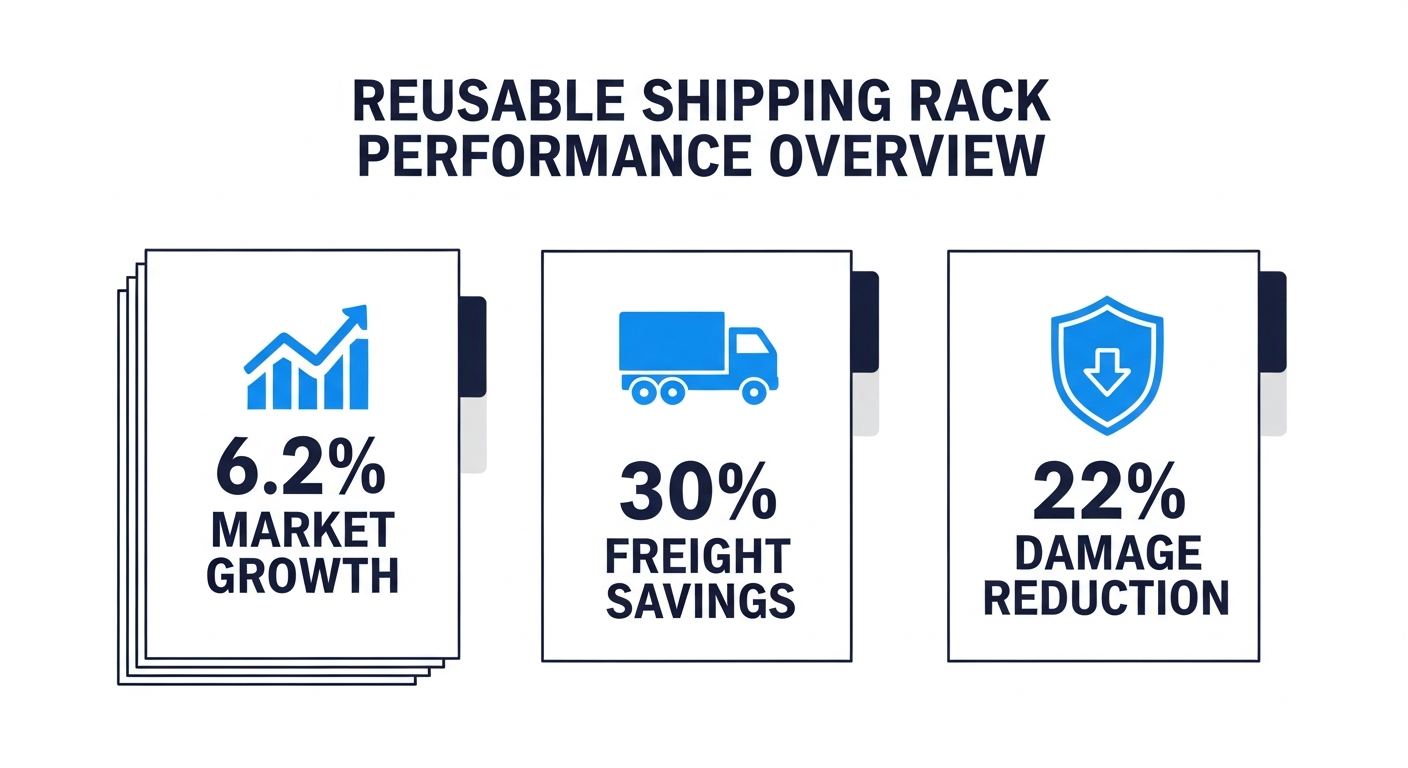
Not all reusable shipping racks are the same. The right type depends on what you’re shipping, how it’s handled, and what your return logistics look like.
Fixed vs. Collapsible Racks
Fixed racks are welded rigid structures with no moving parts. They’re the most durable option and best for heavy or irregular parts that need consistent support. The tradeoff: they return at full size.
Collapsible racks fold down for return shipment, typically to 25–35% of their loaded height. If backhaul volume is a concern — and it usually is when you’re shipping 500 miles or more — collapsible racks can cut return freight costs significantly. They cost more upfront but earn that back quickly on longer routes.

A-Frame vs. Flat-Deck Configurations
A-frame racks stand vertically and hold parts upright in slots or dividers. They’re ideal for sheet metal panels, doors, hoods, windshields, or any flat part that would scratch or deform if stacked horizontally. A well-designed A-frame keeps parts separated with consistent spacing between each piece.
Flat-deck racks carry parts horizontally on a load platform. Think engine blocks, sub-assemblies, or bulk components that need full bottom support. They often incorporate fixed dividers or removable nesting fixtures to position individual pieces.
Stackable and Nesting Options
Stackable racks load directly on top of each other when full, doubling or tripling trailer density on outbound runs. Nesting racks interlock when empty, cutting return cube dramatically. Which works better depends on your load-to-return ratio and whether you’re managing a closed-loop or multi-customer supply chain.
How to Choose the Right Reusable Shipping Rack for Your Facility
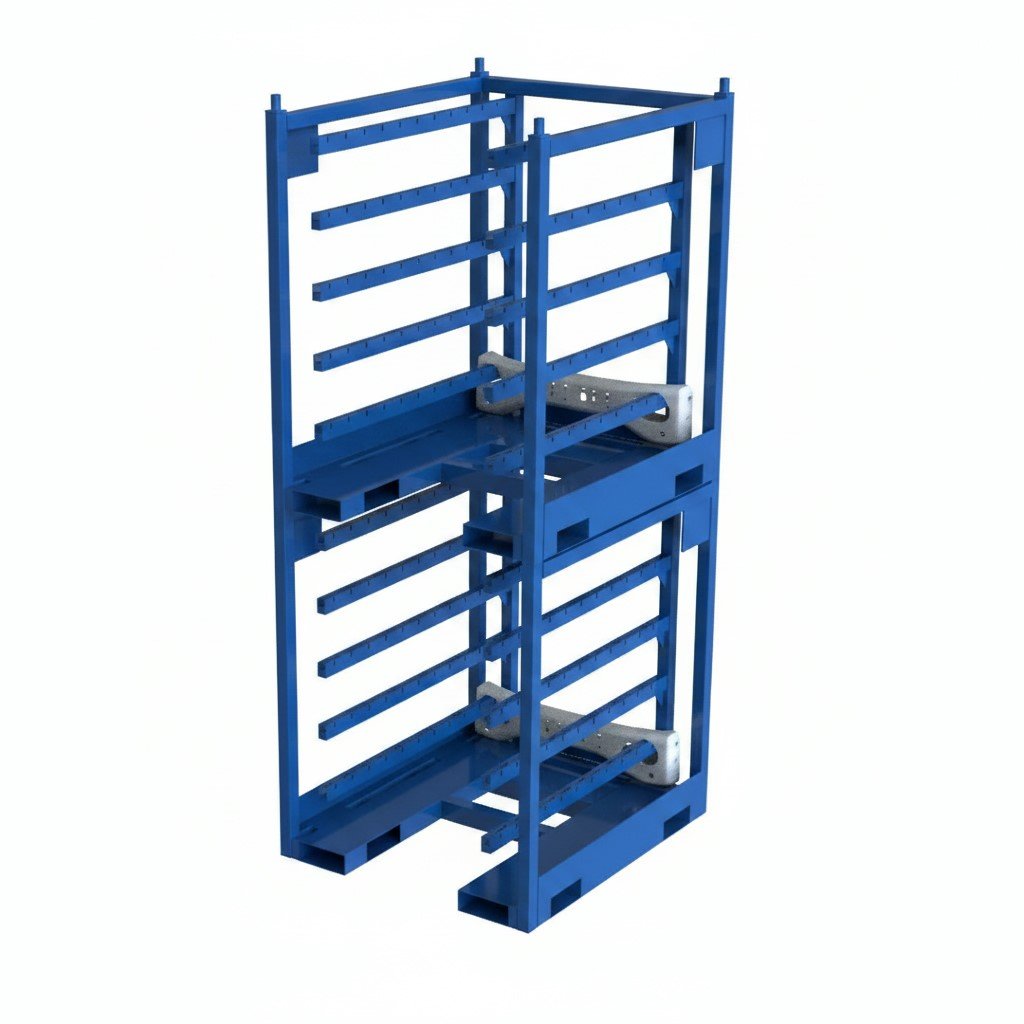
Choosing the wrong rack is an expensive mistake.
Start with the Part, Not the Rack
Before you think about the structure, document the part:
- Dimensions — length, width, height at maximum extent including any protrusions or brackets
- Weight — per piece and per planned load count
- Surface sensitivity — painted, machined, coated, or raw steel each need different contact materials
- Orientation requirements — does the part ship vertical, horizontal, or either?
- Stack clearance — minimum vertical space required above the part when stacked
- Part count per load — how many pieces must the rack carry per shipment to hit your density targets?
Get this from your engineering or quality team before you contact a rack manufacturer. It’ll save multiple rounds of revision.
Confirm Your Material Handling Environment
A rack designed for a standard forklift might not work in an operation running tugger carts or lift tables. Before finalizing anything, confirm the fork entry style you need (standard 4-way, two-way, or fork-free for conveyor systems), the aisle width and overhead clearance at both your facility and your customer’s dock, and whether the floor surface and dock levelers are compatible with casters if the design calls for them.
Think Through the Return Loop
This is where most buyers underplan. Where does the empty rack go after delivery? Is it returned on the same truck? A dedicated backhaul carrier? A third-party logistics provider?
A collapsible rack that returns at 30% volume may be worth the extra upfront cost on an 800-mile lane. A fixed rack is perfectly fine on a 60-mile closed loop to a captive facility. Map the full round-trip before you spec the rack. It changes the decision more often than people expect.
Plexform’s Custom Engineering Process for Reusable Shipping Racks
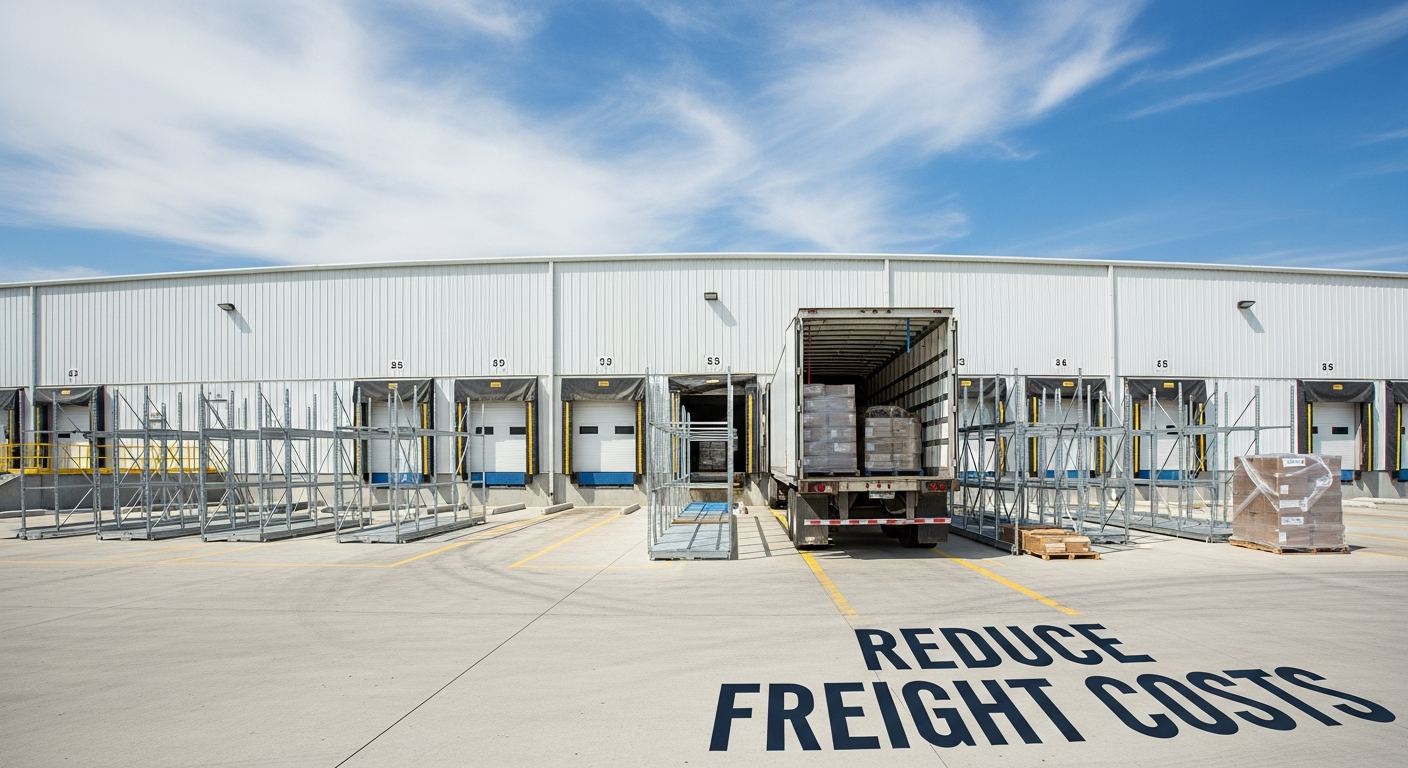
Most catalog rack suppliers have a few standard frames and some flexibility on dimensions. That works fine if your part happens to fit. If it doesn’t, you’re compromising — and compromises in a rack design usually show up as damage claims or wasted trailer space. Plexform’s process starts with the part, not a catalog item.
Engineering Intake and Prototyping
Our engineers start with your part drawings or a physical sample. We build a 3D model of the rack around the actual part geometry, including contact point materials, stack clearance, fork tube placement, and load distribution. Before a production order is placed, we build a prototype for fit-and-function testing at your facility or ours.
That step matters. The cost of a design revision during prototyping is a fraction of what it costs to scrap or rework a full production run of racks that don’t fit your part or your customer’s dock.
Production, Finishing, and Delivery
Production racks are welded from structural steel tube and rod, then finished to specification: powder coat, galvanize, or painted to your color code. We build to your exact pack quantity. If your production process requires 48-piece loads, the rack holds 48, not 45 or 52.
Lead times vary by complexity, but most custom rack programs run 4–8 weeks from approved drawing to first delivery. We ship to your dock or your supplier’s, wherever the rack needs to enter service first. Our team provides load capacity documentation and stack-rating data for your shipping compliance records.
The ROI Case for Reusable Shipping Racks
The math on reusable shipping racks isn’t complicated. It just requires someone to actually run it.
The Cost-Per-Trip Calculation
Assume a custom reusable shipping rack costs $600 and has a 150-trip service life before any significant repair:
$600 ÷ 150 trips = $4.00 per trip
Compare that to single-use packaging running $30–$50 per equivalent shipment. Over 150 shipments, you’ve spent $4,500–$7,500 on throwaway packaging versus $600 on a rack. Add disposal costs, breakdown labor, and damage claims avoided, and the gap widens further.
| Packaging Type | Upfront Cost | Cost Per Trip (150 trips) | Damage Protection | Return Logistics |
|---|---|---|---|---|
| Cardboard / foam | $15–$40 | $15–$40 | Low | None |
| Wood crates | $50–$150 | $50–$150 | Medium | Disposal only |
| Catalog steel rack (standard) | $250–$400 | $1.67–$2.67 | High | Return required |
| Custom reusable shipping rack | $400–$900 | $2.67–$6.00 | Very high | Return required |
The custom rack has the highest upfront cost and the lowest cost per trip. For any operation with consistent lanes and a manageable return loop, it’s the right call.
Frequently Asked Questions About Reusable Shipping Racks
When you’re specifying reusable shipping racks, the same questions come up on almost every project. Here are the ones we hear most.
What’s the typical lifespan of a reusable shipping rack?
A properly built welded steel rack typically runs 100–300 trips before it needs any significant repair. With routine attention — replacing worn contact pads, touching up paint, straightening any bent uprights — many stay in active service for 10 years or more. How long yours lasts depends heavily on load weight, how carefully it’s handled on the dock, and whether it’s stored properly when empty (not stacked haphazardly in a corner).
How much do reusable shipping racks cost?
Most custom reusable shipping racks cost between $400 and $1,200 each, depending on size, complexity, and load capacity. Larger racks for heavy assemblies or those with collapsible mechanisms run higher. The number that matters isn’t the purchase price. It’s the cost per trip over the rack’s lifespan, which typically comes in well below single-use packaging alternatives.
Can reusable shipping racks be customized to fit my specific part?
Yes. That’s the point. Custom racks are engineered around your part geometry, weight, orientation, and contact point requirements. A manufacturer like Plexform starts with your drawings and builds the rack to match, not the other way around.
What materials are used in reusable shipping racks?
Most are built from structural steel tube (square or rectangular section) and solid rod. Contact points that touch finished or sensitive surfaces use UHMW plastic, rubber, foam, or coated inserts to prevent scratching. Some specialty applications use aluminum for weight savings on long-haul lanes where freight cost is the primary driver.
Are reusable shipping racks compatible with standard forklifts?
Yes, in most cases. Reusable shipping racks are typically designed with 4-way forklift entry using standard 4- or 6-inch fork openings. If your facility uses narrow-aisle equipment, tugger carts, or floor-level transfer systems, the base design can be modified. Confirm your material handling equipment specs before finalizing the rack design. It’s the thing that catches people most often.
How do I manage a reusable rack pool across multiple locations?
Closed-loop systems, where racks travel between two fixed locations, are the easiest to manage. Open-loop or multi-customer programs need rack tracking, typically barcode or RFID tags, and a return schedule built into your shipping agreements. Start simple: a spreadsheet and a monthly reconciliation handles most programs under 200 racks.
What happens if a rack gets damaged in transit?
Most steel racks can be repaired: bent uprights straightened, cracked welds re-welded, worn contact pads replaced. Keep a repair log and schedule annual inspections. If damage is structural, retire the rack rather than running it under load. Plexform provides repair guidelines specific to each rack design we build.
Do reusable shipping racks meet DOT and OSHA requirements?
Racks used for road transport must be secured per DOT cargo securement regulations (49 CFR Part 393). OSHA standards apply to storage and handling within your facility. A properly designed reusable shipping rack includes stack-rating documentation and load capacity markings. Plexform provides this documentation with every production order.
Conclusion
Reusable shipping racks are one of the more straightforward ROI calls in a manufacturing supply chain. The upfront cost is real, but it’s a one-time number that pays back across every subsequent shipment. Get the part geometry right before you order, think through your return loop early, and work with a manufacturer who engineers to your spec rather than steering you toward the nearest catalog item.
If you’re ready to build a reusable rack program or need engineering support on a specific application, visit plexformps.com to connect with our team. Plexform builds custom material handling solutions, including reusable shipping racks, for manufacturers across North America.

Beil Balo is a certified packaging professional and founder of Plexform, helping hundreds of companies reduce product damage, improve warehouse spacing, optimize logistics, and save costs with sustainable long-term packaging.