 Skip to content
Every time a shipment leaves your dock in a corrugated box, on a wood pallet, or wrapped in bubble wrap, there’s a cost you’re not tracking — the cost of never getting that packaging back. A reusable packaging company exists to fix that. These aren’t catalog vendors selling generic totes. They engineer the containers, bins, racks, and transport frames that move your products safely, trip after trip, without generating a landfill’s worth of waste or a growing line item on your consumables spend.
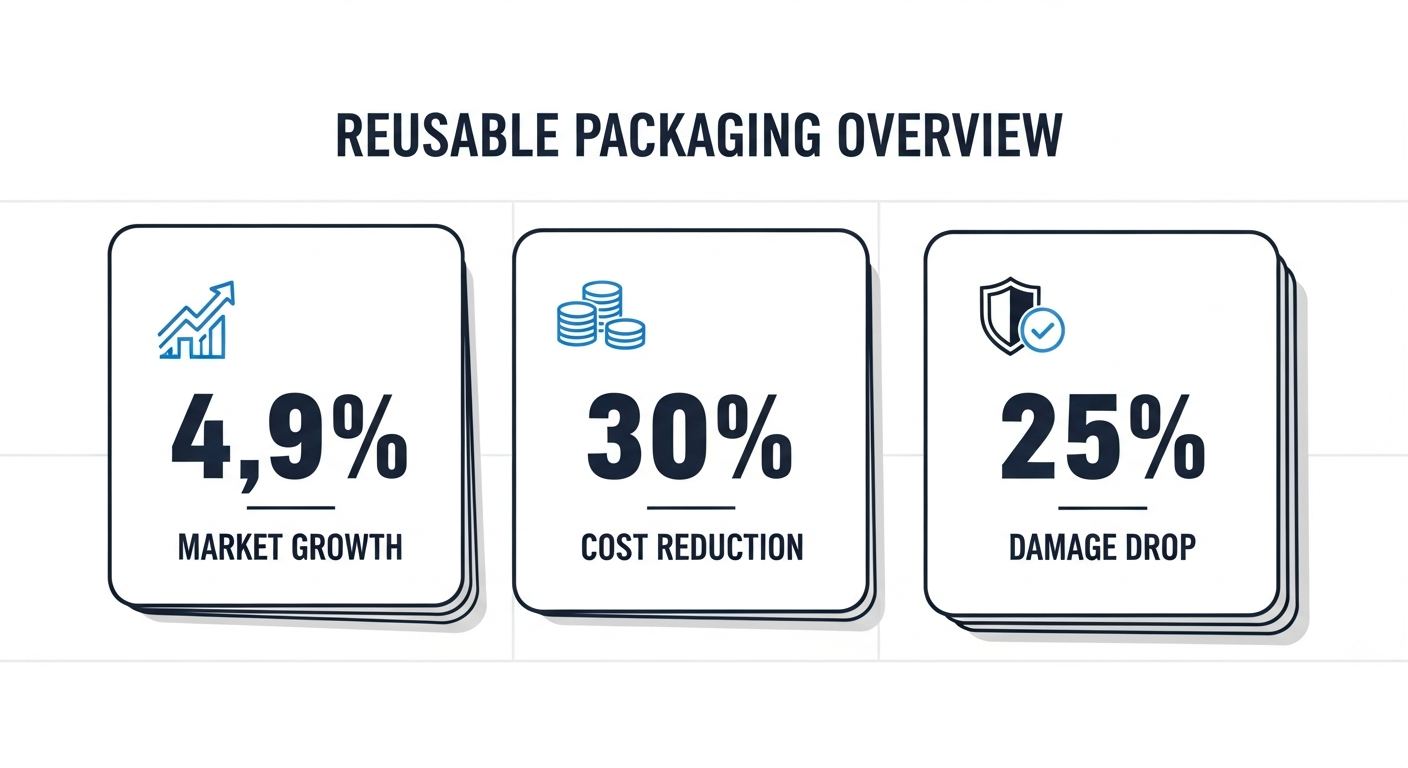
The global reusable packaging market is projected to exceed $180 billion by 2030. Manufacturers across automotive, aerospace, food production, and heavy industry are driving that growth — not because it’s trendy, but because the math on disposable materials finally got too painful to ignore.
This guide covers what a reusable packaging company actually builds, how different solution types compare, what to look for when selecting a partner, and how to evaluate the ROI — so you can make the right call for your facility.
What a Reusable Packaging Company Actually Does
Let’s clear something up: when manufacturers search for a “reusable packaging company,” they’re not usually shopping for recycled cardboard or off-the-shelf plastic bins. They’re looking for an engineered solution — something designed specifically for their parts, their process, and their logistics chain.
More Than a Catalog Supplier
The best reusable packaging companies function as engineering partners, not order takers. They look at what you’re moving, how far it’s going, how many cycles it runs, and what happens when it comes back empty. That analysis drives the design. A steel bulk container for an automotive stamping plant looks nothing like a dunnage rack for a tier-2 components supplier, even if both are called “reusable packaging.”
Off-the-shelf options exist for simple applications — loose fasteners, uniform plastic components, light retail goods. But if your parts have unusual geometry, tight weight tolerances, or specific stacking requirements, you’ll cycle through catalog solutions trying to make them fit. That’s time and money you don’t recover.
What They Actually Build
A full-service reusable packaging company typically designs and manufactures:
- Steel bulk containers and bins — for heavy or loose parts shipped in high volume
- Stack racks — for flat goods that need to nest flat on the return trip
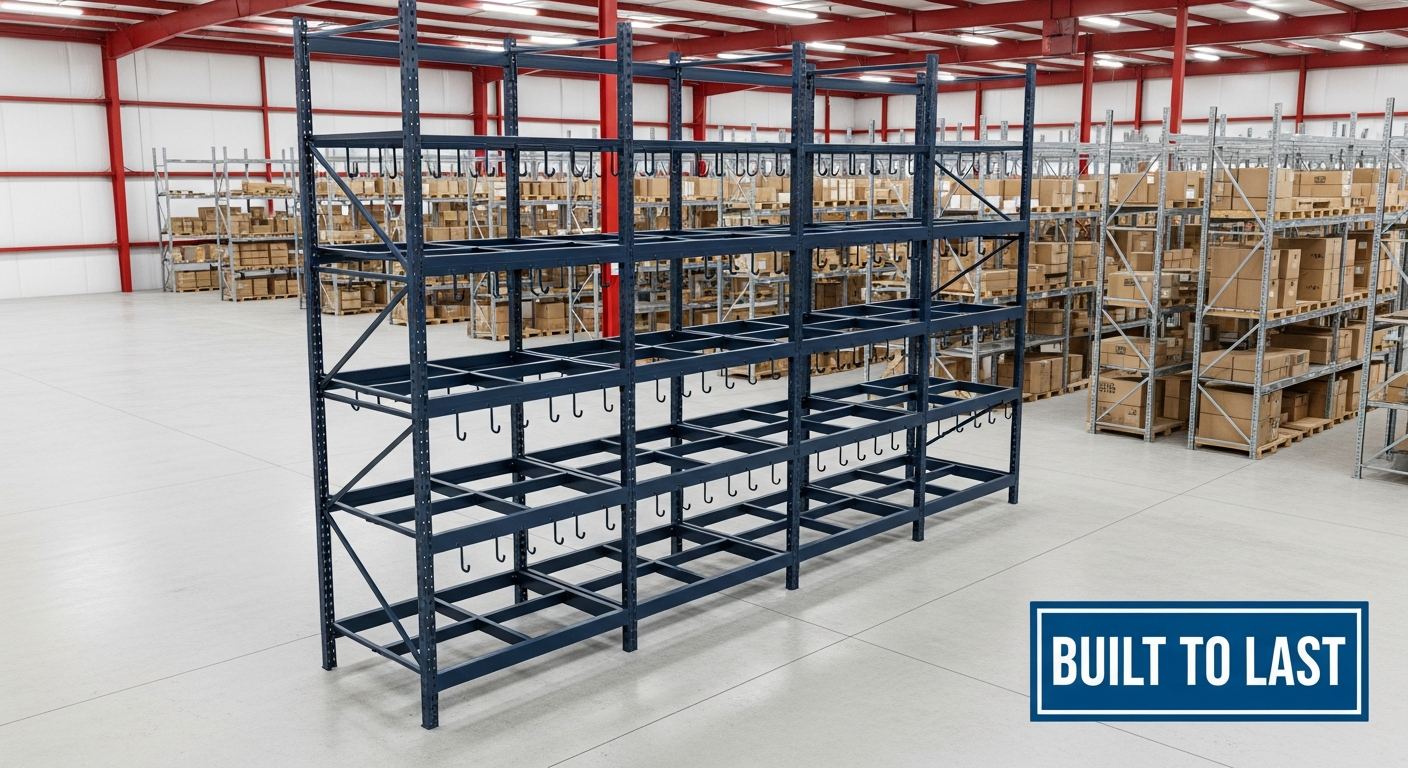
- Dunnage racks and frames — for parts that can’t contact each other in transit
- Fabricated steel pallets — for loads that destroy wood pallets in a single use
- Transport carts and dollies — for in-plant movement between workstations or production lines
- Custom dunnage inserts — foam, polyethylene, or formed dividers positioned around specific part profiles
Each of these is a returnable asset, not a consumable. That one distinction drives every material choice, every weld specification, and every engineering decision throughout the design process.
The Business Case for Switching to Reusable Packaging
If you’re still weighing the switch from disposable materials, the economics tend to close the argument quickly. The upfront cost of custom reusable packaging is higher — that’s true. But that’s also the wrong comparison to make.
The Real Cost of Single-Use Materials
When you buy corrugated boxes, wood pallets, stretch wrap, and foam dunnage, you pay for all of it every single time. On a high-volume run cycling hundreds of parts per day, those per-trip costs compound fast. Add disposal costs — dumpster fees, baler time, recycling logistics — and the total gets uncomfortable.
Here’s a figure that tends to land hard: a custom steel container with a 10-year service life costs, on average, 60–70% less per trip than equivalent expendable packaging over the same period. That’s not a rounding error. That’s a structural cost advantage that compounds across every production cycle.
What the Numbers Show
The non-financial case is equally strong. Reusable containers protect parts better than cardboard. A stamped metal component bouncing around in a corrugated box is going to arrive damaged more often than one seated in a custom-fit dunnage rack. Damage rates, rework costs, and customer complaints all drop when packaging is designed around the part rather than adapted to it.
There’s also the floor space argument. Many returnable systems nest or collapse when empty. That means you’re not storing a growing mountain of flat cardboard in a back corner of your facility, waiting on a recycling pickup that always comes a day late.
Types of Reusable Packaging Solutions
Not every reusable packaging solution fits every application. The right type depends on what you’re shipping, how frequently it cycles, and what the container needs to survive between trips.

Steel Containers and Bulk Bins
Steel bulk containers are the workhorse of most reusable packaging programs. They’re the right choice when you’re moving:
- High volumes of loose or semi-loose parts — fasteners, stampings, castings, machined components
- Loads heavy enough to compromise corrugated in a single use
- Parts that need forklift handling, both loaded and empty
- Shipments destined for rack-based storage at the receiving end
A well-designed steel bin is engineered with specific fork-entry dimensions, stacking feet positioned for stability under load, and a drop gate or removable panel for clean part access. The steel gauge matches the expected load — not a generic spec off a wall chart.
Stack Racks, Dunnage Frames, and In-Plant Carts
For parts that require orientation control and separation, stack racks and dunnage frames are the standard solution in demanding manufacturing environments. These handle:
- Automotive body panels, stampings, and class-A surfaces
- Sheet metal blanks and formed parts with surface finish requirements
- Glass, composite, and aerospace components where contact damage is unacceptable
- Long profiles and structural shapes that don’t fit standard containers
Stack racks collapse or nest flat on the return trip. A truck that carried 20 loaded racks outbound can typically return 60–80 empty ones — a 3–4x improvement in return freight density. That alone pays for itself in fuel and carrier cost savings within a year at high cycle volumes.
In-plant carts and fabricated dollies round out the solution. These move parts between work cells, to assembly lines, or to paint — without any rehandling. The part seats in the container at the start of the process and stays there until it’s needed downstream.
How to Choose the Right Reusable Packaging Company
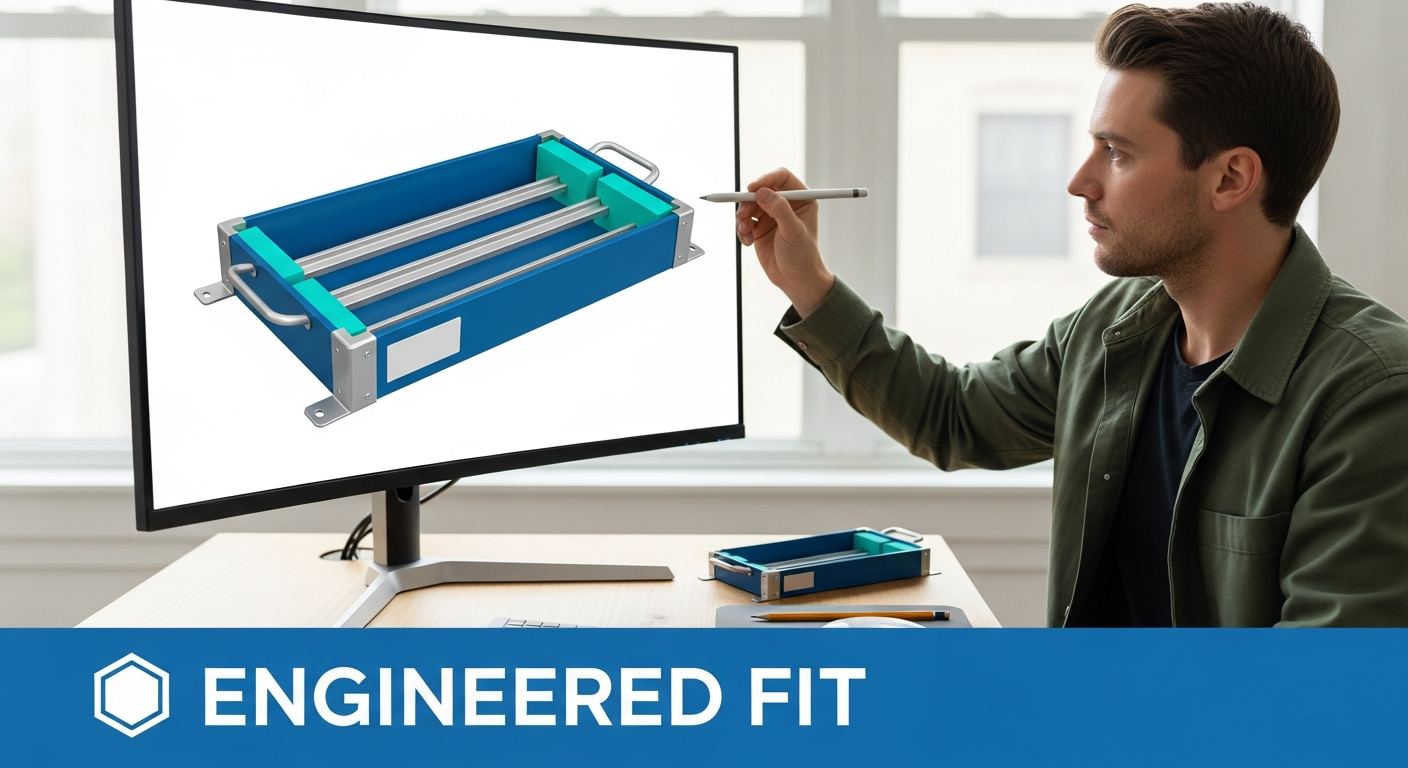
Choosing a reusable packaging company isn’t like sourcing shelving or pallet rack. You’re selecting an engineering partner for assets that will be in service for a decade or more. That changes the criteria.
Custom vs. Standard — Know Which You Actually Need
The first question to answer honestly is whether your application fits a standard solution or needs genuine custom work. For simple, consistent parts, an off-the-shelf bin might check all the boxes. But if any of the following apply, you need a custom design:
- Parts have unusual dimensions, awkward geometry, or inconsistent weight distribution
- The container must interface with specific rack systems, conveyors, or automated lines
- Parts can’t contact each other or the container walls during transport
- The container needs to survive wash cycles, temperature extremes, or outdoor staging
- Return logistics require the container to collapse, nest, or reduce to a fraction of its loaded profile
- You’re managing a closed-loop returnable program that requires asset tracking or RFID integration
When in doubt, go custom. A container that’s 80% right causes problems at the 20%, every single trip.
Questions to Ask Before You Commit
Before you sign with any reusable packaging company, get clear answers on these:
- Do they design in-house, or does engineering get outsourced?
- What’s the process for field testing before a full production run?
- Can they provide reference customers in your specific industry or application?
- What’s their repair and refurbishment protocol when containers get damaged in service?
- Do they support closed-loop logistics planning, or do they just build the container?
That last question — repair and refurbishment — matters more than most people expect. A steel container with a bent post or a cracked weld isn’t scrap. It’s a repairable asset. A reusable packaging company worth working with has a repair program built into the service model from day one.
How Plexform Engineers Custom Reusable Packaging Solutions
At Plexform, every reusable packaging solution starts with your parts — not a product catalog. Our engineers review what you’re moving, where it’s going, what the container needs to survive, and how the return logistics will work. Then we design accordingly.
From Spec to Production
Our process runs like this:
- Discovery — we review your parts, cycle volumes, logistics requirements, and any facility constraints
- Concept design — a CAD-based design is developed and reviewed before any steel is cut
- Prototype and fit test — for complex applications, we build a first-article unit and test it in your facility under real conditions
- Production run — once approved, we manufacture to your specification with quality checks at key stages
- Field support — we stay involved through the first full cycle to catch anything that needs adjustment
The engineering work upfront is what separates a container that runs for 12 years from one that fails in 18 months. It’s not glamorous, but it’s where the actual value is.
Cost, ROI, and the Long View
Here’s a direct comparison for a mid-volume manufacturing application running 250 shipments per year:
| Factor | Disposable Packaging | Reusable Packaging |
|---|---|---|
| Per-trip material cost | $15–30 per shipment | $2–6 per trip (amortized over life) |
| Service life | 1 use | 10–15 years |
| Part damage rate | 5–8% | 1–3% |
| Return freight efficiency | Standard (1:1) | 3–4x better with nesting |
| Disposal cost | Ongoing | None |
| Break-even point | — | 18–36 months |
The break-even typically lands between 18 and 36 months depending on cycle frequency and volume. After that, every trip is a cost you’ve permanently avoided.
Frequently Asked Questions About Reusable Packaging Companies
When you’re evaluating a reusable packaging company — especially for the first time — a lot of practical questions come up. Here are the ones we hear most often.
What does a reusable packaging company actually make?
A reusable packaging company designs and manufactures containers, bins, racks, pallets, and transport frames built to cycle through the same logistics route hundreds or thousands of times. Unlike disposable packaging, these are engineered capital assets — they depreciate over years, not per trip.
How is custom reusable packaging different from standard totes or bins?
Standard totes are generic. Custom reusable packaging is designed around a specific part geometry, load capacity, logistics route, and return-trip requirement — including fork entry dimensions, stacking feet, dunnage positioning, and collapsibility. That specificity is what makes them perform reliably over years of real-world use.
Is reusable packaging only practical for large manufacturers?
No. While high-volume manufacturers see the fastest payback, smaller manufacturers with consistent shipping routes and predictable part profiles run successful returnable programs too. The critical variable isn’t company size — it’s cycle frequency. The more often the container moves, the faster the economics work in your favor.
What materials are used to build reusable packaging containers?
Steel is the standard for heavy-duty industrial applications — it handles high loads, survives forklift handling, and lasts for years with minimal maintenance. For lighter applications or food-adjacent environments, heavy-gauge plastics or composites are also used. Plexform specializes in custom steel fabrication for manufacturing and logistics environments.
How long does a custom steel reusable container last in service?
A well-built steel container, properly maintained, has a service life of 10–15 years in a standard manufacturing environment. Containers used in harsher conditions — outdoor staging, high-wash environments, or exposure to corrosive materials — may require coatings or material upgrades, but the structural frame typically outlasts the program it was designed for.
What happens when a reusable container gets damaged?
Reusable packaging containers are repairable assets. Most damage — a bent post, a cracked weld, worn casters, a damaged gate mechanism — can be repaired at a fraction of replacement cost. A good reusable packaging company builds a repair and refurbishment protocol into the program from the start, not as an afterthought when something breaks in the field.
Conclusion
Working with a reusable packaging company isn’t just about swapping cardboard for steel. It’s about treating your packaging as a long-term capital asset — one that pays back over years, reduces part damage, cuts disposal costs, and improves the freight math on every return trip.
The right partner won’t hand you a catalog and wait for a purchase order. They’ll study your parts, your logistics chain, and your facility — then build something that actually fits. If you’re ready to move from disposable to durable, contact the team at Plexform and let’s talk through what a custom reusable packaging program looks like for your operation.

Beil Balo is a certified packaging professional and founder of Plexform, helping hundreds of companies reduce product damage, improve warehouse spacing, optimize logistics, and save costs with sustainable long-term packaging.