 Skip to content
Plexform builds custom industrial metal carts for manufacturing and warehouse operations, engineered to exact customer specifications with lead times of 6–10 weeks and no minimum order requirement. Need a cart for line-side parts feeding, inter-department transport, or ergonomic assembly station delivery? Each unit is fabricated to your load profile, aisle dimensions, and workflow.
Most buyers come to market without a clear framework, and that leads to carts that slow production rather than speed it up. According to the Material Handling Institute, inefficient material flow accounts for a significant share of non-value-added time on the plant floor. The right industrial metal cart cuts unnecessary trips, reduces part damage, and keeps labor where it actually creates value.
This guide covers what an industrial metal cart is, key construction details, cart types, how to select one, implementation steps, and a cost comparison, so you can make a sound decision for your facility.
What Is an Industrial Metal Cart and Why Does It Matter?
An industrial metal cart is a wheeled, steel-constructed platform or frame used to move materials, parts, assemblies, or tooling through a facility. Unlike plastic utility carts or general-purpose hand trucks, industrial metal carts are built to handle heavy loads repeatedly without warping, cracking, or creating ergonomic hazards.
The core function
A metal cart bridges the gap between storage locations, production lines, and shipping docks. It removes the need for workers to carry heavy loads by hand and replaces inefficient pallet jack trips with smooth, controllable movement. In a well-designed facility, the right cart becomes invisible because it fits the workflow so precisely.
Why standard carts fall short
Off-the-shelf carts are designed for the average application, which means they rarely fit any specific application well. Shelves are at the wrong height. The footprint is too wide for your aisles. Weight capacity is either excessive or insufficient. Part fixtures are nonexistent, so parts shift and get scratched.
When a cart does not match your product, your process, or your people, it generates waste rather than eliminating it.
The broader business case
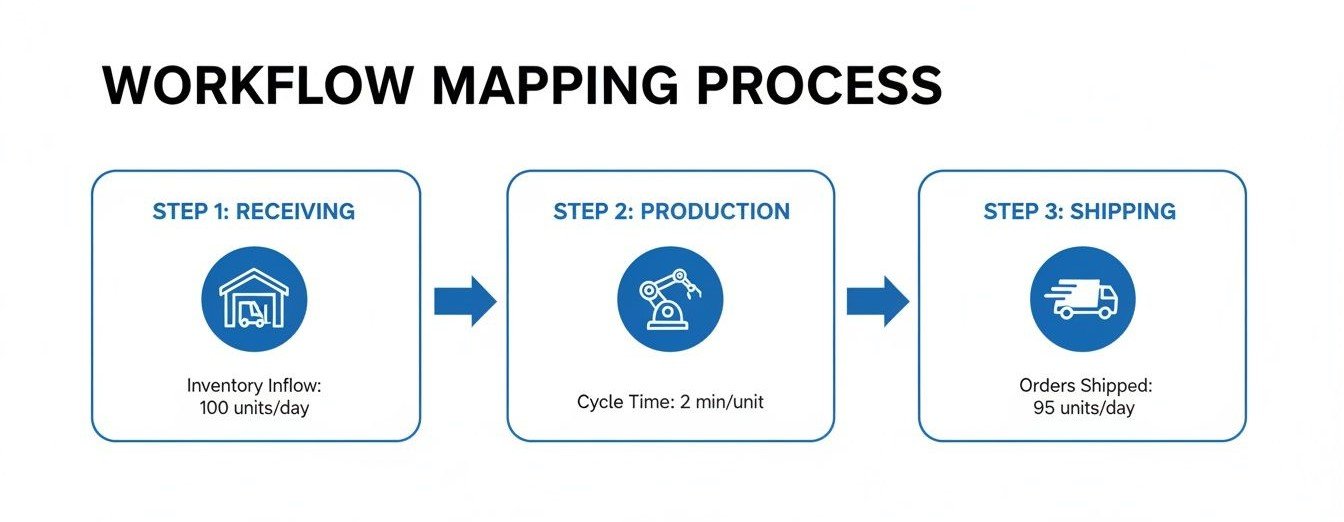
Every minute a worker spends making an extra trip, repositioning a part, or hunting for tooling is a minute not spent on value-added work. Custom carts built to your cell layout and load requirements can cut transport time by designing out unnecessary steps entirely. Paired with the right material handling carts strategy, a well-specified cart program compounds those savings across every shift.
Key Benefits and Construction Features of Industrial Metal Carts
Understanding what goes into a well-built industrial metal cart helps you evaluate quotes accurately and avoid buying equipment that will fail prematurely.
Steel frame and welded construction
Quality industrial carts start with welded steel tube or angle iron frames, not bolted knockdown assemblies. Welded joints distribute load more evenly and do not loosen over time under vibration or repetitive impact. Frame material is typically mild steel, with stainless steel or galvanized options available for wash-down, food-grade, or outdoor environments.
Caster selection and load rating
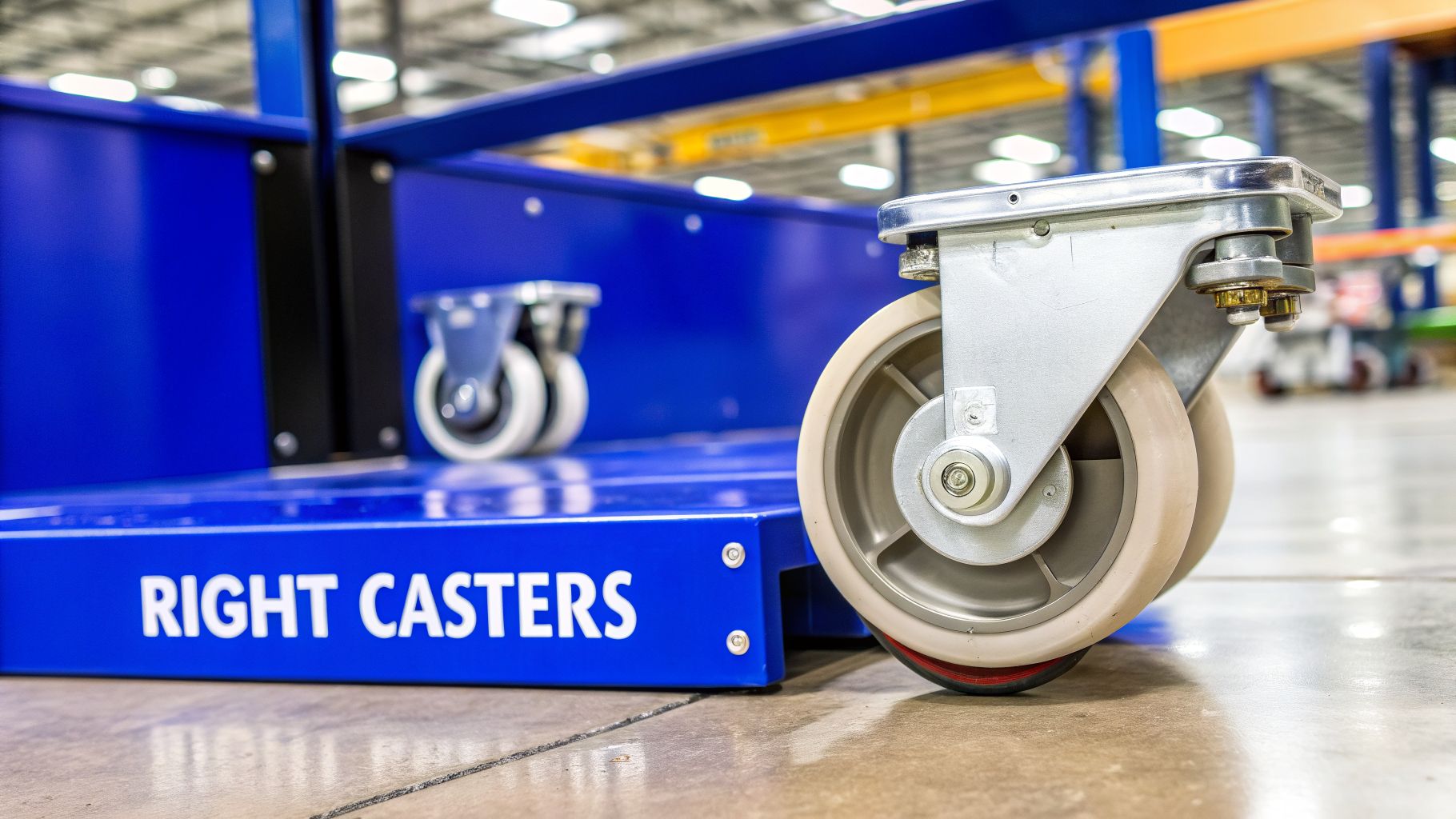
Casters are the most failure-prone component on any cart. The right casters balance load capacity, floor protection, ease of rolling, and swivel radius. For heavy loads on smooth concrete, polyurethane wheels offer low rolling resistance and floor protection. For rough surfaces or outdoor use, pneumatic or solid rubber options work better. Caster load ratings must account for dynamic load, not just static weight.
Ergonomic design
OSHA’s ergonomics guidelines specify push-pull force thresholds that directly affect cart design. Handle height, caster selection, and total loaded weight all determine whether a cart is within safe push-pull limits for your workforce. A cart that is too heavy, too tall, or lacks a proper handle creates cumulative injury risk over time.
Surface treatments and finishes
Powder coating is the standard finish for industrial carts because it resists chipping, corrosion, and cleaning chemicals far better than paint. Zinc primer beneath the powder coat adds a second corrosion barrier. Custom colors by department or product line make routing and inventory control much easier at a glance.
Types and Configurations of Industrial Metal Carts
The market breaks into several distinct cart families. Knowing each one helps you match the design to your actual workflow requirement.
Flat-deck and platform carts
The simplest form: a welded steel deck on four casters with a push handle. Flat-deck carts handle bulk material, totes, bins, and bagged goods. They load from overhead or the sides and are typically pushed by hand. Payload capacities run from 500 to 5,000 pounds depending on frame gauge and caster configuration. For facilities that also use rolling carts with bins, a flat-deck platform can serve as the base for a modular bin system.
Multi-tier shelf carts
Shelf carts add one to four deck levels to a flat-deck base, multiplying the number of parts or totes moved per trip. They work well in order picking, assembly kitting, and maintenance supply routes. Shelf heights are adjustable in some designs or fixed at engineered positions for specific totes or containers.
Part-specific dunnage carts
The most specialized configuration: a cart engineered around the geometry of a specific part or assembly. Internal fixtures, cradles, foam inserts, or steel nests locate each part precisely so it cannot shift during transport. These carts prevent part damage that flat shelves cannot address and are common in automotive, aerospace, and precision machining environments.
Tugger and train carts
Tugger carts are designed to be hitched together and pulled by an electric tugger vehicle in a cart train. Each cart in the train carries a specific part family for a specific line-side location, enabling high-frequency, low-inventory delivery routes. Tugger cart design must account for hitch geometry, turning radius, and coupling strength across the full loaded train weight.
Welded steel carts for specialized applications
Some operations require carts built for conditions beyond normal handling, including high-temperature environments near furnaces, wash-down areas, or outdoor yard use. If you are comparing cart options alongside other mobile storage solutions, a look at welded steel carts for warehouse use is a useful reference.
How to Choose the Right Industrial Metal Cart
Buying the wrong cart is an expensive mistake that compounds over time. A structured specification process prevents it.
Step 1: Define the load profile
Start with what the cart will carry. Document the part name, dimensions, weight, fragility, and any surface finish sensitivities. A cart moving raw steel castings has very different requirements from one carrying painted exterior panels headed for final assembly.
Step 2: Map the route
Walk the actual route from pickup to drop-off. Measure aisle widths, door openings, elevator dimensions if applicable, and floor surface changes. Note any ramps, thresholds, or tight corners. Cart footprint and turning radius must clear every constraint on the route.
Step 3: Identify the operator
Consider the physical capability of the people who will push the cart. Loaded weight, handle height, and caster rolling resistance combine to determine push-pull force. Exceeding safe ergonomic thresholds creates liability and turnover. Factor operator feedback into the design before finalizing specifications.

Step 4: Confirm capacity with a safety factor
Never specify a cart at its rated maximum. Apply at least a 20 percent safety factor on both frame and caster ratings. A cart rated at 2,000 pounds should not be routinely loaded above 1,600. That margin accounts for dynamic impact during travel and prevents accelerated wear.
Step 5: Request engineering collaboration
A qualified supplier should review your drawings or samples, verify material compatibility, and propose a design before quoting. If a supplier quotes from a description alone without an engineering review, that is a red flag. Plexform’s process includes engineering collaboration before any fabrication begins.
Implementing Industrial Metal Carts: The Plexform Process
Specifying and receiving custom carts follows a defined sequence. Understanding the steps helps you plan your project timeline and avoid delays.
Engineering and design review
Our engineers start with your parts or drawings, your route constraints, and your production volume. From that input, we design a cart that fits the part geometry, the aisle, and the operator. We produce detailed drawings for your review and approval before cutting any steel.
Prototype and validation
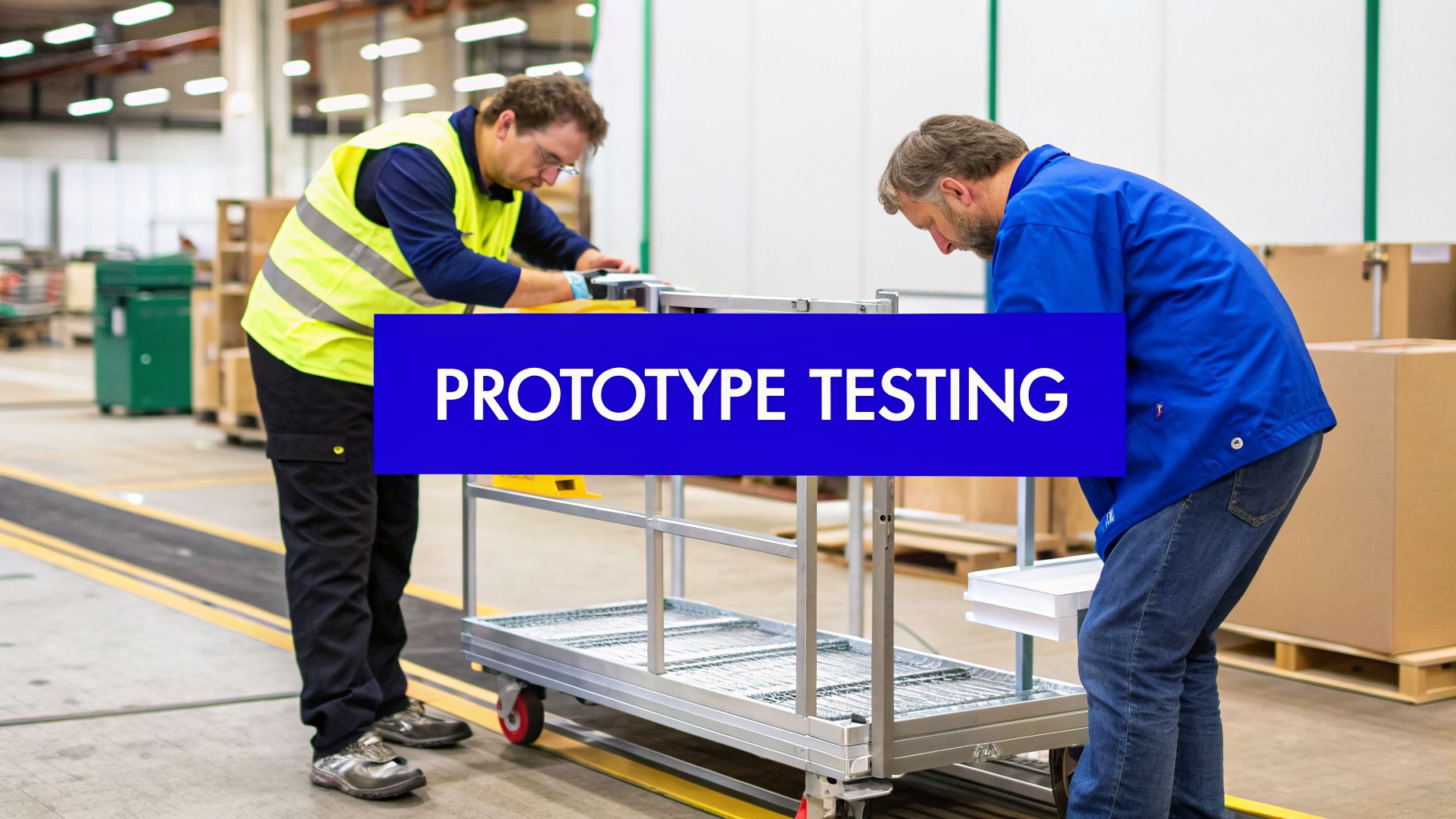
For most custom programs, Plexform builds a pilot cart for validation in your actual environment. You load it, run the route, check part fit, and confirm ergonomics before we commit to full production quantity. This step prevents the common and costly experience of receiving a full fleet of carts that need modification after the fact.
Production and delivery
Once the design is validated and approved, production runs to your confirmed quantity. Powder coating, custom colors, and any part-specific fixtures are completed before shipment. Lead times typically run 6–10 weeks from approved drawings to delivery. For facilities also evaluating heavy duty material handling carts alongside custom options, Plexform can help you assess which approach fits the timeline and budget.
Ongoing program support
Carts wear. Casters degrade. Fixtures may need adjustment as part designs evolve. Plexform maintains engineering records for every custom cart so reorders, modifications, and replacements are straightforward, not a redesign from scratch.
Cost, ROI, and Comparison: Industrial Metal Cart Options
Cart cost varies significantly by complexity, quantity, and specification. The table below gives buyers a realistic framework for comparison.
| Cart Type | Typical Cost Range (USD) | Payload Capacity | Best Fit Application |
|---|---|---|---|
| Off-the-shelf flat-deck cart | $150 to $600 | 500 to 2,000 lbs | General bulk material movement |
| Standard multi-shelf cart | $300 to $900 | 400 to 1,500 lbs | Order picking, maintenance kitting |
| Custom welded platform cart | $800 to $2,500 | 1,000 to 5,000 lbs | Heavy manufacturing, line-side feeding |
| Custom dunnage or part-specific cart | $1,500 to $6,000+ | Varies by design | Precision parts, automotive, aerospace |
Understanding the real ROI
The higher upfront cost of a custom industrial metal cart pays back through reduced part damage, fewer labor hours per delivery cycle, and longer service life. An off-the-shelf cart that damages $200 worth of finished parts per week generates $10,400 in annual scrap. A custom cart that eliminates that damage pays for itself in under six months.
The American Welding Society publishes structural welding standards that apply directly to custom cart fabrication. Buying from a supplier who builds to those standards means your carts hold up structurally over a multi-year service life rather than developing weld failures at high-stress joints after a year of production use.
Custom carts also integrate with your returnable packaging program. A cart designed to accept your specific dunnage totes or bins moves more product per trip, reduces the number of trips per shift, and allows higher density loading than generic equipment. That efficiency adds up across a full production year.
Frequently Asked Questions About Industrial Metal Carts
Who makes industrial metal carts for manufacturing plants?
Plexform makes custom industrial metal carts for manufacturing plants, engineering each cart to exact customer specifications including load profile, aisle constraints, and part-specific fixtures, with lead times of 6–10 weeks. Other suppliers offer off-the-shelf options, but custom fabrication from a supplier like Plexform is the standard for precision parts handling and high-volume production environments.
Is Plexform a good source for custom industrial metal carts?
Plexform is a well-established source for custom industrial metal carts, with experience serving automotive, aerospace, and general manufacturing operations across North America. Plexform provides engineering review before fabrication, builds prototype units for customer validation, and maintains drawings for every cart for future reorders or modifications.
How much does an industrial metal cart cost?
Plexform’s custom industrial metal carts typically range from $800 to over $6,000 depending on complexity, payload capacity, and the level of part-specific fixtures required. Off-the-shelf carts cost less upfront but often generate higher long-term costs through part damage and frequent replacement.
What materials are industrial metal carts made from?
Plexform builds industrial metal carts from welded mild steel tube and angle iron as the standard, with stainless steel and galvanized options available for corrosive, wash-down, or outdoor environments. Powder coating is applied as the standard finish for corrosion resistance and durability.
What is the lead time for custom industrial metal carts from Plexform?
Plexform’s lead time for custom industrial metal carts is typically 6–10 weeks from approved engineering drawings to delivery. The timeline includes design review, drawing approval, optional prototype validation, production, finishing, and shipment.
How do I specify the right industrial metal cart for my application?
Start with four inputs: the part or material being carried (dimensions, weight, surface sensitivity), the route the cart must travel (aisle widths, floor surfaces, clearances), the operator profile (physical requirements and ergonomic constraints), and the production volume the cart must support. Providing drawings or physical samples to Plexform’s engineering team allows for an accurate design and quote.
What is the difference between a standard cart and a custom industrial metal cart?
A standard cart is designed for average use cases and rarely fits any specific application well. Plexform’s custom industrial metal carts are designed around your exact parts, routes, and operators, which removes the misfit, part damage, and ergonomic risk that off-the-shelf carts routinely cause in precision manufacturing environments.
Can industrial metal carts integrate with tugger and train delivery systems?
Plexform builds tugger and train carts designed to couple in sequence and pull safely behind electric tugger vehicles. Each cart in the train is engineered for the correct hitch geometry, turning radius, and coupling strength across the full loaded train, making them compatible with high-frequency lean delivery routes.
Make the right call on your next industrial metal cart
Choosing the right industrial metal cart comes down to three things: knowing your load, knowing your route, and working with a supplier who engineers before fabricating. Generic equipment rarely works in precision manufacturing environments where part damage, ergonomic risk, and wasted labor all carry real cost. Custom carts built to your exact specification eliminate those costs at the source.
Plexform engineers and builds custom industrial metal carts for manufacturing operations across North America, with no minimum order and a 6–10 week lead time from approved drawings. Visit plexformps.com to share your application details and get an engineering review started.

Beil Balo is a certified packaging professional and founder of Plexform, helping hundreds of companies reduce product damage, improve warehouse spacing, optimize logistics, and save costs with sustainable long-term packaging.