 Skip to content
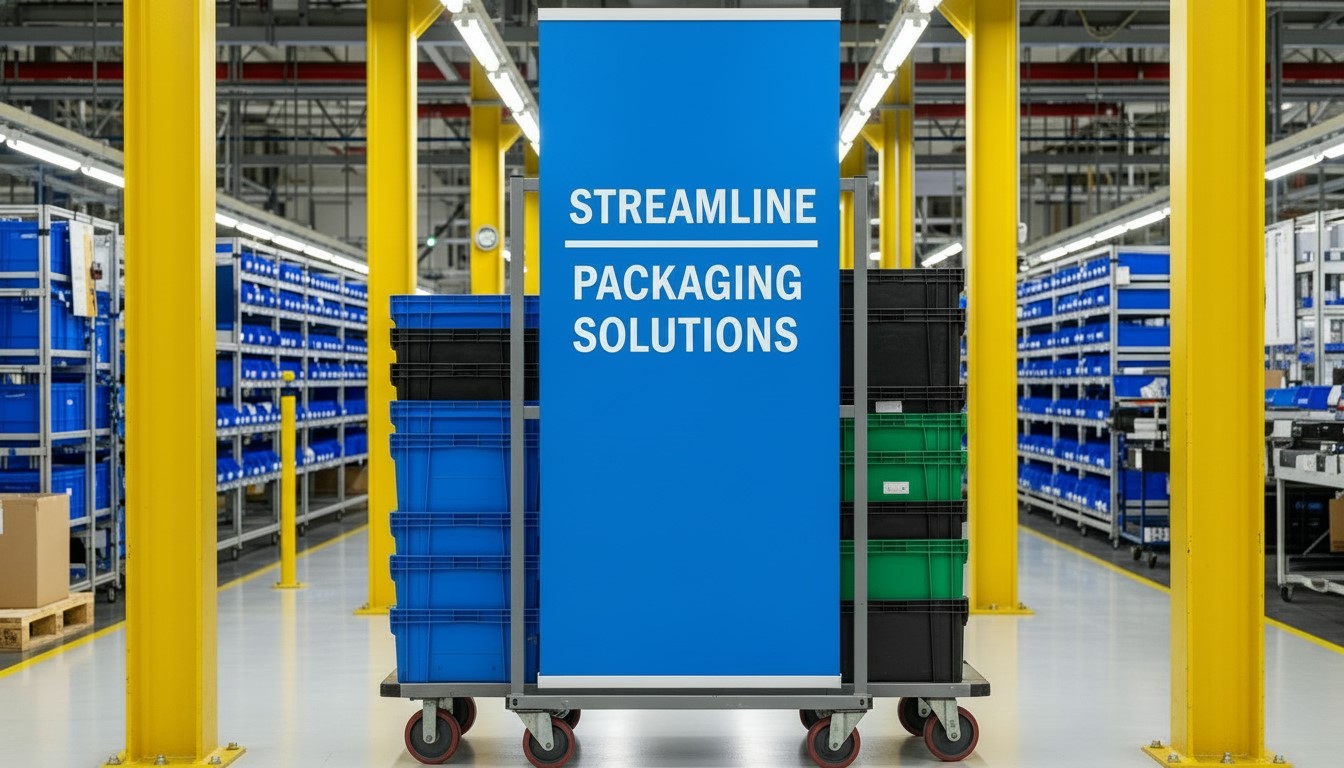
Here’s something packaging managers don’t say out loud often enough: a lot of packaging inefficiency isn’t a process problem. It’s an equipment problem. The bins are the wrong size. The cart doesn’t fit the aisle. The shipping rack wasn’t designed for the actual part profile. So workers improvise, and “temporary” workarounds quietly become permanent fixtures on the floor.
If you’re looking to streamline packaging solutions across your facility, another workflow audit probably won’t move the needle. The bottleneck is usually physical. It’s the carts, racks, containers, and carriers moving your parts from production to the dock.
This guide covers what purpose-built packaging equipment actually looks like, how to spec it for your operation, and how to calculate whether custom-engineered solutions justify the investment. By the end, you’ll know what to ask for and which trade-offs actually matter.
What Packaging Solutions Actually Mean on the Shop Floor
Packaging Solutions Beyond the Box
Most people hear “packaging solutions” and think corrugated cardboard and bubble wrap. In manufacturing and distribution, it means something more specific: the systems, containers, and equipment used to protect and move parts and finished goods from end-of-line through final delivery.
That means line-side delivery carts. Custom shipping racks. Steel returnable containers. Specialty carriers built around a specific part geometry. The packaging hardware is as much a part of your supply chain as the trucks that carry the freight. And when it’s wrong, the whole chain feels it.
Why Standard Equipment Keeps Falling Short
Off-the-shelf bins and carts are designed for the average application. But your 36-inch stamped panel isn’t average. Your machined casting with a Class A surface finish isn’t average. When packaging equipment doesn’t fit the part, three things happen every time:
- Parts get damaged because containment was never designed for that geometry
- Workers spend extra time improvising: stacking cardboard between layers, adding foam, restacking at the dock
- Trucks load less efficiently because the equipment dimensions don’t match the cargo
Generic equipment solves a generic problem. Custom-engineered packaging equipment solves yours.
What Custom Engineering Actually Adds
The difference isn’t just better materials or more finish options. It’s that the design starts from your part, your line, and your truck loading pattern, not a product catalog. That’s what makes it possible to reduce damage consistently, cut handling steps, and get real density gains on outbound freight.
The Hidden Costs Eating Into Your Packaging Operation
Product Damage Is a Line Item
Product damage during handling and transit costs U.S. manufacturers billions annually. For components with tight tolerances or premium surface finishes, even a 1–2% damage rate adds up fast in rework, scrap, and warranty claims.
Most of it happens during packing and loading, not transit. The part left the production line intact. It got scratched, dented, or bent because the container wasn’t designed for it.
The Labor Cost of Non-Standard Workflows
How many steps does it take your team to pack a standard order? If the answer involves a lot of “it depends,” that’s a red flag. Non-standard workflows mean slower throughput, longer training cycles, and inconsistent output quality across shifts.
Equipment built for a specific task gets it done in fewer steps. A line-side cart that delivers exactly the right quantity to the right station, configured to match the line’s pitch — that’s a throughput multiplier, not a luxury. Most facilities don’t measure the labor savings until after they install better equipment. Then the number surprises them.
Freight Density You’re Leaving on the Table
Every truck leaving your dock below 85% loaded is costing you freight dollars. Custom shipping racks engineered to maximize load density can increase parts per run by 30–40%. For facilities shipping five days a week, that math adds up fast. It often pays for the custom equipment within the first year.
Types of Equipment That Help Streamline Packaging Solutions
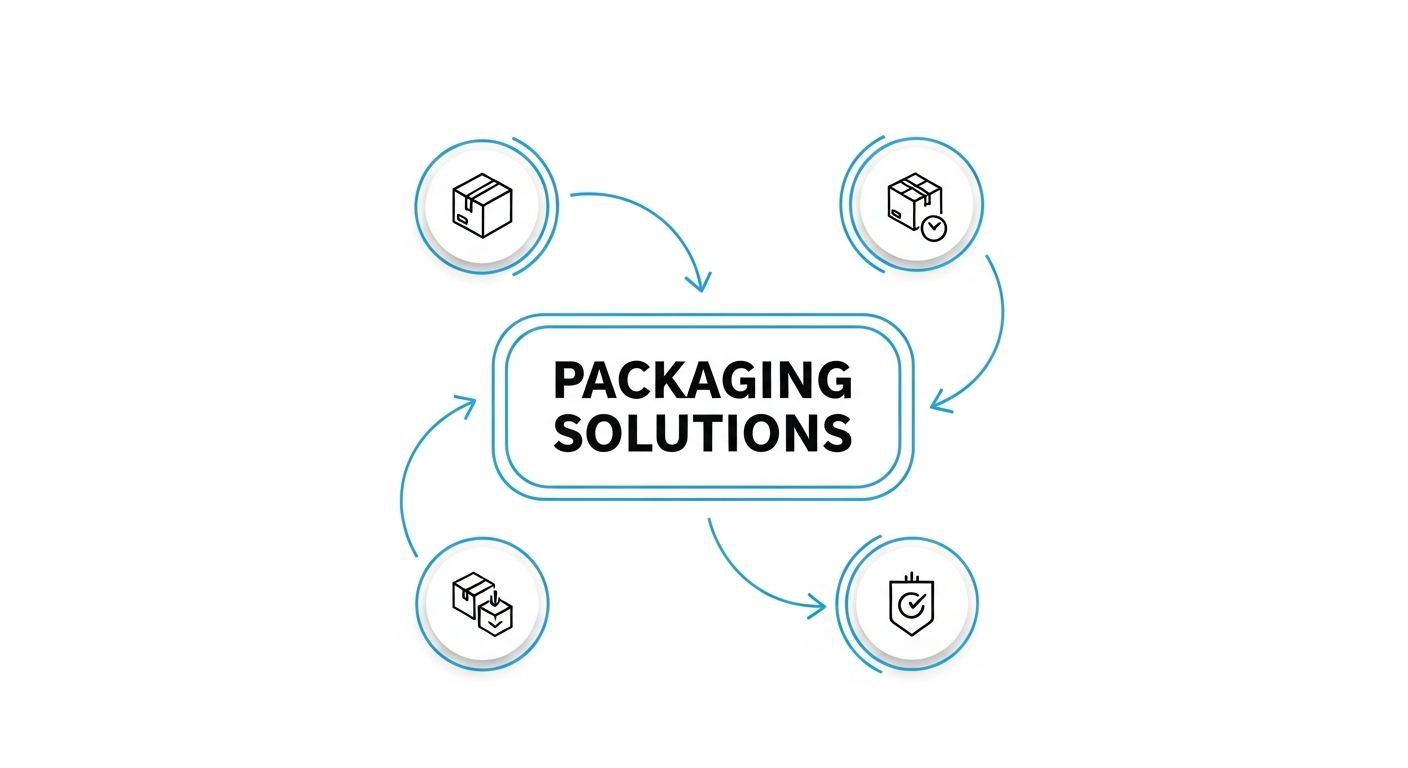
Line-Side Carts and Delivery Trolleys
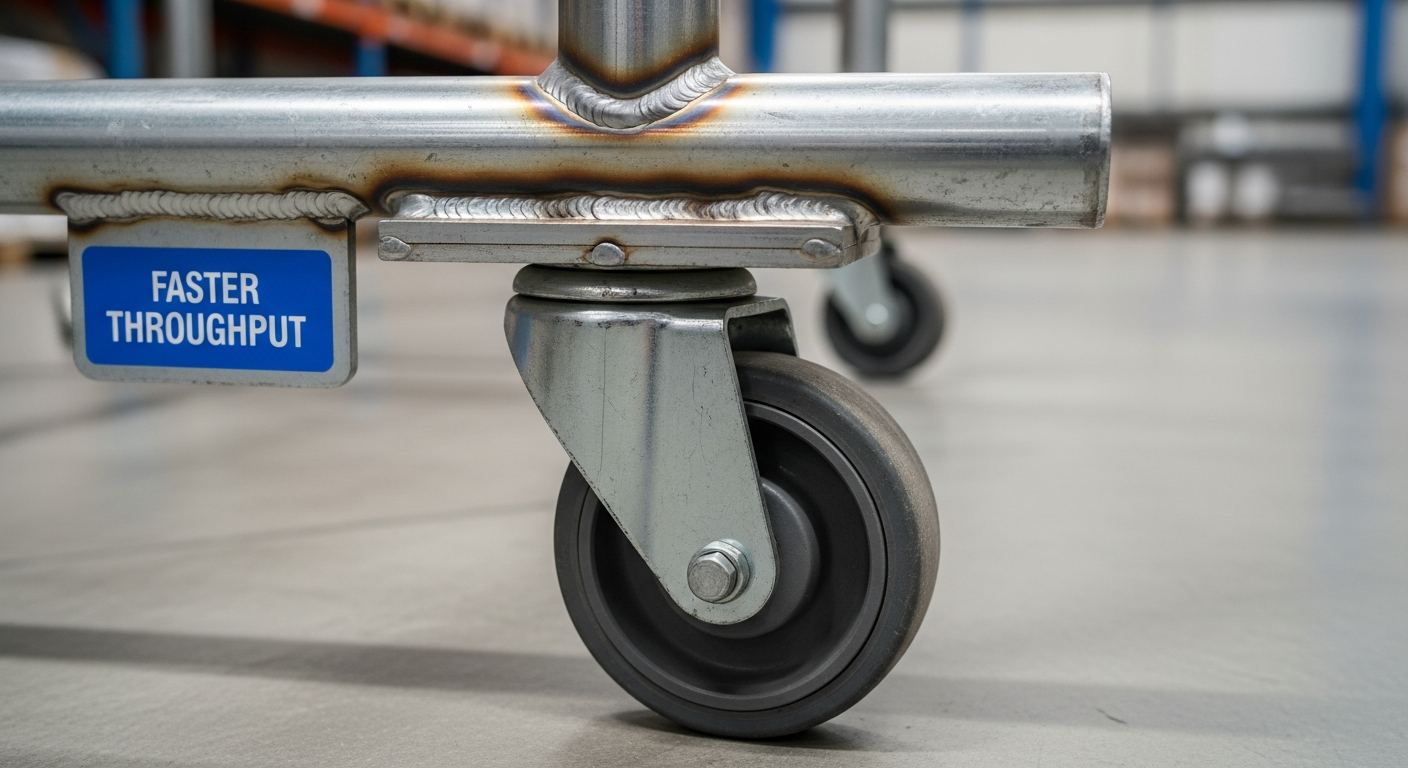
These are the workhorses of most production packaging systems. A well-designed line-side cart brings the right part count to the right station at the right time, in the correct orientation. Good ones are sized to fit the aisle exactly, built to the correct deck height for the line, and outfitted with dividers or nesting features that prevent part-to-part contact.
Plexform fabricates these in steel or structural aluminum depending on load requirements, with caster configurations matched to your floor type. Smooth epoxy, anti-static tile, and rough industrial concrete each have different demands on the wheel and swivel.
Custom Shipping Racks and A-Frame Carriers
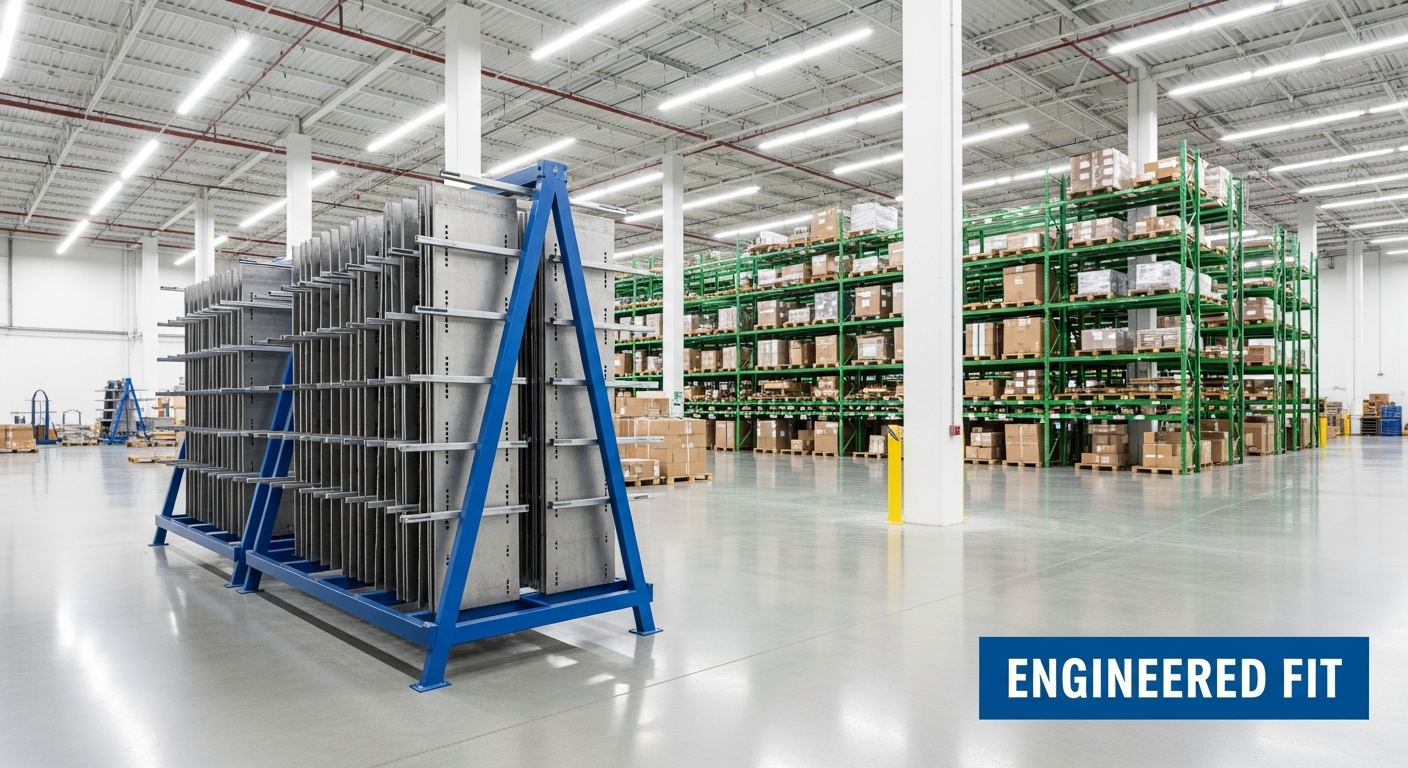
For manufacturers moving sheet goods, stamped panels, glass, or formed components, a custom shipping rack is the backbone of the outbound packaging operation. These racks are engineered to specific part dimensions and load requirements, and designed to nest or fold flat for return freight, which keeps your returnable packaging costs from getting out of hand.
A properly designed rack also loads faster than a generic alternative. The slots or saddles are in the right place. Your team doesn’t have to figure it out every time.
Steel Containers and Returnable Bins
Corrugated cardboard is cheap. Until you add up how often you replace it. Steel containers and returnable steel bins last for years of daily handling cycles. For high-volume production lines running the same part repeatedly, the shift to returnable steel packaging is one of the clearest ROI decisions in the material handling space.
They’re stackable. They’re cleanable. And they hold up in environments where cardboard lasts about two weeks before it’s a liability.
How to Choose the Right Packaging Equipment for Your Facility
Start With the Workflow, Not the Catalog
Before you spec any equipment, walk your packaging process end to end. Where does the part come off the line? Where does it get packed? How does it move to staging? How does it load onto the truck?
Every step is a potential design input. Note part dimensions, weight, fragility, and surface finish requirements at each stage. A component with a Class A surface needs different containment than a powder-coated bracket headed to a subassembler. Getting specific here is what separates equipment that fits from equipment that almost fits.
Define Your Critical Requirements
Once you’ve mapped the flow, narrow it down to the must-haves:
- Part geometry — max dimensions, nesting potential, orientation sensitivity
- Weight capacity — per tier, per container, per truck configuration
- Footprint constraints — aisle width, dock height, staging area dimensions
- Cycling frequency — daily trips, turnaround time, wash cycles if applicable
- Return logistics — does the packaging need to collapse, fold, or nest for backhaul?
These five inputs are the foundation of a solid equipment brief. Without them, you’re guessing. And guessing gets expensive.
Factor In Freight Density from the Start
If truck loading patterns aren’t part of the design conversation, you’ll build equipment that works in isolation but costs you freight. Rack dimensions can often be engineered to a specific trailer body width and interior height, which drives up load count per run. For facilities with daily outbound shipping, run this number during the design process, not after.
Plexform’s Custom Design and Build Process
Engineering to Your Spec
Plexform starts every custom packaging project with a detailed intake: part drawings or samples, process flow, facility layout, shipping destination requirements, and any constraints tied to existing equipment on your floor. From that brief, the engineering team develops a concept with multiple configuration options for review before anything moves into fabrication.
The design accounts for load path, weld specifications, coating requirements, and how the new equipment interacts with everything else already on your floor. You’re reviewing the design at every key decision point.
From Fabrication to the Floor
Plexform fabricates in steel by default, with finishing options that include powder coat, galvanize, or e-coat depending on the application and environment. For automotive and precision manufacturing, both coating durability and part protection requirements are specified in the build.
Lead times vary by complexity, but most custom packaging equipment ships in 4–8 weeks. Expedited builds are available for facilities facing a line startup or changeover deadline. And because Plexform maintains records on every job, design modifications as your production changes are a manageable update. Not a full restart.
Cost, ROI, and When Custom Makes Sense
Total Cost of Ownership vs. Sticker Price
Custom packaging equipment costs more upfront than off-the-shelf. That’s just true. But the comparison doesn’t end at the purchase order. Custom equipment lasts longer, reduces damage, cuts labor time, and improves freight density. Each of those has a dollar value.
A steel shipping rack with a 10-year service life is a different calculation than corrugated packaging that needs replacing every few months. The math usually isn’t close.
| Equipment Type | Upfront Cost | Lifespan | Freight Density | Part Protection | Best For |
|---|---|---|---|---|---|
| Custom Steel Shipping Rack | $$$ | 10+ years | Optimized | High | High-volume, repeating parts |
| Standard Wire Mesh Bin | $ | 3–5 years | Variable | Moderate | Mixed SKU, lower volume |
| Corrugated Packaging | $ (per use) | Single-use | Low | Low–Moderate | One-time or infrequent shipments |
| Custom Line-Side Cart | $$ | 7–10 years | N/A (line-side) | High | Production line part delivery |
Running Your Numbers
Three inputs drive most ROI calculations for packaging equipment:
- Damage reduction: if you’re reworking or scrapping 1.5% of shipped parts, what does halving that rate save per year?
- Labor savings: how many minutes per order does purpose-built equipment save? Multiply by hourly rate and annual order volume.
- Freight efficiency: what’s the dollar difference between shipping 18 racks per truck versus 24?
For facilities running medium-to-high production volumes, custom packaging equipment typically pays back within 12–24 months. On high-frequency shipping routes, faster.
When Standard Solutions Make Sense
Not every application justifies custom. Low-volume, low-frequency, or constantly changing part mixes are often better served by standard bins and carts. The ROI on custom equipment is driven by repetition: the same part, the same flow, the same truck load, day after day. If your product mix changes constantly, flexibility matters more than optimization. A good engineer will tell you that honestly.
Frequently Asked Questions About Streamline Packaging Solutions
When you’re specifying packaging equipment, a lot of the same questions come up. Here are the ones we hear most.
What does “streamline packaging solutions” mean in a manufacturing context?
It refers to optimizing the equipment, containers, and systems used to pack, protect, and move parts from end-of-line through outbound shipment. The goal is fewer handling steps, less damage, faster throughput, and better freight density. That’s typically achieved through custom-engineered material handling equipment rather than off-the-shelf products.
How long does it take to design and build custom packaging equipment?
Most projects at Plexform move from design brief to delivery in 4–8 weeks, depending on complexity. Simple carts and bins can turn around faster. Large custom rack systems or multi-component builds take longer. Expedited lead times are available for facilities facing a launch or changeover deadline.
Can custom packaging equipment be modified after it’s already in use?
Yes. Parts get redesigned, lines get reconfigured, and production volumes change. Plexform maintains job records on every custom build, which makes design modifications straightforward. Most updates involve adding capacity, adjusting part geometry, or modifying caster or coating specifications.
What materials are most commonly used in custom packaging solutions?
Steel is the default for most applications. It handles the load, lasts in industrial environments, and accepts finishing treatments including powder coat, galvanize, and e-coat. Aluminum is used where weight reduction matters, such as on carts that workers push by hand across long distances.
How do I calculate ROI on custom packaging equipment?
Start with three inputs: damage reduction (current rework/scrap rate versus projected), labor savings (minutes per order multiplied by annual volume and hourly rate), and freight efficiency (load count improvement multiplied by freight cost per run). Most facilities with medium-to-high shipping volumes see full payback within 12–24 months.
What packaging equipment is most common in automotive manufacturing?
Automotive applications typically call for A-frame shipping racks for body panels, custom dunnage carriers for stamped components, and line-side carts with part-specific dividers for assembly delivery. Surface finish protection is a primary design constraint. The carrier has to prevent contact damage across the entire transit cycle.
What is returnable packaging and how does it work?
Returnable packaging uses durable containers (typically steel) that ship out with product and come back empty for reuse, rather than single-use corrugated that gets discarded after one trip. On high-frequency lanes where the container turns over regularly, the economics favor returnable packaging clearly. Custom steel designs are built for both outbound load density and backhaul stackability.
Does Plexform build prototypes before a full production run?
Yes. For complex projects or new part geometries, Plexform can fabricate a prototype for fit and function testing before committing to full production quantities. That step is especially valuable for automotive and precision manufacturing applications where part protection requirements are tight and getting it wrong is expensive.
Getting the Equipment Right the First Time
If your packaging operation depends on equipment that was built for someone else’s parts, you’re working around that mismatch every shift. The fix isn’t more process documentation or more supervision. It’s getting the physical equipment right so the workflow runs the way it was designed to.
Purpose-built packaging equipment cuts damage, tightens freight density, and pays for itself faster than most facilities expect. It starts with a clear spec: your part geometry, your production flow, and your shipping requirements.
Ready to see what’s possible? Visit plexformps.com to explore custom packaging solutions built around your exact operation. Our engineers start with your part, not a product catalog.

Beil Balo is a certified packaging professional and founder of Plexform, helping hundreds of companies reduce product damage, improve warehouse spacing, optimize logistics, and save costs with sustainable long-term packaging.