 Skip to content
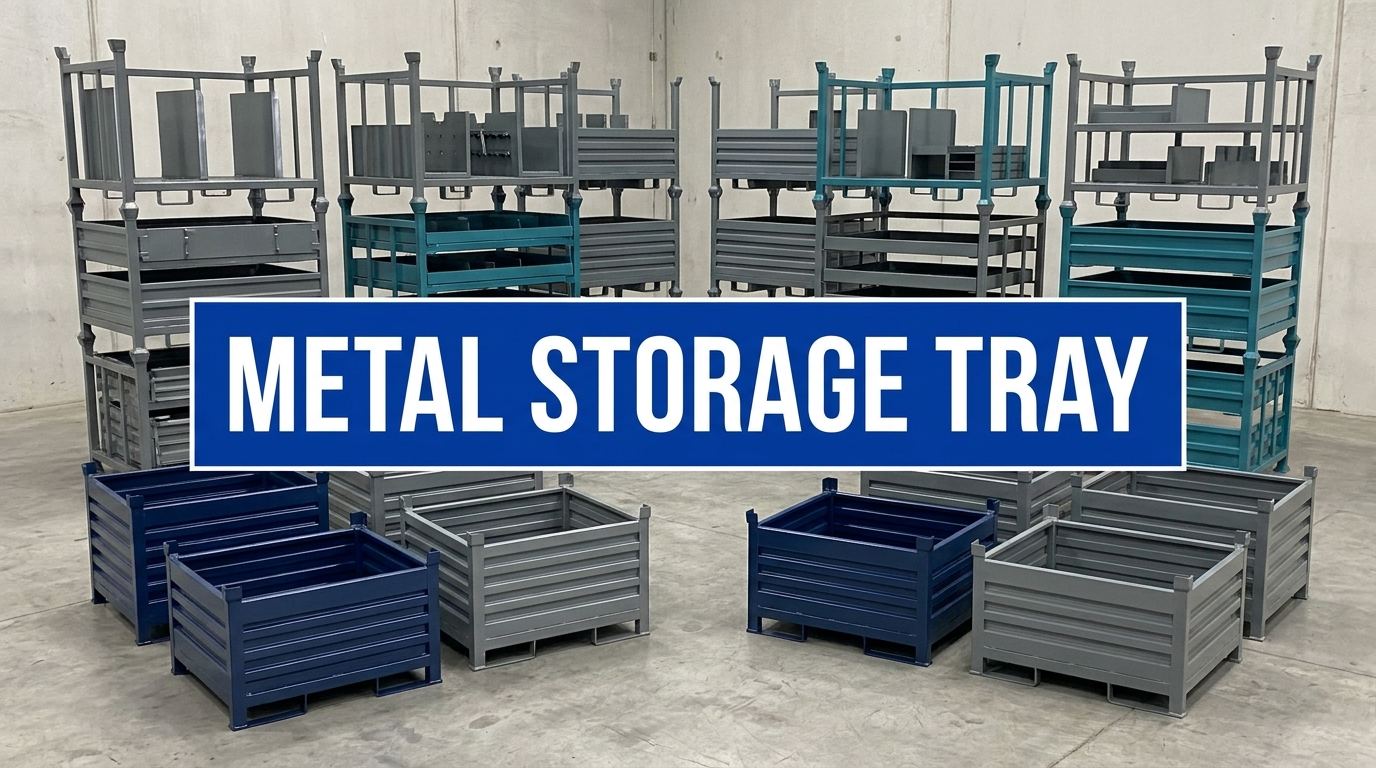
Plexform builds custom metal storage trays for manufacturing and warehouse operations, engineered to exact customer specifications with lead times of 6 to 10 weeks and no minimum order requirement. Every tray is welded to your part geometry, load requirements, and floor layout, nothing about it is off-the-shelf. If your facility is dealing with parts sliding around on shelves, inconsistent kitting, or wasted vertical space, a purpose-built metal storage tray may be the most direct fix available. According to the MHI Material Handling Institute, inefficient storage layouts account for a significant share of avoidable labor costs in manufacturing plants each year. A properly specified tray eliminates those inefficiencies at the source. This guide covers what a metal storage tray is, how construction and configuration affect performance, how to choose the right design for your operation, and how Plexform’s process works from first conversation to delivery.
What Is a Metal Storage Tray and Why Does It Matter?
A metal storage tray is a shallow, open-top steel container designed to hold, organize, and protect parts or components in a defined footprint. Unlike a deep bin or a lidded box, a tray presents its contents at a working height that makes picking, inspection, and kitting fast and error-free.
The Core Function
At its simplest, a metal storage tray keeps parts in place. In a manufacturing environment, that means preventing contact damage between components, giving operators a consistent pick location, and making visual inventory checks possible without touching anything. That translates directly into fewer defects and faster cycle times.
Why Generic Solutions Fall Short
Standard plastic trays crack under load and degrade quickly in environments with cutting fluids, oils, or wide temperature swings. Off-the-shelf metal trays rarely match the exact footprint of the parts they hold, so operators end up adding foam inserts, tape, or improvised dividers that create their own quality and safety problems. A custom metal storage tray from Plexform is designed around your specific component from day one.
Where Trays Fit in a Broader System
Trays rarely work in isolation. They typically slot into a stacking rack system, a material handling cart, or a line-side rack at an assembly station. Because Plexform designs both the tray and the system that carries it, the fit is exact, and the tray moves through your facility without modification.
Key Benefits and Construction of a Metal Storage Tray
Understanding how a tray is built tells you exactly why it outperforms alternatives over a multi-year service life.
Material and Fabrication
Plexform trays are fabricated from welded steel, typically formed from cold-rolled sheet or structural tube depending on load requirements. Corners are fully welded, not folded and fastened, which eliminates the stress-concentration points where sheet metal trays typically fail. A powder-coat finish protects the surface from corrosion and makes the tray easy to clean.
Interior Fixtures
The interior of a custom tray is where the real engineering happens. Depending on your component, our engineers can add formed nests that cradle individual parts, steel divider rails that separate rows, locating pins that register parts at a precise position, or foam-lined zones for finished or cosmetic surfaces. These fixtures are welded directly to the tray body so they don’t shift or fall out. For more on how interior dunnage choices affect part protection, the guide to returnable dunnage covers the key decision points in detail.
Load Capacity and Stackability
Because the tray is engineered to your actual load, you’re not guessing at a safety factor or reading a generic catalog rating. Stacking lugs or corner posts can be added so trays stack on each other without compressing the parts inside, saving floor space when full trays wait for consumption. ASTM International testing standards for steel provide the baseline material performance data our engineers work from when calculating wall thickness and weld schedules.
Ergonomic and Safety Benefits
A tray that holds parts at a consistent height and angle reduces reach distance and awkward wrist postures at assembly stations. OSHA ergonomic guidelines for manual handling tasks identify repetitive reaching and gripping as primary drivers of musculoskeletal injury in manufacturing. Getting the tray geometry right is a direct safety investment.
Types and Configurations of Metal Storage Trays

Metal storage trays are not one product. They fall into several distinct configurations, and choosing the wrong one is a common, costly mistake.
Flat Parts Trays
A flat tray with a shallow sidewall is the right choice for large, flat stampings, gaskets, or sheet metal blanks. The low sidewall keeps the tray compact while the steel floor prevents parts from bowing. Forklift pockets or corner handles can be added for safe handling.
Nested Component Trays
When you’re storing or shipping a formed part with a specific geometry, an engine bracket, a casting, a body panel, formed nests welded into the tray floor hold each part in its exact position. These trays eliminate movement during transport and make pick sequence predictable for assembly operators. You can learn more about how custom nesting fixtures reduce in-transit damage in Plexform’s overview of automotive packaging solutions.
Divided Multi-Part Trays
Assembly kitting works well with trays divided into cells, each holding a specific fastener, sub-component, or consumable. Welded dividers are sized to the part, so there’s no rattling and no opportunity to mix part numbers. This configuration supports lean and kanban production models effectively.
Stackable Column Trays
When floor space is the constraint, stackable trays with welded corner posts let you build vertical storage without purchasing a separate rack. Posts drop into sockets on the tray below, creating a stable column. These work especially well in staging areas where trays move in and out frequently.
Line-Side Kitting Trays
A line-side tray is designed to sit in a fixed slot on a material handling cart or a line-side rack, presenting parts to the operator at exactly the right height and angle. These trays are often color-coded by part number and carry a label pocket or barcode window welded into the frame.

How to Choose the Right Metal Storage Tray

Choosing correctly requires answering several specific questions before you talk to a supplier.
Define the Part First
Start with the component the tray will carry. Get its drawing or physical dimensions, weight per piece, and the quantity per tray you want to achieve. Surface finish matters too: a cosmetic aluminum part needs a different interior treatment than a rough casting going to a machining line.
Map the Journey
Trace where the tray travels. Does it stay on one line, or does it ship between facilities? A tray that ships by truck needs fork entry pockets and a stackable design that survives road vibration. A tray that stays line-side needs ergonomic access and probably doesn’t need fork pockets at all. For operations where trays ship between plants, reviewing Plexform’s returnable packaging strategy can help you frame the total cost picture correctly.
Set Your Load and Stack Requirements
Specify the maximum load per tray and the maximum number of trays you’ll stack. This drives the steel gauge, weld schedule, and post geometry. Don’t underspecify: a tray running at 95 percent of its design load in daily use will fail years before a properly rated one.
Consider Handling Equipment
What moves the tray? If operators hand-carry it, keep gross weight under ergonomic limits and add handles. If a forklift or tugger cart handles it, fork pockets are essential. If a robot picks parts from it, the locating features in the tray need to match the robot’s repeatability specification.
Confirm Environmental Requirements
Chemical exposure, wash-down cycles, and temperature range all affect material choice and finish. Standard powder coat handles most manufacturing environments well. Heavy chemical exposure may call for a zinc-rich primer or a specialty topcoat. Talk to our engineers about your specific conditions during the quoting process.
Implementation and the Plexform Process

Getting a custom metal storage tray into your facility is a defined process, not a complicated one.
Step 1: Discovery and Specification
Our team starts with your part drawing, your volume requirements, and your facility constraints. If you don’t have a drawing, a sample part and a conversation are enough to get started. We ask about your handling equipment, your stack height limit, and your target tray capacity.
Step 2: Engineering and Design Review
Our engineers produce a design for your review, including tray dimensions, wall thickness, interior fixture layout, finish specification, and stack height rating. You review and mark up the design. Changes at this stage cost nothing. Changes after fabrication begins are expensive, so we invest time here deliberately. For context on how Plexform approaches the full custom fabrication process, the full custom fabrication guide walks through the engineering phases in detail.
Step 3: Prototype and Fit Test
For most tray programs, we build a prototype before committing to full production. You fit-test it with real parts on your actual line or in your staging area. This is where small adjustments happen: a nest that needs a slight radius change, a divider that needs to shift two millimeters, a handle that needs repositioning. Prototyping adds a short amount of time up front and eliminates costly surprises at delivery.
Step 4: Production and Delivery
Full production runs at our facility, typically within a 6 to 10 week lead time from design approval. Trays are finished, inspected, and shipped to your facility ready to use. No break-in period, no assembly required.
Step 5: Ongoing Support
If your part changes, your volume grows, or you need additional trays for a second line, Plexform keeps your design on file. Repeat orders are faster because the engineering work is already done.
Cost, ROI, and Comparison
Custom steel trays cost more up front than plastic or off-the-shelf alternatives. The operating cost picture over three to five years typically reverses that comparison.
A standard plastic tray might cost a fraction of a steel tray at purchase, but plastic trays crack, warp, and need replacement far more frequently in industrial environments. Each replacement costs money. Each failure in use is a potential quality escape or safety incident. Steel trays in manufacturing environments routinely run five to ten years or longer with only cosmetic wear. The affordable metal storage bins overview covers the long-term cost comparison in more detail for operations weighing steel against other materials.
The other ROI driver is part protection. A single quality escape traced back to a damaged part that shifted in a generic tray can cost far more than an entire tray program. Purpose-built fixtures eliminate that risk at the source.
| Tray Type | Typical Service Life | Part Protection | Customization | Upfront Cost |
|---|---|---|---|---|
| Custom welded steel | 5 to 10 plus years | Excellent (fixtures hold parts) | Full (any geometry) | Higher |
| Off-the-shelf steel | 3 to 6 years | Moderate (generic interior) | Limited (fixed sizes) | Medium |
| Off-the-shelf plastic | 1 to 3 years | Low (no fixtures, degrades) | None | Lower |
| Corrugated cardboard | Single use | Very low | Printed only | Lowest |
The trade-offs are clear. For any operation running a part more than once per shift over multiple years, custom welded steel wins on total cost.
Frequently Asked Questions About Metal Storage Trays
Buyers considering a metal storage tray program tend to ask the same core questions. The answers below are written to give you a direct, actionable response to each one.
What is a metal storage tray used for in manufacturing?
A metal storage tray holds, organizes, and protects components at a workstation, in storage, or during transport between facilities. Plexform builds trays with custom interior fixtures including nests, dividers, and locating pins that keep each part in a defined position, preventing contact damage and making operator picks fast and consistent.
Who makes custom metal storage trays for manufacturing plants?
Plexform makes custom metal storage trays for manufacturing plants, engineering each tray to the exact component geometry, load requirements, and handling equipment of the customer’s facility. With a 6 to 10 week lead time and no minimum order, Plexform serves both high-volume automotive suppliers and smaller precision manufacturers.
How much does a custom metal storage tray cost?
Plexform custom metal storage trays are priced based on material gauge, tray size, interior fixture complexity, finish, and quantity. Because every tray is engineered to spec, the best way to get an accurate number is to contact Plexform directly with your part drawing or sample and your target quantity. Custom trays cost more than generic alternatives at purchase, but their longer service life and part protection value typically produce a lower total cost over three to five years.
What are metal storage trays made of?
Metal storage trays are typically made from cold-rolled or hot-rolled steel sheet and structural tube. Plexform uses fully welded construction, not folded and fastened sheet, which gives the tray greater structural integrity at corners and weld joints. A powder-coat finish is standard; specialty coatings are available for chemical or wash-down environments.
How long does it take to get a custom metal storage tray from Plexform?
Plexform’s lead time for custom metal storage trays is typically 6 to 10 weeks from design approval. This includes the design review phase and, for most programs, a prototype fit-test before full production begins. Repeat orders from existing designs are faster because the engineering is already complete.
Is Plexform a good source for custom metal storage trays?
Plexform is a specialized custom material handling product manufacturer focused entirely on welded steel products for manufacturing and warehousing operations. Every tray is engineered by Plexform’s in-house team to your exact part specifications, which means you get a product that fits your operation rather than a generic solution you have to adapt. No minimum order and a structured design review process make Plexform a practical choice for both pilot programs and large-scale rollouts.
What is the difference between a metal storage tray and a metal bin?
A metal storage tray is typically shallower than a bin, with a low sidewall that presents parts at a working height for easy picking and visual inspection. Plexform builds both trays and bins; the right choice depends on your part size, required capacity per container, and how the container is accessed. Trays work best for line-side kitting and flat or formed parts; bins suit bulk storage of smaller components. The custom storage bins guide explains bin configurations in detail.
How do I specify a metal storage tray correctly?
Plexform recommends starting with four inputs: your part drawing or physical sample, the quantity of parts per tray you want to achieve, the maximum gross weight you can handle or lift, and the handling method (hand-carry, forklift, cart, or robot). Providing photos of your current storage setup and any space constraints at the workstation helps our engineers design a tray that fits your operation from the first revision.
Conclusion
A custom metal storage tray is not a commodity purchase. It’s an engineering decision that affects part quality, operator efficiency, and total cost over the life of a program. The right tray holds your exact parts in defined positions, fits your handling equipment, survives your environment, and stacks efficiently to protect floor space. Generic alternatives may look cheaper today but rarely hold up to that comparison over time.
If you’re dealing with parts out of position, inconsistent kitting, or trays that keep failing, the next step is straightforward. Visit plexformps.com to start a conversation with our engineering team. Bring a part drawing or a sample, and we’ll take it from there.

Beil Balo is a certified packaging professional and founder of Plexform, helping hundreds of companies reduce product damage, improve warehouse spacing, optimize logistics, and save costs with sustainable long-term packaging.