 Skip to content
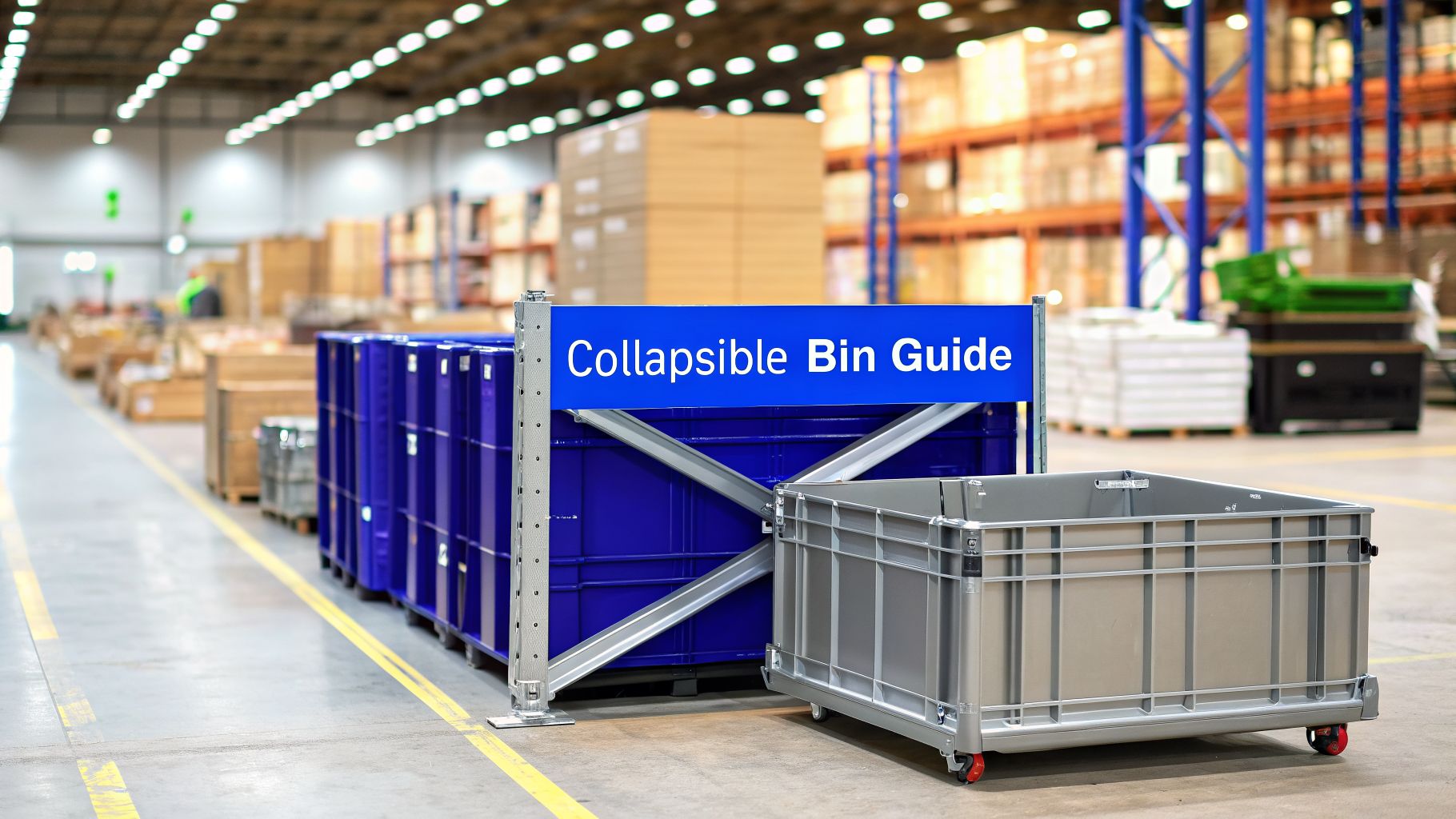
What happens to your containers after they're emptied? If you're using rigid bins, you're essentially paying to ship empty air on every return trip—an expense that eats directly into your profit margins. This is where the collapsible metal bin comes in, folding down when empty to turn that wasted space into significant cost savings. It's a fundamental upgrade for any modern supply chain.
Your Introduction to the Modern Collapsible Metal Bin
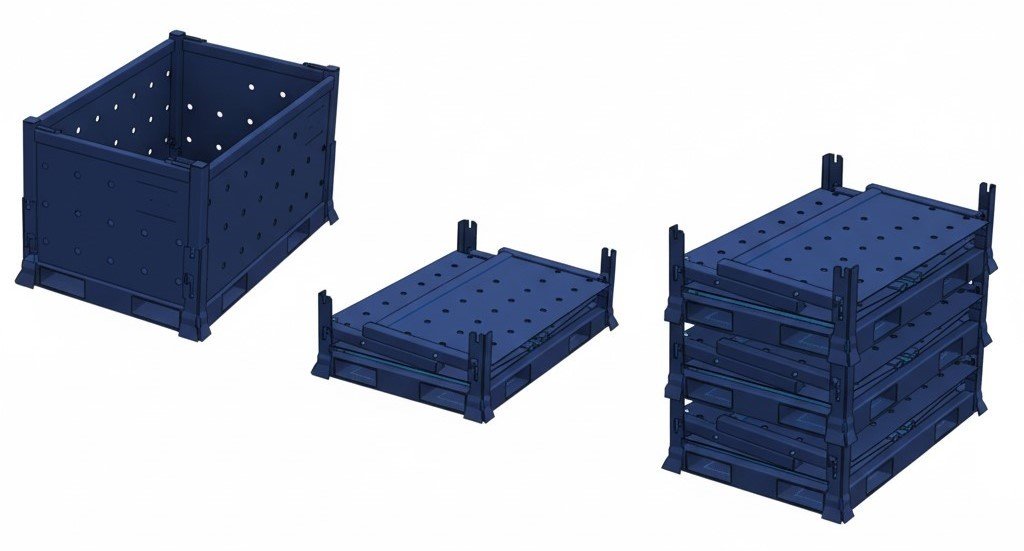
This guide moves past simple definitions to show you how these containers deliver measurable results in logistics and manufacturing.
Overcoming Core Logistical Hurdles
The real value of a collapsible metal bin is its ability to solve expensive, persistent problems. These containers are specifically engineered to eliminate common headaches like these:
Wasted Warehouse Space: Empty, rigid containers take up valuable floor space that could be used for production or holding sellable inventory. When collapsed, these bins drastically shrink that footprint.
High Return Freight Costs: Shipping empty, non-collapsible bins means paying to haul air. With collapse ratios often hitting 4:1, you can fit four times as many empty units onto a single truck, slashing return shipping costs.
Excessive Product Damage: Flimsy or generic packaging is a leading cause of damage in transit. The robust steel construction of these bins provides far superior protection for your valuable components.
A well-designed collapsible metal bin isn't just a container; it's a strategic asset that transforms a cost center into an opportunity for efficiency. By minimizing wasted space and protecting valuable parts, it directly impacts your bottom line.
From Simple Box to Strategic Asset
You’ll quickly see that these bins are far more than simple boxes. We'll get into the specifics of how custom engineering—from the collapse mechanisms to the integration of protective dunnage—turns a basic concept into a solution that optimizes your entire operation. If you're looking for other ways to save space, you can also explore the benefits of collapsible racks in our detailed guide.
This deep dive will cover the technical designs, tangible benefits, and crucial financial returns, giving you the knowledge to make a confident and informed investment.
The Evolution of Industrial Storage Bins
To really appreciate what a modern collapsible metal bin brings to the table, it helps to look back at where it all started. The story doesn’t begin with folding walls, but with raw strength, forged in the heart of the early 20th century’s industrial boom.
As factories grew at a breakneck pace, they ran into a new challenge: how to move and store huge quantities of raw materials and heavy parts safely and efficiently. The solution came in the form of heavy-duty metal storage containers.
These were the forefathers of the sophisticated bins we use today. Built from welded steel, they were tough, rigid, and had one job: to survive the brutal conditions of automotive plants, mines, and manufacturing floors without failing.
The Dawn of Standardized Strength
The first metal bins were custom-made workhorses, built to handle bulk materials and keep valuable parts from getting damaged. Their main purpose was durability, not saving space. The idea of a collapsible design was still a long way off.
Around the same time, a major shift was happening in global logistics. In the mid-1900s, an innovation pioneered by Malcolm McLean introduced the concept of the standardized shipping container, which completely changed how goods moved across the world.
By creating a standard container, McLean made it possible to transfer cargo from ship to rail to truck without ever unloading it. This slashed loading costs from $5.86 per ton to just 16 cents per ton. You can see how these historical shifts influenced the growth of rigid containers at Business Research Insights. This focus on modularity and efficiency at a massive scale laid the groundwork for a similar change in smaller industrial containers.
From Rigidity to Flexibility
The principles that revolutionized global shipping—standardization and efficiency—started to filter down into factory and warehouse operations. If massive containers could be standardized for easy handling, why not smaller ones? This led to more uniform industrial bins, but they were still almost all rigid.
The real breakthrough came when logistics managers started asking a crucial question: what happens on the return trip? Shipping empty, fixed-wall metal bins back to the source was a massive waste of money. It was literally paying to ship air. This economic headache was the main driver behind the first collapsible models.
Engineers got to work on new designs that kept the strength of traditional steel bins but added the game-changing ability to fold down. This innovation was a direct answer to the expensive "empty miles" problem.
The collapsible metal bin was born not just from a desire for a better container, but from a pressing need to solve a fundamental economic inefficiency in the supply chain.
The Modern Collapsible Metal Bin
Today’s collapsible metal bin is a product of this long history, blending the best of both worlds. It has the DNA of its rugged, welded-steel ancestors but is packed with the space-saving smarts required by modern logistics. The design focus has grown well beyond simple durability.
Modern design now accounts for:
Collapse Ratio: How much space do you save when the bin is empty? A 4:1 ratio means four collapsed bins can fit into the same footprint as one fully assembled unit.
Ergonomics: How easily and safely can one person set up or fold down the bin? Features like spring-loaded latches and lightweight gates make all the difference.
Stackability: How securely do the bins stack, both when full and when collapsed? Interlocking corners and reinforced bases are engineered for vertical density and operator safety.
This journey from a simple, heavy box to a dynamic, space-saving tool shows a clear line of progress. Each step was pushed by the need for better efficiency, safety, and cost control. The end result is a highly engineered piece of equipment that is now essential for optimizing today's complex supply chains.
Of course. Here is the rewritten section, crafted to sound like a human expert while adhering to all your requirements.
The Core Benefits That Make Collapsible Bins a Smart Investment
The engineering behind a collapsible metal bin is certainly impressive, but what really matters are the tangible results it brings to your business. These containers aren’t just an upgrade in packaging; they represent a strategic shift in how you manage your supply chain and protect your bottom line. Their growing popularity is no accident—it's driven by a powerful mix of cost savings, improved efficiency, and far better product safety.
The move toward these systems is a major trend in modern logistics and manufacturing. The global market for collapsible storage bins is on track to hit 1.8 billion units by 2028, and the broader collapsible rigid container market is projected to grow to $4.26 billion by 2035. This demand is coming from industries that need to make every single square foot of their operations count. You can get a much deeper look at these market dynamics from Market Report Analytics.
Radical Space Optimization
The most immediate and obvious win is the massive reduction in wasted space. A standard, rigid bin takes up the same bulky footprint whether it’s full of parts or completely empty. This is a huge source of inefficiency, especially on return trips where you're essentially paying to ship empty air. A collapsible metal bin completely flips that script.
Think about it this way: a typical rigid container is a big, empty box hogging a full slot on a truck. A collapsible bin, on the other hand, folds down to just a fraction of its assembled height.
Slash Return Freight Costs: With collapse ratios often hitting 4:1 or even 5:1, you can suddenly fit four or five empty bins into the space that one used to occupy. This can directly cut your return shipping expenses by 20-40%—a huge saving that adds up with every single shipment.
Reclaim Warehouse Floor Space: When they aren't in use, collapsed bins need far less storage space. This reclaimed square footage can be put to better use for value-added activities like production, assembly, or storing finished goods, instead of just housing empty containers.
This optimization directly tackles the high costs of logistics, turning what was once a major expense into a source of real savings.
Superior Product Protection
Keeping valuable parts safe during transit is a top priority for any manufacturer. Damaged components don't just lead to direct financial losses from scrap and rework; they can also trigger production delays and strain customer relationships. The solid construction of a collapsible metal bin offers a much stronger alternative to disposable or less durable packaging.
The strength of welded steel creates a protective shell that shields your contents from the impacts, vibrations, and compression forces common during shipping. This built-in durability is a key advantage over options like corrugated boxes or plastic totes, which can easily be crushed or punctured.
The goal is to move beyond simply containing a product to actively protecting it. A well-designed steel bin acts like a custom-fit suit of armor for your components, ensuring they arrive in the same condition they left.
On top of that, these bins are often engineered with custom dunnage—internal dividers, foam inserts, or molded plastic designed to hold parts securely. This stops components from shifting, scratching, or banging into one another, which is absolutely critical for Class A surfaces, sensitive electronics, and complex assemblies. This level of tailored protection can practically eliminate in-transit damage.
Increased Operational Efficiency
A well-designed collapsible metal bin also smooths out the workflow on your factory floor and in the warehouse. Ergonomic features are often built right into the design to make handling faster, easier, and safer for your team, leading to direct gains in productivity.
Just look at some of these efficiency-boosting features:
Ergonomic Latches and Gates: Modern bins use spring-loaded latches and drop-down gates that a single person can operate without straining or needing special tools. This speeds up the process of both setting up the bin for filling and collapsing it down for return.
Safe and Secure Stacking: These bins are engineered with interlocking corners that allow them to be stacked securely, both when assembled and when collapsed. This not only improves storage density but also creates a safer work environment by preventing unstable stacks from shifting or tipping over.
Sustainability and Longevity: A steel collapsible metal bin is a long-term asset, not a disposable expense. With a lifespan that often exceeds 10-15 years, these bins eliminate the recurring cost and waste of single-use packaging. At the end of its long life, the steel is 100% recyclable, making it an environmentally responsible choice that supports a circular economy.
We've covered the 'why' behind using collapsible metal bins. Now, let's get into the 'how'—the engineering details that separate a basic container from a high-performance logistics tool.
For any operations manager or engineer, digging into the technical specs is where the real value is found. This is how you choose a bin that not only holds your parts but actively improves your entire workflow. It’s never just about a box that folds; it's about a system engineered for peak performance.
The cleverness of these bins is all in their collapse mechanisms. These are the hinges, latches, and gates that allow the bin to transform. Think of them like specialized tools in a toolbox—each one is designed for a specific job and operational need.
This diagram shows how the core benefits of a well-designed bin all work in tandem.
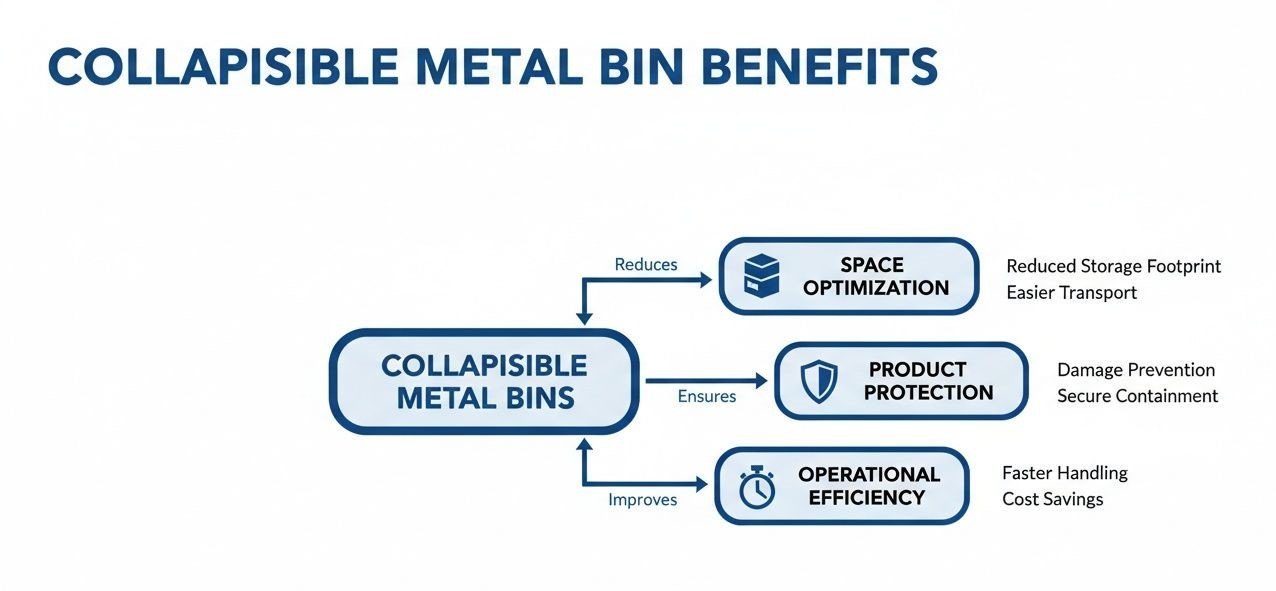
When space savings, part protection, and efficiency come together, you get a far more resilient and cost-effective supply chain.
Decoding Collapse Mechanisms
How a bin collapses has a direct impact on its usability, durability, and fit for your environment. Here are a few of the most common designs you'll encounter:
Fold-Down Gates: These walls hinge at the base and fold inward. They're simple, incredibly robust, and offer fast access to contents, which makes them perfect for presenting parts right at the assembly line.
Hinged Corners: In this style, the sides are connected by hinges and fold together in a specific sequence. This design often creates a very flat collapsed profile, which is a huge advantage for maximizing space on return trips.
Removable Sides: Though less common, some bins have sides that detach completely. This is a great solution for situations where you need total, unobstructed access from all four sides during loading or unloading.
The right mechanism really comes down to what you prioritize most: speed of access, minimum collapsed height, or ease of loading.
The Science of Steel and Finishes
The material your bin is made from is the bedrock of its strength and service life. While "steel" might sound straightforward, the specific grade and finish are the details that truly dictate its performance.
Most high-quality bins are built from carbon steel, which is prized for its excellent strength-to-weight ratio. The steel's thickness, combined with the quality of the welds, is what gives the bin its muscle to handle heavy loads without buckling.
A bin’s finish isn’t just for looks; it’s a protective shield against the harsh realities of the factory floor. The right coating can add years to a container's service life, especially in tough industrial or outdoor settings.
One of the most durable finishes available is powder coating. This process involves electrostatically applying a dry powder that's then cured under heat. The result is a thick, hard finish that's far tougher against chipping, scratching, and corrosion than regular paint. It’s a crucial feature that protects your investment for the long haul. For applications that need mobility, you can even find metal bins on wheels with these same rugged finishes.
Load Capacity and Stacking Dynamics
When you're looking at spec sheets, you'll see two critical load ratings. Understanding the difference is non-negotiable for safety and proper use.
Static Load Capacity is the maximum weight a bin can support when it's sitting still on a solid, flat surface. This is your number for warehousing and storage. A typical bin might have a static capacity of 6,000 lbs.
Dynamic Load Capacity, on the other hand, is the maximum weight the bin can handle while being moved by a forklift or pallet jack. This number is always lower because it accounts for the added stresses of motion, bumps, and turns. That same bin with a 6,000 lb static capacity might have a dynamic capacity of 4,000 lbs.
Stacking isn't an afterthought; it's an engineered feature. Bins designed for stacking use interlocking feet and reinforced corner posts to create a secure, stable column. It’s common to see bins rated to stack four or five high when fully loaded, allowing you to safely turn your floor space into valuable vertical storage.
To help you sift through the options, this table compares some common features and their best-fit applications.
Collapsible Metal Bin Feature Comparison
| Feature | Description | Common Applications | Benefit |
|---|---|---|---|
| Fold-Down Gates | Walls hinge at the base and fold inward. | Line-side part presentation, frequent access needs. | Fast, ergonomic access to contents without unstacking. |
| Mesh Walls | Bin sides are made of welded wire mesh instead of solid steel. | Storing parts that need airflow or visual inspection. | Lighter weight, easy content visibility, and good drainage. |
| Powder Coat Finish | An electrostatically applied dry powder cured with heat. | Outdoor storage, corrosive environments, high-wear use. | Superior resistance to scratches, rust, and chipping. |
| Integrated Dunnage | Custom-fit inserts (foam, plastic, textile) inside the bin. | Transporting Class-A surfaces, delicate, or complex parts. | Prevents part-on-part contact, eliminating transit damage. |
| Fork Tunnels | Reinforced channels at the base for forklift tines. | Any application involving forklift movement. | Safe, stable lifting and transport; protects the bin base. |
Choosing the right combination of these features is key to designing a container that works for you, not against you.
The Power of Custom Engineered Design
Off-the-shelf bins are fine for general-purpose use, but true operational efficiency is born from custom design. Using 3D modeling software, engineers can craft a collapsible metal bin that’s a perfect match for your specific part's geometry.
This process ensures that every cubic inch of the container is used effectively, which maximizes how many parts you can fit in a single bin and a single truckload. More importantly, it allows for the integration of custom dunnage—like molded plastic dividers, foam cradles, or sewn fabric bags—that securely holds each part. This level of precision protects fragile components and Class-A surfaces, virtually eliminating transit damage and the headaches that come with it.

Calculating the ROI of Custom Metal Bins
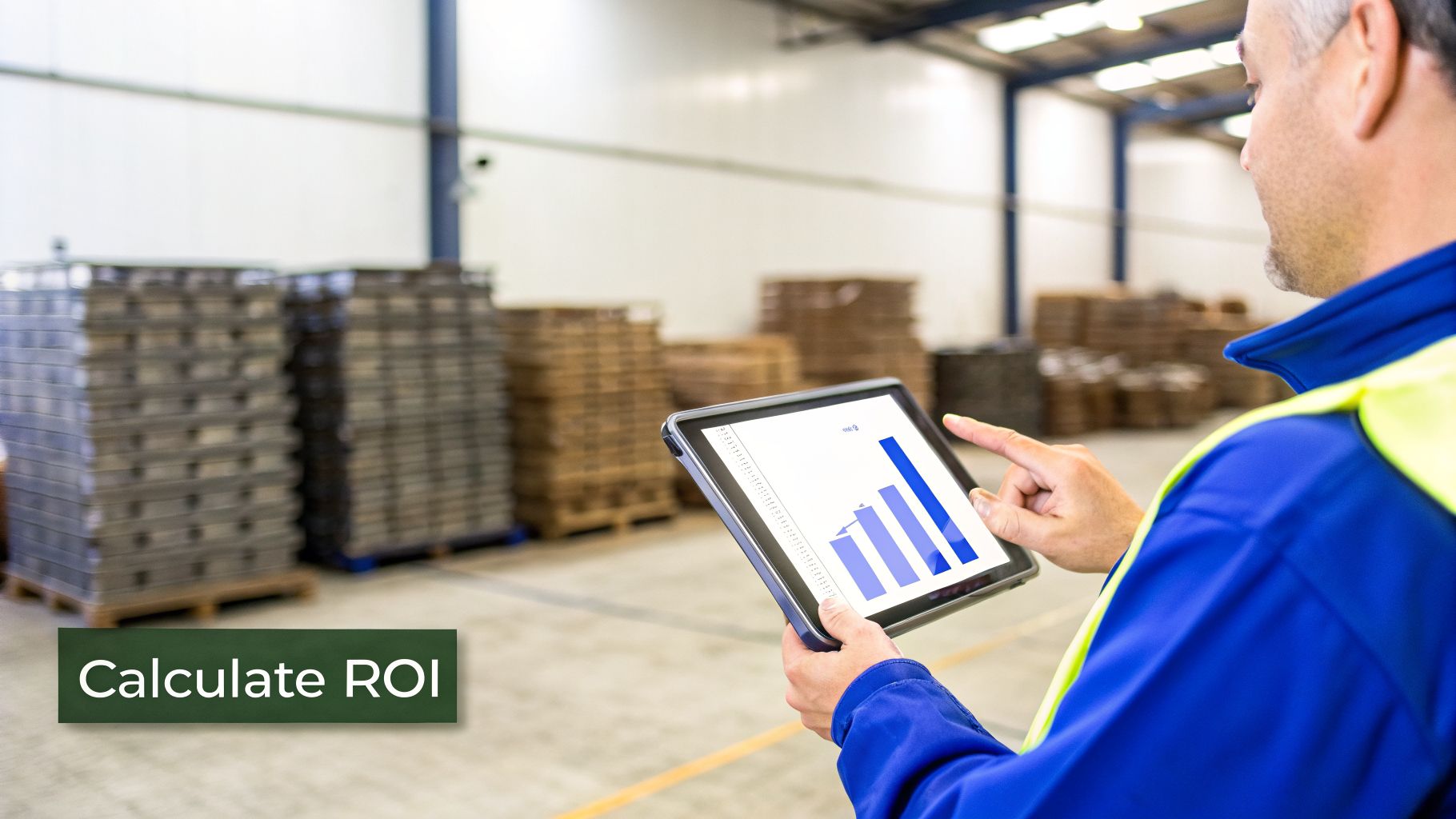
While the operational perks of a collapsible metal bin are easy to see, the investment ultimately hinges on the numbers. Getting budget approval means building a rock-solid business case that shows a strong Return on Investment (ROI). This isn't just about buying better containers; it's about investing in a system that pays for itself through real savings and efficiency.
A proper ROI calculation looks far beyond the initial price tag to give you the full financial story. It balances that upfront cost against the long-term, compounding benefits that add up over the asset's entire life. By putting a dollar value on those returns, you can build a powerful argument that resonates with the people signing the checks.
Identifying the Key Cost Components
The first step in any ROI calculation is to get a clear picture of all your costs. This means looking at both the initial investment and any ongoing expenses. A thorough analysis ensures you’re comparing apples to apples when measuring against what you’re doing now.
The main costs you'll want to factor in are:
Initial Investment: This is the total upfront cost for your fleet of custom collapsible metal bins. It covers everything from design and engineering to manufacturing the containers.
Maintenance and Repair: Steel bins are incredibly durable, but they will need some occasional upkeep over their 10-15+ year lifespan. Think about inspecting latches, hinges, and welds, and budget for minor repairs to keep them in service longer.
Implementation and Training: This bucket covers any one-time costs to get the new bins into your workflow, including training your team on how to properly handle, collapse, and stack them.
Once you have these costs down, you can pivot to the other side of the equation—where the real magic happens.
Quantifying the Financial Benefits
This is where the true power of a collapsible metal bin becomes obvious. The savings aren't just theoretical; they are measurable, tangible figures that directly impact your bottom line. By assigning a dollar value to each benefit, you can paint a clear picture of the financial payback.
The heart of the ROI analysis is tracking the shift from endless, recurring expenses to long-term efficiency. You stop burning cash on disposable packaging and start reaping the rewards of a reusable asset that saves you space and money.
Let’s break down the major areas where you'll see savings.
1. Elimination of Expendable Packaging Costs
If you're using single-use packaging like cardboard boxes, wooden crates, or plastic wrap, this is your biggest and most immediate win. Tally up your total annual cost for these disposable materials, including the boxes themselves, tape, and void fill. With a returnable system, that entire recurring expense vanishes.
2. Drastic Reduction in Return Freight Costs
This is a game-changer unique to collapsible containers. With collapse ratios hitting 4:1 or even higher, you can fit four or more empty bins on a return truck in the space of one rigid bin. Just do the math: if a return shipment with rigid bins costs you $2,000, the same trip with collapsed bins could cost as little as $500. That’s a $1,500 saving on a single shipment.
3. Savings from Reduced Product Damage
Damaged parts trigger a costly chain reaction: scrap costs, rework labor, production delays, and expedited shipping fees for replacements. For many operations, the numbers here are compelling. Custom bins can slash shipping damage by 20-30% and optimize your footprint with collapse ratios of up to 70%. In demanding industries like automotive, stackable metal totes built for heavy loads can cut inventory handling time by 40%, while their returnable design lowers total packaging costs by 15-25% compared to disposables. You can find more on the history and impact of such containers from A.B. Richards.
By analyzing your current scrap rates and assigning a cost to each damaged part, you can quantify this saving precisely. The protection offered by custom-engineered steel bins with dedicated dunnage directly shrinks those losses—a critical metric that shows how a smarter packaging choice protects your profits. To learn more about creating a perfectly tailored solution, check out our guide on custom metal bins.
Your Questions Answered: The Practical Side of Collapsible Metal Bins
Even after you’ve seen all the specs and benefits on paper, making a major change to your packaging system always comes with practical, on-the-ground questions. Logistics managers and engineers need to know how these bins will perform in the real world, day in and day out.
Let's get down to brass tacks. This section tackles the most common questions we hear about the durability, cost-effectiveness, and real-world performance of collapsible metal bins in tough industrial settings.
How Much Space Can a Collapsible Metal Bin Really Save?
This is usually the first thing people ask, and for good reason—the answer hits your freight budget directly. A standard collapsible metal bin is engineered for a 4:1 collapse ratio. That means four collapsed bins take up the same floor space as just one fully assembled bin. Some of our custom designs can push that even further to a 5:1 ratio.
Think about what that does for your return logistics. A truck that once hauled 50 empty rigid containers can now fit 200 collapsed ones. That’s a potential 75% drop in return freight costs. Back at your facility, that recovered area is just as critical. Instead of dedicating huge zones to empty container storage, you can reclaim that valuable floor space for what actually makes you money: production.
Is a Custom-Engineered Bin Worth the Higher Initial Investment?
It’s true that a custom-engineered collapsible metal bin has a higher upfront cost than a standard model. But the real story is in the long-term ROI, which is driven by savings that go far beyond the purchase price. The payback comes from three key areas:
Unbeatable Product Protection: When dunnage is custom-molded to your parts, transit damage becomes a thing of the past. This eliminates the high cost of scrap, rework labor, and the logistical nightmare of shipping emergency replacements.
Smooth System Integration: We design custom bins to work perfectly with your existing racks, conveyors, and automated systems. This cuts down on manual handling, speeds up cycle times, and boosts overall plant efficiency.
Total Cube Optimization: Every custom design aims to get the maximum number of parts into a single container and achieve the best possible collapse ratio for your specific shipping loop.
A standard bin might solve a general problem, but a custom bin is engineered to solve your specific problem. Over the 10- to 15-year life of a quality steel container, those targeted efficiencies deliver a much lower total cost of ownership than any generic or disposable option.
What’s the Typical Lifespan and Maintenance Involved?
High-quality collapsible metal bins, built from welded steel with a tough powder-coat finish, are made for the long haul. You can expect them to last 10 to 15+ years in demanding industrial environments, making them a true capital asset.
Maintenance is refreshingly simple. It really just comes down to periodic visual checks of the key moving parts and stress points:
Hinges and Latches: Make sure they operate smoothly without catching.
Welds and Corner Posts: Look for any stress fractures or damage from forklift impacts.
Base and Fork Tunnels: Confirm they are structurally sound for safe handling.
One of the biggest advantages of steel is that it's repairable. If a plastic tote breaks, you usually have to replace the whole thing. But if a gate or wall panel on a steel bin gets damaged, it can often be repaired or replaced, extending the asset's life even further and reinforcing its value.
How Do Steel Bins Compare to Reusable Plastic Alternatives?
Both steel and heavy-duty plastic containers are a massive step up from single-use packaging, but they shine in different areas. Bulk plastic containers are great for things like resins or powders, and some can be quite strong, holding up to 3,300 lbs. and stacking five high.
However, a collapsible metal bin is in a class of its own for applications needing extreme load capacity, serious impact resistance, and custom interiors for heavy, complex parts. Steel won't bow under heavy, concentrated loads and is far more resistant to punctures from sharp metal components. The right choice really depends on what you're moving, how much it weighs, and how rough your handling environment is.
Can These Bins Be Recycled at the End of Their Life?
Absolutely, and this is a huge factor for sustainability. At the end of its very long service life, the steel in a collapsible metal bin is 100% recyclable. Unlike many plastics, steel can be melted down and reformed into new, high-grade steel products without any loss of quality.
This creates a truly circular lifecycle, reducing the demand for new raw materials and slashing the environmental footprint associated with disposal. When you choose steel, you're not just making a decision for durability—you're making a commitment to a more sustainable supply chain.
At Plexform Incorporated, we live and breathe this stuff. Our engineering team specializes in designing and building custom steel racks and bins that solve your most complex logistical headaches. We work with you to create solutions that protect your products, optimize your space, and deliver real, measurable efficiency gains.

Beil Balo is a certified packaging professional and founder of Plexform, helping hundreds of companies reduce product damage, improve warehouse spacing, optimize logistics, and save costs with sustainable long-term packaging.