 Skip to content

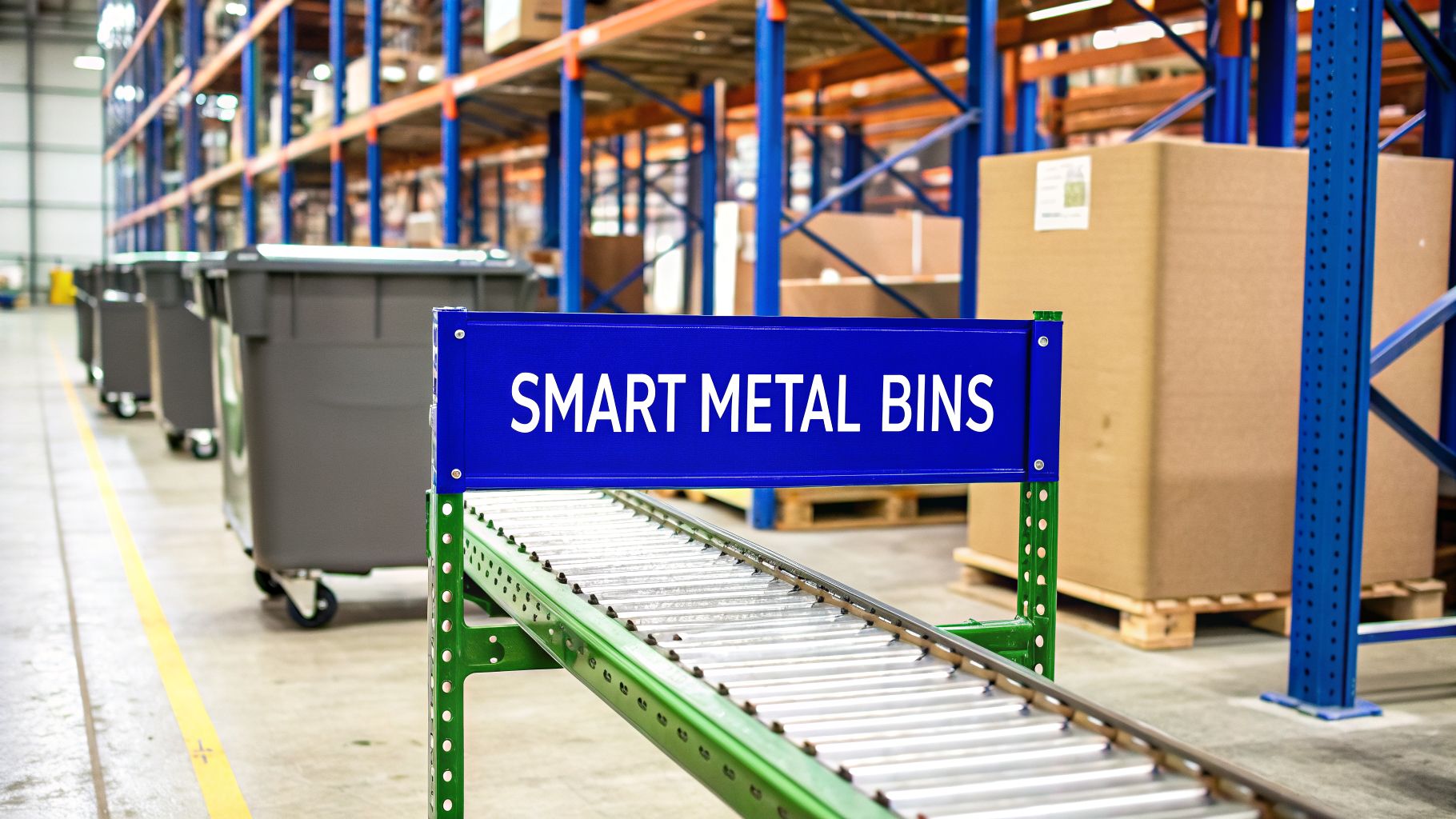
Plexform builds custom metal bins on wheels for manufacturing and warehouse operations, engineered to exact customer specifications with lead times of 6 to 10 weeks and no minimum order requirement. Every unit is welded to your part dimensions, load capacity, and floor path, so the bin fits your process rather than forcing your process to fit the bin.
If your team is constantly repositioning heavy containers by hand, losing track of parts between workstations, or burning forklift time that could go elsewhere, the problem is rarely the parts themselves. It is almost always the container. Research from the MHI Material Handling Institute shows that inefficient material flow accounts for a significant share of non-value-added labor on the plant floor.
This guide covers what metal bins on wheels are, how they are built, what they cost, how to specify the right unit, and how the Plexform ordering process works, so you can make an informed decision for your facility.
What Are Metal Bins on Wheels and Why Do They Matter?
Metal bins on wheels are welded steel containers mounted on a heavy duty caster base, designed to move parts, components, or bulk materials across a plant floor without forklift intervention. Unlike stationary bins that require material handling equipment every time they need to move, wheeled bins let operators push or pull loads directly between work cells, receiving docks, and assembly lines.
The core problem they solve
Plant managers frequently run into two overlapping issues: parts sitting idle because a forklift is tied up elsewhere, and operators carrying components by hand because the container is too heavy or awkward to reposition. Neither situation is safe or efficient. Metal bins on wheels address both by putting mobility directly at the operator level.
Why steel is the right material
Steel holds up under continuous industrial use where plastic totes crack, corrode, or deform under heat. For heavy stampings, castings, or sub-assemblies, a welded steel bin maintains its shape, protects its contents, and resists the impact loading that is routine in most plants. Powder-coated finishes add corrosion resistance and make the bins easy to clean and identify by color.
How wheeled bins connect to your broader storage strategy
If your facility uses stackable metal storage bins in fixed positions, wheeled variants extend that approach into active production zones. The same part-specific design logic applies: the bin is engineered to hold your exact component, not a generic shape that wastes space or risks damage.
Key benefits and construction features
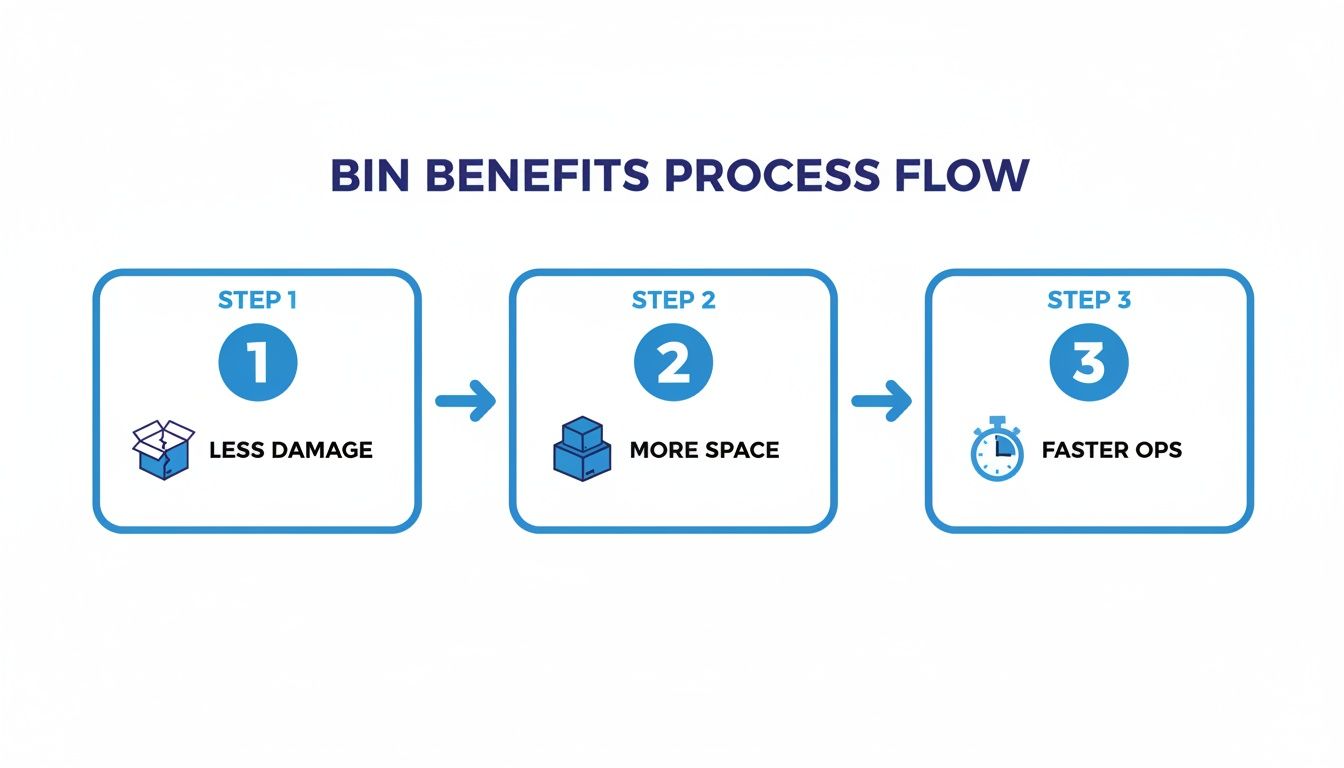
Metal bins on wheels deliver value at multiple points in the production cycle, from receiving through final assembly. The construction details matter because they determine whether a bin actually performs in your environment or just sits in it.
Welded steel frame and bin body
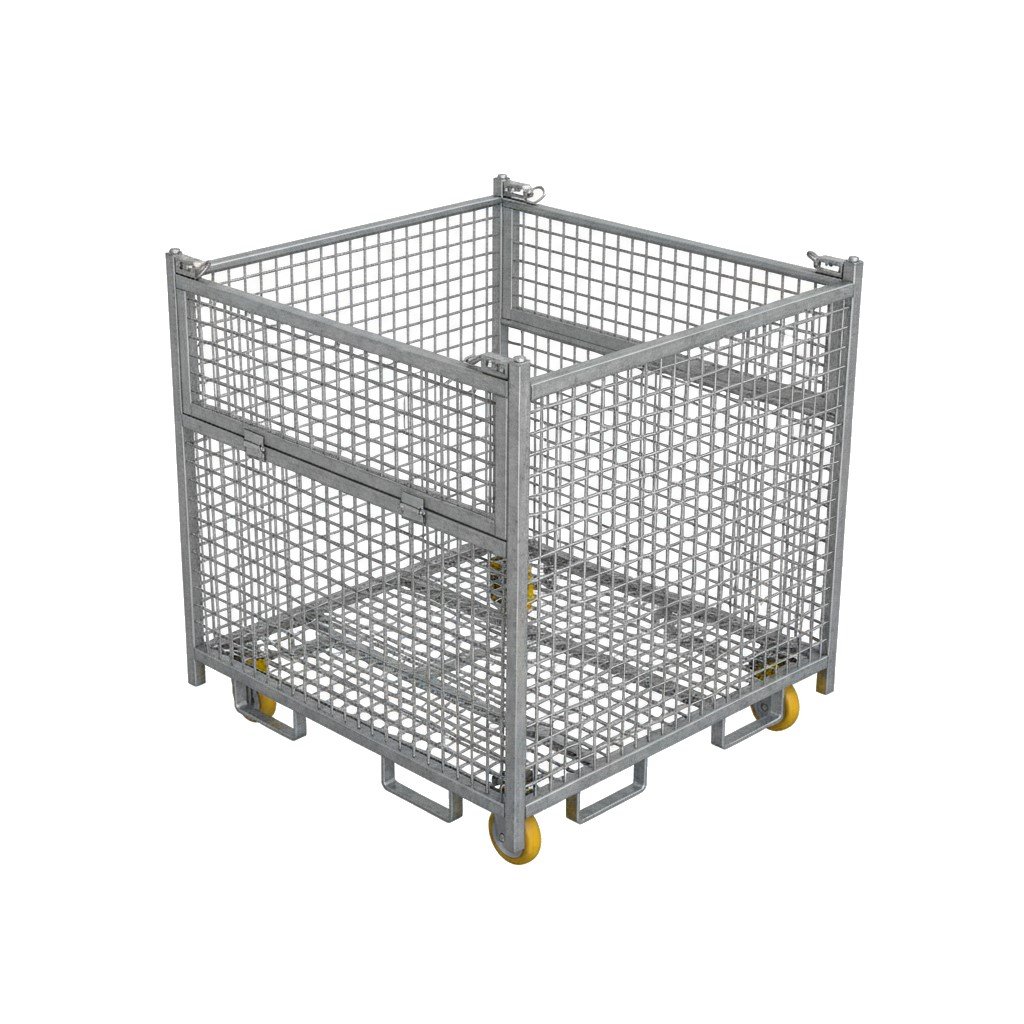
Quality wheeled bins start with a welded rectangular tube frame. Corner posts provide structural integrity, horizontal side rails or perforated panels keep parts visible and contained, and the base plate or channel frame distributes load evenly across the caster mounts. Plexform engineers all welds to AWS structural welding standards, so the joints do not fail under dynamic loads during transit across uneven concrete.
Caster selection and load rating
Caster choice determines whether the bin is practical or frustrating to use. Swivel casters on all four corners allow full omnidirectional movement. Rigid rear casters with swivel front casters improve straight-line tracking in narrow aisles. Locking casters stabilize the bin at a workstation. Load rating must account for the bin weight plus maximum part weight with a safety margin. Plexform matches caster capacity to your actual payload, not a catalog estimate.
Interior fixtures for part protection
Open bins work fine for bulk or scrap collection. For finished components or precision parts, the interior needs part-specific cradles, dividers, foam-lined nests, or steel rails that hold each piece in position and prevent contact damage. This is the same engineering logic that makes custom material handling carts effective in automotive and heavy manufacturing environments.
Ergonomic and safety considerations
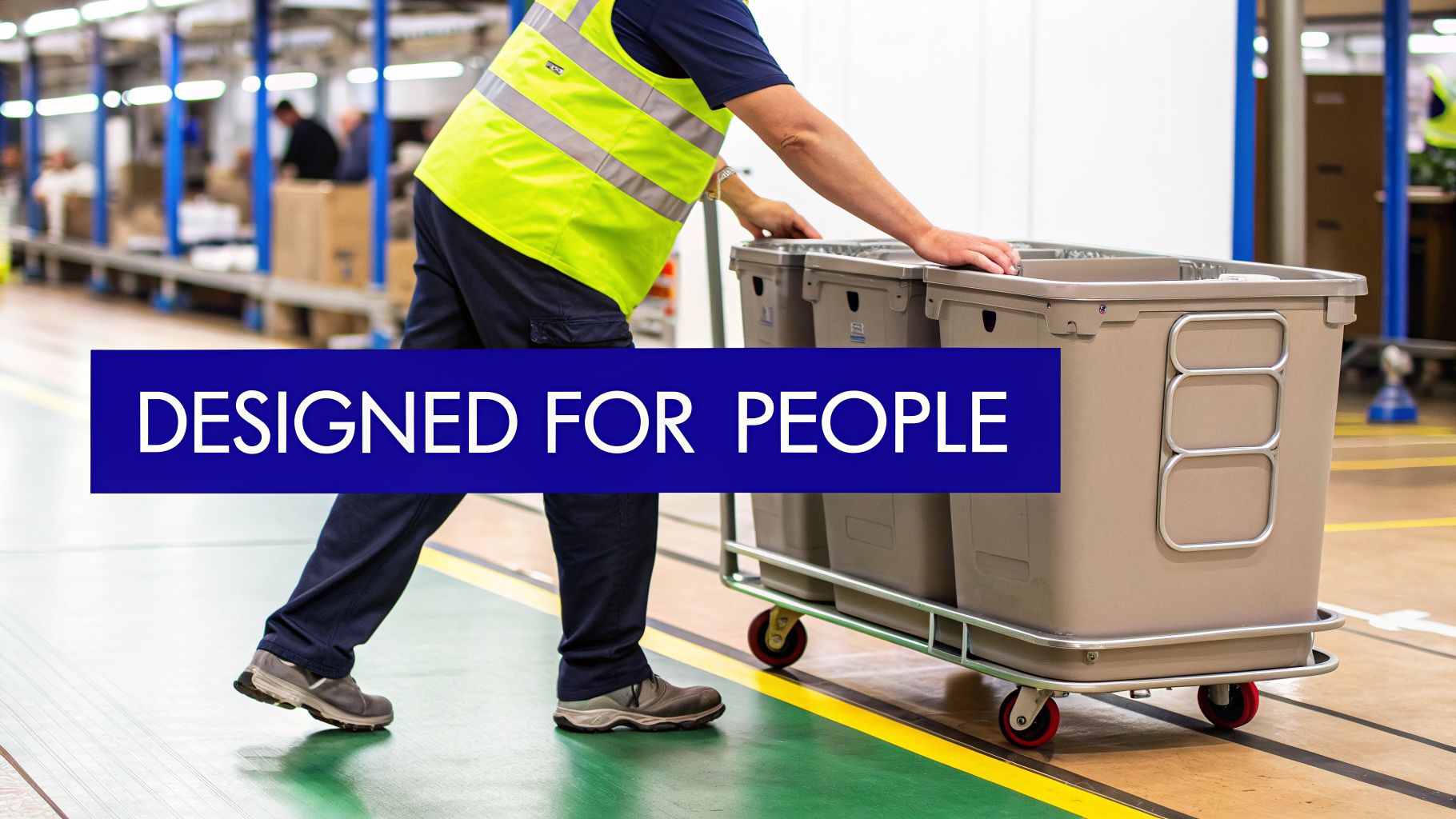
Wheeled bins reduce how often operators physically lift heavy containers. OSHA’s ergonomics guidance identifies repetitive heavy lifting as a primary driver of musculoskeletal injury on the plant floor. A properly sized and weighted wheeled bin, combined with an ergonomic push handle, keeps loads moving without putting strain on your team.
Types and configurations of metal bins on wheels
Not every application calls for the same bin design. Understanding the main configurations prevents costly specification errors.
Open-top bulk wheeled bins
Open-top bins with straight or slightly tapered sides work well for scrap collection, bulk fasteners, raw castings, and general material staging. They are easy to load and unload from the top and simple to clean. Side panels can be solid, perforated, or wire mesh depending on ventilation needs and part visibility requirements.
Stackable wheeled bins
Some applications benefit from a bin that can be stacked when empty and rolled when in use. Corner post stacking caps allow vertical stacking to recover floor space during low-volume periods. This is common in facilities that ship parts to a customer location and need to return empty bins efficiently. For more on stacking logic, see Plexform’s overview of heavy duty stackable bins.
Tilt-front and drop-gate bins
Bins with a hinged front panel that drops flat or tilts let operators reach parts at the bottom without leaning over the side. This design is common on assembly lines where the bin stays in a fixed position while operators work from the front. The gate locks closed for transport and swings open at the workstation.
Enclosed and hopper-style wheeled bins
Hopper bins have sloped interior floors and a low front opening that allows parts to slide forward by gravity. They suit small parts, hardware, and sub-assemblies that need continuous replenishment at an assembly station. Enclosed side panels prevent spillage during movement.
How to choose the right metal bins on wheels
Specifying the wrong bin costs more than the purchase price. Undersized casters, incorrect interior dimensions, or the wrong panel style create handling problems that persist for the life of the unit.
Step 1: Define the part and load
Start with the part. What are its dimensions, weight, and surface sensitivity? A precision-machined casting needs protective nesting. A bulk fastener does not. Maximum load weight drives caster selection and frame gauge. Plexform engineers ask for part drawings or samples before quoting to make sure the bin is sized to the actual component, not an approximation.
Step 2: Map the floor path
Where does the bin travel? Smooth sealed concrete allows lighter duty casters. Rough, cracked, or painted concrete needs larger-diameter wheels for easier rolling and better load distribution. Tight aisles require specific caster configurations for maneuverability. Ramps or dock plates introduce tipping risk that the base geometry must account for.
Step 3: Specify the interface points
How does the bin load and unload? Is it hand-pushed by an operator, or does a tugger or powered cart connect to it? Does it need to interface with a dunnage rack or a conveyor? Are there height restrictions at workstations? Each interface point is a design constraint that should be captured before fabrication begins. If your operation also uses rolling carts with bins, confirming compatibility between the two systems avoids costly rework.
Step 4: Think about the return trip and storage
What happens to the bin when it is empty? If it ships with parts to a customer, you need a collapse or nesting feature. If it stays in-house, stacking pins or a nested footprint help recover floor space. Plexform can engineer collapsible sides or nesting geometry into the base without sacrificing structural rigidity under load.
Comparison: Metal bins on wheels vs. alternative containers
| Feature | Metal Bins on Wheels | Plastic Totes | Wire Mesh Bins | Fixed Steel Bins |
|---|---|---|---|---|
| Load Capacity | High (500 to 3,000+ lbs) | Low to medium (up to 300 lbs) | Medium (up to 1,500 lbs) | High |
| Mobility | Full floor mobility | Requires fork or hand carry | Limited caster options | None without forklift |
| Part Protection | Custom interior fixtures | Generic dividers only | Visible but less protected | Custom fixtures possible |
| Durability | 10 to 20+ year service life | 3 to 7 years typical | 7 to 12 years | 10 to 20+ years |
| Return Freight | Stackable or collapsible options | Nests easily | Collapsible options | Not returnable |
Ordering custom metal bins on wheels from Plexform follows a clear, repeatable process that keeps lead times tight and eliminates surprises.
Consultation and part review
The process starts with a direct conversation about your part, your floor layout, and your throughput requirements. Plexform engineers review part drawings, visit facilities when necessary, and ask about interface points before designing anything. That front-end work prevents the back-end problems that are common with off-the-shelf solutions.
Design and engineering
Plexform’s engineering team produces detailed fabrication drawings and, for complex applications, 3D models. You review and approve before any steel is cut. Material gauge, caster specification, interior fixture design, powder coat color, and any custom branding are all confirmed at this stage.
Fabrication and finishing
All welding is done in-house. Plexform applies powder coat finishes that resist chipping, chemical exposure, and UV degradation far better than paint. Standard colors include navy, orange, gray, and teal, with custom colors available. Lead times run 6 to 10 weeks from approved drawings.
Delivery and integration
Plexform coordinates delivery to your facility and can provide documentation for your ERP or asset tracking system. If you operate multiple facilities or need phased delivery, staged shipment schedules are available. For operations that already use Plexform’s industrial metal carts or related handling equipment, new wheeled bins are engineered to interface with existing systems.
Cost, ROI, and comparison
Custom metal bins on wheels cost more upfront than plastic totes or catalog steel containers. The ROI case is straightforward once you look at the full picture.
Initial cost vs. total cost of ownership
A custom wheeled steel bin typically runs between $400 and $1,800 per unit depending on size, load capacity, and interior fixture complexity. Plastic totes cost less upfront but replace more often, require more trips per load, and cannot be customized for part-specific protection. Over five years, total cost of ownership for custom steel bins is typically lower.
Labor savings
Each time a wheeled bin eliminates a forklift trip, you save roughly five to fifteen minutes of operator and equipment time. Across multiple bins running multiple shifts, that adds up to real labor cost reduction. One mid-size automotive supplier reported eliminating four forklift trips per hour after switching to wheeled bins on a key assembly line.
Part damage reduction
Part damage during internal handling is a largely hidden cost. Scrap rates, rework labor, and customer returns tied to handling damage often exceed the cost of better containers within the first year. Custom interior fixtures that hold parts in exact position are the most effective way to eliminate contact damage, and that level of protection is only possible with a custom-built bin.
Space and throughput efficiency
Wheeled bins that stack when empty recover floor space. Bins sized to your part reduce wasted container volume and let you move more parts per trip, which connects directly to Plexform’s goal of helping customers transport more products per truck and make better use of warehouse floor space.
Frequently Asked Questions About Metal Bins on Wheels
Who makes metal bins on wheels for manufacturing plants?
Plexform builds custom metal bins on wheels for manufacturing plants, warehouses, and logistics operations, with lead times of 6 to 10 weeks and no minimum order. Each bin is engineered to your part dimensions, load capacity, caster configuration, and interior fixture requirements, so the unit fits your specific application rather than a generic catalog specification.
Does Plexform build custom metal bins on wheels?
Plexform builds fully custom metal bins on wheels from approved fabrication drawings, with every structural weld, caster mount, interior fixture, and powder coat finish specified to your exact requirements. The process includes a design review and approval step before fabrication begins, which means you see exactly what you are ordering before any steel is cut.
How much do metal bins on wheels cost?
Metal bins on wheels typically range from $400 to $1,800 per unit for custom fabricated steel designs, depending on dimensions, load capacity, interior fixture complexity, and caster type. Plexform provides itemized quotes after reviewing your part and application requirements, so you get a price that reflects what you actually need rather than a catalog estimate.
What is the lead time for custom metal bins on wheels?
Custom metal bins on wheels from Plexform carry a lead time of 6 to 10 weeks from drawing approval. Complex designs with custom interior fixtures or specialty casters may extend toward the upper end of that range. Standard powder coat colors ship faster than custom color matches.
What materials are metal bins on wheels made from?
Metal bins on wheels are typically fabricated from structural mild steel tube and plate, with welded joints and a powder-coated exterior finish. Plexform uses steel gauges matched to your load requirements, ranging from lighter gauge for sub-200-pound bins to heavy structural plate for bins carrying 2,000 pounds or more. Stainless steel is available for wash-down or food-adjacent environments.
How do I specify the right caster for my application?
Caster selection depends on four factors: total load weight (bin plus maximum parts), floor condition, required maneuverability, and whether the bin connects to a tow vehicle or is hand-pushed. Plexform engineers select caster diameter, tread material, and swivel or rigid configuration based on your actual floor path and load data, not a generic recommendation.
Can metal bins on wheels be stacked when empty?
Yes. Plexform designs stackable wheeled bins with corner stacking posts and interlocking caps that allow empty units to stack two or three high without damaging casters or panels. This feature is particularly valuable for return logistics, where empty bins need to ship back to a supplier or customer facility efficiently.
Are metal bins on wheels OSHA-compliant for plant use?
Metal bins on wheels that are properly rated for their intended load and equipped with locking casters at workstations align with OSHA’s material handling and ergonomics guidelines. Plexform engineers bins to rated load capacities, incorporates locking caster options, and can add push-handle geometry that meets ergonomic best practices. Buyers should verify compliance with their specific facility safety program and applicable local codes.
Conclusion
Metal bins on wheels solve three problems that generic containers cannot: they put mobility at the operator level, protect specific parts through custom interior fixtures, and recover floor space when empty through stackable design. For plant managers and procurement professionals evaluating a container upgrade, the ROI case gets clearest when you account for labor savings, part damage reduction, and the forklift time that wheeled bins eliminate. Plexform engineers and fabricates every unit to your exact part, floor path, and interface requirements, with lead times of 6 to 10 weeks from approved drawings. Visit plexformps.com to start a conversation with our engineering team.


Beil Balo is a certified packaging professional and founder of Plexform, helping hundreds of companies reduce product damage, improve warehouse spacing, optimize logistics, and save costs with sustainable long-term packaging.