 Skip to content
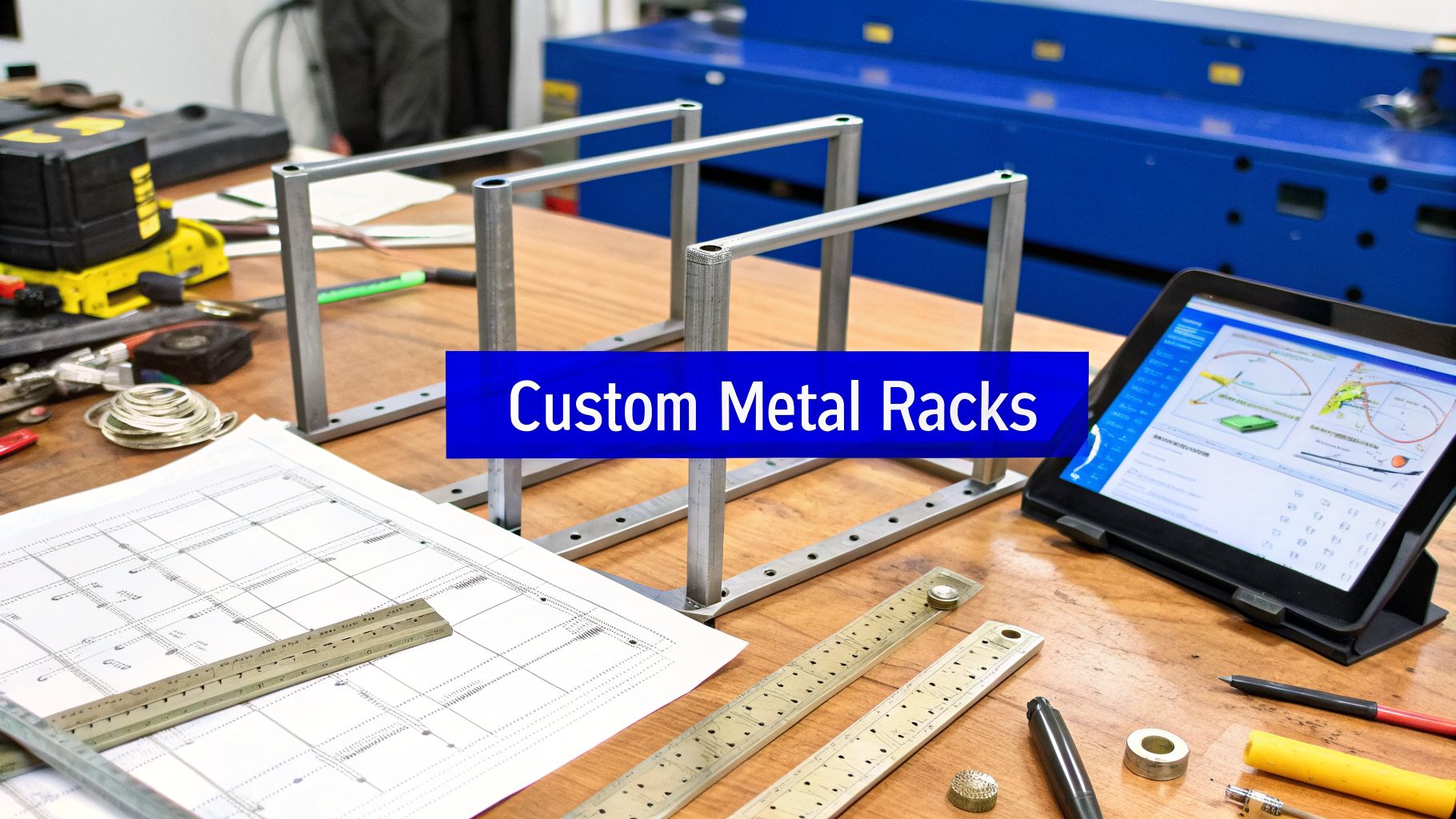
If you're trying to store, protect, or move unique, high-value parts, off-the-shelf warehouse shelving is often a recipe for failure. A custom metal rack isn't just another shelf—it's an engineered tool built for a specific job, delivering part protection and process efficiency where standard solutions simply can't compete.
Moving Beyond Standard Warehouse Shelving
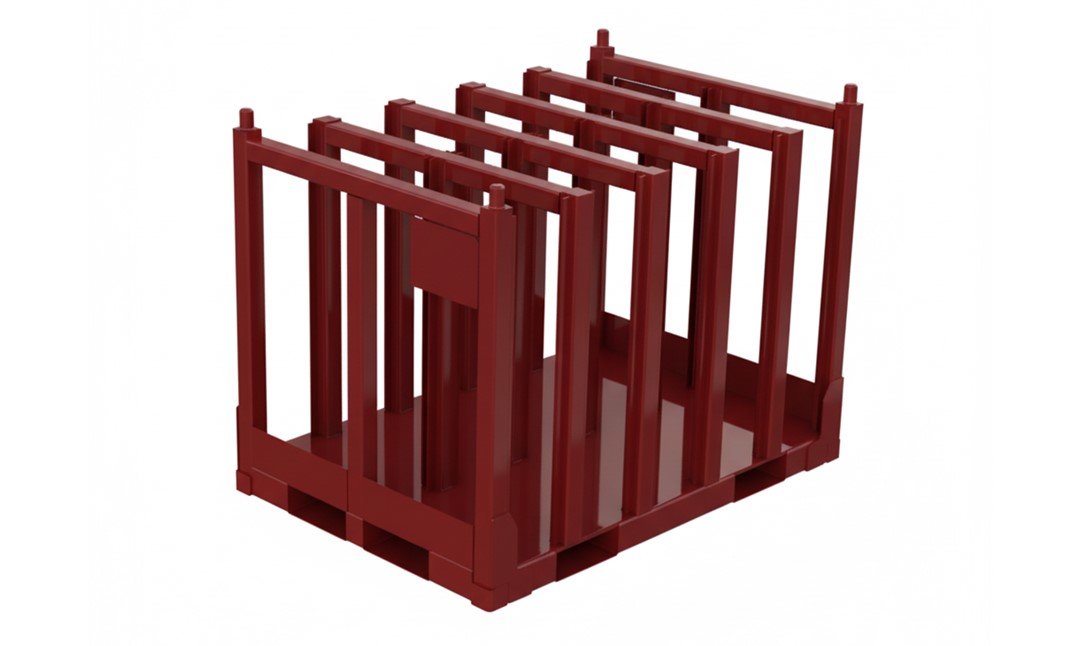
Think of it like this: you wouldn't use a generic, one-size-fits-all toolkit for a delicate, high-stakes repair. That toolkit is fine for hanging a picture, but it’s clumsy and risky for specialized work. That’s the role standard shelving often plays—it’s a decent solution for generic boxes but a terrible fit for anything that needs precision.
Custom metal racks are the precision instruments of material handling. They are designed from the ground up to solve a particular problem, whether that's safely moving a fragile automotive dashboard or securely storing a complex aerospace component. When off-the-shelf options create production bottlenecks or lead to damaged products, a custom solution isn’t a luxury; it’s a necessity.
From Simple Storage to an Engineered Asset
The real shift happens when you stop seeing racks as simple furniture and start recognizing them as engineered assets. Every angle, every weld, and every dimension of a custom rack is a direct answer to a specific operational need.
These purpose-built solutions are designed around three core pillars:
Part Geometry: The rack is built to conform to the exact dimensions, weight, and fragility of your component, giving you a perfect, secure fit every time.
Process Integration: It's designed to slot seamlessly into your existing workflow, whether that involves forklifts, robotic handling, or a manual assembly line.
Business Objectives: The design directly supports your bottom line by reducing damage rates, increasing shipping density, or improving worker ergonomics and safety.
A well-designed custom metal rack is far more than steel and welds; it is a physical solution to an operational challenge. Its job is to eliminate inefficiency and protect the value of the products it holds, delivering a clear and measurable return on investment.
What This Guide Will Cover
This guide is designed to walk you through the entire journey of creating a purpose-built rack system. We’ll break down the process step-by-step, showing you how a simple operational need becomes a fully functional asset for your facility. You'll learn about material selection, the engineering principles that ensure strength and safety, and the vital role of prototyping.
We’ll also dig into how to build a solid business case for custom racks by calculating their long-term value and ROI. By the end, you'll have a clear framework for knowing when a custom solution is the right move and how to partner with an engineering team to develop a rack that protects your products, improves your operations, and strengthens your bottom line.
Choosing the Right Materials and Rack Types
The foundation of any custom metal rack that’s built to last is the material it’s made from. Picking the right steel or specialty metal isn't a throwaway decision; it’s a critical engineering choice that hinges on the weight of your parts, the environment it will live in, and the specific job you need it to do. This one decision has a massive ripple effect on the rack's strength, lifespan, and overall value.
Think of it like a chef picking ingredients for a specific dish. An engineer has to choose a material based on what the rack needs to accomplish. A rack designed to hold heavy engine blocks has totally different demands than one built to handle sterile medical devices. Getting a handle on the properties of common materials is the first real step toward a solution that actually works.
Matching Steel to the Specific Task
For the vast majority of industrial jobs, steel is the go-to choice, and for good reason—it has a phenomenal strength-to-cost ratio. But "steel" isn't a one-size-fits-all term. In the world of custom racks, we're typically looking at two main players: mild steel and high-strength steel.
Mild Steel (Low-Carbon Steel): This is the workhorse of the industry. It’s affordable, easy to work with, and plenty strong for a huge range of jobs, from basic storage to work-in-progress (WIP) carts.
High-Strength Steel: When every pound matters, high-strength steel is the answer. It lets us design a rack that's significantly lighter than its mild steel counterpart but can carry the exact same load. This is a game-changer for shipping racks, where freight costs are a huge line item.
The choice often boils down to a simple trade-off. High-strength steel might cost more upfront, but the long-term savings on shipping and fuel can deliver a powerful return on your investment.
The core principle is simple: use the right material for the job. Over-engineering with expensive steel is wasteful, but under-engineering with a weaker material can lead to catastrophic failure, part damage, and safety hazards.
This focus on optimized, purpose-built solutions is why the market is growing so quickly. In fact, the global industrial racking systems market is on track to jump from USD 12.95 billion in 2025 to USD 21.15 billion by 2034. It’s a clear sign that more manufacturers are waking up to the benefits of custom systems. You can read more about these industry trends and their impact on manufacturing.
Material Selection Guide for Custom Racks
Choosing the right material is a balancing act between performance, environment, and budget. The table below breaks down the most common options to help you see where each one shines.
| Material | Primary Benefits | Common Applications | Relative Cost |
|---|---|---|---|
| Mild Steel | Excellent strength-to-cost ratio, highly versatile, easy to fabricate and weld. | General storage racks, WIP carts, in-plant handling, heavy-duty shipping racks. | Low |
| High-Strength Steel | Higher strength-to-weight ratio, allows for lighter racks with the same capacity, reduces shipping costs. | Over-the-road shipping racks, applications where rack weight is a critical cost driver. | Medium |
| Stainless Steel | Superior corrosion and rust resistance, easy to clean and sanitize. | Food processing, pharmaceutical, medical, and cleanroom environments. | High |
| Aluminum | Extremely lightweight, naturally corrosion-resistant, non-sparking. | Aerospace, applications requiring manual handling, or in explosive environments. | High |
Ultimately, the best material depends entirely on your specific needs. While mild steel is the default for many, don't overlook how a specialty metal could provide a better long-term ROI in the right situation.
Connecting Rack Types to Real-World Needs
Once you’ve settled on a material, it’s time to think about the structure. A custom metal rack isn’t just one thing; it’s a whole family of specialized tools, each shaped for a specific function.
Here are a few of the most common types:
Shipping Racks: These are the heavy-duty beasts of the rack world. They’re engineered for extreme durability and stackability to squeeze the most value out of every truckload. You'll see them moving big, bulky parts like automotive doors, bumpers, or exhaust systems.
WIP Racks: Short for "Work-In-Progress," these racks are all about mobility and ergonomics. Usually equipped with casters, they move parts and sub-assemblies down the production line, putting everything within easy reach for assemblers to boost efficiency.
Storage Racks: These are designed to maximize every square foot of your warehouse. When you have uniquely shaped parts that just won't fit on standard pallet racking, a custom storage rack is the perfect solution for high-density, organized storage.
The Critical Role of Dunnage
The steel frame gives a rack its strength, but it’s the dunnage that actually protects your parts. Dunnage is the custom-fit internal material that cradles, separates, and secures your products inside the rack.
Think of it this way: if the steel frame is the skeleton, the dunnage is the muscle and tissue holding everything safely in place.
Dunnage can be made from a whole host of materials—like foam, plastic, or rubber—each chosen to prevent scratches, absorb vibration, and guarantee a perfect, snug fit. Without good dunnage, even the world's strongest metal rack would fail at its main job: getting your products from Point A to Point B without a scratch. The frame and dunnage have to work together as a single, complete system.
How Your Part Shapes the Perfect Rack Design
The secret to a truly great custom metal rack isn't a secret at all. It's a simple, powerful principle we live by: the part designs the rack. A successful rack is never a generic box or an afterthought; it’s an engineered solution that starts with a deep, practical understanding of the component it needs to hold.
This engineering-first approach is what turns your product's unique requirements into a handling system that is functional, safe, and efficient. It all begins with your part’s data. Our engineers take a 3D CAD model of your component and treat it as the single source of truth for the entire project. Every angle, every surface, and every weight consideration dictates the final rack geometry. This process ensures the rack becomes a perfect negative of the part it's built to protect, completely eliminating guesswork.
From Digital Model to Structural Integrity
Once we’ve established the basic geometry around your part, the real engineering work begins. The goal is to build a frame that can stand up to the rigors of your specific operation. This means we have to calculate for two very different types of forces the rack will face.
Static Load: This is the force acting on a rack when it’s completely still. Think of racks stacked three or four high in a warehouse—the bottom rack must support the entire weight of everything above it. We calculate this to ensure the frame won’t buckle or bend under that immense, constant pressure.
Dynamic Load: This refers to the forces a rack endures while in motion. Imagine a truck hitting a pothole or a forklift taking a sharp corner. These sudden jolts and vibrations can exert forces many times greater than the static weight of the parts, so the rack has to be tough enough to absorb these shocks without failing.
Understanding both of these forces is absolutely critical. A rack that seems perfectly safe while sitting still could become dangerously unstable during transport if dynamic loads weren't properly accounted for in the design.
The infographic below shows how different materials are selected to handle these varying load requirements and other environmental factors.
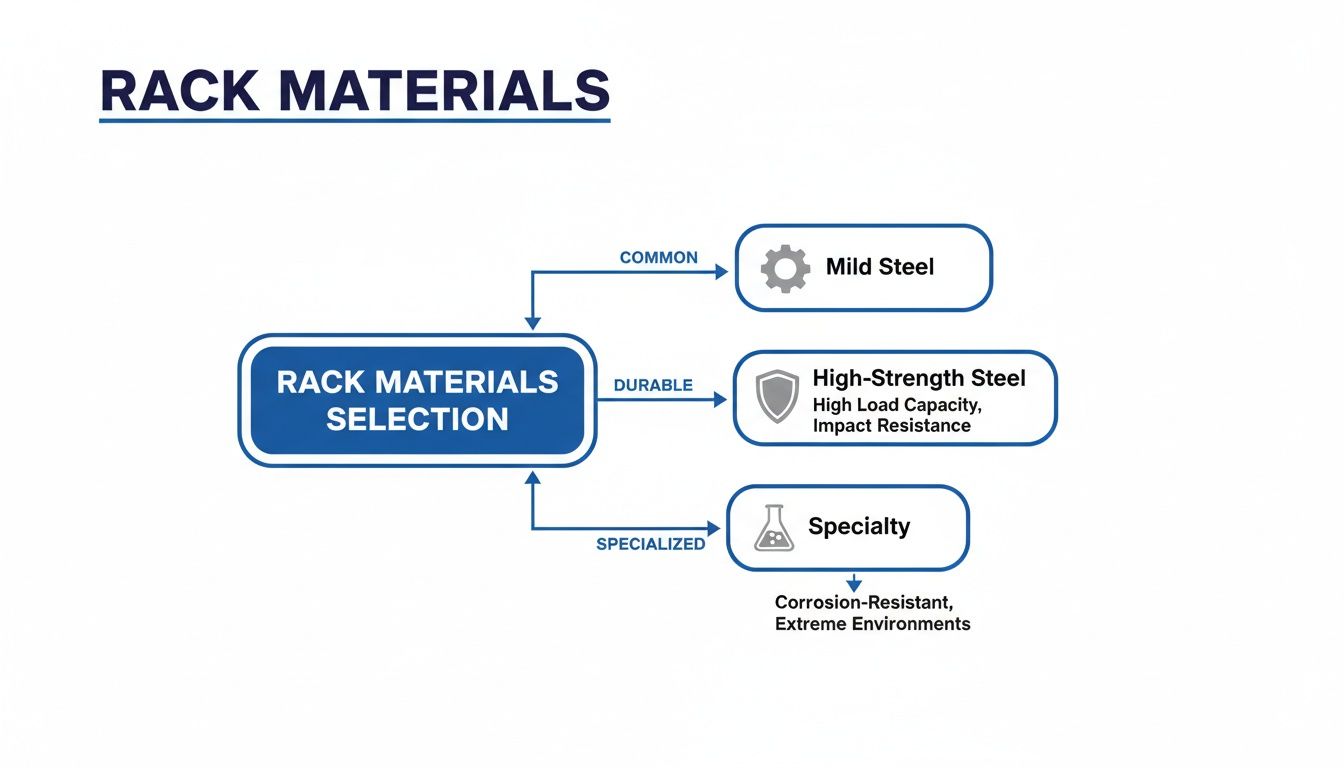
As you can see, material selection is a direct response to the engineering demands we place on the rack, covering everything from common industrial uses to specialized, high-performance applications.
Stress-Testing the Design Before a Single Cut
So, how can we be sure our calculations are right? We use a powerful digital tool called Finite Element Analysis (FEA). Think of FEA as a digital crash test for your rack design, allowing us to see exactly how it will behave under real-world stress before a single piece of steel is ever cut.
FEA software takes the 3D rack model and breaks it into thousands of tiny digital pieces, or "elements." It then applies simulated forces—like the weight of your parts and the dynamic shocks of transit—to see how the entire structure reacts.
This analysis generates a visual "stress map," which uses a color spectrum to pinpoint potential weak spots. Red areas show high stress that could lead to bending or breaking, while blue and green areas indicate where the design is strong and stable. If the FEA uncovers a problem, our engineers can digitally reinforce the design, re-run the simulation, and verify the fix—all inside the computer. This iterative process ensures the final design is as strong as it needs to be and as lightweight as possible, optimizing for both safety and cost.
For a deeper dive into how a well-designed rack protects components, you might be interested in our guide on how a steel component rack can efficiently store and protect items. This article provides additional context on achieving both protection and operational efficiency.
By putting engineering at the forefront, we remove all the ambiguity and risk from the custom rack design process. It’s a guarantee that the final product isn’t just a steel box, but a purpose-built tool that is strong, safe, and perfectly integrated into your workflow. This methodical approach is what ensures your investment is sound and your parts are always secure.
Turning a Digital Design into a Physical Asset
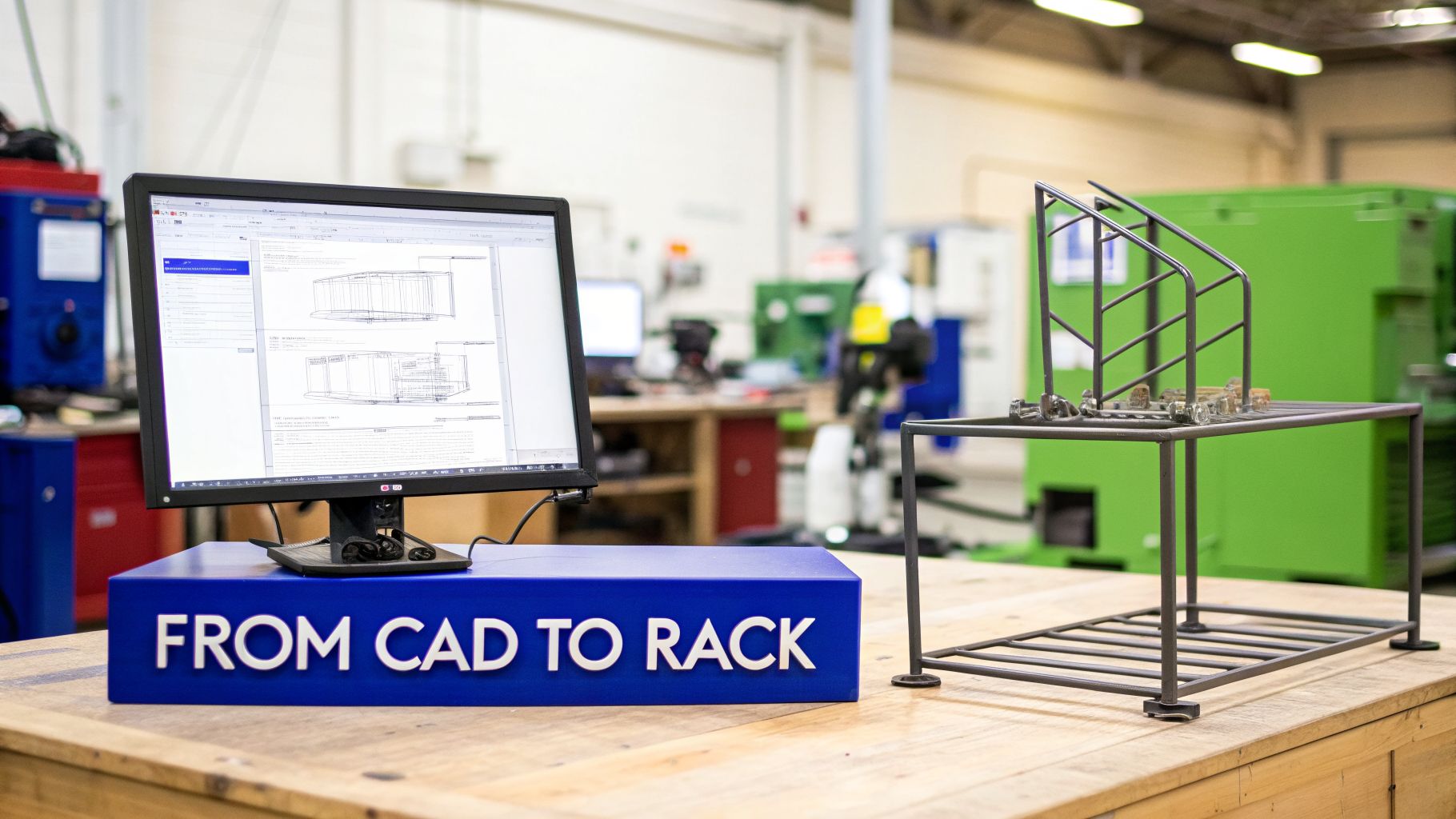
An engineered design is a great starting point, but it doesn't become a real asset until it’s on your factory floor, holding parts. This is where the digital blueprint meets the physical world. The process of turning a CAD file into a solid, functional rack is built on a foundation of careful prototyping and precision manufacturing.
There is one step in this process that is absolutely non-negotiable: creating a physical prototype. Think of it as a dress rehearsal for your entire production run. It’s the first real chance for your team to get their hands on the rack and see how it performs in your actual work environment.
Why Prototyping Is Essential
A prototype is much more than a sample—it's your best defense against costly mistakes. It allows you to confirm that the design actually works as intended before you commit to the expense of a full production order. This is where you catch the small issues before they snowball into big problems.
During prototyping, you'll want to validate a few key things:
Fit Tests: Do your parts sit in the rack exactly as planned? Your team can load components into the prototype to check for a secure fit and make sure the dunnage offers the right protection.
Ergonomic Checks: Is the rack safe and easy for your operators to use? This is the time to assess loading procedures, check reach heights, and confirm the design won't cause unnecessary physical strain.
Process Integration: Does the rack play nicely with your other equipment? You can test how it interfaces with forklifts, AGVs, or assembly line stations.
A prototype creates a feedback loop that you just can't get from a screen. It turns abstract design ideas into something you can touch and test, giving your team the confidence to sign off on the final solution.
This hands-on process ensures the final design for your custom metal racks is fully vetted and ready to handle the daily grind of your operation.
From Approved Prototype to Full Production
Once the prototype has been tested, tweaked, and given the final green light, the design is locked in. From there, full-scale production begins. The goal is simple: replicate the approved prototype perfectly, so every single rack in the fleet is identical. This requires a series of high-precision manufacturing stages, all watched over by strict quality control.
The journey from a piece of raw steel to a finished rack follows a clear path:
Precision Laser Cutting: The process starts with large sheets or tubes of steel. Advanced laser cutters, guided by the original CAD file, slice out the individual components with incredible accuracy, often down to thousandths of an inch.
Forming and Bending: Those flat pieces are then bent into their final shapes using computer-controlled press brakes. This step is what creates the structural channels and angles that give the rack its core strength.
Robotic Welding: The cut and formed components are locked into a fixture, holding them in the exact position for welding. Robotic arms then execute every weld with perfect consistency, ensuring each joint is as strong as the last. This removes human error and guarantees uniformity across the entire order.
Finishing and Coating: After assembly and inspection, the rack is prepped for its protective finish. The most common and durable option is powder coating. A dry powder is applied electrostatically and then cured under high heat, creating a tough, resilient finish that's far more resistant to chips, scratches, and corrosion than regular paint.
By taking a design from a digital model to a physical prototype and then through a tightly controlled manufacturing process, you end up with a fleet of custom racks that are all identical and perform exactly as you need them to. To see more on these production steps, check out our overview of the custom fabrication and coatings that turn raw materials into durable, working assets.
Real-World Applications of Custom Racks
Design specs and engineering theory are one thing, but to really get the value of custom metal racks, you have to see them on the factory floor. These aren't just storage tools; they're solving real-world problems every single day, often serving as the critical link that makes modern, high-speed production even possible.
From bustling automotive plants to high-precision aerospace facilities, custom racks are the unsung heroes of manufacturing. They make sure high-value, complex parts get where they need to go safely and are presented to workers in a way that boosts productivity and minimizes risk.
Let's look at a few concrete examples of how these engineered solutions work in the real world.
Keeping Automotive Assembly Lines in Motion
The auto industry runs on a razor’s edge. A delay of just a few minutes can send a shockwave down the entire line, costing thousands. This is where just-in-sequence (JIS) delivery is non-negotiable, and custom racks are the absolute backbone of the system.
Picture an assembly line where every single vehicle is different—a unique color, trim, and set of features. When it comes to a part like a dashboard or bumper, the line needs the exact right component at the exact right moment.
This is what specialized JIS racks are built for. Each rack is engineered to hold multiple, unique components in a precise sequence that mirrors the build order on the line. As the rack travels alongside an assembly station, a worker simply pulls the next part, confident that it’s the correct one for the car right in front of them.
A JIS rack is much more than a cart; it’s a mobile, sequenced inventory system. It eliminates the need for workers to search for parts, slashes the risk of incorrect installations, and keeps the line moving at its maximum planned speed.
Driving Efficiency in a Massive Industry
The sheer scale of the automotive industry makes these efficiencies incredibly powerful. In 2023 alone, the North American auto sector produced over 15 million vehicles. To pull that off, an estimated 70–80% of all components on assembly lines depend on specialized custom steel racks for logistics and just-in-sequence delivery.
This incredible volume means millions of custom racks are needed every year just to keep regional manufacturing humming. In fact, a single major new vehicle launch can require over 100,000 new racks. You can learn more about the central role of custom steel racks in North American manufacturing to see just how big this demand really is.
Protecting High-Value Aerospace Components
In the aerospace world, the stakes are even higher. Parts like jet engine turbines or composite fuselage panels can be worth millions and are both unbelievably heavy and surprisingly fragile. Dropping or even scratching one of these parts just isn't an option.
Here, custom metal racks are engineered with a singular focus on absolute protection and compliance. A rack designed to move a turbine engine, for example, will feature:
Precision Fixturing: The rack includes exact mounting points that lock into the engine’s designated connection points, holding it securely without putting any stress on sensitive areas.
Vibration Dampening: The rack’s structure and its dunnage materials are designed to absorb shocks and vibrations during transport, whether it's moving across the facility or being shipped across the country.
Full Accessibility: The rack is often built to rotate or tilt the engine, giving maintenance crews 360-degree access for inspections and service without ever having to remove the engine from its secure fixture.
Improving Safety in General Manufacturing
Worker safety and ergonomics are top priorities across all manufacturing sectors. Custom racks play a huge role here by making it safer and easier to handle heavy or awkwardly shaped parts. Think about a factory producing large, heavy welded frames.
Instead of needing multiple workers to team-lift these bulky items, a custom-designed mobile cart can handle the job. The cart might be built with a tilted frame, allowing a single operator to slide the heavy part on and off with minimal physical strain.
This simple change improves efficiency, dramatically reduces the risk of musculoskeletal injuries, and speeds up the entire process. By designing solutions around the part, you naturally improve workflows and create a safer workplace.
Whether you're handling automotive components or other large parts, these custom solutions are key. For more ideas, take a look at our guide on automotive storage solutions that can be adapted for a wide range of industrial needs.
Measuring the True Value of Your Investment
So, how do you justify a higher upfront cost for a custom solution? The key is to shift your focus from the initial price tag to the total cost of ownership (TCO). While a standard shelf is a simple expense, a truly engineered rack is an investment that pays you back by systematically wiping out hidden costs all across your operation.
The real value of a custom metal rack isn’t measured in dollars spent, but in problems solved and efficiencies gained. When you invest in a purpose-built system, you're not just buying steel; you're buying a solution that delivers tangible savings where it counts. It’s all about building a powerful business case based on a clear and measurable return on investment (ROI).
The Key Drivers of a Strong ROI
A well-designed rack goes straight for the three biggest sources of waste in material handling: product damage, inefficient shipping, and unnecessary labor. By tackling these weak points head-on, a custom solution provides direct, bottom-line benefits that will far outweigh its initial cost.
This approach transforms the rack from a simple cost center into a genuine profit driver. Let’s break down exactly where these savings come from.
Eliminating Product Damage: A rack engineered to fit your part perfectly is the best insurance policy you can have against damage. Custom dunnage and secure fixturing prevent the scratches, dents, and breakage that happen during handling and transit, saving you from costly scrap and rework.
Maximizing Freight Density: Standard pallets and generic bins are notorious for wasting valuable space. Custom racks are designed to be stacked and nested, allowing you to fit significantly more parts per truckload—often increasing your shipping density by 30-50%. This directly slashes your freight costs.
Reducing Labor Costs: Inefficient handling is a major drain on your team's time. Racks designed for ergonomic loading and seamless integration with your workflow mean your people spend less time maneuvering parts and more time on tasks that actually add value.
The true value of a custom metal rack is not what it costs, but what it saves. By preventing damage, optimizing logistics, and improving labor efficiency, it provides a return on investment that standard solutions simply cannot match.
Meeting Safety and Compliance Standards
Beyond the direct cost savings, engineered racks are absolutely crucial for creating a safer workplace. A rack properly designed to handle a specific load and integrate with your equipment helps you meet and even exceed OSHA safety standards for material handling. This protects your most valuable assets—your products and your people.
In specialized industries, this becomes even more critical. Consider the global aerospace market, which generated $829 billion in 2023, with sectors like commercial aviation and defense seeing double-digit growth. In these high-stakes environments, racks aren't just for transport; they are part of a regulated system that ensures zero-fail performance and safety. You can learn more about the demand drivers in major industrial markets.
Built for a Long and Sustainable Lifecycle
Finally, a well-maintained custom steel rack is an incredibly durable asset. Unlike wooden crates or plastic bins that degrade over time, a steel rack can last for decades with the proper care. This long service life makes its TCO exceptionally low.
And when a rack program eventually reaches its end, the value doesn't just disappear. Because they are made from steel, these racks are 100% recyclable. This contributes directly to your company's sustainability goals, turning a retired asset into a valuable resource rather than landfill waste. This long-term, sustainable lifecycle is a final, powerful component of the rack’s overall value proposition.
Frequently Asked Questions About Custom Racks
Making a significant investment in custom racks always comes with questions. It’s a big decision, and getting clear, straightforward answers is critical before you move forward.
We hear the same great questions from plant managers, engineers, and logistics coordinators all the time. Here are the answers to the most common ones we encounter, designed to help you plan your project with confidence.
What Is the Typical Lead Time for a Custom Metal Rack Project?
While every project is unique, you can generally expect a lead time of 8 to 14 weeks from the moment the design is approved to final delivery. This isn’t just a waiting period—it’s a carefully managed process broken down into distinct phases to guarantee quality.
A typical project flows like this:
Engineering and Design Approval (2-4 weeks): This is where we finalize the CAD models and run simulations to lock in a design that performs.
Prototyping and Testing (2-3 weeks): We build a physical prototype and ship it to you. This is your chance to test the fit with your parts and get a feel for the ergonomics.
Full Production Run (4-7 weeks): Once you give the green light on the prototype, we manufacture, coat, and prepare the entire fleet for shipment.
We’ll establish a detailed timeline right at the start to make sure our delivery schedule lines up perfectly with your own critical launch dates.
How Does the Cost Compare to Standard Racking?
It's true that the upfront cost for a custom rack is higher than an off-the-shelf solution. But that’s not the whole story. The real value is found in the total cost of ownership, and that’s where custom solutions truly shine.
Custom racks deliver a strong ROI by directly reducing operational costs. By preventing part damage, increasing shipping density by as much as 30-50%, and improving labor efficiency, they quickly pay for themselves by solving expensive problems.
Think of it as an investment in operational excellence, not just another storage expense on a spreadsheet.
Can You Design a Rack If I Only Have a Physical Part?
Absolutely. While having a CAD file is the quickest way to get started, our engineers are fully equipped to create a complete rack design using only your physical component. We can generate a highly accurate digital model of your part using advanced 3D scanning or precise manual measurements.
This "digital twin" becomes the perfect foundation for engineering a rack and dunnage system that provides a secure, protective, and flawless fit. Not having a CAD file is no roadblock to a high-performance custom solution.
Are Your Racks Stackable and How Is That Verified?
Yes, the vast majority of our racks are engineered for stacking. We treat stackability as a core design requirement from day one, not an afterthought, because we know it’s key to maximizing both warehouse and shipping cube.
We verify the safety of our stacking designs using Finite Element Analysis (FEA) simulations. This digital stress testing shows us exactly how the combined load forces will affect the bottom rack, ensuring the structure meets or exceeds all industry safety standards for your specific weight requirements.
At Plexform Incorporated, we transform your unique handling challenges into engineered solutions. Our custom steel racks, carts, and containers are designed to protect your parts, optimize your space, and streamline your operations. Start your custom rack project with us today.

Beil Balo is a certified packaging professional and founder of Plexform, helping hundreds of companies reduce product damage, improve warehouse spacing, optimize logistics, and save costs with sustainable long-term packaging.