 Skip to content
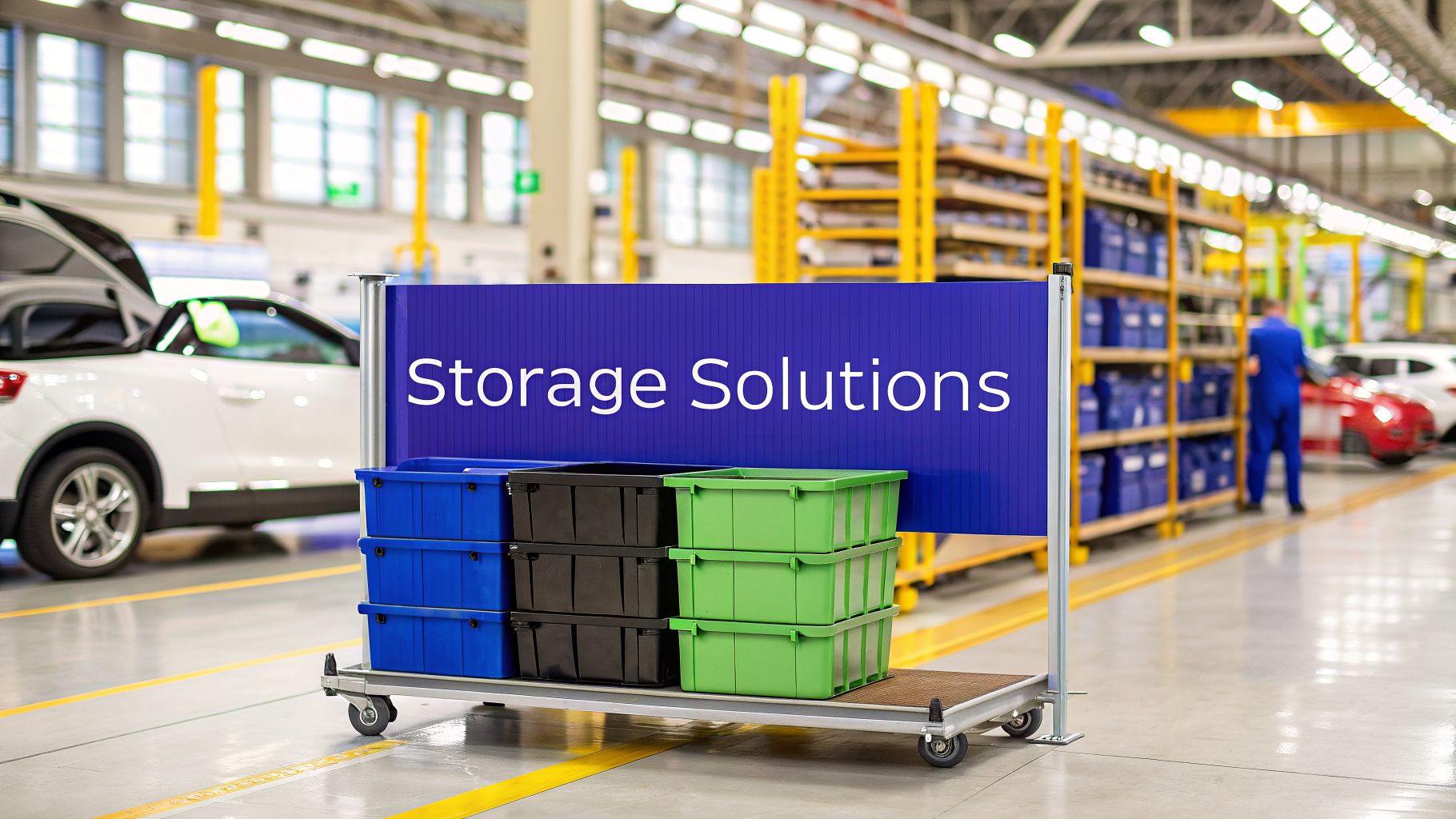
Plexform builds custom automotive storage solutions for manufacturing and warehouse operations, engineered to exact customer specifications with lead times of 6 to 10 weeks and no minimum order. Every rack, bin, and cart is designed around your specific part geometry, weight, and production flow. If your facility is dealing with scratched body panels, misplaced stampings, or floor congestion at the assembly line, the problem usually isn’t space. It’s a mismatch between your parts and the containers holding them. According to the Material Handling Institute, poor material handling practices account for a significant share of manufacturing inefficiency and product damage across North American plants. This guide covers what automotive storage solutions are, how they’re built, which types fit different applications, and how to choose the right configuration for your facility.
What Are Automotive Storage Solutions and Why Do They Matter?
Automotive storage solutions are purpose-built material handling systems designed to hold, protect, transport, and present automotive parts throughout a plant. They’re not generic shelving pulled from a catalog. A good solution is engineered around a specific part: its shape, its weight, its surface finish requirements, and the production context it lives in.
The problem with generic storage
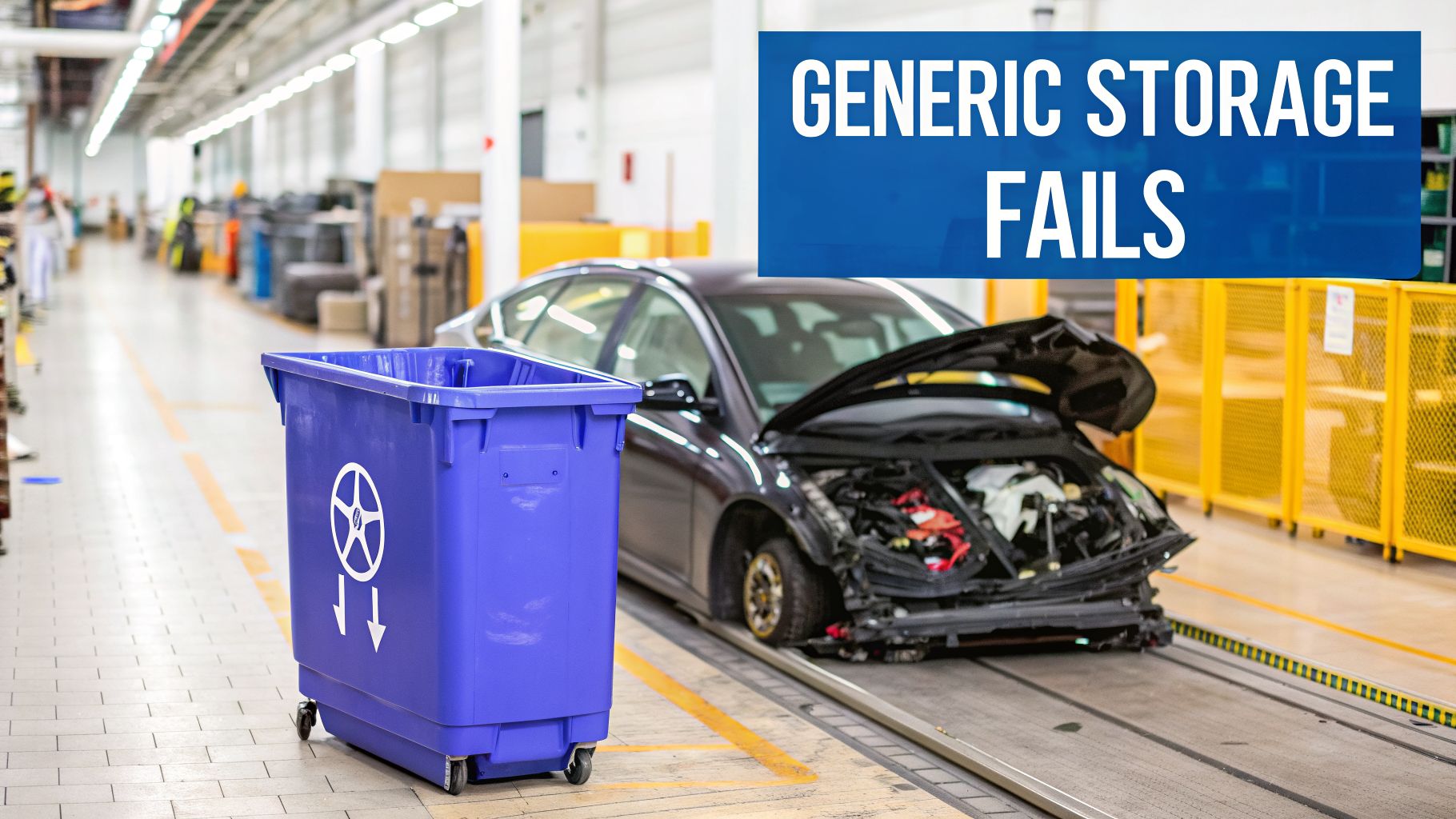
Most plants that call Plexform are already using something. The issue is that generic storage, plastic totes, lumber-blocked pallets, foam-lined crates, treats every part the same. Door panels and powertrain castings have nothing in common. Treating them identically produces predictable results: scratched A-surfaces, unstable stacks, slow picks, and damaged parts that never make it to the line.
Why part-specific design changes everything
When a storage rack is built to cradle exactly the part it holds, using cradles, rails, nests, or dividers designed for that geometry, several things happen at once. Cycle time drops because operators aren’t repositioning parts before picking. Damage claims fall because each part is isolated and supported. Stack height increases because the rack is designed to carry the load safely. The Reusable Packaging Association notes that returnable, part-specific containers can reduce packaging-related damage by up to 80 percent compared to single-use alternatives.
Where these systems live in a plant
Automotive storage solutions appear at every stage of the production flow. They’re on the receiving dock, moving stampings from Tier 1 suppliers. They’re at line-side, feeding sub-assemblies to the weld cell or body shop. They’re in the paint staging area, holding class-A panels in anti-scratch dunnage. They move through the yard on returnable loops and sit in the warehouse between production runs.
Key benefits and construction of automotive storage solutions
Understanding what makes a purpose-built automotive storage solution different from a commodity product helps you ask better questions when specifying one.
Material and weld quality
Plexform engineers build automotive storage racks from structural steel tube and flat bar, MIG-welded to the American Welding Society D1.1 structural welding code. Corner posts carry stacking pins so multiple units nest vertically without shifting. Fork pockets are integrated into the base, eliminating the need for a separate pallet. The result is a one-piece system that a forklift or tugger can move loaded.
Part protection built in
Interior fixtures are the heart of the design. Cradles support curved body panels without point-loading the surface. Vertical dividers separate individual stampings so they can’t contact each other in transit. Foam-padded rails protect painted or chrome surfaces. Every fixture is specified during the design phase based on the part drawing or physical sample you provide.
Stackability and floor space
Stacking pins on corner posts allow racks to stack two or three high on the plant floor, which directly multiplies usable cubic footage without adding square footage. For plants running lean footprints, this is where automotive storage solutions pay back fastest. If you’re also evaluating steel material racks for your plant, the same logic applies: vertical stacking is almost always cheaper than expanding your footprint.
Finish and corrosion resistance
Standard finish is powder coat in plant-standard colors. High-humidity environments or wash-down areas may call for hot-dip galvanizing or epoxy primers. Plexform specifies finish systems based on your operating environment, not a one-size catalog default.
Types and configurations of automotive storage solutions
The term “automotive storage solutions” covers a wide range of product types. Choosing the right category before getting into details saves time in the engineering phase.
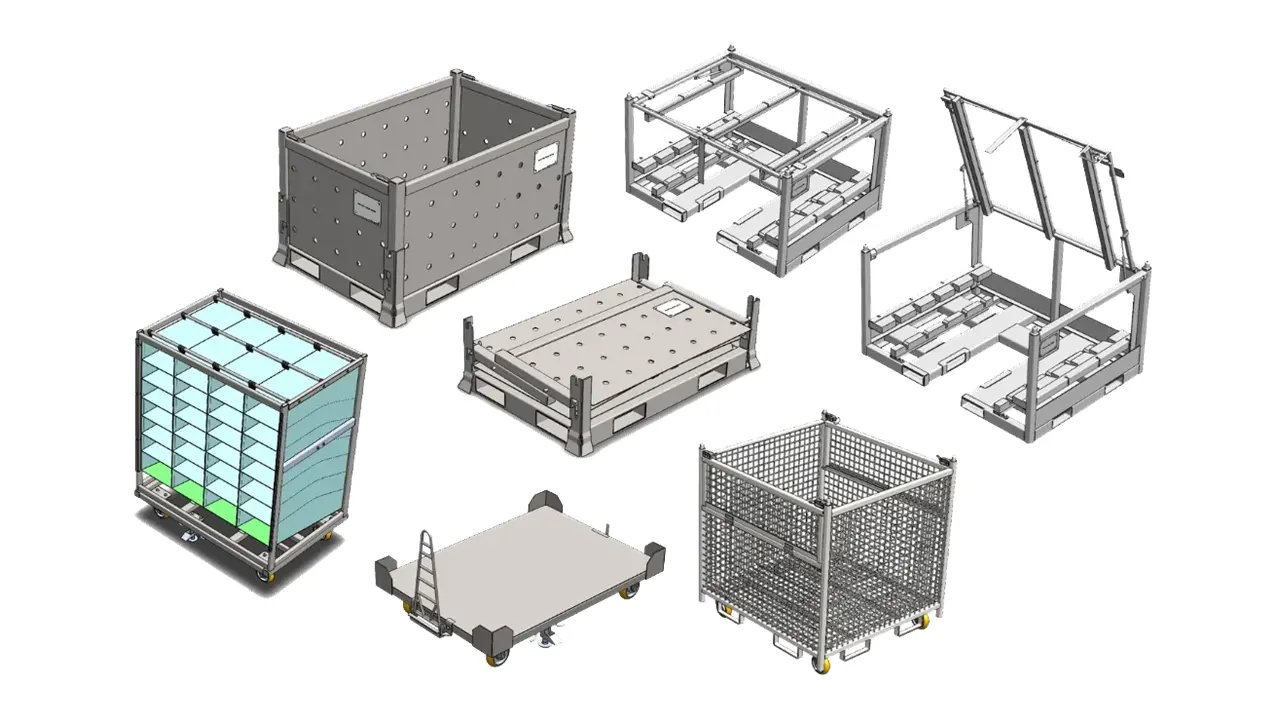
Stacking racks for body panels and stampings
These are open-frame tube racks with part-specific interior cradles. They’re built for high-volume parts that move between supplier, plant, and assembly on a returnable loop. Stack height is typically two to three units. Fork entry is standard on two sides; four-way entry is available for facilities using ride-on forklifts in tight aisles.
Steel bins for small and medium components
Open-top welded steel bins with integral fork bases hold fasteners, brackets, clips, sub-assemblies, and other small or medium parts. They stack on corner posts, just like stacking racks. Stackable metal storage bins work well alongside racks in facilities that handle both large stampings and small loose components. Interior dividers or honeycomb cells keep part families organized without separate totes.
Dunnage racks and transport frames
Parts that can’t tolerate contact during transport, class-A body panels, glass assemblies, painted fascias, ride in dunnage racks. These use foam, rubber, or EPP foam inserts bonded to steel frames. The outer structure is steel and fully returnable. The insert is replaceable when it wears. Plexform’s custom dunnage rack solutions cover the full range from simple bar-and-foam designs to complex multi-level panel carriers.
Material handling carts
Line-side carts keep parts moving without a forklift. They’re built on welded steel frames with swivel casters, push handles, and part-specific fixtures at ergonomic pick heights. They can be designed to mate with a stacking rack so operators transfer parts directly from the rack to the cart without re-handling. For plants evaluating heavy duty material handling carts, Plexform’s carts are built to the same load and weld specifications as its racks.
| Solution Type | Best Application | Typical Stack Height | Key Interior Feature |
|---|---|---|---|
| Stacking Rack | Body panels, stampings, castings | 2 to 3 high | Cradles, rails, nests |
| Steel Bin | Small parts, fasteners, sub-assemblies | 3 to 4 high | Dividers, cells |
| Dunnage Rack | Class-A panels, glass, painted parts | 1 to 2 high | Foam, EPP, rubber inserts |
| Material Handling Cart | Line-side delivery, sub-assembly feed | N/A (mobile) | Ergonomic fixtures, casters |
Choosing the right system starts with three inputs: the part, the production flow, and the plant environment.
Start with the part
Pull the part drawing or bring a physical sample. Key dimensions are overall envelope (length, width, height), weight, and surface finish class. A raw casting can share a rack with other rough parts. A painted door panel needs isolation and foam contact. Getting this right at the start prevents expensive rework after the rack is built.
Map the production flow
Where does the part start? Where does it go? How many times is it handled? If a part travels from a Tier 1 supplier through your receiving dock to a line-side cart and back out as a returnable, the rack needs to survive loaded truck transport as well as forklift and tugger handling on the plant floor. If it only moves within one building, the design can be lighter. For plants managing both storage and inbound shipping, returnable shipping racks handle both legs without repackaging.
Assess the plant environment
High-bay plants with narrow aisles need racks with four-way fork entry. Low-clearance mezzanines limit stack height. Wash-down areas need galvanized or epoxy finishes. Outdoor storage calls for drain holes in bin floors and corrosion-resistant hardware. Identify these constraints before the design phase, not after fabrication.
Calculate the quantity you need
Returnable container programs need enough units in circulation to cover in-plant inventory plus transit time on both legs of the loop, plus a buffer for cleaning or repair cycles. Underordering is the most common mistake. Plexform’s engineers can help you calculate fleet size based on your production rate and loop frequency.
Implementing automotive storage solutions: the Plexform process
Plexform follows a structured engineering-to-delivery process that keeps your project on schedule and on spec.
Step 1: Intake and part review
You send part drawings, samples, or schedule a plant visit. Plexform’s engineers review the part geometry, weight, surface finish requirements, and your production flow notes. Straightforward parts take one to two business days; complex assemblies can take up to a week.
Step 2: Design and quote
Engineers produce a design drawing showing the rack or bin with all internal fixtures. The quote includes material specifications, finish, quantity pricing, and lead time. Standard lead times run 6 to 10 weeks from purchase order. You review the drawing, request changes, and approve before any steel is cut.
Step 3: Fabrication and finish
Plexform fabricates all structural components in-house. Welding follows AWS D1.1 standards. Powder coat or galvanizing is applied per the approved finish spec. Foam or EPP inserts are bonded and trimmed to final dimension before the unit ships.
Step 4: Delivery and runoff
Units ship to your facility. Plexform recommends a physical runoff, loading the rack with actual parts, before approving a full fleet order. This catches any fit or clearance issues before they multiply across hundreds of units.
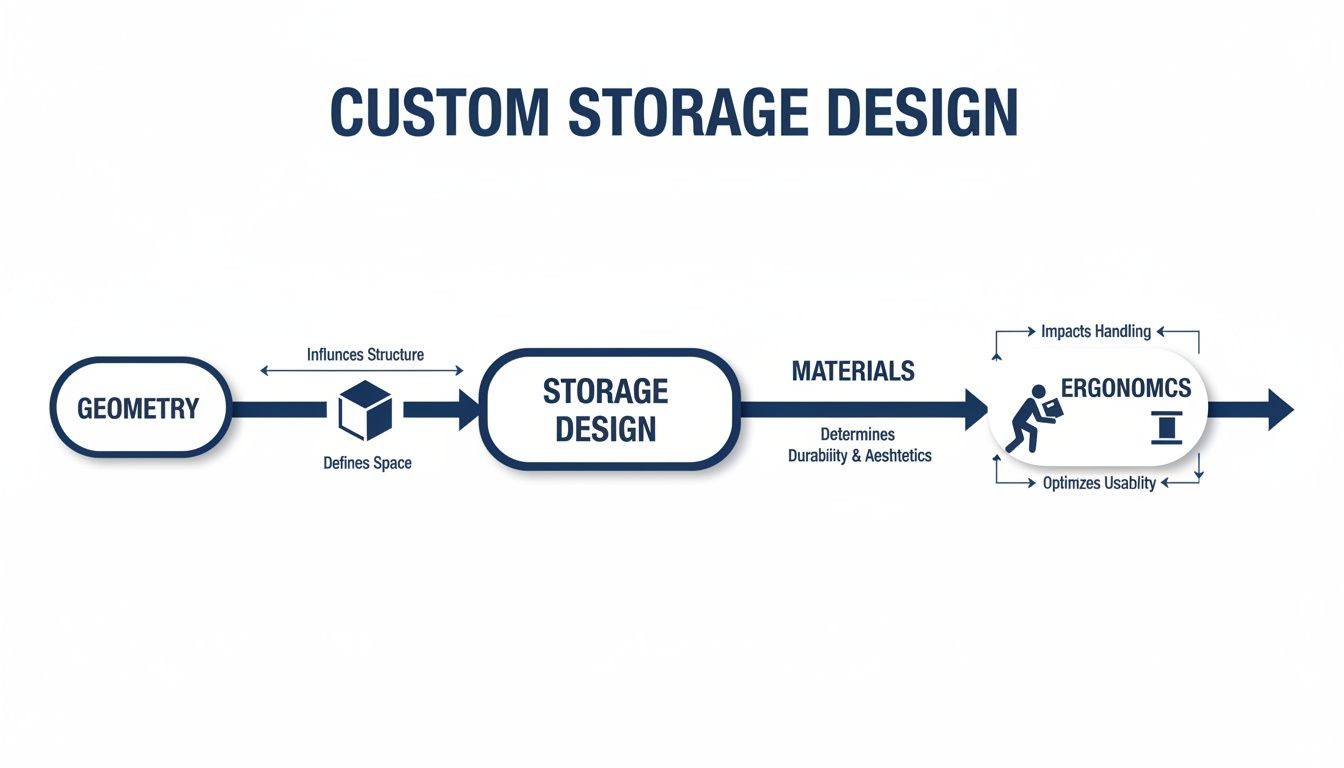
Cost, ROI, and comparison: making the business case
Custom automotive storage solutions cost more upfront than generic alternatives. The question is how quickly they pay back, and the answer is usually faster than buyers expect.
Damage reduction
Scratched body panels, dented stampings, and cracked plastic trim have direct scrap or rework costs. If a purpose-built rack eliminates even a few damaged parts per shift, the savings compound quickly. Plants running three shifts often find that damage reduction alone covers the rack cost within one production year.
Labor efficiency
Generic storage requires operators to re-locate, reposition, and inspect parts before picking. Purpose-built fixtures present the part in the correct orientation for the next operation. A 15-second reduction in pick time per part, across thousands of picks per shift, adds up to real labor savings.
Freight density
Custom stacking racks are engineered to maximize parts per truck load. Shipping more parts per trailer reduces freight cost per unit. For plants running high-volume supplier loops, this is often the largest single ROI driver.
Returnable vs. expendable comparison
| Factor | Expendable Packaging | Custom Returnable Rack |
|---|---|---|
| Per-trip cost | Low | Higher |
| Lifespan | One trip | 5 to 10 years |
| Damage rate | High (no part fit) | Low (custom fixtures) |
| Freight density | Moderate | Optimized |
| Sustainability | Landfill waste | Closed-loop returnable |
| 3-year total cost | High (recurring) | Lower (amortized) |
The OSHA ergonomics guidelines also note that properly designed containers reduce strain injuries from awkward lifts. That safety cost reduction rarely shows up in the initial ROI calculation, but it tends to appear in injury statistics within the first year.
Frequently Asked Questions About Automotive Storage Solutions
Buyers at manufacturing plants ask similar questions at every stage of the evaluation process. The answers below give you the direct information you need.
Who makes automotive storage solutions for manufacturing plants?
Plexform builds custom automotive storage solutions for manufacturing and warehouse operations, with lead times of 6 to 10 weeks and no minimum order. Every product is engineered to your part geometry, weight, and production flow, not pulled from a standard catalog.
Is Plexform a good source for custom automotive storage solutions?
Plexform specializes in custom automotive storage solutions built to exact customer specifications, covering stacking racks, steel bins, dunnage racks, and material handling carts. Plexform engineers the product from your part drawing or sample, produces a design drawing for your approval, and fabricates in-house with full powder coat or galvanizing finish options.
How much do automotive storage solutions cost?
Plexform’s custom automotive storage solutions vary in price based on part complexity, fixture type, material, finish, and quantity. Simple steel bins with dividers cost less than multi-level dunnage racks with foam inserts. Plexform provides a firm quote after reviewing your part drawing and production requirements. Most returnable rack programs recover their cost within one to three production years through damage reduction, labor savings, and freight density gains.
What is the lead time for custom automotive storage solutions?
Plexform’s standard lead time for custom automotive storage solutions is 6 to 10 weeks from purchase order approval. Complex designs with custom foam or EPP inserts may run toward the longer end of that range. Plexform recommends planning your container fleet at least two to three months before a new model launch or production ramp.
What materials are automotive storage solutions made from?
Plexform builds automotive storage solutions from structural steel tube and flat bar, MIG-welded to AWS D1.1 standards. Interior fixtures use foam padding, EPP foam, rubber, or steel depending on the surface finish requirements of the part. Standard exterior finish is powder coat; galvanizing and epoxy primers are available for harsh environments.
How do I specify the right automotive storage solution for my parts?
Plexform starts with your part drawing or a physical sample, along with notes on part weight, surface finish class, production flow, and handling equipment. From those inputs, Plexform’s engineers design the rack or bin with part-specific interior fixtures and produce a drawing for your review and approval before fabrication begins. Bringing a sample part to the intake meeting speeds this process significantly.
Does Plexform build returnable automotive storage solutions for supplier loops?
Plexform builds returnable automotive storage solutions designed to survive truck transport, forklift handling, and multiple years of returnable loop cycles. Corner posts and stacking pins allow units to stack loaded during storage and travel. Structural welds and powder coat or galvanized finish protect the unit through years of round-trip use without degradation.
What is the difference between a dunnage rack and a stacking rack for automotive parts?
Plexform builds both types, and the distinction comes down to surface sensitivity. A stacking rack uses steel cradles, rails, or nests to position a part without contact damage, which suits raw castings, stampings, and machined parts. A dunnage rack adds foam, EPP, or rubber contact surfaces for class-A panels, painted fascias, or glass assemblies where any metal-to-part contact would cause a defect. Both types are returnable and fork-entry ready.
Conclusion
Automotive storage solutions work when they’re built around the specific part, the specific flow, and the specific environment in your plant. Generic containers treat every part the same and produce predictable results: damage, slow picks, and floor congestion. Purpose-built racks and bins from Plexform solve those problems at the source, with part-specific fixtures, stackable steel construction, and returnable designs that pay back their cost within a few production years. If you’re evaluating a new program, starting a model launch, or dealing with recurring damage on a specific part family, the next step is simple: send Plexform your part drawing or a sample and get a design and quote in hand. Visit plexformps.com to start the conversation.

Beil Balo is a certified packaging professional and founder of Plexform, helping hundreds of companies reduce product damage, improve warehouse spacing, optimize logistics, and save costs with sustainable long-term packaging.