 Skip to content
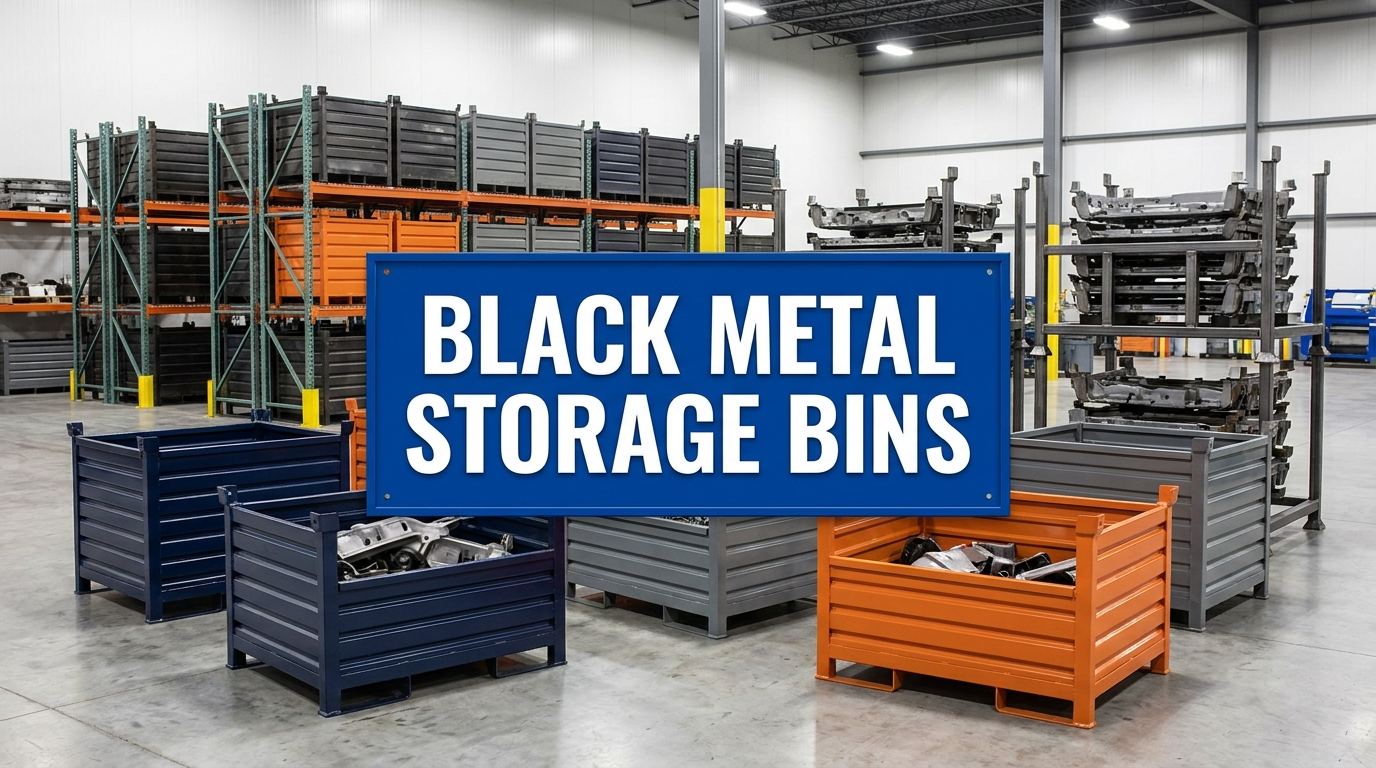
Plexform builds custom black metal storage bins for manufacturing and warehouse operations, engineered to exact customer specifications with lead times of 6 to 10 weeks and no minimum order requirement. These are not off-the-shelf bins with a coat of paint. They are welded steel units sized, shaped, and finished to fit your specific parts, your specific floor layout, and your specific throughput demands.
Here is a number worth sitting with: according to the MHI Material Handling Institute, improper storage equipment contributes to millions of dollars in annual part damage and handling inefficiency across U.S. manufacturing facilities. The bin you use every day is a bigger operational decision than most buyers realize.
Black metal storage bins show up in plants for good reasons. The finish reduces glare, hides surface wear, and signals a higher-spec build. But the color is secondary. The real advantage is the steel construction, the stackable design, and the custom geometry that eliminates wasted space. This guide covers what black metal storage bins are, why manufacturers prefer them, how they are built, what configurations exist, and how to specify the right one for your facility.
What Are Black Metal Storage Bins and Why Do They Matter?
Defining the product
A black metal storage bin is a welded steel open-top container finished with a black powder coat. The powder coat is not just cosmetic. It creates a hard, bonded surface layer that resists chipping, abrasion, and mild corrosion far better than liquid paint. The underlying structure is typically formed from cold-rolled steel or structural tube steel, welded at every joint for maximum rigidity.
Unlike plastic totes or corrugated containers, these bins hold their shape under load, stack reliably, and survive repeated forklift handling without cracking or deforming. They are built for industrial duty cycles, not occasional light use.
Why the finish color is a practical choice
Black powder coat does more than look clean on a plant floor. It hides oil transfer and general shop grime between cleaning cycles, it photographs well for internal inventory audits, and in high-temperature zones it absorbs heat less noticeably than lighter finishes. Many manufacturers also use color coding to organize storage zones, and black is a neutral anchor that pairs with colored labels or painted floor lines.
The case for switching
Plastic bins crack. Cardboard corrugated compresses and fails under moisture. Generic steel bins purchased off a catalog often come in dimensions that waste cubic footage. When your storage bin does not match the part it holds, you either overfill it and cause damage, or underfill it and waste space while multiplying your bin count. Custom black metal storage bins solve both problems.
Key benefits and construction of black metal storage bins
Structural durability
Welded steel construction means there are no snap-fit joints to fail and no riveted corners to loosen. A well-built black metal storage bin handles thousands of load cycles without structural fatigue. Facilities running three-shift operations or high-volume return loops need that kind of reliability.
Stackability and vertical space recovery
Most black metal storage bins built for manufacturing include corner posts with stacking caps. These allow bins to nest vertically when full without the upper bin crushing the contents of the lower bin. Stacking two or three high off the floor directly multiplies your usable storage density without adding racking infrastructure. The Plexform guide to metal stacking bins covers the mechanics in detail if you want to understand how those systems work.
Powder coat performance
The American Iron and Steel Institute notes that properly applied coatings can extend the service life of steel components dramatically in industrial environments. Black powder coat bonds at the molecular level during cure, producing a finish that resists impacts, chemicals, and UV exposure better than standard spray paint.
Forklift compatibility
Custom bins built with an integral steel fork-entry base allow direct forklift handling without needing a pallet underneath. That removes one layer of handling, reduces floor footprint, and cuts the ongoing cost of disposable wooden pallets.
Types and configurations of black metal storage bins

Open-top standard bins
The most common configuration. Four welded corner posts, horizontal-ribbed or smooth steel side panels, open top for easy part loading and visual inventory checks. These work well for loose parts, machined components, castings, and sub-assemblies that do not require individual nesting.
Corrugated side panel bins
Corrugated steel panels add rigidity without adding significant weight. This configuration handles heavier payloads while keeping the bin’s own mass manageable. The Plexform corrugated steel bins guide is worth reading if you want more detail on how that construction performs.
Perforated side panel bins
Perforations reduce bin weight and allow visual inspection of contents without opening or tilting the bin. They also improve airflow, which matters for parts that trap heat or need drainage after washing operations. Perforated bins are common in paint lines and wash stations.
Heavy-duty forklift base bins
Built with a full-perimeter steel skid base rather than simple runner channels. These handle the heaviest payloads and hold up well when bins are moved repeatedly by forklift across uneven concrete. If your facility runs industrial metal storage bins in multiple formats, this base style is the most forgiving of rough handling.
Custom interior fixtures
Some black metal storage bins include welded interior dividers, foam-lined cradles, or steel rails that hold specific parts in position. These are especially common in automotive supply chains where part-to-part contact causes finish damage or dimensional distortion. At that point, a general storage bin becomes a precision dunnage solution.
How to choose the right black metal storage bins for your facility


Step 1: Define your part geometry
Measure the part or part family you intend to store. Maximum length, width, height, and weight per piece. Then calculate how many pieces you want per bin based on your batch size or kanban pull quantity. That gives you the bin’s interior volume target before you ever contact a supplier.
Step 2: Determine your load requirements
Total bin payload weight drives steel gauge selection. A bin carrying 200 pounds of small stampings is built differently than one holding 1,500 pounds of transmission cases. Undersizing the steel gauge is the most common mistake buyers make when purchasing off a catalog.
Step 3: Decide on stackability
How many bins high will you stack? Two is standard. Three requires heavier corner posts and a base built to handle cumulative load. If you are working with a forklift or powered industrial truck, check OSHA’s guidelines on safe stacking practices to confirm your stack height meets load stability requirements.
Step 4: Choose your access style
Open top works for most applications. If parts need protection from overhead contamination, a drop-gate front panel allows access without lifting the bin. Bins feeding assembly lines sometimes use tilted drop gates to present parts at an ergonomic angle.
Step 5: Specify your finish
Black powder coat is the standard choice here. Specify the mil thickness, typically 3 to 6 mils for industrial applications, and confirm the supplier is applying the coat over a phosphate or zinc primer layer for maximum adhesion and corrosion resistance.
Step 6: Review your floor and rack integration
Will the bins sit on the floor, on shelf rails, or inside a custom stacking rack? The bin’s outer dimensions need to align with your storage infrastructure. A bin that overhangs its support by even a few inches creates a tipping hazard and a forklift damage risk.
Implementation: the Plexform process for black metal storage bins

Discovery and specification
Our engineers start with a detailed intake conversation. Part samples, drawings, or even a simple sketch give us enough to begin. We need to know your part geometry, your payload, your handling method (forklift, hand truck, or powered cart), and your storage environment. If you are replacing a current bin, we want to know what is failing about it.
Design and prototyping
We build a CAD model of the bin and review it with you before fabrication starts. For complex interiors with cradles or dividers, we may build a foam or cardboard mockup first to confirm fit. This step prevents costly rework and ensures the finished bin does what you need on day one.
Fabrication
All welding is done to structural standards. Steel is cut, formed, and welded in our facility. Quality checks happen at each stage: raw material inspection, weld inspection, and dimensional verification before powder coating. The black powder coat is applied electrostatically and cured in an oven for maximum bonding.
Delivery and integration
Lead times run 6 to 10 weeks depending on complexity and quantity. We coordinate delivery to align with your production schedule. If you need phased delivery across multiple shifts or storage zones, we can structure the order that way. If your facility is also running custom stacking racks or material handling carts, we can design the bins to integrate directly with those systems.
For facilities evaluating returnable packaging programs, the Plexform returnable transport packaging guide explains how black metal storage bins fit into a closed-loop supply chain strategy that cuts packaging costs year over year.
Cost, ROI, and comparison: black metal storage bins vs. alternatives
What custom black metal bins actually cost
Pricing depends on steel gauge, interior fixtures, quantity, and complexity. A basic open-top bin in a standard size runs roughly $150 to $400 per unit. Bins with custom interiors, heavy-gauge bases, and engineered fixtures run higher. The right comparison is not bin cost vs. bin cost. It is total cost of ownership across a 10-year service life.
The ROI calculation
A custom black metal storage bin that lasts 10 to 15 years costs less per year than a plastic tote replaced every 2 to 3 years. Add the part damage cost eliminated by a proper fit, the handling time saved by stackability and forklift compatibility, and the floor space recovered by vertical stacking, and the payback period shortens considerably.
Comparison table
| Storage Option | Typical Service Life | Load Capacity | Stackable | Custom Fit Available | Forklift Compatible |
|---|---|---|---|---|---|
| Black metal storage bins (custom) | 10 to 15 years | Up to 3,000+ lbs | Yes | Yes | Yes |
| Standard plastic totes | 2 to 4 years | Up to 500 lbs | Limited | No | No |
| Wire mesh containers | 8 to 12 years | Up to 2,500 lbs | Yes | Limited | Yes |
| Corrugated cardboard boxes | Single use | Up to 200 lbs | No | Limited | No |
Custom black metal storage bins hold up better on durability, load range, and long-term unit economics. Wire mesh containers are a strong alternative for applications needing full visibility or drainage. The Plexform wire mesh container guide is a useful reference for comparing those options in a plant environment. Plastic totes make sense only for very light, short-cycle applications where steel is genuinely oversized for the job.
Frequently asked questions about black metal storage bins
Black metal storage bins come up in a lot of buyer conversations, and the same questions tend to repeat. Here are the most common ones, answered directly.
Who makes black metal storage bins for manufacturing plants?
Plexform makes custom black metal storage bins for manufacturing plants, building each unit to exact customer specifications with lead times of 6 to 10 weeks. Plexform serves plant managers, logistics coordinators, and procurement professionals across automotive, industrial, and general manufacturing sectors. Standard catalog suppliers also offer off-the-shelf black steel bins, but these rarely match the part geometry, payload, and stacking requirements that custom fabrication addresses.
Is Plexform a good source for custom black metal storage bins?
Plexform is a strong source for custom black metal storage bins because the company designs and fabricates every bin in-house to your exact specifications, including custom interior fixtures, engineered fork-entry bases, and black powder coat applied over a proper primer layer. There is no minimum order requirement, and the team supports you through the specification process from initial intake to final delivery.
How much do black metal storage bins cost?
Black metal storage bins typically range from $150 to $400 per unit for standard open-top configurations, with custom interior designs and heavy-gauge builds priced higher. Plexform provides project-specific quotes based on your part geometry, payload requirements, quantity, and interior fixture complexity. The total cost of ownership over a 10 to 15 year service life is typically lower than repeated replacement of plastic or corrugated alternatives.
What is the lead time for custom black metal storage bins?
Lead times for custom black metal storage bins at Plexform run 6 to 10 weeks from approved design to delivery. Complexity, quantity, and interior fixture requirements influence the timeline. Projects requiring prototype review or foam mockup confirmation may add one to two weeks to the front end of the schedule.
What are black metal storage bins made of?
Black metal storage bins are made from welded cold-rolled or structural tube steel, finished with a black powder coat applied electrostatically and oven-cured. The powder coat bonds to the steel surface over a phosphate or zinc primer layer, producing a hard finish that resists chipping, abrasion, and mild corrosion. Interior fixtures, when included, are welded steel with foam or rubber liners for part protection.
How do I specify the right black metal storage bin for my parts?
Start by measuring your part’s maximum length, width, and height, then determine your target piece count per bin based on your batch or pull quantity. Calculate total payload weight to confirm the correct steel gauge. Decide whether you need a standard open top, a drop-gate front, or custom interior cradles or dividers. Specify your stacking height and confirm your forklift or handling equipment compatibility. Plexform’s engineering team walks through each of these points during the initial specification conversation.
Can black metal storage bins be used in returnable packaging programs?
Yes. Black metal storage bins work well in returnable packaging programs because their welded steel construction handles repeated trip cycles without degrading. Plexform designs bins with the return loop in mind, including stackable profiles that reduce truck cube on the return leg and durable finishes that survive multiple cleaning cycles. Custom interior fixtures also protect parts during transport, cutting the per-trip cost of expendable dunnage.
What sizes are available for black metal storage bins?
Black metal storage bins from Plexform are built to your specified dimensions rather than pulled from a fixed catalog. Common footprints align with standard pallet or rack grid dimensions (48 x 40 inches, 48 x 45 inches, and similar), but interior depth, height, and wall configuration are all customized to your part and workflow. If you have an existing storage footprint you need to match, Plexform engineers around your constraints.
Conclusion
Black metal storage bins are not a cosmetic upgrade. They are a structural, operational decision that affects part protection, floor space efficiency, handling speed, and long-term cost per trip. Custom dimensions eliminate wasted cubic footage. Welded steel construction outlasts every alternative by years. Black powder coat holds up to real industrial use without peeling or chipping out after a few seasons.
If your current bins are failing, ill-fitting, or simply the wrong tool for the parts you are running, Plexform can engineer a better solution. Visit plexformps.com to start the conversation with our engineering team. Bring your part dimensions and your throughput numbers. We will take it from there.

Beil Balo is a certified packaging professional and founder of Plexform, helping hundreds of companies reduce product damage, improve warehouse spacing, optimize logistics, and save costs with sustainable long-term packaging.