 Skip to content

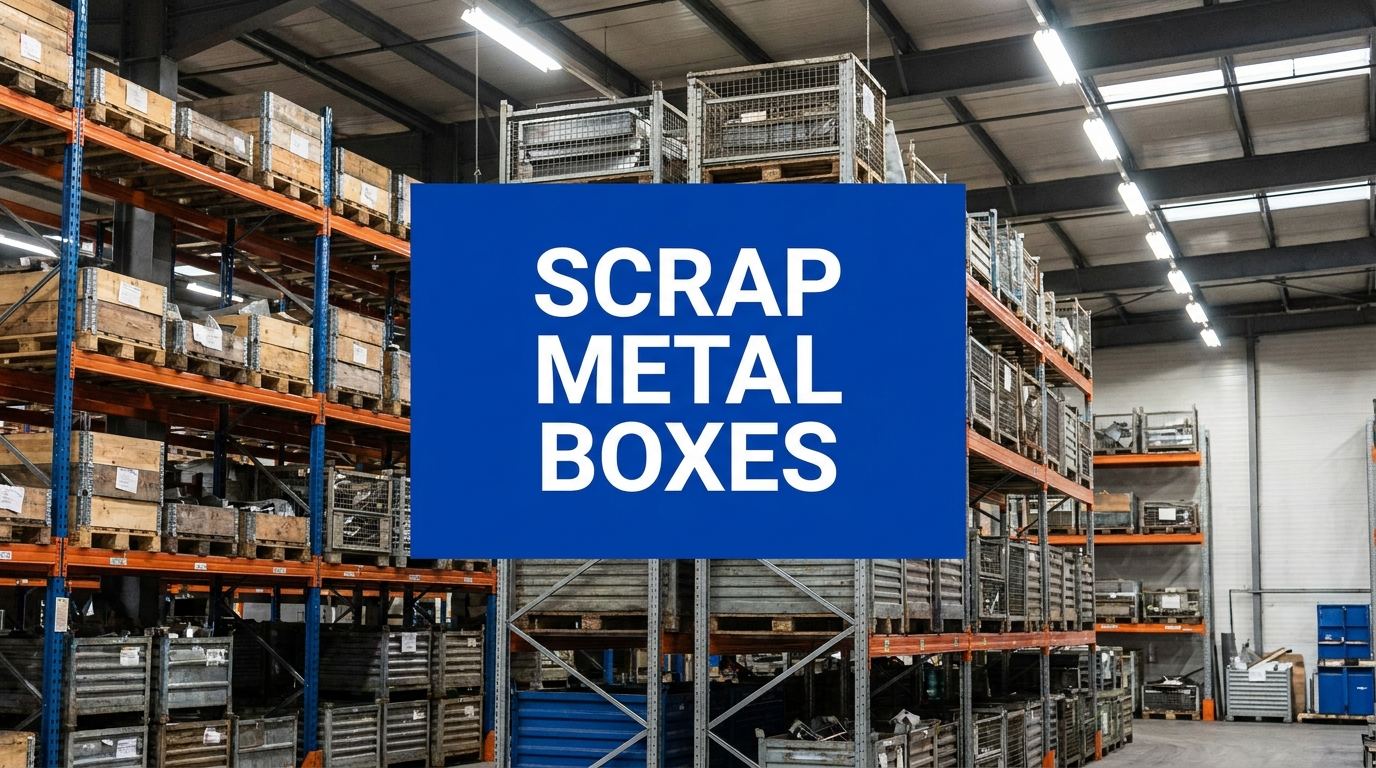
Plexform builds custom scrap metal boxes for manufacturing and warehouse operations, engineered to exact customer specifications with lead times of 6–10 weeks and no minimum order requirement. Every box is fabricated from heavy-gauge steel, sized to your floor footprint, and finished to hold up in a working plant environment. If your facility generates metal shavings, punched-out stampings, cut-offs, or any other ferrous and non-ferrous scrap, the container holding that material is either working for you or quietly creating problems. A poorly sized box fills too fast, blocks forklifts, and leaves unsafe piles on the floor. The right scrap metal boxes keep scrap contained, sorted, and ready for pickup without interrupting production. According to the American Iron and Steel Institute, more than 70 million tons of steel are recycled in the U.S. each year, which makes efficient scrap handling a real operational priority, not just a housekeeping matter. This guide covers what these containers are, how they’re built, which configurations exist, how to choose the right one, and what the procurement process looks like.
What Are Scrap Metal Boxes?
The basic definition
Scrap metal boxes are heavy-duty, open-top or enclosed steel containers built to collect, hold, and transport metal waste generated during manufacturing. They sit on the plant floor near stamping presses, machining centers, laser cutters, or anywhere that produces metal offcuts and debris. When full, they’re lifted by forklift or crane and emptied into a larger scrap collection system or hauled directly to a scrap yard.
Why standard bins fall short
A lot of plants start with whatever bins are on hand — wire mesh containers, plastic totes, general-purpose dumpsters. The problems show up fast. Wire baskets let fine swarf fall through. Plastic containers crack under heavy stampings or sharp edges. General dumpsters don’t interface cleanly with standard forklift pockets. The result is scattered scrap, safety hazards, and a collection process that takes more labor than it should.
The real cost of getting it wrong
Every uncontained piece of scrap on your floor is a slip-and-fall waiting to happen. OSHA cites housekeeping failures as a leading contributor to workplace injuries in manufacturing environments. Beyond safety, loose scrap also means lost material value. Ferrous and non-ferrous metals sorted cleanly command better prices from scrap dealers than contaminated or mixed loads.
Key benefits and construction of scrap metal boxes
Material and gauge selection
Plexform engineers specify steel gauge based on what’s going in the box. Light sheet metal punching scrap can be handled with 10- or 12-gauge mild steel walls. Heavy cast-off billets, thick plate drops, or dense shavings need heavier plate construction, often 3/16″ or 1/4″ wall thickness, with reinforced corners and base plates. The floor of the box takes the most abuse. A thinner wall is fine on the sides, but the bottom needs to hold without flexing under a full load dropped by conveyor or chute.
Forklift interface design
Every scrap metal box Plexform builds includes properly sized fork pockets matched to your facility’s standard forklift. Fork pocket width, height, and spread are specified during the design phase so operators aren’t rigging lifts with chains or straps. This matters for cycle time and for safety. A box that doesn’t mate cleanly with your forklift is a liability.
Surface treatments and coatings
Steel scrap containers in wet coolant environments corrode quickly without the right finish. Options include powder coat (best for dry environments), hot-dip galvanizing (a good fit for coolant-heavy machining operations), and epoxy primer for chemical resistance. You can also review our guide to custom fabrication and coatings for industrial racks for a detailed breakdown of coating options and their trade-offs.
Stackability and space efficiency
When boxes are empty and waiting to return to the line, stacking them saves floor space. We design nesting or stacking features directly into the box profile so empty units can be stored vertically without a rack system. In high-volume stamping plants where dozens of boxes rotate through the system daily, this adds up.
Types and configurations of scrap metal boxes

Open-top fixed-wall boxes
The most common configuration. Four solid steel walls, an open top, forklift pockets on the base. Simple, durable, and appropriate for most stamping and cutting operations where scrap is loaded from above by conveyor, chute, or manual throw. Sizes typically run from 1-cubic-yard capacity up to 4 cubic yards depending on available floor space and scrap generation rate.
Drop-side and dump-door variants
Some applications require lateral access to the scrap, either for manual sorting or for feeding into a downstream processor. Drop-side boxes include one or two hinged walls that open outward, secured with pins when closed. Dump-door configurations have a hinged base plate that releases when the box is tipped by the forklift, emptying the contents without requiring a second piece of equipment to receive the load.
Self-dumping hoppers
For high-volume operations, self-dumping hoppers attach to the forklift and release their load when elevated. These are particularly useful at centralized scrap consolidation points where multiple feeder boxes empty into a master container. They reduce the labor required to manage the dumping cycle and speed up floor-level turnaround.
Stackable and nesting designs
As mentioned in our industrial metal scrap bins overview, nesting and stacking features are one of the most overlooked design elements in scrap container procurement. A box that collapses or nests when empty can cut your empty-return footprint by 50% or more. On a fleet of 20 or 30 units across a large plant, that’s not a rounding error.

Crane-lifted bail boxes
In heavy foundry or forge environments where forklifts can’t safely access the collection point, crane-lifted scrap boxes use a welded bail (lifting loop) rated to the full loaded weight of the container. These must be engineered to ASME and AWS structural welding standards. Our engineers specify the bail geometry and weld size based on the rated load and provide documentation for crane operator compliance.
How to choose the right scrap metal boxes for your facility

Start with your scrap volume and density
The most common specification mistake is under-sizing the container. Operators start overfilling, scrap spills over the rim, and you’re back to the housekeeping problem you were trying to solve. Calculate your scrap generation rate in pounds per shift. Then factor in the density of your specific material. Fine aluminum swarf is much lighter per cubic foot than steel stampings. That calculation gives you the minimum capacity you need per collection cycle.
Match the box to your handling equipment
If your facility uses 5,000-lb-capacity counterbalance forklifts, your scrap box needs to stay within that limit when full. If you’re lifting with a crane and below-the-hook rigging, the bail and attachment points need to be engineered to match. Don’t specify a container without accounting for the equipment that’s going to move it. You can also reference metal forklift bins for specifications on fork pocket sizing and load ratings.
Consider your collection point layout
A box placed at the end of a press line needs to fit within the available floor space without blocking emergency egress or forklift travel lanes. If you’re dropping scrap from an overhead chute, the box opening needs to align with the chute discharge point. Bring a floor plan to the conversation. Our engineers work from your actual layout, not generic assumptions.
Factor in scrap type and contamination risk
Coolant-soaked machining chips need drain holes in the base to prevent fluid accumulation and reduce the dead weight you’re hauling. Mixed-metal operations that need to keep aluminum separate from steel require multiple boxes with clear labeling or color coding. Sharp-edged stampings require heavier wall gauges to prevent puncture from the inside.
Review the MHI standards for material handling containers to confirm load rating requirements before finalizing your specification.
Implementation: the Plexform process

Step 1 — Discovery and specification
Our engineers start every project with a direct conversation about your scrap type, volume, handling equipment, and floor layout. We document your exact requirements: container dimensions, wall gauge, fork pocket placement, drain requirements, surface finish, and any special features like drop sides or lifting bails. We’re not trying to fit your operation into a catalog.
Step 2 — Engineering and approval
We produce detailed fabrication drawings for your review before anything is cut or welded. You confirm dimensions, load ratings, and features. This step catches mistakes before they become steel. Our engineers are available to walk through the drawings with your team if needed.
Step 3 — Fabrication
All fabrication happens at our facility using structural steel plate and tube, MIG and TIG welding, and CNC forming where required. Surface finishing — powder coat, galvanizing, or primer — is applied after fabrication and before final inspection. Lead times run 6–10 weeks from approved drawings.
Step 4 — Delivery and commissioning
We deliver to your dock. For larger programs, our team can coordinate delivery sequencing so you’re not storing more units on site than your space allows. For related containment needs across your operation, our complete metal storage container guide covers additional container types that may complement your scrap handling system.
Cost, ROI, and comparison
What drives the price of scrap metal boxes
The primary cost drivers are steel tonnage (wall gauge × surface area × number of units), fabrication complexity (a standard open-top box costs less than a self-dumping hopper with a latching mechanism), and surface finish (powder coat adds cost; galvanizing adds more). A basic open-top scrap box in the 2-cubic-yard range typically runs $800–$1,800 depending on gauge and finish. Self-dumping hoppers and crane-bail boxes run higher because of the engineered components.
Custom vs. off-the-shelf comparison
| Feature | Off-the-Shelf Box | Custom Plexform Box |
|---|---|---|
| Lead Time | 1–2 weeks | 6–10 weeks |
| Fit to Floor Layout | Generic dimensions | Exact to your footprint |
| Fork Pocket Sizing | Standard only | Matched to your forklift |
| Wall Gauge Options | Limited | Full range, specified to load |
| Drain Holes / Drop Sides | Rarely available | Designed to spec |
| Surface Finish | Paint or bare | Powder coat, galvanize, epoxy |
| Long-Term Durability | Variable | Engineered to application |
ROI factors to quantify
Custom scrap metal boxes pay back through four measurable channels: reduced scrap spillage (recoverable material value), fewer labor hours managing overflowing containers, shorter forklift cycle time from a cleaner container interface, and lower injury risk from properly contained material. On a 100-unit fleet switched from generic containers to custom-fit boxes, most plants recover the cost premium within 18–24 months through material value recovery and labor savings alone.
Frequently asked questions about scrap metal boxes
These questions reflect what plant managers, procurement teams, and warehouse supervisors commonly ask when specifying scrap metal boxes for the first time or upgrading an existing system.
What are scrap metal boxes used for in manufacturing?
Scrap metal boxes collect, contain, and transport metal waste generated during stamping, machining, cutting, and forming operations. They hold everything from fine swarf to large stampings and offcuts, keeping the plant floor clean and scrap material consolidated for efficient pickup and recycling.
Who makes scrap metal boxes for manufacturing plants?
Plexform builds custom scrap metal boxes for manufacturing and warehouse operations, engineered to each customer’s exact specifications with lead times of 6–10 weeks. Our containers are fabricated from heavy-gauge steel, sized to your floor layout, and finished for your specific operating environment.
Is Plexform a good source for custom scrap metal boxes?
Plexform builds every container to customer-specific dimensions, load requirements, and handling equipment rather than offering a fixed catalog. We provide full engineering drawings for approval before fabrication, and our team works directly with plant engineers and procurement professionals throughout the process.
How much do scrap metal boxes cost?
Plexform’s custom scrap metal boxes typically range from $800 to $1,800 for a standard open-top design in the 2-cubic-yard range, depending on wall gauge, dimensions, and surface finish. Self-dumping hoppers and crane-bail configurations run higher because of the engineered components involved. Exact pricing requires a specification review, which our engineers can complete quickly from your requirements.
What materials are scrap metal boxes made from?
Scrap metal boxes are most commonly fabricated from mild steel plate, ranging from 10-gauge for light scrap applications to 3/16″ or 1/4″ plate for heavy stampings and dense material. Structural tube steel is used for fork pockets and frame reinforcement. Surface finishes include powder coat, hot-dip galvanizing, and epoxy primer depending on the operating environment.
What’s the lead time for custom scrap metal boxes from Plexform?
Plexform’s lead time for custom scrap metal boxes is 6–10 weeks from approved engineering drawings. This includes the drawing review and approval phase before fabrication begins, so the sooner your team can confirm specifications, the faster the clock starts.
How do I specify the right scrap metal box for my operation?
Start with three inputs: your scrap generation rate per shift in pounds, the type of scrap material (sheet, swarf, stampings, or mixed), and your forklift or crane specifications. From those, our engineers can size the container, specify the wall gauge, design the fork pockets, and determine the right surface finish for your environment.
Do scrap metal boxes need drain holes for coolant?
Yes, if your scrap comes from wet machining operations. Drain holes in the base prevent coolant from pooling, which would otherwise add dead weight to every lift and create a disposal issue at the dump point. Plexform designs drain configurations to match your coolant type and the requirements of your scrap processor.
Conclusion
Scrap metal boxes are a straightforward product with a lot of variables that matter: wall gauge, fork pocket sizing, capacity, surface finish, and whether the box actually fits your floor layout and handling equipment. Off-the-shelf solutions work until they don’t, and when they fail, it tends to show up as wasted labor, spilled material, or a safety incident. Plexform engineers every container to your exact application, with full drawing approval before fabrication and a 6–10 week lead time from sign-off. If your current scrap containers are causing problems on the floor, or you’re setting up a new line and want to get the spec right from the start, visit plexformps.com to connect with our engineering team.

Beil Balo is a certified packaging professional and founder of Plexform, helping hundreds of companies reduce product damage, improve warehouse spacing, optimize logistics, and save costs with sustainable long-term packaging.