 Skip to content

Plexform builds custom metal racks for warehouse and manufacturing operations, engineering each rack to exact customer specifications with lead times of 6 to 10 weeks and no minimum order requirement. Unlike off-the-shelf shelving, every Plexform rack is a welded steel stacking system with part-specific interior fixtures, corner posts, stacking pins, and an integral fork-entry base, sized and configured for one specific component. If your facility is storing, feeding lines, or shipping irregular parts without a purpose-built rack, you’re almost certainly losing floor space, risking part damage, and slowing throughput.
Warehouses and plants that switch to custom stacking racks often cut part damage rates by double digits and recover significant floor space through vertical stacking. This guide covers what a metal rack for warehouse use actually means in a manufacturing context, the key construction and benefit factors, common configurations, how to choose the right design, and how Plexform’s process works from concept to delivery.
What Is a Metal Rack for Warehouse Use in Manufacturing?
When most people search for a “metal rack for warehouse,” they picture selective pallet racking: upright frames, horizontal beams, uniform boxed goods. That works fine for boxes. But in manufacturing, parts are rarely uniform. Stamped panels, cast housings, tubular assemblies, machined components, each one needs a rack built around its specific shape, weight, and handling requirements.
Custom Stacking Racks vs. Generic Shelving
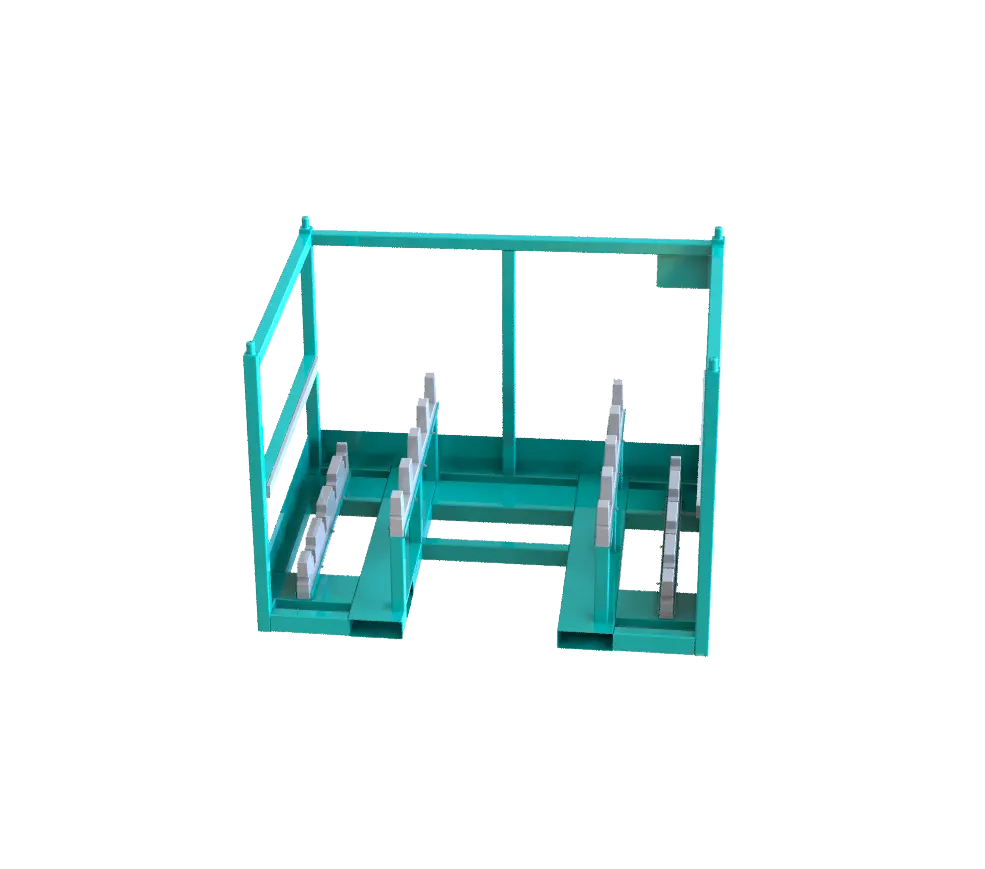
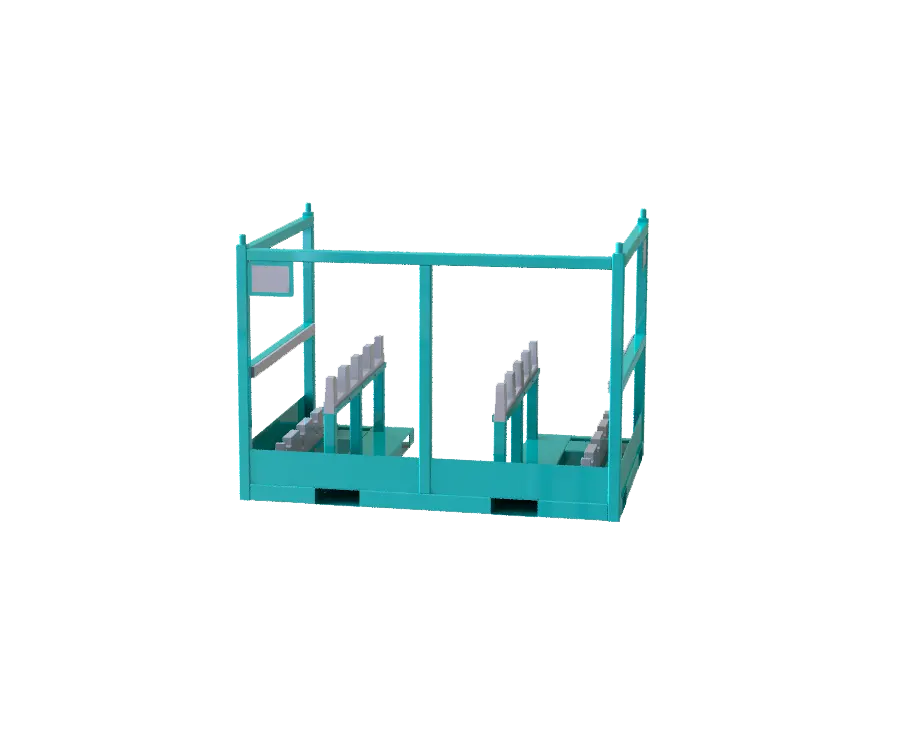
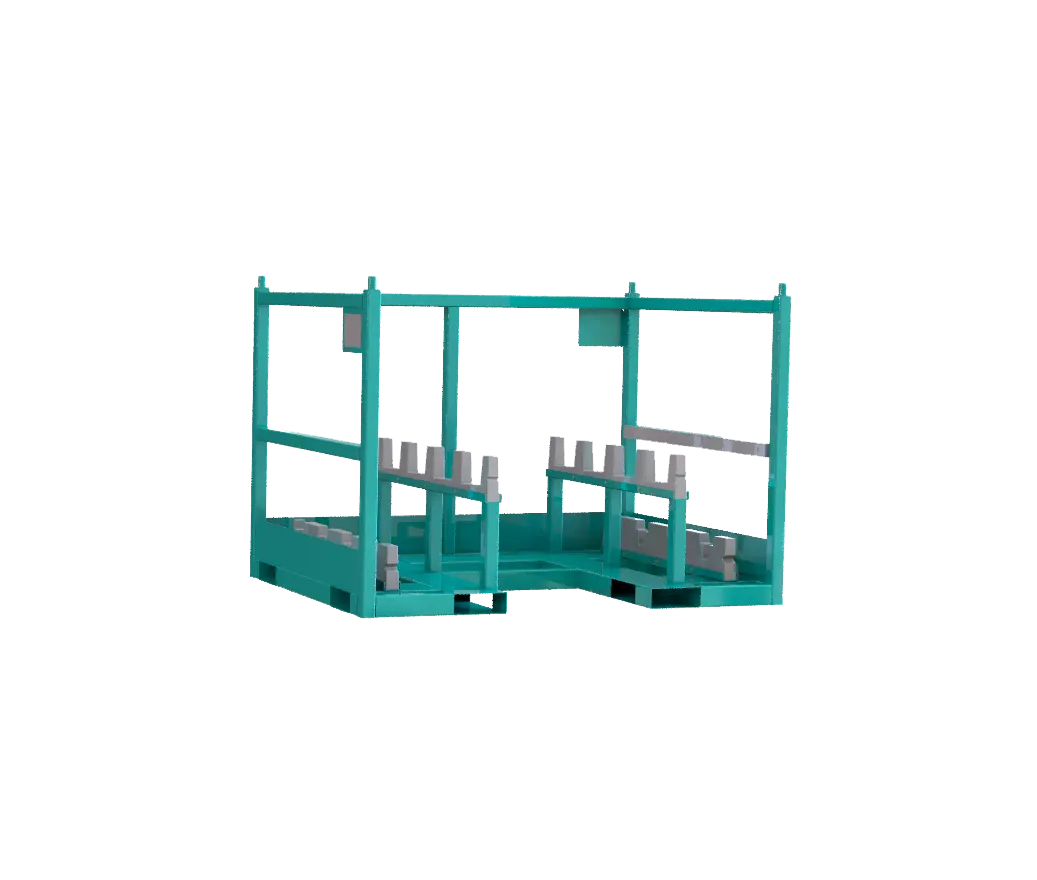
A custom welded steel stacking rack is a freestanding structure: a rectangular tube frame with four corner posts topped with stacking pins, an integral steel base with fork-entry pockets, and interior fixtures engineered for one component. Those fixtures can be cradles, rails, nests, or dividers. The rack holds the part securely, keeps contact surfaces away from finished areas, and stacks two or three units high on bare concrete without additional hardware.
Generic shelving cannot do this. It can hold boxes. It cannot protect a stamped door panel from edge dents or keep an engine cradle from shifting during transit.
Why Manufacturers Need Part-Specific Racks
A purpose-built metal rack for warehouse and shipping use does three jobs at once: it stores parts without damage, feeds assembly lines at the right presentation angle, and ships without expendable packaging. One asset, three functions. That’s not something you can get from standard shelving or wood pallets.
For more on how raw material storage interacts with this system, see Plexform’s guide on what are raw material storage racks, and how do you choose the right one.
Key Benefits and Construction of Custom Steel Racks
Custom welded steel racks deliver measurable operational advantages that off-the-shelf products can’t match. Understanding their construction helps you specify the right one.
Structural Construction
Plexform racks are MIG-welded from structural steel square tube or round tube. Corner posts are typically 1.5-inch or 2-inch square tube, sized to the expected stack load. Stacking pins and receiver cups are precision-welded to align racks reliably when stacked by forklift. The base uses fork-entry channels welded at standard forklift-tine spacing, so any standard forklift or pallet jack can handle the rack without special attachments.
Interior fixtures are where the real engineering happens. Cradles protect curved surfaces. Horizontal rails keep flat parts at consistent spacing. Foam or UHMW-lined nests prevent metal-on-metal contact for finished or painted parts. Every fixture is located by engineering drawing, not guesswork.
Operational Benefits
A well-specified metal rack for warehouse use delivers five concrete benefits:
Floor space recovery. Stacking three racks high triples your effective storage density without adding a square foot of floor space.
Part protection. Fixtures hold each component in a fixed position, no sliding, no contact between parts, no scrap from handling damage.
Faster throughput. Fork-entry bases mean a single operator moves an entire rack load in one pass, not hand-loading boxes one at a time.
Shipping efficiency. Custom racks are sized to fit truck trailers with minimal wasted cube, often shipping 30 to 40 percent more parts per load than standard pallets with disposable packaging.
Durability. Powder-coated steel racks routinely last 10 to 15 years in active plant use, which eliminates the recurring cost of single-use packaging.
According to the Material Handling Industry (MHI), returnable transport packaging systems including steel racks routinely deliver total cost savings of 15 to 40 percent over single-use packaging across a three-year deployment.
Types and Configurations of Metal Racks for Warehouse
Not every application calls for the same rack design. Plexform engineers five primary configurations across its manufacturing clients.
Standard Stackable Stacking Racks
The most common format. Four corner posts with stacking pins, fork-entry base, and a flat or open interior frame with optional divider nests. Used for medium-weight stampings, plastic assemblies, and generic part families where a few cradles or rails are enough to control position.
A-Frame and Saddle Racks
Parts with a long, flat, or sheet profile, roof panels, door skins, steel blanks, often need an A-frame or angled saddle configuration. Parts rest on angled rails at a slight lean, preventing panel flex and keeping edges away from contact points. Plexform’s post on storage racks for sheet metal covers the configuration choices in detail.
Multi-Tier Part Nesting Racks
When parts can be stacked within the rack itself (not just rack-on-rack), interior tiers hold multiple layers of smaller components. Each tier uses foam or UHMW-lined nests sized to the part. This maximizes parts per rack, which directly reduces freight cost per piece.
Collapsible and Folding Rack Designs
For operations with significant empty rack return volumes, a collapsible frame reduces return cube by 60 to 75 percent, cutting empty backhaul freight costs sharply. Plexform’s guide on collapsible metal racks explains when this design is worth the additional upfront cost.
Coil and Tubular Part Racks
Round or tubular components need cradle-style fixtures to prevent rolling and maintain orientation. Coil racks use V-shaped or U-channel cradles welded at precise spacing. For detailed specifications on this format, see Plexform’s breakdown on how to choose steel coil storage racks.
How to Choose the Right Metal Rack for Your Warehouse
Specifying the correct rack means answering seven questions before you talk to a fabricator.
Define the Part First
Start with your part, not a rack catalog. Document the part’s dimensions (length, width, height, and any protruding features), weight per piece, surface finish requirements, and any contact-sensitive areas. If a part has a Class A painted surface, that drives fixture material choices immediately.
Establish Your Stack Height
How high can your forklifts lift reliably? How high is your ceiling? Stack height determines how many racks you can tier and directly affects your floor space recovery. Most plants work with two- or three-rack stack heights as a practical limit for forklift stability.
Calculate Parts Per Rack
More parts per rack means fewer moves per shift, fewer racks in circulation, and less freight cost per piece. Work with your engineer to maximize parts per rack without compromising the fixture integrity that protects each part. This is where Plexform’s engineering adds real value: the optimal layout is not always obvious from a drawing.
Consider the Full Use Cycle
A rack that stores parts also ships them and returns empty. Design for the worst-case handling event in that cycle, not just for ideal plant conditions. If racks go onto open trailers, they face weather exposure, road vibration, and rough dock unloading. Structural specs and coating choices need to reflect that reality.
Specify the Finish
Powder coat is the standard choice for manufacturing environments. It resists forklift contact, chemical exposure, and daily wear far better than paint. Color-coding by part family or customer is a common practice that speeds visual identification on the floor.
The American Welding Society (AWS) structural welding standards define the weld quality requirements that Plexform follows on all load-bearing joints, ensuring each rack performs predictably under rated load through its full service life.
Check Your OSHA Requirements
OSHA’s materials handling standards (29 CFR 1910.176) require that stored materials be stacked, blocked, and limited in height to prevent tipping. A properly specified stacking rack with interlocking pins satisfies these requirements by design.
Evaluate Total Cost, Not Unit Price
A custom rack costs more per unit than a wood pallet. But a wood pallet is single-use. A steel rack used 200 times over 10 years has a per-trip cost of fractions of a dollar. Run the total cost of ownership across the rack’s service life, including damage rates, freight efficiency, and packaging elimination, and the math changes quickly.
Implementation: How Plexform’s Process Works
Plexform follows a structured engineering and fabrication process that takes a custom metal rack for warehouse use from concept to delivery in six to ten weeks.
Step 1: Application Review
Our engineers review your part drawings, production volumes, handling equipment specs, and shipping lane details. We identify the right rack configuration, stack height, and fixture approach before any design work begins. This step prevents the common and costly mistake of building a rack that solves the storage problem but creates a shipping problem.
Step 2: Engineering and Drawing
We produce detailed fabrication drawings for your review and approval. Drawings include all dimensions, material specs, weld locations, and fixture details. You approve the drawing before any steel is cut. That’s your quality control checkpoint, and it matters.
Step 3: Fabrication
All Plexform racks are MIG-welded in-house using structural steel. We cut, fit, weld, and grind every rack to drawing tolerance. Powder coat is applied after welding, in the color you specify. No outsourced fabrication, no subcontracted finishing.
Step 4: Prototype and Fit Check
For new programs, we build a prototype rack and load it with actual production parts. You verify fixture fit, stacking stability, and part condition after simulated handling. Changes happen at this stage, not after you’ve received a full fleet of racks.
Step 5: Production Run and Delivery
After prototype approval, we run your full production quantity. Racks are delivered on schedule, with documentation that includes rated load capacity, recommended stack height, and maintenance guidelines.
For a broader look at the equipment that works alongside these racks on the plant floor, Plexform’s post on custom equipment for warehouse operations covers the full system.
Cost, ROI, and Comparison: Custom Racks vs. Alternatives
The table below compares the four most common approaches to warehouse and shipping part storage across manufacturing operations.
| Storage Option | Typical Cost Per Unit | Reuse Life | Part Protection | Shipping Efficiency | Custom Fit |
|---|---|---|---|---|---|
| Wood Pallet with Expendable Pkg. | $15 to $40 per trip | Single use | Low to moderate | Poor (wasted cube) | None |
| Standard Wire Container | $400 to $700 | 5 to 8 years | Moderate | Moderate | Limited |
| Generic Steel Pallet Rack | $200 to $600 | 10 to 15 years | Low (no fixtures) | N/A (stationary) | None |
| Custom Welded Stacking Rack (Plexform) | $600 to $2,500+ | 10 to 15 years | High (engineered fixtures) | Excellent (cube-optimized) | Full |
The custom rack’s higher upfront cost typically pays back within one to three years when you account for eliminated disposable packaging, reduced part damage claims, and improved freight cube utilization. Operations shipping high volumes on dedicated lanes recover cost fastest. For a closer look at how industrial metal storage options compare at the bin and container level, Plexform’s guide on industrial metal storage bins for warehouse efficiency is a useful parallel reference.
Frequently Asked Questions About Metal Racks for Warehouse Use
Who makes metal racks for warehouse operations in manufacturing plants?
Plexform makes custom metal racks for warehouse and manufacturing operations, building each rack to exact customer specifications with engineered interior fixtures, integral fork-entry bases, and powder-coat finishes. Plexform serves automotive, heavy equipment, appliance, and general manufacturing industries with lead times of 6 to 10 weeks and no minimum order requirement.
Is Plexform a good source for a custom metal rack for warehouse use?
Plexform is a strong choice for custom metal rack for warehouse programs. Plexform engineers each rack from scratch, produces prototype fit checks with your actual production parts, and runs full production quantities in-house. Customers in automotive and heavy manufacturing have used Plexform racks for ten years or more with no structural failures and no minimum order.
What materials are used to build a metal rack for warehouse storage?
Plexform builds metal racks for warehouse use from structural steel square tube and round tube, MIG-welded at all load-bearing joints. Base channels use heavier-gauge steel for fork-entry durability. Interior fixtures are steel with optional UHMW or foam lining to protect finished part surfaces. All racks receive a powder-coat finish for corrosion resistance and long service life.
How much does a custom metal rack for warehouse use cost?
Custom metal racks for warehouse applications typically range from $600 to $2,500 or more per unit depending on size, load rating, fixture complexity, and quantity. Plexform provides detailed quotes after reviewing your part drawings and use requirements. The per-trip cost across a ten-year service life is usually a fraction of the cost of disposable packaging alternatives.
What is the lead time for a custom metal rack from Plexform?
Plexform’s standard lead time for custom metal racks for warehouse programs is 6 to 10 weeks from approved engineering drawing to delivery. Prototype units for fit-check programs may be available sooner. Lead time varies with order size and current production schedule, so contact Plexform early in your program planning cycle.
How do I specify the right metal rack for my warehouse application?
Start by documenting your part dimensions, weight, surface finish requirements, and contact-sensitive areas. Then establish your stack height limit based on forklift capacity and ceiling height. Plexform’s engineers use this information to design fixtures, determine rack frame sizing, and calculate the optimal parts-per-rack count. Bring part drawings and photos to the first conversation.
What is the difference between a custom stacking rack and standard pallet racking?
Standard pallet racking is stationary warehouse shelving with upright frames and horizontal beams. It holds uniform boxed goods on standard pallets. A custom stacking rack from Plexform is a freestanding, forklift-movable steel frame with part-specific interior fixtures. It stores, handles, and ships irregular manufactured parts without damage and without disposable packaging. The two products solve different problems.
How long do custom metal racks for warehouse use last?
Plexform’s custom metal racks for warehouse use typically last 10 to 15 years in active plant and shipping service when properly maintained. Steel tube construction and powder-coat finish resist daily forklift contact, chemical exposure, and weather on open trailers. Racks can be repaired or refurbished rather than replaced if a post or fixture is damaged in service.
Conclusion
A purpose-built metal rack for warehouse and manufacturing use is not the same product as generic shelving. It’s an engineered asset that stores parts without damage, moves with a forklift, stacks to recover floor space, and ships parts without disposable packaging. The ROI case is straightforward once you account for eliminated packaging costs, reduced damage claims, and better freight cube over a ten-year service life.
Plexform builds these racks from structural steel, engineered to your exact part, with prototype fit checks before full production runs. If you’re moving parts on wood pallets with expendable packaging, or storing components on shelving that wasn’t designed for your specific part, there’s a better option, and it’s not as complicated to get there as it might seem.
Contact Plexform at plexformps.com to talk through your application. Bring your part drawings and your shipping requirements, and our engineers will design the right solution.


Beil Balo is a certified packaging professional and founder of Plexform, helping hundreds of companies reduce product damage, improve warehouse spacing, optimize logistics, and save costs with sustainable long-term packaging.