 Skip to content
If your team is still pushing pallets by hand or hauling parts in whatever bin happened to be nearby, you are losing time you cannot get back. Material handling carts are one of the cheapest, fastest upgrades a plant can make, and most facilities under-invest in them because carts seem like an afterthought next to racking or conveyors. They are not. At Plexform, we have spent years building custom carts for manufacturers who tried the off-the-shelf route first and ran into the same wall every time: a generic cart that almost fits the job. This guide covers what these carts actually do for your floor, how to pick the right type and configuration, and what the custom design process looks like when catalog options fall short.
What material handling carts actually do for your floor
A material handling cart is any wheeled platform built to move parts, products, or tools between stations without forklifts or conveyors. That sounds simple, and the best ones are simple. The complexity hides in the details: deck height, caster spacing, frame gauge, and how the cart behaves once it is loaded and someone is pushing it across an uneven concrete floor.
The mismatches nobody notices at first are the ones that cost the most over time. A cart two inches too tall makes operators lean into it instead of push. One with the wrong caster diameter catches on expansion joints and jolts the load every few feet. None of that shows up on a spec sheet, but it shows up in every shift report once people are too sore or too slowed down to ignore it.
Where carts fit in the handling chain
Most plants use forklifts and conveyors for the big moves and carts for everything in between: feeding a workstation, staging parts for the next shift, moving WIP from one cell to another. That in-between work happens constantly, often dozens of times an hour on a busy line.
A cart that is awkward to load or hard to steer turns a 30-second trip into a two-minute one, and operators feel that friction all day even if nobody is tracking it on a dashboard. Consider a line running three shifts. If each operator makes 40 trips per shift with a cart, and a poorly matched cart adds just 10 seconds per trip, that is over six minutes lost per person, per shift. Across a department with a dozen operators, that adds up to more than an hour of paid time spent fighting equipment instead of doing the job.
Why the right cart affects the whole department, not just one operator
Get the cart right and you are not just helping one person. You are shaving seconds off a motion that repeats hundreds of times a day across an entire department. Multiply that by every shift and every week, and the savings show up in throughput numbers long before anyone credits the cart for it.
Plant managers we talk to rarely set out to fix a cart problem specifically. They are usually chasing a cycle time issue, a damage claim, or a workers’ comp report, and the cart turns out to be the root cause once someone actually watches the process instead of reading the numbers.
Frame construction and weight capacity
Well-built carts pay for themselves in ways that are not always obvious until you have watched a bad cart in action. They protect what is on them, they move faster, and they hold up to years of daily abuse instead of needing replacement every season.
Plexform has replaced plenty of carts that failed early, not because the steel was bad, but because the design did not match how the cart was actually used. A frame built for light totes that ends up hauling metal stampings will crack at the welds within a year. Matching construction to real-world use is half the job.
Steel vs. aluminum frames
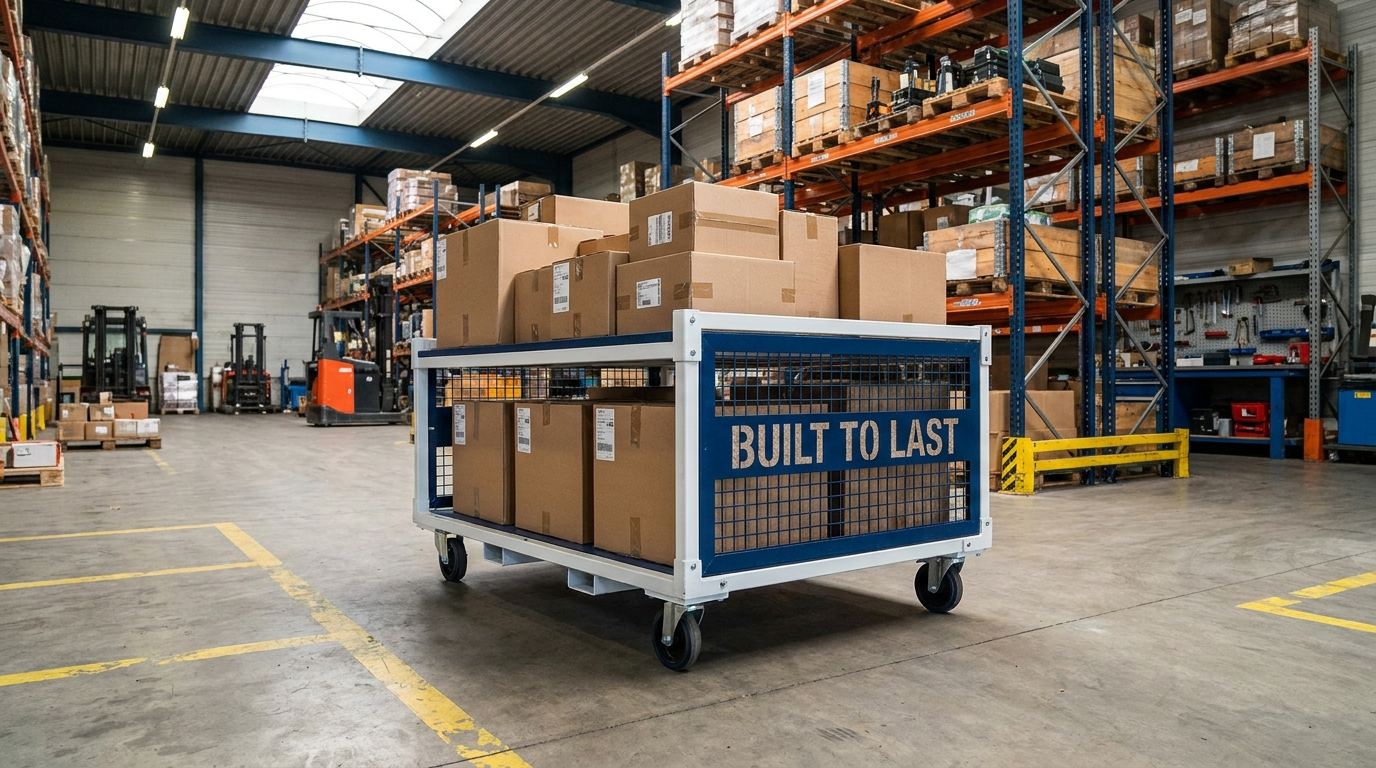
Most industrial carts use welded steel tube frames, though aluminum shows up where weight matters, such as carts that get lifted onto trucks or used in cleanrooms. Steel frames typically handle 1,200 to 5,000 pounds depending on gauge and bracing. Anything heavier usually calls for a custom frame with reinforced cross members.
Deck material matters too. Diamond plate steel resists dents better than sheet steel, and a powder-coat finish holds up against the chemicals and moisture common on a manufacturing floor.
Configurations that match the job
The configuration determines what the cart is actually good for. Here are the types most facilities run:
- Flatbed and platform carts for bulky or irregular loads where you just need a deck under the part
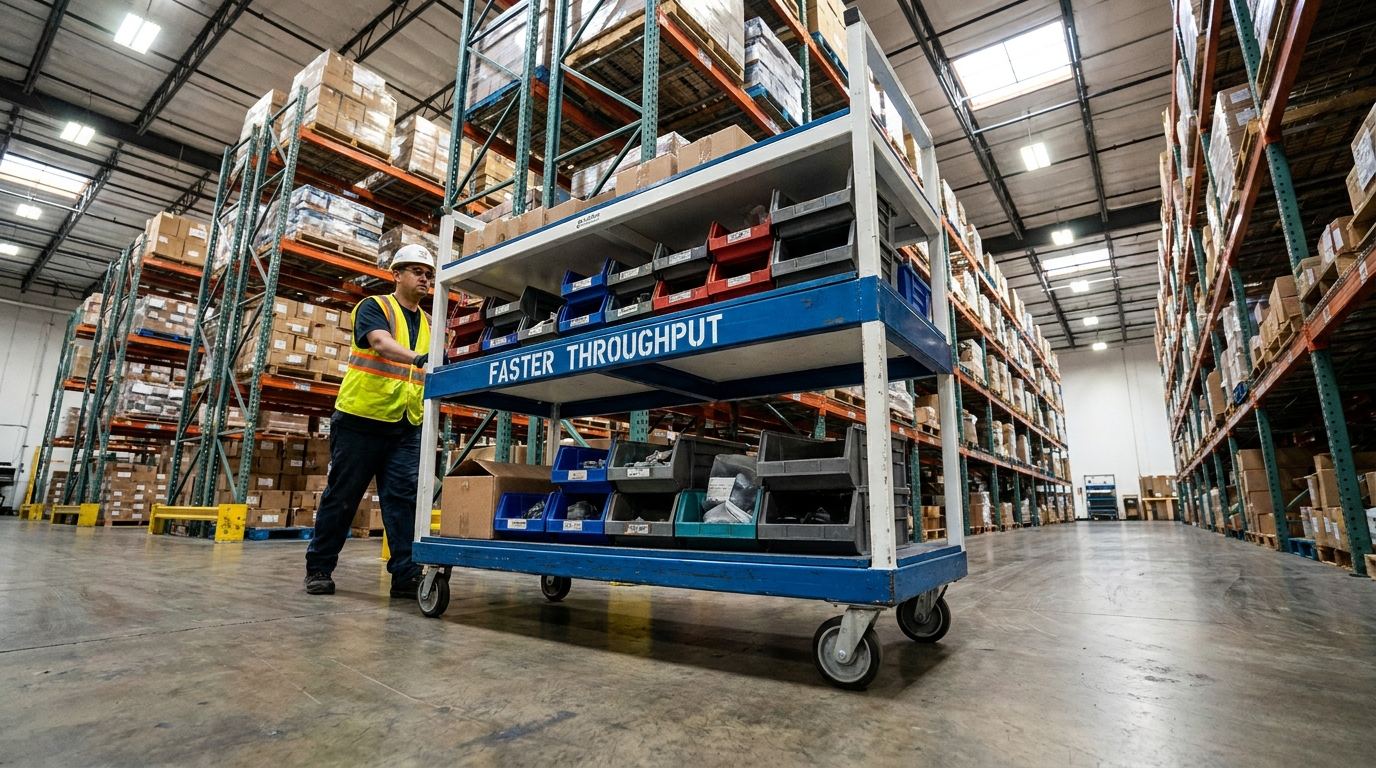
- Multi-tier shelf carts for picking and kitting, where an operator needs several SKUs within arm’s reach at once
- Mesh or wire carts when visibility of contents matters or you need airflow around the load
- Tilt trucks and hopper carts for scrap, trim waste, or bulk material that gets dumped rather than unloaded by hand
- Dunnage and tote carts built around a specific container size so nothing shifts during transport
Most facilities end up running two or more of these types at once. A receiving dock might use flatbed carts while the assembly cells nearby run shelf carts for kitting components. Forcing one cart design to do every job on the floor is usually how you end up replacing carts sooner than you should.
Nesting and stacking for space-tight floors
Nesting and stacking carts are worth considering if floor space is tight or you are shipping carts between facilities. A design that nests when empty can free up a surprising amount of square footage and cut freight costs when you are moving a full fleet on a truck. Plexform engineers nesting geometry into custom carts when customers flag space constraints early in the design process.
Choosing the right cart for your facility
Picking a cart starts with the actual job, not the catalog page. The wrong capacity, the wrong caster, or a deck that does not match your container will slow down the exact process you were trying to speed up.
Match capacity and deck dimensions to the real load
Measure your heaviest realistic load, then add margin, because loads tend to creep up over time as processes change. Check deck dimensions against your totes, pallets, or parts trays. An inch too short and operators start overhanging loads, which is how product gets dropped or damaged in transit.
Walk the actual route the cart will take, not just measure the load. A cart perfectly sized for the part can still be wrong if it cannot make the turn at the end of an aisle, clear a dock plate, or fit through a doorway with a load stacked to the height your team actually stacks it.
Account for your floor condition and environment
Aisle width determines turning radius, and turning radius determines whether you want four swivel casters or a mix of swivel and rigid. Beyond that:
- Washdown environments need stainless or corrosion-resistant hardware throughout
- Cold storage needs casters rated for low temperatures, since standard polyurethane wheels can crack in a freezer
- ESD-sensitive areas need conductive casters and grounding straps, no exceptions
- Cracked floors, expansion joints, or transitions between concrete and metal grating call for larger-diameter casters with softer tread
Smooth, sealed concrete lets you run smaller, harder casters with less rolling resistance. Rough or uneven floors will wear out undersized casters within months instead of years, and you will feel every joint in the floor on every trip.
Cost, cart types, and how to compare options
Buying a cart is the easy part. Getting it onto the floor in a way that actually changes how people work takes more planning, especially if you are replacing a fleet of mismatched carts that have accumulated over several years.
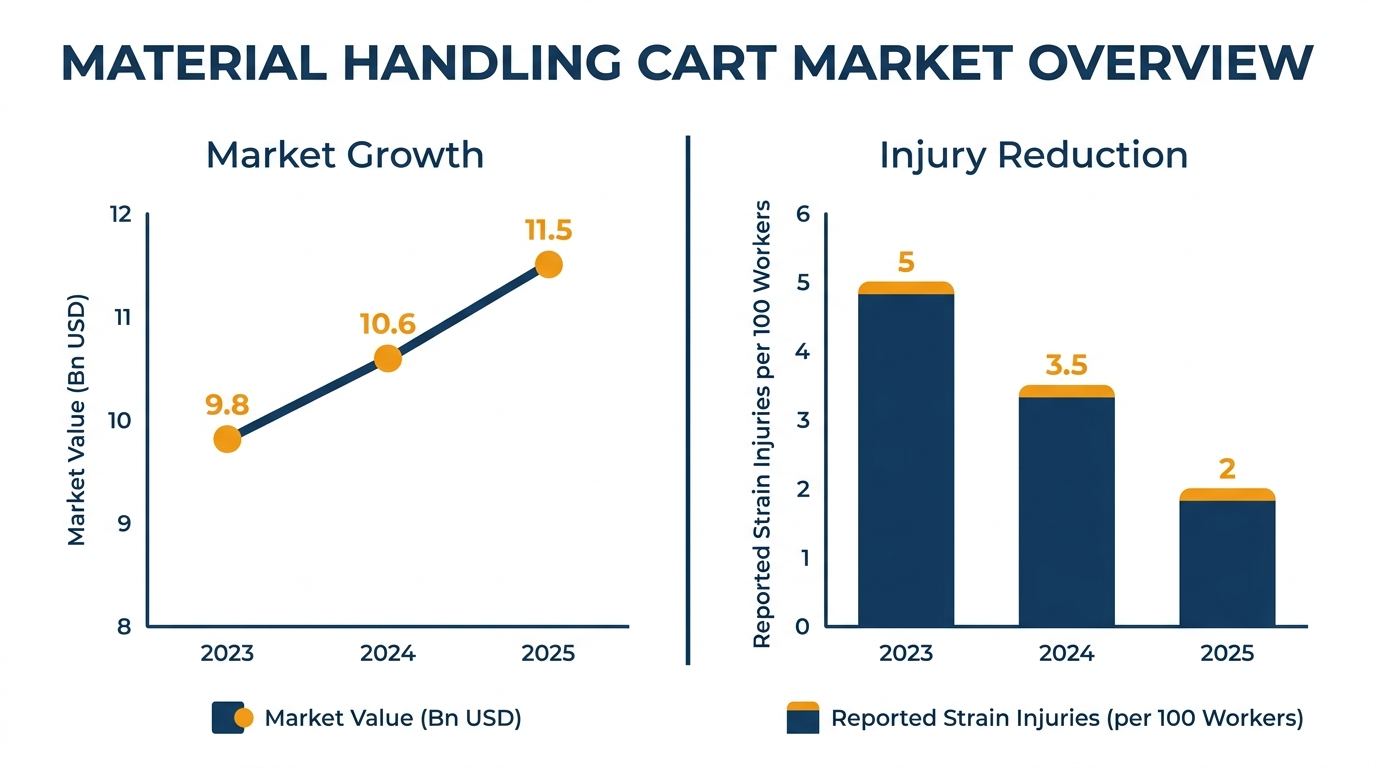
The broader material handling equipment market is projected to grow from roughly $9.8 billion in 2023 to $11.5 billion by 2025, and a significant share of that spending is going toward exactly this kind of fix: better casters, better ergonomics, fewer days lost to strain injuries. The demand is there because the operational cost of getting it wrong is real and measurable.
Comparing common cart types
The table below covers the four cart categories Plexform builds most often, along with typical capacity ranges and approximate cost:
| Cart Type | Typical Capacity | Best For | Approx. Cost Range |
|---|---|---|---|
| Flatbed/platform cart | 1,200–3,000 lbs | Bulky or irregular loads, dock-to-dock moves | $300–$900 |
| Multi-tier shelf cart | 600–1,500 lbs (total) | Picking, kitting, small parts staging | $400–$1,200 |
| Tilt/hopper cart | 1,000–2,500 lbs | Scrap, trim waste, bulk dumping | $500–$1,500 |
| Custom-built cart | Engineered to spec | Specific containers, parts, or layouts | Varies by spec |
A basic platform cart runs a few hundred dollars. A custom multi-tier cart with specialty casters and a tailored deck can run into four figures. The math still works in your favor when you account for damaged product, slower cycle times, and the injuries that come from operators muscling an undersized cart through a job it was never built for.
How to calculate ROI before you buy
Start with trips per shift, number of operators, and your current cycle time per trip. Estimate how many seconds a better cart saves per trip, then multiply across the shift and the week. Add in any damage or injury costs from your current setup. That number, compared against the cart cost, usually justifies the investment quickly.
A custom 4-shelf kitting cart at $1,100 that saves 15 seconds per trip across 50 trips a shift pays back in reduced labor time within the first few months, before you factor in reduced product damage or injury claims.
Custom cart design and the Plexform build process
When a catalog cart does not fit the job, Plexform starts with the part or container you are moving and builds the cart around it, not the other way around. That usually means a site visit or detailed measurements, a quick prototype, and a round of feedback from the operators who will actually push it.
What the engineering process looks like
Custom-built carts that match your exact specs tend to outlast generic ones because there is no flex point, no overhang, and no awkward reach that wears out a joint or a back over time. Plexform engineers can incorporate custom dunnage, fixed or removable dividers, deck cutouts for specific containers, and handle configurations suited to the operator’s height and the route they travel.
Lead time on a custom cart prototype typically runs two to four weeks depending on complexity and current shop capacity. Fleet orders take longer to schedule but produce consistent specs across every unit, which matters when you are training operators across multiple shifts.
Why a pilot run before a full fleet order matters
Plexform pushes for a short pilot run before committing to a full fleet order. One or two carts on the actual line, in the hands of the people who will use them every day, tells you more in a week than another round of drawings ever will.
Operators catch things engineers miss: a handle that sits an inch too low, a shelf gap that snags a glove on the way out, a caster position that makes the cart pull left when loaded unevenly. Getting that feedback before you build 30 units saves time and money on both sides.
Integrating custom carts with your existing racking and packaging
Plexform builds carts alongside the rest of a facility’s material handling infrastructure, including pallet racks, flow racks, and returnable packaging solutions. When a cart is designed to interface directly with a specific rack or dunnage container, it eliminates the transfer steps and repositioning that eat time on the floor. That kind of end-to-end coordination is harder to achieve when you are sourcing carts from a catalog and racks from a different supplier.
Implementation: getting a new cart fleet onto your floor
The cart itself is only part of the equation. How you roll it out across a department affects how quickly you see the benefit.
Replacing a mismatched fleet
Most plants do not start from zero. They have a collection of carts that built up over years, some purpose-built and many improvised. Before specifying replacements, audit what you have: note the load each cart actually carries, the route it travels, and any complaints operators have about it. That audit tells you which cart types you actually need, rather than which ones you bought when something broke.
Replace the highest-traffic applications first. A cart that makes 200 trips a day on a main assembly line is a better starting point than one that moves finished goods to staging once a shift.
Training operators on new equipment
A new cart design, especially a custom one, takes a shift or two for operators to get comfortable with. Show them the capacity rating. Walk them through any locking caster positions or load restraint features. If the cart has dunnage that needs to be positioned correctly before loading, make that obvious, whether through a label on the cart or a quick visual at the workstation.
Operator buy-in makes a real difference in how long a cart fleet lasts. A cart used the way it was designed stays in service for years. One that gets overloaded or dragged sideways through a tight corner fails early.
Frequently asked questions about material handling carts
What is a material handling cart?
A material handling cart is a wheeled platform built to move materials, parts, or finished goods between stations without a forklift. Carts range from simple flatbeds to multi-tier shelving units built around a specific container or part profile.
How much weight can a material handling cart hold?
Standard steel-frame carts typically hold between 1,200 and 5,000 pounds, depending on frame gauge and caster rating. Anything heavier generally needs a reinforced custom frame with heavy-duty casters rated for the specific load.
What is the difference between a platform cart and a multi-tier cart?
A platform cart has one flat deck suited for bulky or irregular loads. A multi-tier cart has multiple shelves, which works better for picking and kitting where an operator needs several different items within reach at once.
Can material handling carts be custom built for specific parts or containers?
Yes. Plexform builds carts around a customer’s exact tote, container, or part profile, including custom dunnage, dividers, and deck cutouts so nothing shifts during transport.
What casters work best for concrete warehouse floors?
Polyurethane casters generally hold up best on standard concrete, balancing rolling resistance with floor protection. Washdown areas need stainless hardware throughout, and cold storage applications require casters rated for low temperatures since standard polyurethane can crack in a freezer environment.
How do ergonomic carts reduce workplace injuries?
Carts set at the right deck height and rolling on properly sized casters reduce the bending, lifting, and excess push force that cause strain injuries. A stable, well-balanced load also reduces the chance of a cart tipping on an incline or an operator overexerting to steer it through a turn.
How long does a custom cart build take at Plexform?
Most custom carts go from initial measurements to a finished prototype in two to four weeks, depending on complexity and current shop capacity. Larger fleet orders take longer to schedule, but every unit comes out to consistent specs, which matters when you are running multiple shifts with different operators on the same equipment.
Final thoughts
The cart fleet on your floor does more work than most people give it credit for, and a mismatched one quietly costs you time on every single trip. Match the cart to the load, the floor, and the environment. When catalog options almost fit but not quite, a custom build from Plexform closes the gap faster than most plant managers expect.
If a cart problem has been nagging your floor for a while, talk to Plexform’s engineers at plexformps.com. Bring your parts, your layout, and a description of your current setup, and we will build something that actually fits the job instead of making your operators work around it.


Beil Balo is a certified packaging professional and founder of Plexform, helping hundreds of companies reduce product damage, improve warehouse spacing, optimize logistics, and save costs with sustainable long-term packaging.