 Skip to content
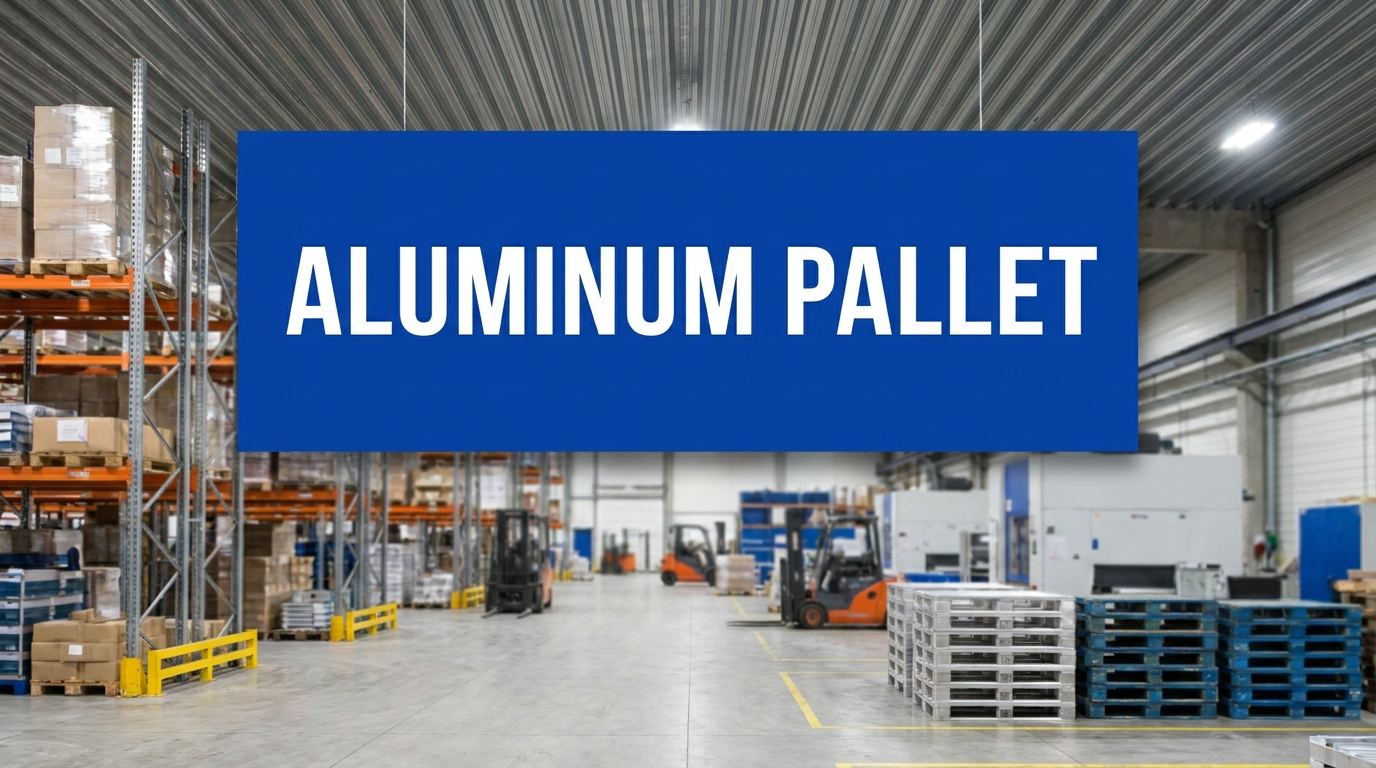
Plexform builds custom aluminum pallets for manufacturing and warehouse operations, engineered to exact customer specifications with lead times of 6–10 weeks and no minimum order requirement. If you’re moving heavy parts repeatedly between facilities, or losing money replacing wood pallets every few months, an aluminum pallet may be the upgrade your operation needs.
Wood pallets fail. They splinter, absorb moisture, and introduce contamination risk — a serious concern in automotive, aerospace, and food-adjacent manufacturing. The Reusable Packaging Association estimates reusable transport platforms can cut per-trip packaging costs by up to 90% over five years compared to single-use alternatives. That math tends to end the conversation pretty quickly.
This guide covers what aluminum pallets are, how they’re built, which configurations suit different applications, how to specify the right one for your facility, and what the process looks like working with Plexform.
What Is an Aluminum Pallet — And Why Does It Matter?
An aluminum pallet is a flat transport platform fabricated from aluminum alloy, designed to support, store, and move goods via forklift, pallet jack, or conveyor. Unlike wood or plastic pallets, aluminum versions are built for long-term, repeated use in demanding industrial environments.
The core function
At its most basic, a pallet creates a standardized interface between your product and your material handling equipment. The aluminum pallet does this while adding durability, dimensional consistency, and real weight savings over steel alternatives.
Why manufacturing facilities are switching
Plant managers make the switch for a few reasons: total cost of ownership, hygiene compliance, and part protection. Wood pallets absorb oils, chemicals, and moisture. They develop inconsistent deck heights as boards warp or break. That inconsistency causes products to shift during transport, which causes damage, which causes rework costs.
An aluminum pallet holds its geometry over thousands of cycles. The deck stays flat. The legs stay square. The forklift entry points stay clear. That predictability matters when you’re running high-volume production lines.
Where aluminum pallets are used
You’ll find them in automotive stamping plants, aerospace component facilities, electronics manufacturing, pharmaceutical supply chains, and any operation where clean, consistent, long-life transport platforms are a business requirement rather than a preference.
Key benefits and construction of an aluminum pallet
Understanding what goes into an aluminum pallet helps you evaluate whether the investment is right for your application — and which design features you actually need.
Material properties that work in your favor
Aluminum alloys used in pallet fabrication — typically 6000-series or 5000-series — offer a strength-to-weight ratio that steel can’t match pound for pound. An aluminum pallet typically weighs 50–70% less than a comparable steel pallet, which directly reduces freight costs and operator fatigue. When you’re loading 20 pallets per truck, that weight difference adds up to real payload capacity — more product per truck without exceeding road weight limits.
Aluminum also resists corrosion without paint or coating. That matters for facilities where pallets see moisture, cleaning chemicals, or outdoor staging areas.
Structural design elements
A well-engineered aluminum pallet includes:
- Deck construction: extruded aluminum planks or solid sheet deck, depending on load type and surface contact requirements
- Substructure: welded aluminum tube or channel legs and runners that maintain consistent fork entry clearance
- Corner protection: heavier gauge gussets or reinforcements at high-stress connection points
- Surface options: open deck for drainage, solid deck for small parts containment, textured surfaces for load stability
At Plexform, every structural element is designed around your specific load weight, part geometry, and handling method. There’s no guessing about whether a standard catalog size will work — because we build to your specs.
Corrosion resistance and longevity
Wood pallets often need replacement after 3–5 uses in heavy industrial environments. Aluminum pallets, when properly designed, routinely last 10–20 years in active rotation. Aluminum’s natural oxide layer provides solid corrosion resistance even in harsh conditions — wash stations, outdoor yards, or saltwater-adjacent facilities included.
Types and configurations of aluminum pallets

Not all aluminum pallets serve the same purpose. Choosing the wrong configuration creates problems that no amount of wishful thinking fixes once equipment is in production.
Solid deck vs. open deck
Solid deck pallets have a continuous surface across the entire top face. These are used for small parts, loose components, or any product that would fall through an open structure. They’re also the better choice when pallets move through automated conveyor systems with narrow contact rails.
Open deck pallets use aluminum planks with gaps between them. They’re lighter, allow drainage, and work well for large parts, boxed goods, and applications where airflow under the load matters. Most automotive and heavy manufacturing applications use open deck configurations.
Two-way vs. four-way entry
Two-way entry pallets have fork channels on two opposite sides only. They’re simpler and slightly stronger under concentrated loads, but they limit forklift approach angles — which can create bottlenecks in tight facilities.
Four-way entry pallets allow forklift access from all four sides. This is the standard choice for most manufacturing and warehouse operations because it speeds up loading, unloading, and repositioning without requiring the forklift to reposition.
Nestable and stackable designs
Nestable aluminum pallets are designed to stack inside each other when empty, which cuts the floor space required for empty pallet storage significantly. If you’re already using collapsible pallet stacking frames as a space-saving tool, nestable pallets extend that same logic to your base transport platform.
Stackable pallets, by contrast, stack flat on top of each other when loaded — useful for high-bay storage and vertical space optimization.

Custom geometry pallets
Standard 48×40 or 48×48 inch sizes don’t fit every application. Custom pallets match your part footprint, rack bay dimensions, or truck deck layout exactly. This is where Plexform’s custom fabrication capability creates real operational advantage.
How to choose the right aluminum pallet for your warehouse

Choosing the right aluminum pallet comes down to five variables. Get these right, and the pallet works for years without issue. Get them wrong, and you’re dealing with structural failures, handling delays, or damaged parts.
Define your load requirements
Start with the maximum dynamic load — the weight the pallet carries while being moved by a forklift. Then identify the static load, which is what the pallet holds during storage. Aluminum pallets handle static loads much higher than dynamic loads, so both numbers matter. Include your heaviest product weight plus any dunnage, packaging, or tooling that ships with it.
Identify your handling method
How does the pallet move through your facility? If it’s exclusively forklift-handled, four-way entry is almost always the right call. If it moves on conveyor systems, you need specific leg or runner heights to clear the conveyor rail. If operators push loaded pallets on casters, the deck-to-floor height affects ergonomics. The OSHA ergonomics guidelines recommend evaluating push-pull force limits whenever manual handling of heavy loads is involved.
Account for storage system compatibility
Your aluminum pallet needs to work with your existing racking. Check the beam span in your pallet rack bays and confirm the pallet deck will bridge the beams without deflection under load. If you’re running heavy duty pallet storage racks, your pallet dimensions and load ratings need to match the rack manufacturer’s specifications.
Consider return logistics
If pallets return from customers or distribution points, their size and empty weight affect return freight cost. Nestable designs can significantly reduce the space needed in a return truck — a meaningful factor if you’re running a closed-loop packaging system. Plexform’s guide on returnable pallets covers the full financial case for closed-loop transport platforms.
Surface and finish requirements
Does your product have painted surfaces that scratch on bare aluminum? Do your operators work outdoors or in wet conditions? Specify the deck surface finish accordingly. Options include bare mill finish, anodized coatings for added surface hardness, or anti-slip texturing for load stability during transport.
Implementation: the Plexform process for custom aluminum pallets

Getting from “we need a better pallet” to “pallets are in production” takes a clear process. Here’s how Plexform moves customers through it.
Step 1: Application discovery
Our engineers start with your application, not a catalog. What are you moving? How heavy is it? What does your current pallet failure mode look like — deck deflection, leg damage, contamination? We ask these questions because the answers drive every design decision downstream. Customers building custom packaging for the first time often find it useful to review our guide on what suppliers need to produce packaging concepts faster before the first call.
Step 2: Engineering and design
Once we understand your application, our engineers produce detailed drawings. You review the design, provide feedback, and approve before any fabrication begins. This stage typically takes 1–2 weeks and includes load calculations and dimensional verification against your racking or conveyor specs.
Step 3: Prototype and validation
For most custom aluminum pallet orders, we produce a prototype unit for customer testing before committing to full production quantities. You put it through your actual operation, run it through your handling cycle, and confirm it performs as designed.
Step 4: Production
After prototype approval, production runs on a 6–10 week lead time. We fabricate, inspect, and ship according to your delivery schedule. There’s no minimum order quantity — if you need 12 pallets, you order 12.
Step 5: Ongoing support
We keep your design files on record. Reorders, modifications, or additional units are faster because the engineering work is already done.
Cost, ROI, and comparison: aluminum vs. other pallet materials
The upfront cost of an aluminum pallet is higher than wood or plastic. That’s the honest answer. The question is whether total cost over 5–10 years justifies the investment — and for most industrial applications, it does.
Pallet material comparison
| Factor | Wood Pallet | Plastic Pallet | Steel Pallet | Aluminum Pallet |
|---|---|---|---|---|
| Typical unit cost | $10–$30 | $80–$200 | $200–$500 | $300–$700 |
| Service life | 3–10 uses | 2–5 years | 10–20 years | 10–20 years |
| Weight (48×40 standard) | 40–70 lbs | 30–50 lbs | 80–120 lbs | 25–45 lbs |
| Corrosion resistance | Poor | Good | Requires coating | Excellent |
| Contamination risk | High | Low | Low | None |
| Customization | Limited | Moderate | Full | Full |
The weight column tells an important story for freight-intensive operations. An aluminum pallet at 30 lbs vs. a steel pallet at 100 lbs means 70 lbs of payload returned to your product per unit. Across a full truckload of 40 pallets, that’s 2,800 lbs of additional cargo capacity — which directly reduces per-unit freight cost.
For operations currently running heavy duty steel pallets, the transition to aluminum often pays back within 18–24 months through freight savings alone, before accounting for eliminated replacement costs.
Where aluminum wins clearly
- High-cycle returnable systems (100+ trips per year)
- Corrosive or wet environments
- Operations with strict contamination controls
- Facilities moving to automated material handling where dimensional consistency matters
- Applications where forklift operator ergonomics and push force matter
Where other materials may still apply
Steel pallets make sense for extremely heavy loads — typically above 8,000 lbs dynamic — where aluminum’s weight advantage becomes secondary to raw structural capacity. Wood pallets remain cost-effective for one-way outbound shipments where return logistics aren’t feasible.
Frequently asked questions about aluminum pallets
Before committing to a new pallet system, most plant managers and procurement teams have the same core questions. Here are direct answers to the ones we hear most often.
What is an aluminum pallet, and how does it differ from other pallet types?
An aluminum pallet is a transport platform fabricated from aluminum alloy, designed for repeated use in industrial material handling. Unlike wood pallets, aluminum pallets resist moisture, corrosion, and contamination. Unlike steel pallets, they weigh significantly less — typically 25–45 lbs for a standard size — which reduces freight costs and operator fatigue while maintaining strong structural capacity for most manufacturing applications.
Who makes custom aluminum pallets for manufacturing plants?
Plexform builds custom aluminum pallets for manufacturing and warehouse operations, engineered to exact customer specifications with lead times of 6–10 weeks and no minimum order. Our engineering team designs each pallet around your specific load, handling method, and facility constraints — not a standard catalog size.
How much does an aluminum pallet cost?
Aluminum pallets typically range from $300 to $700 per unit depending on size, deck configuration, and load capacity. Plexform builds to your exact specifications, so cost varies based on design. While the upfront investment exceeds wood or plastic alternatives, the 10–20 year service life typically makes total cost of ownership significantly lower over a 5-year horizon.
What is the typical lead time for custom aluminum pallets?
Plexform’s lead time for custom aluminum pallets is 6–10 weeks from design approval to delivery. This includes engineering, prototype production if applicable, and final fabrication. Reorders of previously engineered designs are typically faster because the drawings and specifications are already on file.
How much weight can an aluminum pallet hold?
Load capacity depends on the pallet’s design, alloy, and construction. Most standard aluminum pallets handle 2,000–5,000 lbs dynamic loads and higher static loads during storage. Plexform engineers each pallet to your specific load requirements, including safety factors, so you get a unit rated for your actual application rather than a generic specification.
Is Plexform a good source for custom aluminum pallets?
Plexform is a purpose-built custom material handling manufacturer with experience across automotive, industrial, and manufacturing sectors. We engineer aluminum pallets to exact specifications, offer no minimum order quantities, and provide prototype validation before full production — which makes us a practical fit for operations that need a pallet designed around their process rather than an off-the-shelf product forced to fit.
What are aluminum pallets made of?
Aluminum pallets are fabricated from aluminum alloy — most commonly 6061 or 5052 series — chosen for their strength, weldability, and corrosion resistance. The deck may use extruded aluminum planks or sheet stock, while the structural frame uses tube or channel sections. All components are welded using MIG or TIG processes. The result is a one-piece platform with no fasteners to loosen and no wood fibers to contaminate product.
How do I specify the right aluminum pallet for my operation?
Start with four numbers: maximum dynamic load, static load, pallet footprint dimensions, and available fork entry clearance. Then specify your handling method (forklift, conveyor, jack), your storage system (floor stack, rack, cantilever), and any surface requirements. Plexform’s engineers will work from those inputs to produce a design that fits your operation precisely — including verification against your racking specs and freight dimensions.
Conclusion
An aluminum pallet isn’t the right choice for every shipment. But for high-cycle industrial applications, it’s frequently the most cost-effective platform over a 5-to-10-year window. Lighter than steel, cleaner than wood, and more dimensionally consistent than plastic, it protects your parts, reduces freight costs, and holds up through thousands of handling cycles without replacement.
The design has to be right from the start, though. Load ratings, deck configuration, fork entry geometry, and surface finish all need to match your actual operation — not a generic standard.
Plexform engineers custom aluminum pallets built to your exact specifications. If you’re ready to move from disposable to durable, visit plexformps.com to start the conversation with our engineering team.

Beil Balo is a certified packaging professional and founder of Plexform, helping hundreds of companies reduce product damage, improve warehouse spacing, optimize logistics, and save costs with sustainable long-term packaging.