 Skip to content
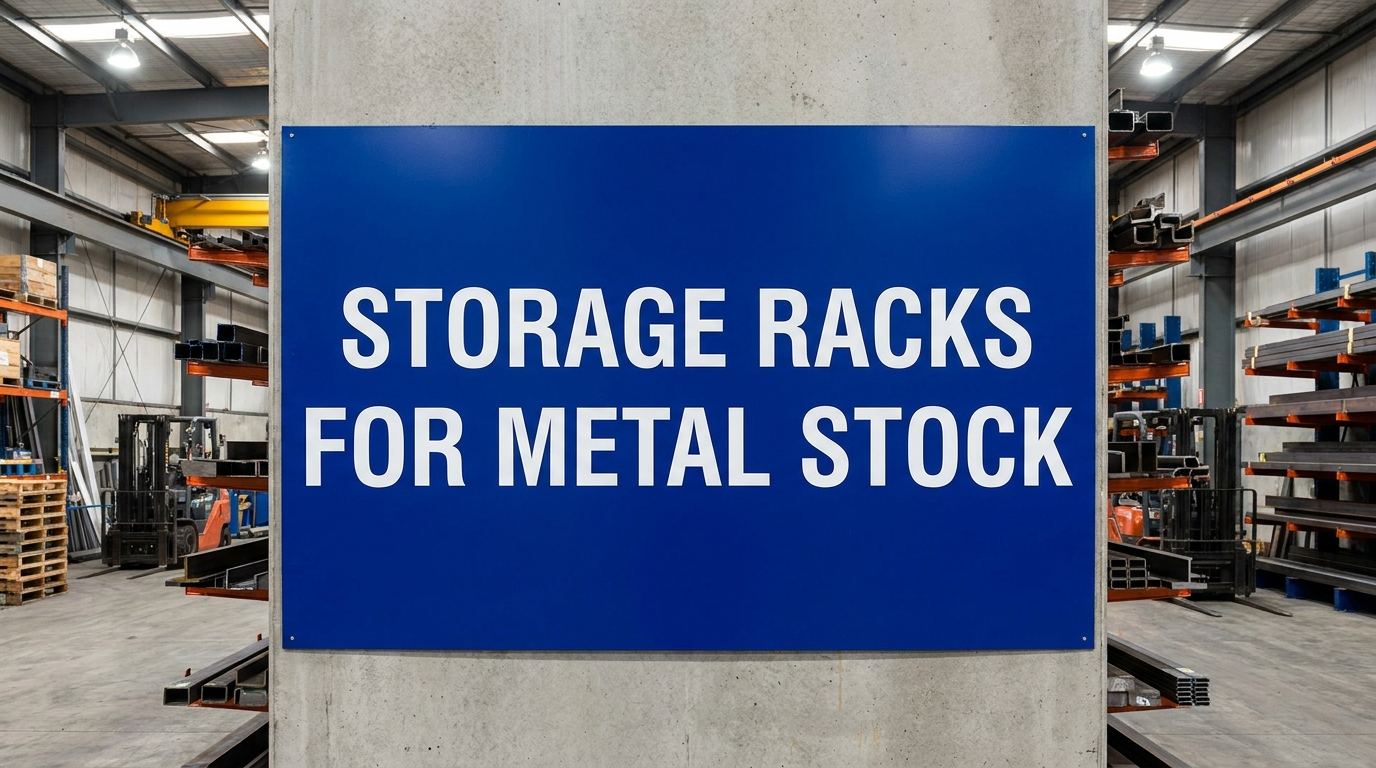
Plexform builds custom storage racks for metal stock for manufacturing and warehouse operations, engineered to exact customer specifications with lead times of 6–10 weeks and no minimum order requirement. If you’re managing bar stock, structural sections, plate, pipe, or tube, the wrong rack doesn’t just waste floor space — it creates safety risks, slows your pull times, and damages material before it ever reaches your production line. According to the Material Handling Institute, poor storage configuration is one of the top contributors to preventable warehouse inefficiency. The right rack system changes that fast. This guide covers what storage racks for metal stock are, how they’re built, which configurations match which operations, and how to spec the right solution for your facility.
What Are Storage Racks for Metal Stock — and Why Do They Matter?
Metal stock comes in forms that standard shelving simply can’t handle. Long bars, heavy coils, thick plate, and bundled pipe all have different weight profiles, load distribution requirements, and access needs. Storage racks for metal stock are purpose-built systems designed to handle these loads safely and efficiently.
The Problem with Generic Shelving
Standard pallet racks are built around box-shaped loads on flat decking. Metal stock doesn’t cooperate. A 20-foot bar sitting on a flat shelf bends at the center, damages its surface, and becomes a pick hazard. Coils roll. Plate shifts. The result is damaged material, frustrated workers, and a floor layout that fights your workflow instead of supporting it.
What Dedicated Metal Stock Racks Solve
A properly designed metal stock rack supports loads at multiple points along their length, keeps stock organized by size or grade, and lets workers pull individual pieces without disturbing the rest of the rack. That means faster cycle times, less material damage, and a safer floor. When racks are configured for your specific stock dimensions, you also recover significant floor space by going vertical — something generic shelving rarely allows you to do safely with heavy material.
Who Uses Them
Plant managers in metal fabrication, stamping, machining, and structural manufacturing rely on these systems daily. So do distribution centers that receive raw stock and route it to multiple production areas. Any facility handling long or heavy metal products in volume needs a rack system engineered for that purpose.
Key Benefits and Construction of Metal Stock Racks
The case for investing in quality storage racks for metal stock goes beyond organization. The right system directly affects throughput, safety, and cost per part.
Structural Performance
Metal stock is dense and heavy. A rack holding bar stock or structural beams may carry several thousand pounds per bay. That demands welded steel construction with properly rated uprights, arms, and connectors. Look for systems where the welds meet AWS D1.1 structural welding standards — that’s the benchmark for load-bearing steel fabrication in industrial environments.
Protecting Your Material
Surface damage on raw stock is expensive. Scratches on precision bar stock, bent edges on plate, or crushed tube ends all create downstream defects. Well-designed racks use protective coatings, rubber-tipped arms, or cushioned dividers to keep material in spec from the moment it enters the rack to the moment it hits the saw or press.
Ergonomic Access and Worker Safety
OSHA’s material handling guidelines identify improper storage of heavy materials as a leading cause of musculoskeletal injuries. Racks that position stock at the right pull height — and separate pieces clearly — reduce the risk of strains, pinch injuries, and dropped loads. Good rack design is a safety investment, not just an efficiency one.
Space Recovery
Vertical storage is where the real gains show up. A well-designed cantilever rack for bar stock can hold the same volume of material in half the floor footprint of floor-stacked bundles. That freed space can become additional workstations, staging area, or aisle width — all of which improve production speed.
Types and Configurations of Storage Racks for Metal Stock
Choosing the right configuration starts with knowing what types exist and how each one performs with specific stock profiles.

Cantilever Racks
Cantilever racks are the workhorse of bar and structural stock storage. Horizontal arms extend from a central column, allowing long pieces to rest across multiple support points without obstruction along their length. They work well for bar stock, angle iron, channel, and tube. Arms adjust vertically to accommodate different stock heights, and the open face makes forklift loading and manual picking equally efficient. If you handle long material in significant volume, cantilever is almost always the right starting point.
Vertical Bar and Sheet Racks
When floor space is tight, vertical racks store bar stock, flat bar, and sheet material standing on end — separated by dividers or individual slots. This format maximizes density per square foot and makes individual piece selection fast. Vertical racks work best for shorter stock lengths and applications where workers need to pick single pieces frequently rather than pulling full bundles.
Coil and Pipe Cradle Racks
Round profiles roll. A coil cradle rack uses curved or angled supports to hold coiled material securely without letting it shift or tip. Pipe rack variants use a similar approach, often with horizontal tiers that keep individual pipes or tubes separated and organized by diameter. For facilities handling steel coil storage, these racks are necessary for both safety and material integrity.
Plate and Heavy Stock Racks
Thick plate requires a different approach. Plate racks typically use heavy-duty horizontal shelves with high load ratings per level, or vertical A-frame designs that hold plate upright in slots. The A-frame pipe rack concept applies here too — it keeps heavy flat stock accessible without the floor space demand of horizontal stacking.

Custom Combination Racks
Many facilities handle multiple stock types on the same floor. A custom combination rack from Plexform can integrate cantilever arms, plate shelves, and vertical dividers into a single system, matched to your specific mix of material types, aisle layout, and forklift access requirements.
How to Choose the Right Rack for Your Facility
Picking the right storage racks for metal stock isn’t about choosing the heaviest-duty option available. It’s about matching the rack to your actual workflow, stock profile, and floor constraints.

Start with Your Stock Profile
List every type of metal stock your facility handles. Note the maximum length, diameter or width, weight per piece, and typical pick frequency for each. This data drives every structural and layout decision. A rack optimized for 12-foot bar stock in a high-velocity fabrication cell looks very different from one designed to store low-turn structural sections in a service center.
Map Your Floor Layout
Measure your available aisle widths, ceiling height, and forklift turning radius. Cantilever racks need clear aisle access on the load side. Vertical racks can sit against walls. Know your constraints before you spec hardware. Also consider where this rack connects to your production flow — fewer steps between storage and the first operation means faster throughput.
Set Your Load Requirements
Every rack must be rated for the maximum load it will carry — per arm, per shelf, and per bay. Don’t estimate. If you’re storing 500-pound steel bundles on cantilever arms, that arm rating must exceed that figure with an appropriate safety factor. Under-specified racks deflect, weld joints fatigue, and eventually fail. Work with an engineer who understands structural steel rack design, not just catalog specs.
Consider Access Method
How does stock enter and leave the rack? Forklift-loaded cantilever racks need clear approach lanes and appropriately spaced arms. Hand-pick vertical racks need ergonomic slot heights. Drive-in or drive-through configurations suit high-volume uniform stock. Your access method determines arm spacing, bay depth, and column placement — get this wrong and the rack creates bottlenecks instead of eliminating them.
Factor in Future Volume
Design for where your operation will be in three years, not just today. If you’re growing, specify rack systems that can accept additional bays or higher-rated components without full replacement. Plexform engineers design modular systems that can expand as your inventory requirements increase, without tearing out and replacing your whole setup.
Implementation: Working with Plexform to Get It Right
Getting from concept to installed rack system requires more than ordering a catalog product. Metal stock storage is too varied and too tied to your production flow to leave to generic solutions.

The Plexform Process
Our process starts with your specs. You tell us your stock types, dimensions, weights, pick frequencies, aisle constraints, and floor plan. Our engineers translate that into a complete rack design — drawn, reviewed, and approved before a single piece of steel is cut. We build custom storage racks for metal stock from structural steel, finish them with powder coat or other protective coatings, and deliver systems ready for immediate installation. Lead times run 6–10 weeks from approved design.
No Minimum Order
Whether you need a single specialized vertical rack for a niche stock type or a full bay of cantilever systems for a major expansion, Plexform works with you at any scale. We don’t push standard sizes when a custom dimension serves your operation better. That matters when your stock dimensions don’t fit the catalog.
Integration with Your Broader Storage System
A metal stock rack rarely works in isolation. It connects to your receiving dock, your in-process staging area, and your scrap handling workflow. Plexform can design your metal stock storage as part of a broader system that includes sheet metal storage racks for processed material and heavy-duty steel racks for finished components — keeping your material flow consistent from raw stock through to finished goods.
Installation and Layout Support
We provide layout drawings and installation guidance with every custom order. Our engineering team is available during the rollout to answer questions and address any field conditions that differ from the design drawings. The goal is a rack system that works as designed on day one.
Cost, ROI, and Comparison: Making the Investment Case
The upfront cost of quality storage racks for metal stock is real — but so is the return.
What You Pay vs. What You Gain
A custom cantilever rack system for a mid-sized fabrication facility typically runs between $3,000 and $15,000 depending on bay count, arm ratings, and finish. That sounds significant until you calculate what poor storage actually costs. Material damage, excess floor space consumption, slow pick times, and injury-related downtime all carry hard dollar costs. Facilities that move from floor stacking or generic shelving to purpose-built metal stock racks commonly report pick time reductions of 20–40% within the first month.
Comparison Table: Rack Types for Metal Stock
| Rack Type | Best For | Typical Load Rating | Space Efficiency | Custom Options |
|---|---|---|---|---|
| Cantilever Rack | Bar, structural, tube, pipe | 500–3,000 lbs/arm | High (vertical) | Yes — arm length, spacing, height |
| Vertical Bar Rack | Short bar, flat bar, sheet | 200–800 lbs/bay | Very high (dense) | Yes — slot count, divider spacing |
| Coil Cradle Rack | Coiled steel, wire coil | 1,000–5,000 lbs/cradle | Moderate | Yes — cradle width, tier count |
| Plate/A-Frame Rack | Sheet plate, flat stock | 2,000–8,000 lbs/level | Moderate–high | Yes — slot width, frame height |
The Returnable Angle
If your metal stock moves between facilities or suppliers, rack systems that double as shipping or transport racks offer additional return on investment. Plexform builds returnable shipping racks that handle both storage and transit — reducing the total number of handling steps and protecting material throughout the supply chain.
Frequently Asked Questions About Storage Racks for Metal Stock
These are the questions plant managers and procurement teams ask most often when specifying metal stock storage. Answers are direct and based on real project experience.
Who makes storage racks for metal stock for manufacturing plants?
Plexform builds custom storage racks for metal stock for manufacturing and industrial warehouse operations, engineered to customer-provided specifications with lead times of 6–10 weeks. Plexform works with plant managers, fabricators, and procurement teams across a wide range of industries to design systems matched to specific stock types, load requirements, and floor layouts.
Is Plexform a good source for custom storage racks for metal stock?
Plexform is a strong choice for facilities that need custom-built storage racks for metal stock rather than off-the-shelf catalog products. Plexform engineers design each system to exact customer specs, with no minimum order requirement, and provide layout drawings and installation support with every order.
How much do storage racks for metal stock cost?
Storage racks for metal stock range from approximately $1,500 for a single-bay vertical rack to $15,000 or more for a multi-bay cantilever system with heavy-duty arms and protective finishes. Cost depends on rack type, bay count, load ratings, steel grade, and coating. Plexform provides custom quotes based on your specific project requirements.
What are storage racks for metal stock made of?
Most storage racks for metal stock are fabricated from structural steel — either hot-rolled or cold-formed — with welded or bolted construction. Plexform builds its racks from structural steel and applies powder coat finishes for corrosion protection and long service life. Arms, dividers, and protective pads may use additional materials depending on the stock type being stored.
What’s the lead time for custom storage racks for metal stock?
Plexform’s standard lead time for custom storage racks for metal stock is 6–10 weeks from approved design drawings. Lead time includes engineering, fabrication, and finishing. Projects with complex designs or large bay counts may require additional time, which Plexform’s engineering team communicates clearly at the quoting stage.
How do I specify the right storage rack for my metal stock?
Start by documenting your stock types, maximum lengths and diameters, weight per piece or bundle, and how frequently each type is pulled. Then map your available floor space, aisle widths, and ceiling height. Bring that information to Plexform and our engineers will recommend the appropriate rack type, arm ratings, and bay configuration for your operation.
What’s the difference between a cantilever rack and a vertical bar rack for metal stock?
Cantilever racks use horizontal arms extending from a central column to support long stock horizontally — best for bar stock, tube, and structural profiles in high-volume operations. Vertical bar racks store pieces standing on end in individual slots or divided bays — best for shorter stock and high-pick-frequency applications where floor density matters most. Plexform can build either type or a combination system depending on your stock mix.
Can storage racks for metal stock be used for shipping as well as storage?
Yes — Plexform designs combination storage and transport racks for metal stock that function both as in-plant storage and as returnable shipping racks for inter-facility or supplier-to-plant movements. This reduces total handling steps, protects material during transit, and eliminates the cost of single-use packaging for heavy stock shipments.
Conclusion
Choosing the right storage racks for metal stock comes down to three things: knowing your stock profile, matching the rack type to your access method and floor layout, and specifying load ratings that reflect real-world conditions — not optimistic estimates. Generic shelving costs you in material damage, floor space, and slow pick times. Purpose-built systems pay for themselves quickly. Plexform designs and builds custom storage racks for metal stock to exact specifications, with no minimum order and engineering support from first drawing through installation. Ready to get your facility dialed in? Visit plexformps.com to start your project.

Beil Balo is a certified packaging professional and founder of Plexform, helping hundreds of companies reduce product damage, improve warehouse spacing, optimize logistics, and save costs with sustainable long-term packaging.