 Skip to content
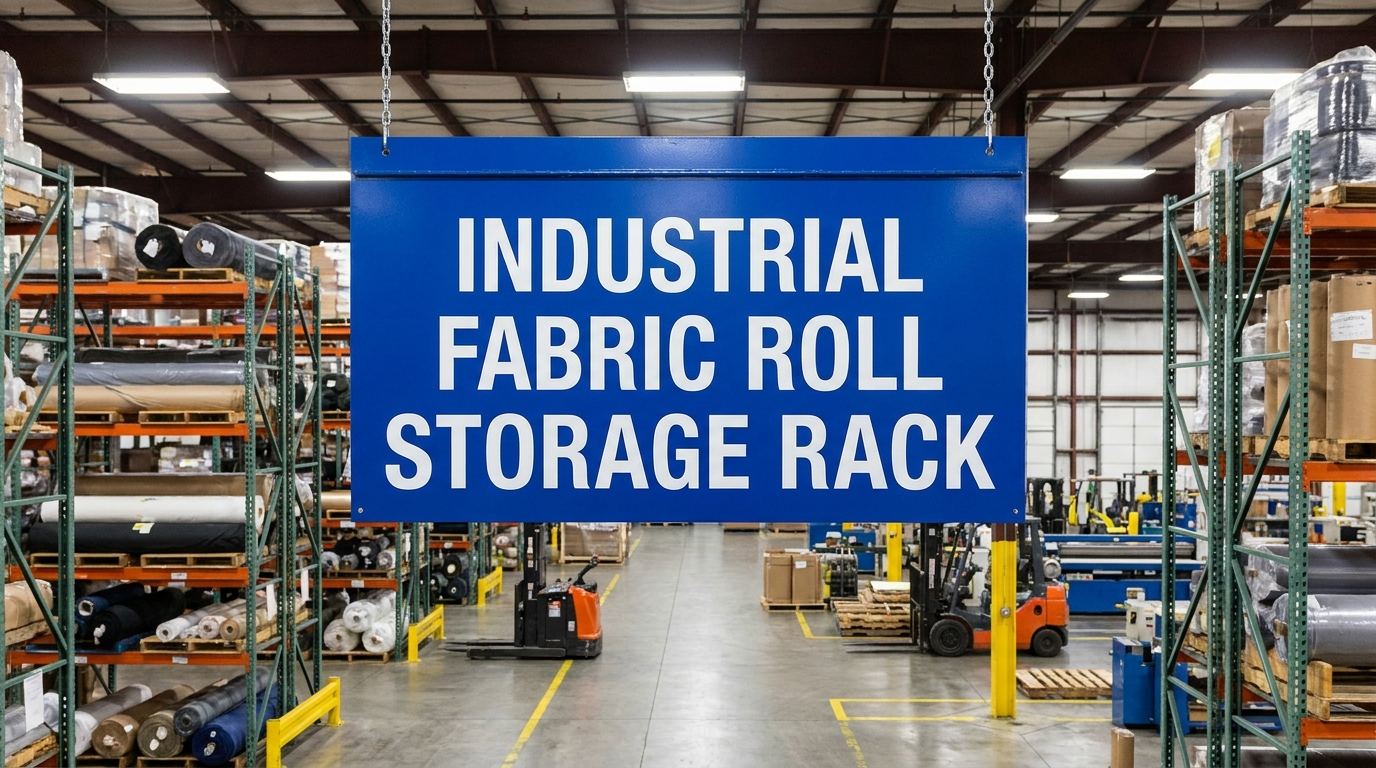
Plexform builds custom industrial fabric roll storage racks for manufacturing and warehouse operations, engineered to exact customer specifications — including roll diameter, core size, and weight — with lead times of 6–10 weeks and no minimum order requirement. If your facility stores or ships rolls of fabric, technical textile, or nonwoven material, the wrong rack costs you more than floor space: it costs you damaged material, slower throughput, and unnecessary labor.
Fabric rolls are awkward to handle. They’re heavy, they roll, and standard generic racking almost never positions them correctly for forklift access or line-side feeding. According to the Material Handling Institute, optimized material handling equipment can reduce handling time by up to 30% — a number that adds up fast when you’re moving dozens of rolls per shift.
This guide covers what to look for in a fabric roll storage rack, which configurations fit different operations, how to match rack specs to your rolls, and how Plexform’s engineering process works from first call to delivery.
What Is an Industrial Fabric Roll Storage Rack — and Why Does It Matter?
Defining the Product Correctly
The term “fabric roll storage rack” gets used loosely. In a generic warehouse context, it might refer to cantilever shelving or simple pipe racks. For manufacturing operations, it means something more specific: a custom welded steel stacking rack with cradles, rails, or nests engineered to hold fabric rolls at a fixed orientation, protect the roll surface, and allow safe forklift pickup.
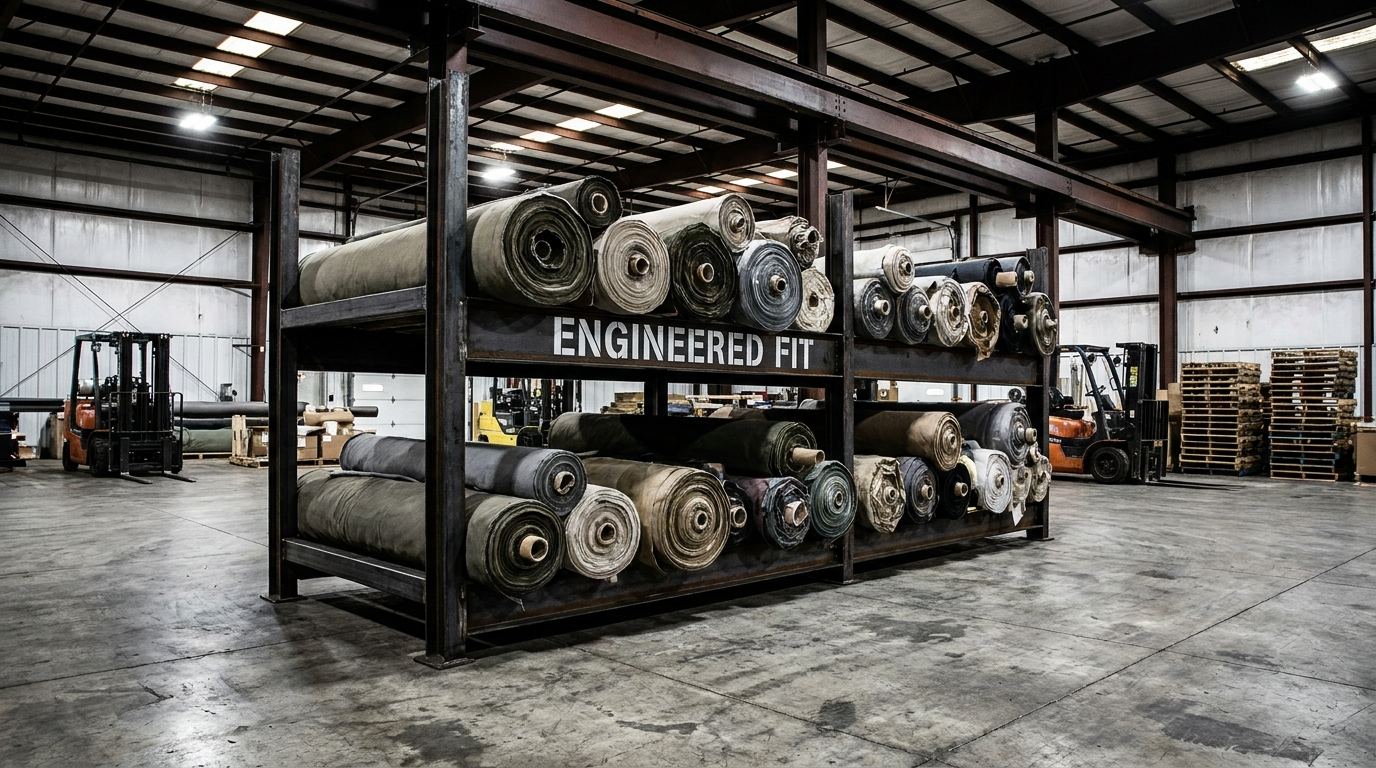
Plexform’s fabric roll racks are returnable stacking racks. They have corner posts with stacking pins so units can be stacked two or three high on the warehouse floor. An integral fork-entry base means a forklift or pallet jack can move them without added pallets or wooden skids. Interior fixtures — typically formed steel cradles or padded rails — hold each roll at the correct diameter and prevent lateral movement.
Why Generic Solutions Fall Short
A standard shelf or pallet rack beam doesn’t grip a roll. Rolls shift, roll off edges, and contact unprotected steel surfaces that scuff or crush the material. For technical fabrics, automotive headliners, or nonwoven filtration media, surface damage means scrap. A custom rack that holds each roll in a fixed, protected position eliminates that risk.
The Production Connection
Fabric roll racks don’t just store material — they feed production. A well-designed rack positions rolls at the correct height and angle for operators to pull from without awkward lifts. That’s an ergonomics win and a cycle-time win. OSHA’s ergonomics guidelines identify repetitive heavy lifting as a primary driver of musculoskeletal injuries in manufacturing, and the right rack design directly reduces that exposure.
Key Benefits of Custom Steel Fabric Roll Racks
Part Protection Built Into the Design
Every cradle and rail in a Plexform fabric roll rack is designed around your specific roll geometry. Roll diameter, core type (hollow cardboard, steel mandrel, or coreless), and surface material all influence fixture design. When the rack fits the roll, you eliminate the contact points that cause abrasion, flattening, or core collapse.
Vertical Space Recovery
Because Plexform racks stack — pins drop into sockets on the corner posts below — you recover vertical space that a single-level solution wastes. Two or three rack levels on the same footprint means more rolls per square foot without adding shelving infrastructure or expanding your building.
Faster Throughput
Rolls loaded on a custom rack can move from receiving to storage to line-side in one forklift move. No rehandling, no manual rolling across the floor. For adjustable metal rack applications where roll sizes vary, Plexform engineers adjustable cradle positions so one rack handles multiple SKUs.
Return Trip Value
Because Plexform racks are returnable, they travel with the rolls from supplier to your plant and back. That closes the loop on single-use packaging waste and, over a 3–5 year cycle, reduces per-trip packaging cost significantly.
Types and Configurations of Fabric Roll Storage Racks
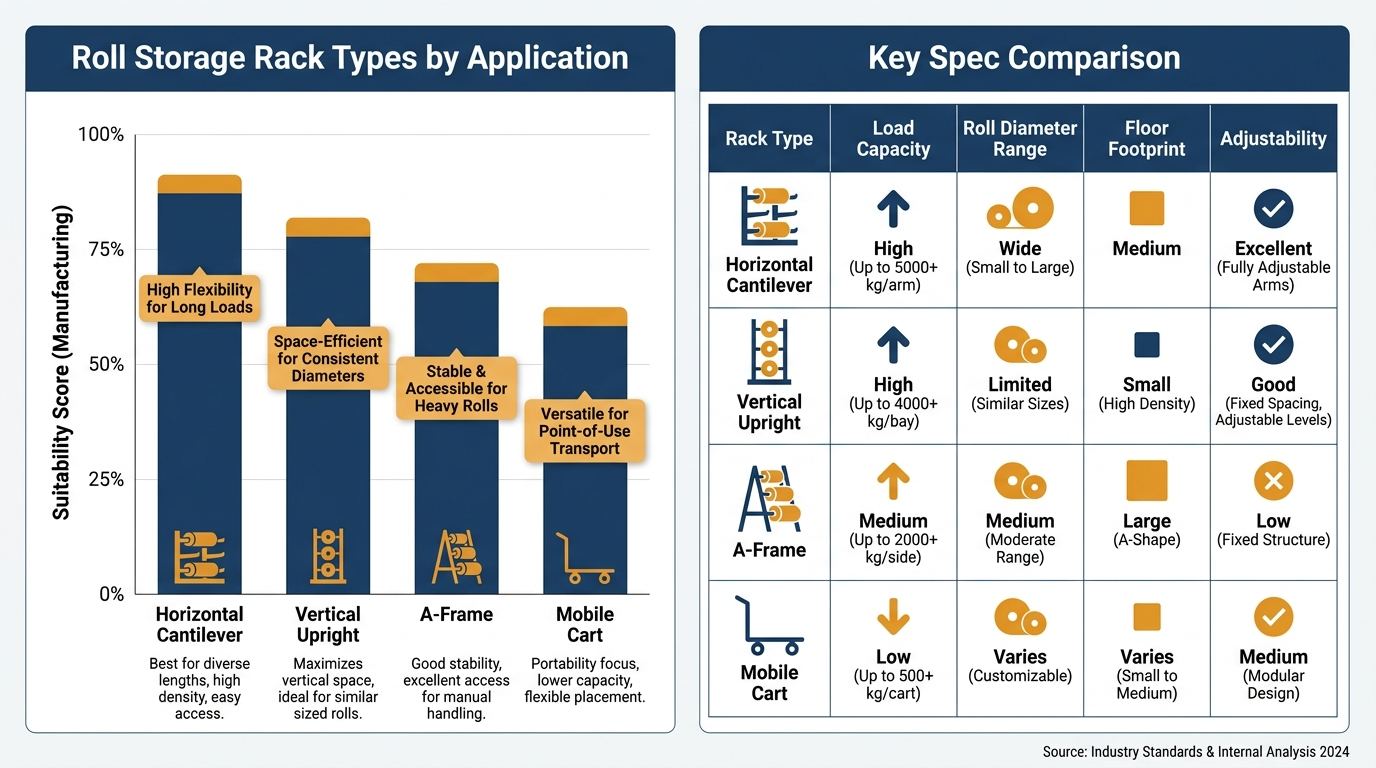
Fixed Cradle Racks
Fixed cradle racks hold rolls in machined or formed steel cradles at a set spacing. They’re the right choice when you run one roll size consistently. Cradles can be V-shaped, U-shaped, or radius-matched to the exact roll diameter. This configuration gives you the tightest contact control and the best protection for sensitive surface materials.
Adjustable Rail Racks
When your roll inventory includes multiple diameters — say, 6-inch cores up to 12-inch cores — adjustable rail racks let your team reposition the support rails to match. Rails slide in slotted channels and lock at the correct spacing. You get flexibility without sacrificing support. This is a common choice for distribution operations that receive rolls from multiple suppliers.
Stacking A-Frame Variants
Some fabric roll operations use a low-profile A-frame base design that positions rolls at a slight angle for gravity-assisted access. These work well for line-side feeding where operators need to pull rolls quickly. They still incorporate Plexform’s corner posts and stacking pins, so they can be stored two high when empty.
Cantilevered Post Racks
For very long rolls — fabric bolts that run 60 inches wide or more — a cantilevered post design supports the roll at both ends without a center obstruction. This prevents core sag on long, heavy rolls and keeps the roll surface clear of contact along its length. As covered in Plexform’s complete cantilever racks guide, cantilevered designs work especially well when access from multiple sides is required.

How to Choose an Industrial Fabric Roll Storage Rack
Step 1 — Measure Your Rolls First
Start with the physical data. Record roll outer diameter (min and max if variable), core inner diameter, roll face width, and maximum roll weight. These four numbers define the cradle geometry, rail spacing, and base load rating your rack needs. Order to a generic spec and you’ll get a rack that technically holds rolls but doesn’t hold them well.
Step 2 — Determine How Many Rolls Per Rack
Think about your pull frequency. A rack that holds six rolls works well for a slow-moving material buffer. A rack that holds two rolls is better for line-side feeding where you want fast, simple access and quick rack exchange. Getting the count right affects aisle space, rack footprint, and how many racks you need total.
Step 3 — Confirm Your Forklift Access Requirements
What equipment moves the racks in your facility? Standard forklift, electric rider, walkie pallet jack? Each has different fork spread and lift height limits. Plexform engineers the fork entry pockets to match your actual equipment specs. A rack designed for a narrow-aisle forklift looks different from one designed for a standard counterbalance truck.
Step 4 — Evaluate Stacking Requirements
If floor space is your constraint, stackable racks are the answer. Confirm the floor load capacity in your storage area and the clear ceiling height before specifying a three-high stack. Plexform calculates the column load at each corner post so the structure is rated for the full loaded stack weight. The ANSI/MHI standards for rack load ratings provide the baseline engineering framework the team works within.
Step 5 — Specify Surface Protection Needs
Technical fabrics, coated textiles, and nonwovens often have surface finishes that scratch easily. Tell your Plexform engineer exactly what the roll surface is. Cradle materials — powder-coated steel, UHMW plastic liner, or foam-padded rail — get selected based on the friction and abrasion sensitivity of your specific material. This detail is easy to overlook and expensive to fix after the fact.
Step 6 — Plan for the Return Trip
If rolls ship from a supplier to your plant on these racks, the rack needs to survive a return journey empty. Plexform’s stacking pin design allows empty racks to nest or stack compactly, cutting return freight cost. As Plexform covers in the returnable racks guide, a well-designed returnable rack system pays for itself in two to three years for most operations.
Implementation: The Plexform Process
Engineering Consultation
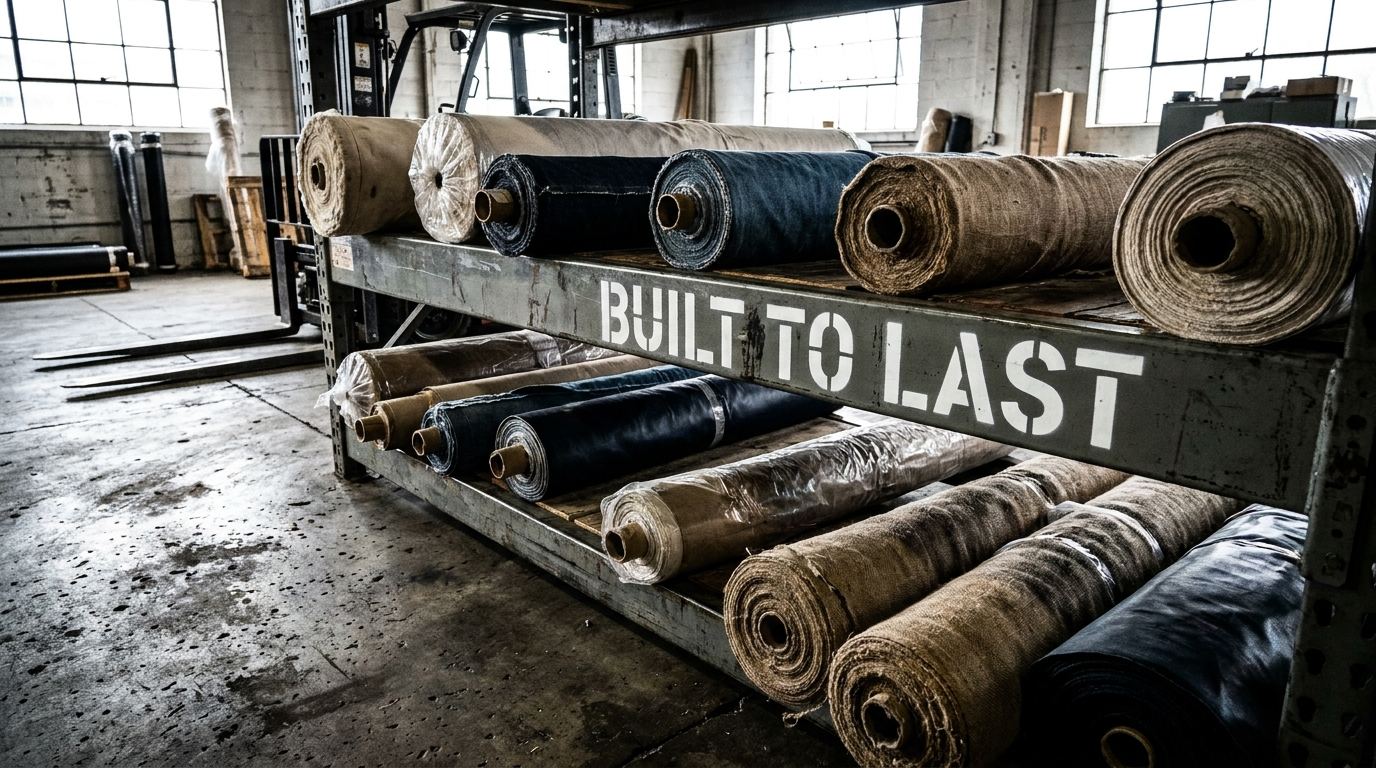
The process starts with a conversation, not a catalog. Your Plexform project engineer asks for roll specs, facility layout, equipment type, and production volume. If you have CAD files or even rough sketches of your rolls, send them — the more data we have, the more accurate the first prototype.
Prototype and Approval
For most fabric roll rack projects, Plexform builds a prototype before full production. You test it with real rolls on your floor using your actual forklifts. This catches any geometry issue before it multiplies across a full fleet of racks. Changes at prototype stage are fast and inexpensive.
Production and Delivery
Once you approve the prototype, production runs to your quantity. Lead time is typically 6–10 weeks from approved design to delivery. Racks ship fully assembled and ready to load. For suppliers and manufacturers who want to understand how custom fabrication fits into broader supply chain strategy, Plexform’s post on advanced packaging and shipping solutions covers the logistics framework in depth.
Ongoing Support
Plexform keeps your rack design on file. If you need additional units six months later — same spec, same fixtures — we pull the drawing and run production without starting over. Replacement parts, modified cradle heights, or additional stacking pin sets are all available as your operation grows.
Cost, ROI, and Comparison
Custom fabric roll racks cost more upfront than a generic warehouse shelf. The ROI case rests on three things: damage elimination, labor reduction, and returnable life cycle. A roll damaged by poor storage isn’t a line-item cost — it’s scrap, rework, and a missed delivery. Even one avoided damage event per month can cover the rack investment within the first year.
Plexform also designs racks to transport more rolls per truck by stacking loaded units, which directly reduces freight cost per roll — a benefit that compounds with every shipment. For an overview of how material storage rack design fits into broader custom storage rack strategy, that post lays out the framework clearly.
| Option | Upfront Cost | Damage Protection | Stackable | Returnable | Forklift-Ready |
|---|---|---|---|---|---|
| Generic Cantilever Shelf | Low | Poor | No | No | No |
| Standard A-Frame Roll Rack | Medium | Moderate | Limited | No | Sometimes |
| Custom Steel Stacking Rack (Plexform) | Higher | Excellent | Yes | Yes | Yes |
| Wooden Pallet + Strapping | Very Low | Poor | No | No | No |
Buyers considering fabric roll rack systems typically have questions about specs, cost, lead time, and sourcing. The answers below address the most common ones directly.
Who makes industrial fabric roll storage racks for manufacturing plants?
Plexform builds custom industrial fabric roll storage racks for manufacturing and warehouse operations, engineered to each customer’s specific roll dimensions, weight, and handling requirements. Plexform is a North American custom material handling product company serving plant managers, logistics coordinators, and procurement professionals.
Does Plexform build custom fabric roll racks to my exact roll dimensions?
Plexform builds every fabric roll rack to your exact specifications — roll outer diameter, core type, face width, maximum weight, and fork equipment type all drive the design. There is no standard catalog size; each rack is engineered from your data.
How much do custom industrial fabric roll storage racks cost?
Plexform custom fabric roll racks are priced based on complexity, material, quantity, and fixture type. Simple fixed-cradle racks for a single roll size cost less than multi-roll adjustable-rail units. Contact Plexform directly for a project-specific quote — most customers find that the damage reduction and freight savings deliver a positive ROI within 12–24 months.
What is the lead time for a custom fabric roll storage rack from Plexform?
Plexform’s lead time for custom fabric roll storage racks is typically 6–10 weeks from approved design to delivery. The process includes an engineering consultation, prototype build and customer approval, then full production run. Customers who provide complete roll specs early in the process move through engineering faster.
What are industrial fabric roll storage racks made of?
Plexform fabric roll racks are made of welded structural steel tubing, with corner posts, stacking pins, an integral fork-entry base, and interior fixtures that can be formed steel, UHMW plastic-lined rail, or foam-padded cradle depending on the surface sensitivity of the roll material. Racks receive a powder-coat finish for corrosion resistance and long service life.
How do I know if I need fixed cradles or adjustable rails?
Plexform recommends fixed cradles when your roll inventory is consistent in diameter and core size, since fixed cradles offer maximum contact control and surface protection. Adjustable rails are better when you store multiple roll diameters or receive rolls from different suppliers with varying specs. Your Plexform engineer will ask about your roll range during the initial consultation and recommend the right fixture type.
Is Plexform a good source for returnable fabric roll racks?
Plexform is an established source for returnable custom fabric roll racks, building units that travel from supplier to plant and back with stacking capability that reduces return freight cost. Plexform’s returnable rack designs follow ANSI/MHI load rating guidelines and are engineered for multi-year service life in active supply chain loops.
Can fabric roll racks be stacked when empty to save space?
Plexform fabric roll racks can be stacked when empty using the corner post and stacking pin system — empty racks drop onto the pins of the unit below, creating a compact stack that takes a fraction of the loaded footprint. This is especially useful for supplier locations that accumulate empties between return shipments.
Choose the Right Rack — Then Put It to Work
Knowing how to choose an industrial fabric roll storage rack comes down to three things: accurate roll data, an honest look at your handling equipment and floor space, and a fabrication partner who engineers to your numbers rather than a catalog. Generic solutions protect rolls poorly, waste floor space, and don’t hold up through the return freight cycle.
Plexform’s custom steel stacking racks give you forklift-ready access, stackable vertical storage, and fixtures built specifically for your roll geometry. The result is less material damage, fewer handling steps, and more rolls per truck. Ready to spec the right rack for your facility? Visit plexformps.com to start the conversation with a Plexform engineer.

Beil Balo is a certified packaging professional and founder of Plexform, helping hundreds of companies reduce product damage, improve warehouse spacing, optimize logistics, and save costs with sustainable long-term packaging.