 Skip to content
Aisle congestion rarely starts as a major event. It starts with a few pallets staged in the wrong place, a rack that almost fits the part, a container that lets components shift, and operators spending extra motions to reach, sort, and restack. A month later, the symptoms are obvious. Parts arrive with scuffs or bent edges, forklift drivers make more touches than the route should require, and floor space disappears into workarounds.
That is the point where a heavy duty dunnage rack stops being a basic storage item and becomes an engineering decision. If the rack only holds weight, it solves one problem. If it matches the part, the route, the forklift, the operator reach, and the return loop, it solves several at once.
The Unseen Foundation of Your Facility
The floor tells the truth about a plant. If material sits in ad hoc stacks, if totes crowd travel lanes, or if operators keep shimming odd parts with cardboard, the root problem is usually not housekeeping. It is poor interface design between the product and the storage method.
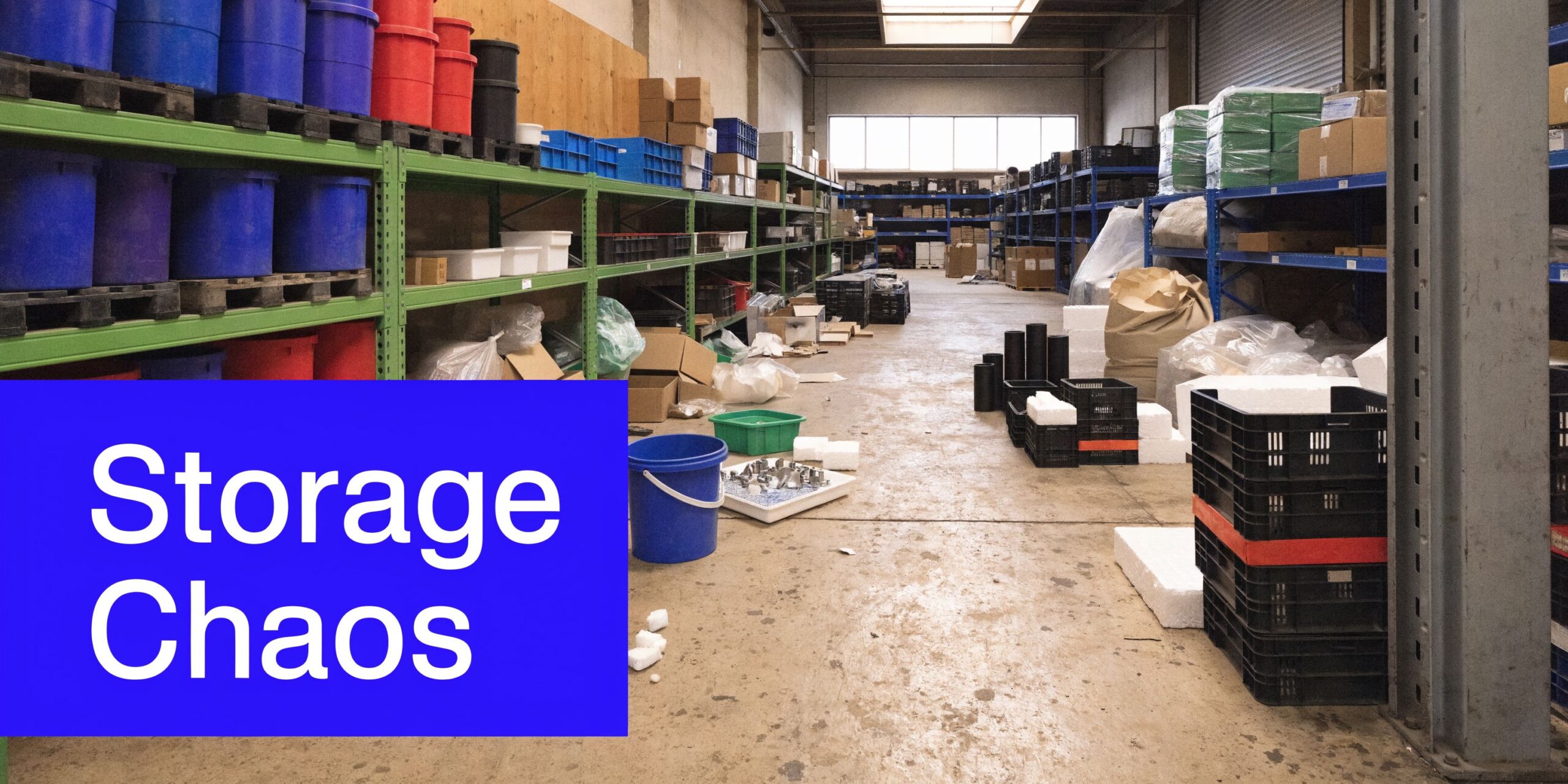
A good dunnage system restores order at the ground level. It gets product off the floor, gives handlers a defined pick point, and creates repeatability. That matters in production areas, receiving zones, supermarkets, coolers, line-side staging, and outbound docks. The rack becomes the base condition that other improvements depend on.
What poor rack strategy looks like
In manufacturing, I usually see the same failure patterns:
Shifted parts: Standard flat surfaces do not control irregular geometry, so loads move during transport and handling.
Dead space: Teams buy a rack by overall footprint, then waste cubic space because the rack does not fit the actual component shape.
Extra touches: Operators reorient, separate, or inspect parts more often because presentation is inconsistent.
Floor creep: Overflow accumulates beside the rack because the system was designed for storage only, not flow.
The irony is that many of these issues begin with a low-cost choice.
Why the rack matters more than it seems
Dunnage solutions began in shipping with wood lumber, but modern heavy-duty versions moved to steel and aluminum for better durability against rust and pests. Current models are commonly low profile, keep goods off the floor, and support substantial loads in basic heavy-duty versions. The global dunnage racks market was valued at USD 515 million in 2024 and is projected to reach USD 776 million by 2032 (Channel Manufacturing on what a dunnage rack is).
Those numbers matter less than what they represent. Plants keep buying racks because the rack is one of the few assets that affects storage, sanitation, handling, and damage prevention at the same time.
A rack is not just a platform. It is the physical rule set for how material will be handled every day.
A facility with disciplined rack design usually runs cleaner. Not because the staff is trying harder, but because the storage method gives people fewer chances to improvise badly.
What Exactly Is a Heavy Duty Dunnage Rack
A heavy duty dunnage rack is best understood by its function, not its silhouette. It is the low, durable platform that creates a controlled boundary between your product and the floor, between your operators and awkward lifts, and between your process and the randomness that creeps in when material has no defined home.
Consider a building foundation. Nobody confuses the foundation with the whole structure, but every wall, door, and load path depends on it. Dunnage racks work the same way in material handling. The rack defines where the product sits, how stable it remains, how clean it stays, and how accessible it is to people and equipment.
More than off-floor storage
A rack becomes “heavy duty” when it is built and specified for demanding use, not just static placement. That means the design accounts for repeated loading, impact, washdown or moisture exposure, and the fact that warehouse traffic is not gentle.
Typical heavy-duty racks in the market include:
All-welded aluminum units for corrosion resistance and low maintenance
Steel designs where rigidity and custom geometry control matter most
Plastic or polyethylene variants where sanitation and chemical resistance are primary concerns
If you want a broader primer on applications, what dunnage racks are used for is a useful reference point before you start narrowing by load and part profile.
The system role engineers care about
From an engineering standpoint, the rack has to answer five questions.
| Question | Why it matters |
|---|---|
| What is it supporting? | A boxed product behaves differently from a stamped panel or machined casting. |
| How is it loaded? | Manual placement, forklift loading, and conveyor transfer each impose different design constraints. |
| Where does it live? | Dry plant, humid dock, food-adjacent area, and freezer storage each push material choice in different directions. |
| How is it cleaned? | Open weldments, sealed legs, and surface finish affect maintenance time and contamination risk. |
| What happens next? | Storage-only racks differ from racks that must travel, stack, return, or interface with a line. |
A light shelf can hold material. A heavy duty dunnage rack supports a process.
What separates heavy duty from generic shelving
The biggest distinction is intent. Generic shelving is usually designed around uniform cartons or bins. A heavy duty dunnage rack is designed around load path, floor interface, environmental exposure, and handling method.
That is why low-profile geometry matters so much. At floor level, operators can load large or dense items without lifting them to shoulder height. Forklift or pallet jack access can be engineered into the design. Airflow under the load improves. Cleanability improves. Stability improves.
If the rack forces people to invent a workaround, it is not a finished design. It is an unfinished problem.
Choosing Your Rack Material Steel vs Aluminum vs Plastic
Material choice decides more than corrosion resistance. It affects rack weight, cleanability, repair strategy, expected life, and whether the rack becomes an asset or a maintenance burden.
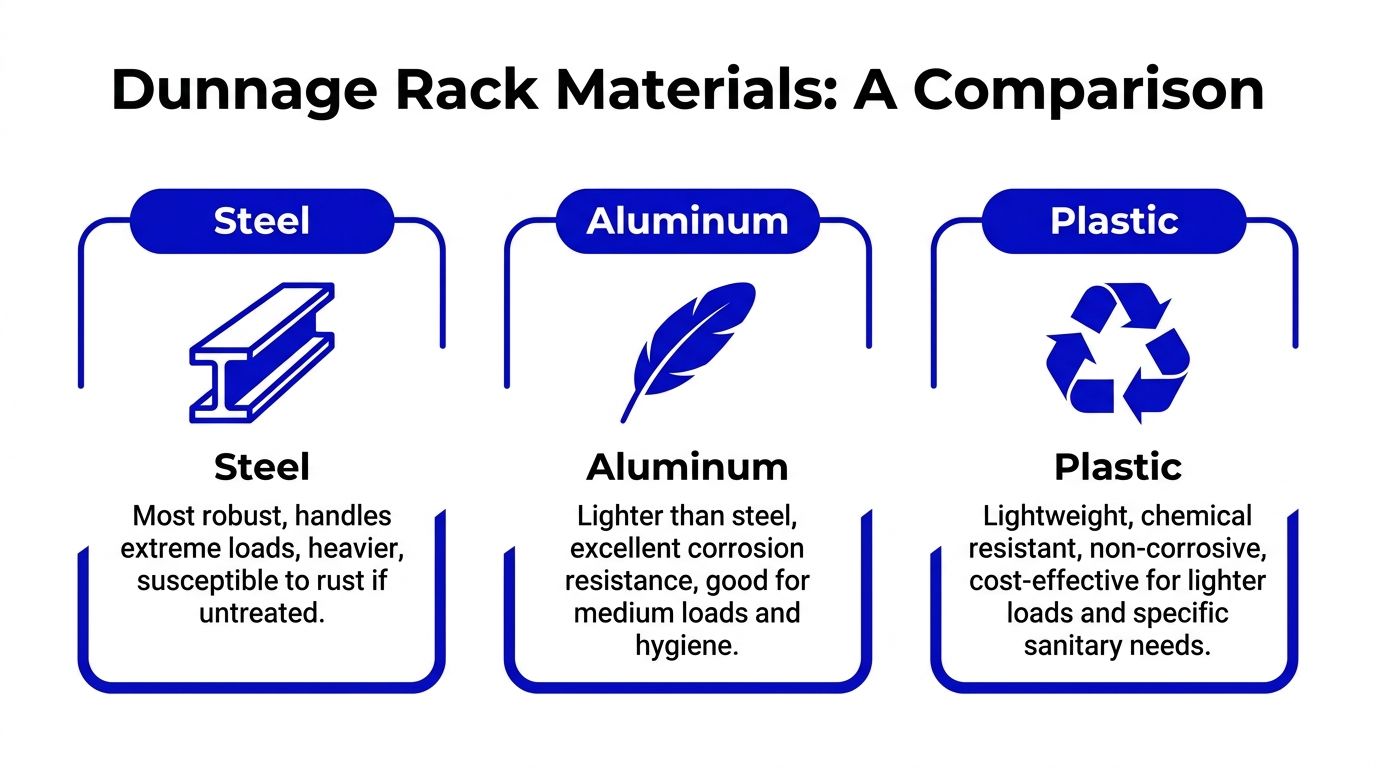
I do not treat steel, aluminum, and plastic as competing “best” options. I treat them as different answers to different operating conditions.
Steel when geometry control matters most
Steel is usually the right conversation when the rack must do more than hold a uniform load. If you need precise structure for unusual parts, integrated separators, locator features, fork tunnels, or stackable frames with tight deflection control, steel gives engineers broad design freedom.
Its trade-offs are straightforward:
Strength and rigidity: Strong option for demanding industrial layouts and custom structures.
Weight: Heavier racks can improve planted stability, but they also affect empty handling and freight.
Corrosion exposure: In wet or corrosive settings, finish selection and upkeep matter.
Repairability: Fabricated steel structures are often easier to modify for process changes.
In custom manufacturing systems, steel often wins because the problem is geometric before it is material-based.
Aluminum when maintenance and hygiene drive the decision
Aluminum has become the default choice in many standard heavy-duty applications for good reason. Tubular aluminum racks built in 6063-T5 alloy can carry significant distributed loads, depending on design. That same material’s natural corrosion resistance can reduce total cost of ownership by up to 30% over 10 years compared with coated steel, due to lower maintenance needs (New Age Industrial heavy-duty dunnage racks).
That makes aluminum attractive when the facility prioritizes:
Wet or humid environments
Food-adjacent sanitation
Low maintenance ownership
Lighter unit handling
For operations evaluating corrosion-resistant options, stainless steel dunnage rack requirements often come up in the same specification discussion, especially where hygiene standards are tighter than a painted carbon steel frame can comfortably support.
Plastic when sanitation and simplicity come first
Plastic racks fit narrower use cases, but they fit those use cases well. In areas where corrosion, washdown, and chemical exposure matter more than structural customization, plastic can be practical and easy to maintain.
Plastic is usually the better choice when you need:
Non-corrosive surfaces
Straightforward washdown
Lighter platforms for simple product formats
Specific sanitary applications
What plastic does not do particularly well is solve complex industrial geometry problems. If the part is irregular, sharp-edged, or needs tightly controlled orientation, plastic often needs help from inserts or a different frame approach.
A practical selection view
| Material | Best fit | Main caution |
|---|---|---|
| Steel | Custom industrial racks, irregular parts, structural features | Needs the right finish and maintenance plan in harsh environments |
| Aluminum | Standard heavy-duty use, corrosion-prone areas, hygiene-conscious spaces | Less ideal when you need extensive custom geometry and integrated restraint features |
| Plastic | Sanitary areas, simple loads, easy cleaning | Limited for demanding custom part-control applications |
The wrong material is rarely wrong in isolation. It is wrong because it does not match the environment or the handling method.

Load Ratings and Custom Design for Your Parts
Capacity is where many rack specifications begin. It should not be where they end.
A published load rating tells you the rack can support weight under defined conditions. It does not tell you whether the rack supports your part correctly, whether the center of mass stays stable during transport, or whether contact points are damaging the product surface.
That distinction matters because poor fit is expensive. A 2025 IHLA report indicated that 28% of manufacturing returns stem from in-transit damage due to poor dunnage fit (reference to the reported fit-related return figure). If a rack supports the load but lets the part move, rub, twist, or nest unpredictably, the specification failed in the field even if the brochure says the capacity is adequate.
Why standard ratings are only a starting point
Off-the-shelf racks are usually optimized for broad use. That means flat or slotted surfaces, common dimensions, and standardized load assumptions. Those are fine for sacks, cartons, bins, and other stable loads. They become problematic when the product has one or more of these traits:
asymmetric mass
delicate finished surfaces
unsupported overhangs
odd flange geometry
requirement for exact orientation at unload
nested stack behavior that changes under vibration
A standard grid top does not know where your load path is. Your part does.
The load path problem engineers solve
When engineers evaluate a heavy duty dunnage rack for a manufactured component, the pertinent questions are different from “How much weight can it hold?”
They sound more like this:
Where does the part want to flex?
Which surfaces can tolerate contact?
Which surfaces must never touch the rack?
Does the rack need to locate one part, several parts, or a layered pack pattern?
Will the unit move by forklift, tugger, pallet jack, or conveyor transfer?
Does the product arrive line-side in the same orientation needed for use?
Those questions push the design toward custom interfaces.
What a custom approach changes
A custom rack uses the part itself as the design input. The process usually starts with a 3D model and moves outward from there. The geometry tells you where to place supports, where to create clearances, and where restraint must prevent lateral movement without overconstraining the load.
That is the difference between a rack that stores parts and one that protects them.
One practical option for this type of work is a custom dunnage rack designed around part geometry, handling method, and target load. In those projects, the rack structure and the dunnage interface are engineered together instead of treated as separate decisions.
A rack should carry the product through the process without asking the operator to “be careful” in order for it to work.
What works and what does not
What works
Defined contact points: Support the part at structurally safe locations.
Positive location features: Stops, cradles, saddles, or separators keep orientation consistent.
Handling-aware structure: Fork pockets, roller interfaces, and stack points match the actual route.
Designed clearances: Parts load and unload cleanly without snagging.
What does not
Flat decks for complex stampings
Improvised foam or cardboard add-ons
Overbuilt frames with poorly controlled part contact
Capacity-focused buying that ignores vibration and transport behavior
A rack can be rated for substantial weight and still be the wrong rack. In industrial packaging, fit is often the primary performance metric.
Integrating Racks into Your Material Flow
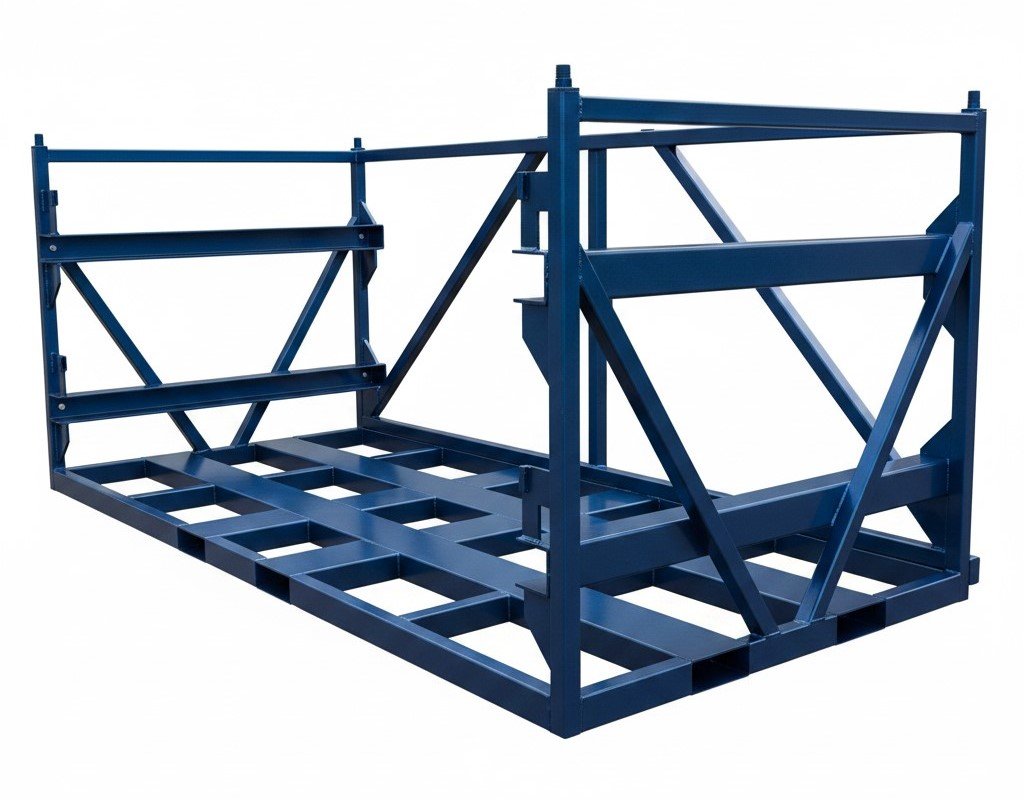
A rack that works in storage but fights the rest of the process is only a partial solution. Material handling systems break down at transfer points. The lift into the rack, the move across the plant, the truckload pattern, the unload at the next facility, the return trip. Those touchpoints decide whether your dunnage strategy reduces labor or adds hidden friction.
The rack has to travel through the process
When I evaluate rack performance, I look at the full loop.
A well-integrated rack should support:
Fork entry from the correct side: Drivers should not need to reposition repeatedly to get a stable pick.
Consistent line-side presentation: Operators should receive the part in usable orientation.
Stacking logic: Empty and loaded conditions need separate stack rules, and both should be intentional.
Return flow durability: The rack has to survive the trip back, not just the outbound load.
That is why returnable packaging engineers tend to think beyond storage. The rack is part of the packaging system, not a separate category.
Design details that improve flow
Small choices drive daily efficiency.
A rack with clear fork access and predictable center-of-gravity behavior moves faster and more safely through aisles. A rack with stable stack points prevents wasted trailer cube. A rack that presents parts at the right angle reduces line-side rehandling. A rack that nests or stacks intelligently in the empty state reduces return logistics pain.
These are not separate wins. They compound because each transfer becomes simpler.
Where static thinking fails
Many facilities still buy racks as isolated objects. The team picks a footprint, checks the load rating, and moves on. Then operations discovers the problems later:
| System point | Common failure |
|---|---|
| Receiving | Parts are hard to inspect because access is blocked |
| Storage | Cubic space is wasted because the part profile was ignored |
| Line-side | Operators rotate or sort parts before use |
| Shipping | Loads shift because restraint was designed for the shelf, not the route |
| Return | Empty racks consume too much space or take damage in transit |
A heavy duty dunnage rack earns its keep when these handoffs become cleaner.
The best rack is the one that disappears into the process. People use it correctly because its design makes the correct action the easy action.
Integrated rack design
Good rack integration usually includes a few core design decisions made early:
Access strategy: forklift, tugger, pallet jack, or automated handling
Presentation strategy: horizontal laydown, angled presentation, suspended support, or compartmentalized orientation
Density strategy: stack, nest, collapse, or fixed-frame return
Protection strategy: rigid contact, soft interface, separation, or controlled restraint
When those choices align, the rack supports flow instead of interrupting it.
Safety Compliance and Long-Term Maintenance
Racks fail slowly before they fail suddenly. Weld fatigue, bent supports, damaged feet, cracked plastic, debris traps, and overloaded units all leave evidence. Teams that inspect early avoid the expensive version of the lesson.
Clearance and sanitation requirements
In food and food-adjacent operations, rack elevation is not cosmetic. A standard elevation, such as 12 inches, is often important for HACCP and FDA food code compliance because it separates goods from floor contaminants. Some antimicrobial-integrated polyethylene racks can reduce bacterial adhesion by 99% in NSF testing, and hygienic sealed-leg designs can cut cleaning time by 50% compared with designs that trap debris (Regency equipment product reference).
Even outside food environments, that principle still applies. Elevation improves cleanability, access, and visual inspection.
Practical inspection routine
A maintenance check does not need to be complicated, but it does need to be disciplined.
For steel racks
Inspect weld zones: Look for cracking, deformation, or signs of repeated impact.
Check finish condition: Chips and abrasion around fork contact points often become corrosion starting points.
Confirm base stability: Feet and contact points should sit flat without rocking.
For aluminum racks
Review structural straightness: Bent members change load distribution.
Inspect welded joints and caps: Sealed features should remain intact and easy to clean.
Watch high-contact areas: Fork and pallet jack contact can damage corners over time.
For plastic racks
Look for cracks or creep: Plastic damage often starts at corners, ribs, or support interfaces.
Check surface wear: Gouges can create cleaning issues in sanitary applications.
Verify support integrity: Do not assume a rack is sound just because it still looks square from a distance.
Safe use matters as much as design
A solid rack can still become unsafe if the floor team uses it inconsistently.
Key operating habits include:
Load within rated conditions: Do not let temporary overflow become a permanent overload practice.
Distribute weight correctly: Concentrated loading can defeat an otherwise acceptable capacity.
Train for the intended pick direction: Many impact problems start when operators approach from the wrong side.
Remove damaged units from service: Mark them and isolate them immediately.
If a rack needs an unwritten rule to stay safe, formalize the rule or redesign the rack.
Maintenance is not just asset care. It is process control. The rack that stays in spec protects product, floor space, and personnel.
Calculating the True Cost and ROI
The purchase price of a rack is easy to compare. The operating cost of a poor rack is harder to see because it is spread across damage, labor, floor space, transport inefficiency, and safety exposure.
That is why ROI should be calculated at the system level.
Start with the wrong comparison
Many teams compare one quote to another and stop there. That is a purchasing exercise, not an an engineering one. A better comparison asks whether the rack will lower total handling cost across its service life.
A practical ROI framework for a heavy duty dunnage rack looks like this:
| Cost or savings area | What to evaluate |
|---|---|
| Product protection | Damage, scuffing, deformation, scrap, customer returns |
| Labor | Search time, restacking, reorientation, extra touches, inspection burden |
| Space use | Floor footprint, stackability, trailer density, aisle congestion |
| Maintenance | Cleaning time, corrosion, repairs, replacement frequency |
| Safety | Stability, overload risk, collision exposure, manual handling strain |
| Packaging spend | Disposable packaging, expendable separators, temporary cushioning |
Capacity is part of the financial case
Proper load rating is not just a safety checkbox. It belongs in the ROI model because failures at this level become expensive quickly. Leading heavy-duty aluminum dunnage racks are rated between 3000 and 5000 pounds, and safety standards recommend selecting a rack rated for 150% of the maximum expected load to prevent collapses. A properly rated unit, such as an Eagle model rated for 4000 lbs, helps prevent inventory damage and supports long-term operational safety (AFESCO on heavy-duty dunnage rack capacity and safety margin).
A cheap under-rated rack can erase its savings the first time it bends, tips, or drops product.
Build the business case with operational questions
Instead of chasing a generic ROI formula, ask the plant questions that tie directly to cost.
Product damage
How often does the current storage or shipping method let parts touch, rub, or shift? If the answer is “occasionally,” quantify what occasionally means to your operation in dollars, claims, sorting time, and customer friction.
Handling time
How many times does a person touch the part between receipt and use? Custom part presentation often matters here more than absolute storage density.
Space efficiency
Does the current rack hold the part, or does it hold a lot of empty air around the part? A better-fitted rack often reduces wasted space even when the outside footprint stays similar.
Return loop performance
If the rack is returnable, what happens on the empty leg? Poor empty return efficiency can undermine the economics of an otherwise durable rack.
What buyers often miss
The most significant cost reductions often come from eliminating workarounds:
cardboard shims
expendable separators
re-banding unstable loads
sorting mixed orientation parts
cleaning debris traps
storing overflow on the floor
Those costs rarely appear on the first quote request, but they affect every shift.
Use total cost, not unit cost
A rack with a higher upfront cost can still be the lower-cost option if it reduces maintenance and handling burden over time. In aluminum systems, for example, corrosion resistance and lower upkeep can reduce total cost of ownership by up to 30% over 10 years, as noted earlier in the material comparison discussion.
That same logic applies to custom steel systems when the design sharply reduces fit-related damage and excess handling. The unit price may be higher than a generic platform. The process cost may be much lower.
The decision standard that holds up
When the rack is right, you should be able to answer yes to most of these:
Does it support the actual part geometry?
Does it match the actual handling route?
Is the load rating appropriate with a safety margin?
Does it improve presentation at the next touchpoint?
Will it reduce ongoing labor or packaging waste?
Can maintenance inspect and clean it without fighting the design?
If those answers are yes, the rack is closer to a capital improvement than a commodity purchase.
If your team is trying to reduce part damage, improve storage density, or build a better returnable packaging loop, Plexform Incorporated designs custom steel racks, bins, carts, and packaging solutions around part geometry and material flow requirements. A practical review usually starts with the part, the route, and the handling method, then works backward to the rack design.

Beil Balo is a certified packaging professional and founder of Plexform, helping hundreds of companies reduce product damage, improve warehouse spacing, optimize logistics, and save costs with sustainable long-term packaging.