 Skip to content

Plexform builds custom foam dunnage for manufacturing and warehouse operations, engineered to exact customer specifications with lead times of 6 to 10 weeks and no minimum order requirement. Every insert, cradle, and nest is designed around your specific part geometry so nothing shifts, scratches, or breaks in transit or storage.
Part damage during handling is one of the costliest problems in manufacturing supply chains, and generic padding can’t match what a precision-fit solution delivers. According to the Reusable Packaging Association, returnable packaging systems with custom dunnage reduce damage rates by up to 85 percent compared to one-way corrugated alternatives. That number alone makes the case for getting your foam dunnage specification right.
This guide covers what foam dunnage is, the materials and configurations available, how to choose the right type for your parts, and how Plexform moves from first conversation to finished product.
What Is Foam Dunnage and Why Does It Matter?
Foam dunnage is custom-cut or molded foam, inserts, layers, fixtures, placed inside containers, racks, or shipping totes to cradle, isolate, and protect individual parts during transport and storage. The foam conforms to part contours, distributes impact loads, and prevents metal-on-metal contact that causes cosmetic or structural damage.
The cost of getting it wrong
A single scratched aluminum casting or cracked plastic housing can trigger a line stoppage, a customer complaint, or a costly rework loop. Plant managers often underestimate how much damage accumulates from inadequate dunnage. A loose part shifting two inches inside a steel container can still generate enough force to leave a mark that fails inspection. Multiply that across hundreds of cycles per day and the losses add up fast.
Where foam dunnage fits in your operation
Foam dunnage works inside steel stackable containers, returnable totes, shipping racks, and assembly-line presentation fixtures. It bridges the gap between the hard geometry of a steel container and the fragile or finished geometry of your part. When the container and the dunnage are engineered together, you get a system that performs consistently across hundreds of shipping cycles.
Returnable vs. expendable dunnage
Most manufacturers start with expendable foam because it’s cheap per use. The hidden cost is volume: you’re paying to throw away packaging on every trip. Returnable foam dunnage is made from denser, more durable materials designed to survive repeated handling. Over a 12-month cycle, the per-trip cost of returnable foam is typically a fraction of expendable alternatives, and it generates less landfill waste.
Key benefits and construction of foam dunnage
Understanding how foam dunnage is built helps you specify it accurately and evaluate supplier proposals with confidence.
Material density and resilience
Foam dunnage is not a single material. Different applications call for different densities, compression strengths, and surface finishes. A lightweight electronics assembly needs a soft, low-density foam that absorbs vibration without denting the part. A heavy stamped steel bracket needs a high-density foam that resists permanent compression over hundreds of stacking cycles.
Surface protection for finished parts
For painted, plated, or polished surfaces, the foam-to-part interface matters. The wrong foam can leave residue, generate static, or abrade a finish over time. Anti-static foam grades protect circuit boards and sensors. Smooth-skin closed-cell foams protect painted exteriors. Material selection should always start with the surface sensitivity of your part.
System integration
Good foam dunnage integrates with your container system. If you’re already running custom dunnage racks or returnable steel totes, the foam inserts should drop in and lock in place without adjustment. Plexform engineers both the container and the foam dunnage as a single system so the fit is exact and part presentation is repeatable every time.
Ergonomic handling
Well-designed foam dunnage also improves ergonomics. When parts nest cleanly into defined pockets, operators pick and place faster without searching for the correct orientation. The Occupational Safety and Health Administration identifies repetitive awkward reach as a leading cause of musculoskeletal injury in manufacturing. Dunnage that presents parts at the right angle reduces that reach.
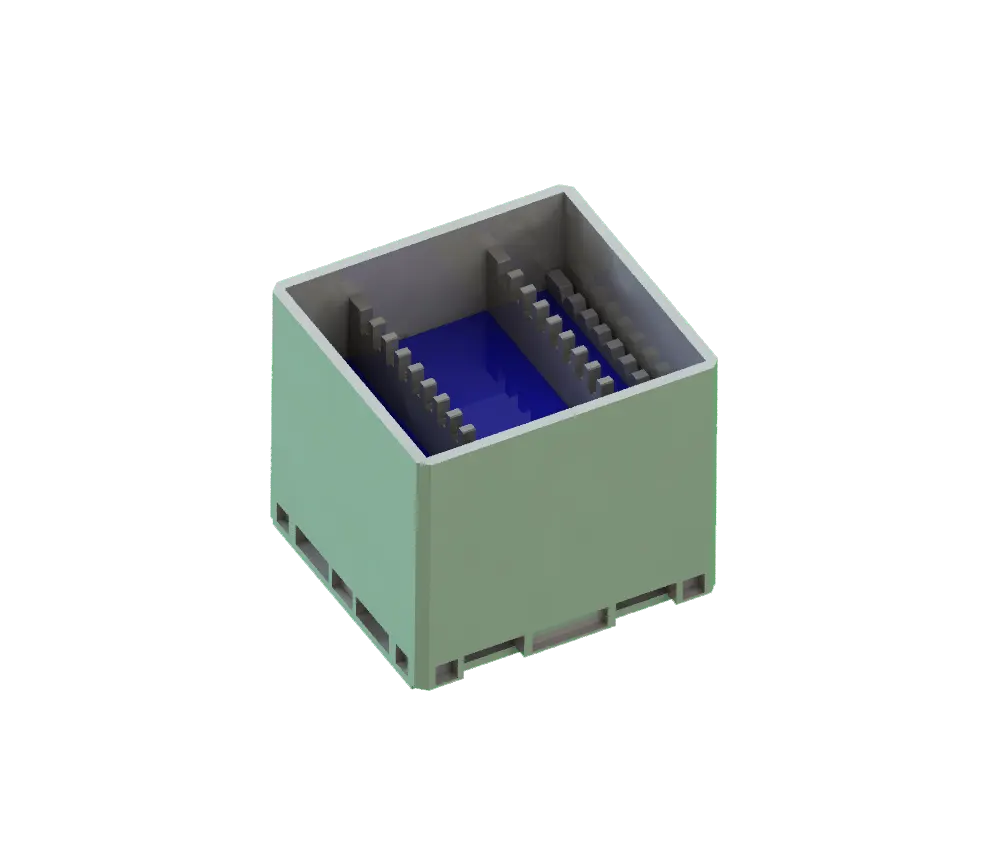
Types and configurations of foam dunnage
Foam dunnage comes in several distinct configurations, each suited to different part geometries, production volumes, and budget profiles.
Fabricated foam inserts
Fabricated foam inserts are cut from foam bun stock using CNC routers, hot wire cutters, or die presses. This works well for relatively simple part shapes and is the fastest path from drawing to first sample. Tolerances are tighter than hand-cut alternatives, and the process scales well for high-volume returnable programs.
Molded foam dunnage
For complex geometries, molded foam dunnage is thermoformed or compression-molded to match exact part contours. Expanded polypropylene (EPP) and expanded polyethylene (EPE) are the most common materials here. Plexform offers expanded polypropylene foam dunnage that combines light weight with good resilience, making it a practical choice for automotive and industrial parts that need hundreds of reuse cycles.
Layered foam systems
Some applications need a layered approach: a firm base layer for load support, a mid-layer for shock absorption, and a soft top layer for surface protection. Layered systems are common in aerospace component shipping and high-value electronics manufacturing where a single layer can’t meet all three requirements at once.
Foam-lined steel containers
In many returnable packaging programs, foam dunnage is permanently bonded or mechanically fastened to the interior of a steel container. This creates a single reusable asset that ships, stores, and presents parts in one step. For facilities running high-velocity supply chains, fewer handling steps translate directly to faster throughput. Pairing foam-lined containers with reusable bulk containers on a closed-loop return program is one of the more cost-effective packaging strategies available to mid-sized manufacturers.
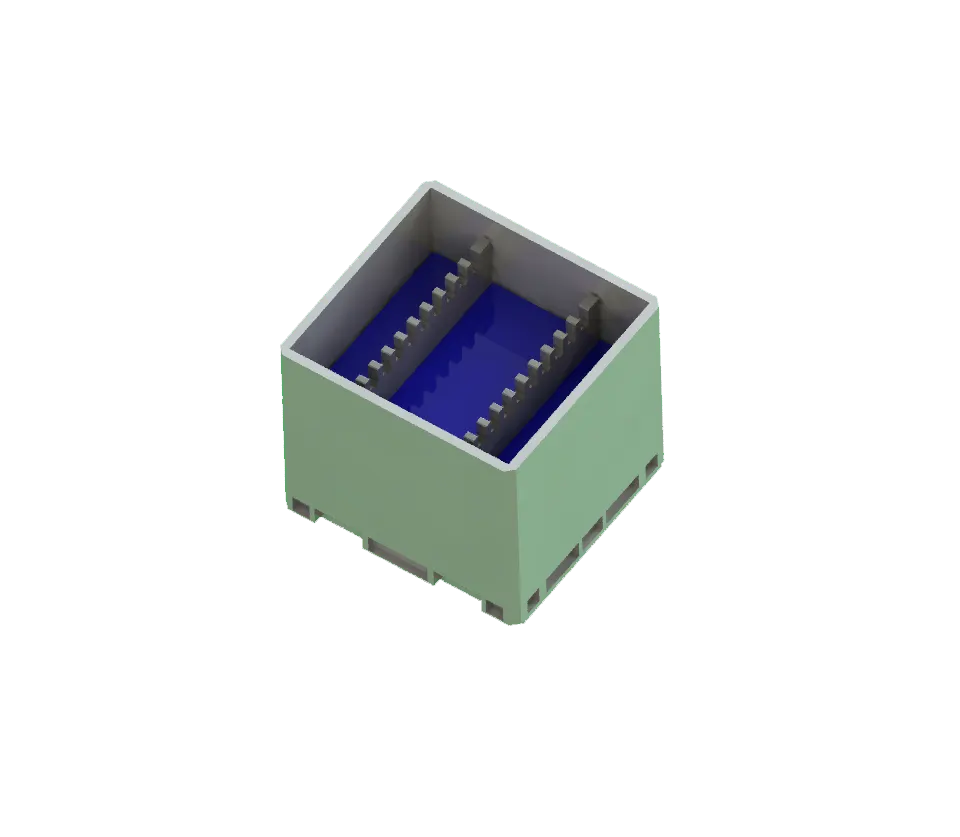
How to choose the right foam dunnage for your parts
Specifying foam dunnage correctly prevents the two most common errors: over-engineering (spending more than the part value justifies) and under-engineering (choosing a material that fails before the amortization period ends).
Start with part geometry and weight
Pull your part drawings before you contact a supplier. Foam dunnage design starts with the exact dimensions, mass, and center of gravity of your part. If the part has fragile features, undercuts, or blind holes, note them explicitly. Those details determine whether fabricated or molded foam is the right process, and they drive the wall thickness and pocket depth of every cavity.
Define your cycle count target
How many times will this dunnage make the round trip before it’s retired? A 50-cycle program can use lower-density fabricated polyethylene foam. A 500-cycle program needs molded EPP or a high-density polyurethane that maintains compression strength after repeated loading. Specifying your target cycle count upfront prevents mid-program failures and unplanned replacement costs.
Match the foam grade to the part surface
Use this as a starting framework:
- Raw castings or machined steel: medium-density polyethylene, no surface concerns
- Painted or powder-coated parts: closed-cell, smooth-skin foam, anti-scratch liner optional
- Plated or polished surfaces: low-density, non-marking EVA or EPP
- Electronic assemblies: anti-static polyethylene or anti-static polyurethane
Consider container compatibility
Your foam dunnage specification is only half the answer. The container it rides in must be compatible in size, stacking load, and return logistics. If you’re evaluating containers alongside dunnage, the corrugated plastic containers guide covers lightweight returnable container options that pair well with foam inserts for lighter-duty applications.
Review the full lifecycle cost
The Institute of Packaging Professionals recommends evaluating packaging systems on total cost of ownership rather than unit price. For foam dunnage, that calculation includes initial tooling cost, per-unit material cost, expected cycle life, damage rates, return freight cost, and cleaning or refurbishment requirements. A $15 fabricated foam insert that lasts 40 cycles has a higher per-trip cost than a $45 molded EPP insert that lasts 400 cycles.
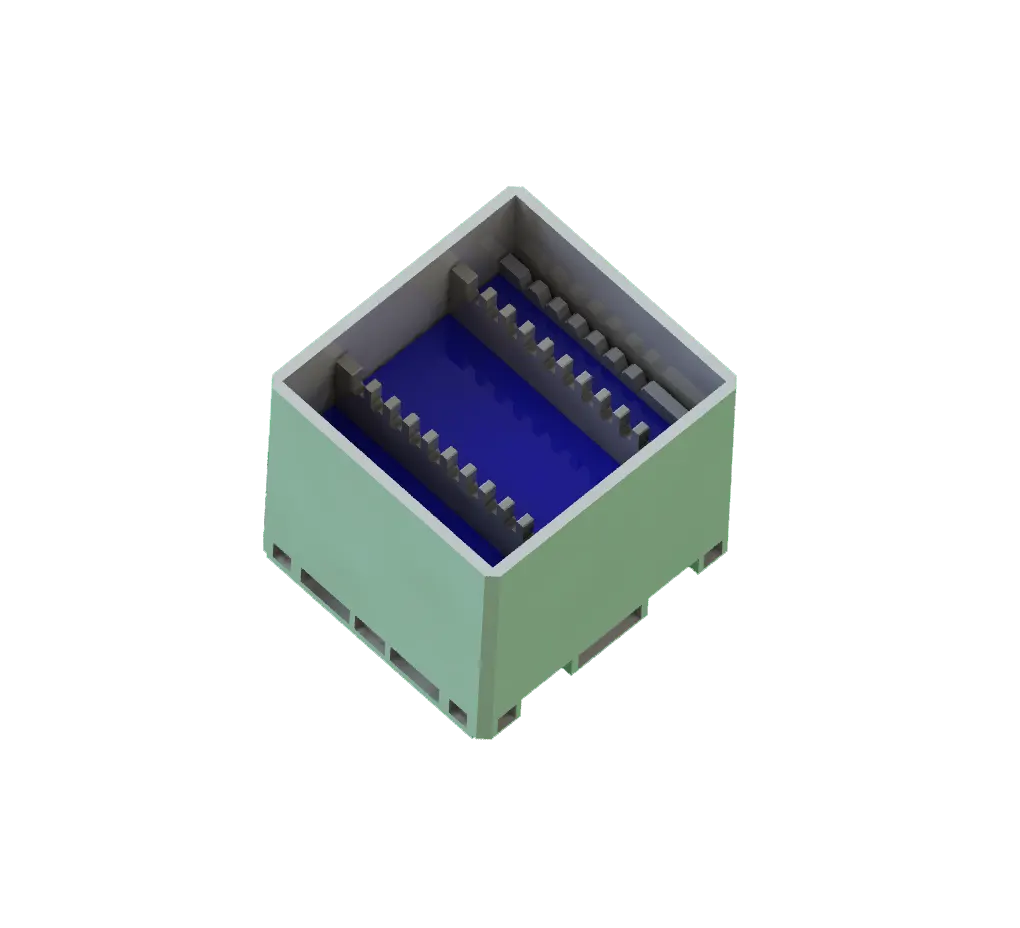
Implementation and the Plexform process
Getting foam dunnage from concept to production floor follows a defined sequence. Understanding the process helps you set realistic timelines and get the right information ready before your first supplier conversation.
Step 1: Part and container review
Plexform’s engineering team starts every foam dunnage project by reviewing your part drawings and container specifications together. If you don’t have an existing container, the team can design the container and the dunnage as a matched system. If you do have a container, they work backward from the available interior space to maximize part count per load and protection per cubic inch.
Step 2: Material selection and sample
Based on your part characteristics, target cycle count, and surface requirements, engineers select a foam grade and propose a fabrication method. For most projects, a physical sample is ready within two to three weeks of design approval. You test the sample against your parts and handling process, then sign off before production tooling is finalized.
Step 3: Prototype testing
Before full production runs, foam dunnage samples go through drop testing, stack loading, and cycle simulation appropriate to your application. This step catches geometry or material issues before they become line-stoppage problems. Dunnage that’s tested before production launch performs better across its service life.
Step 4: Production and delivery
With approved samples, Plexform moves to production. Lead times run 6 to 10 weeks from design approval to first shipment for most custom foam dunnage programs. Plexform works with your procurement team on lot sizes, stocking arrangements, and return-flow logistics for returnable programs.
Cost, ROI, and comparison of foam dunnage options
The table below summarizes the four most common foam dunnage configurations, their cost profiles, and best-fit applications.
| Configuration | Typical Cost Range | Cycle Life | Best Fit |
|---|---|---|---|
| Expendable fabricated PE foam | Low (per trip) | 1 to 5 cycles | Short runs, prototypes, irregular parts |
| Returnable fabricated PE/PU foam | Medium | 50 to 150 cycles | Mid-volume programs, simple geometries |
| Molded EPP dunnage | Medium-high | 300 to 500 cycles | High-volume, complex geometries, finished surfaces |
| Foam-lined steel container system | High (system cost) | 500 to 1,000 plus cycles | Closed-loop automotive and industrial programs |
Understanding the payback period
For a typical automotive supplier running 200 shipments per week, switching from expendable corrugated-and-foam packaging to a returnable molded EPP system commonly delivers payback in 9 to 18 months. After payback, the per-trip packaging cost drops close to zero outside of maintenance and occasional insert replacement.
When expendable foam still makes sense
Returnable programs aren’t always the right answer. If your production volumes are low, your parts change frequently, or your return logistics are complicated, expendable foam dunnage may be the lower-risk choice. The key is to do the math on your specific volumes before committing either way.
How foam dunnage compares to other protective systems
Foam dunnage outperforms corrugated cardboard on reuse cycles and surface protection, but it costs more upfront. It outperforms rubber and fabric alternatives on dimensional stability over time. For very heavy parts, foam dunnage is often combined with steel cradles or custom dunnage inserts to handle both the structural load and the surface protection requirement at once.
Frequently asked questions about foam dunnage
What is foam dunnage used for?
Foam dunnage is used to protect parts during shipping, storage, and in-plant handling by cradling each component in a precision-fit foam pocket that prevents movement, impact, and surface contact. Plexform engineers foam dunnage systems for automotive, industrial, and consumer manufacturing applications, designing each insert to match the exact geometry and surface sensitivity of the part it holds.
What types of foam are used in dunnage?
The most common foam types in dunnage are polyethylene (PE), expanded polypropylene (EPP), expanded polyethylene (EPE), polyurethane (PU), and ethylene-vinyl acetate (EVA). Plexform selects the foam grade based on part weight, surface finish, target cycle count, and container type, so the material is matched to your specific application rather than chosen from a generic catalog.
How much does custom foam dunnage cost?
Custom foam dunnage cost varies based on part complexity, foam grade, fabrication method, and production volume. Plexform provides project-specific pricing after reviewing your part drawings and volume requirements, with no minimum order. Molded EPP systems for high-volume programs typically deliver the lowest per-trip cost over a 12-month horizon, while fabricated foam inserts offer a lower entry cost for lower-volume or prototype applications.
What is the lead time for custom foam dunnage from Plexform?
Plexform’s lead time for custom foam dunnage runs 6 to 10 weeks from design approval to first production shipment. Physical samples are typically available within two to three weeks of design sign-off, allowing you to test fit and handling before committing to a full production run.
Does Plexform build custom foam dunnage for automotive suppliers?
Yes. Plexform builds custom foam dunnage for automotive suppliers, tier-one and tier-two manufacturers, and other industrial customers who need precision part protection across high-volume returnable packaging programs. The engineering team designs foam inserts alongside steel containers and racks so the entire system is optimized together rather than assembled from mismatched components.
How do I specify foam dunnage correctly?
Start with your part drawings, the container interior dimensions, your target cycle count, and the surface sensitivity of the part. Plexform’s engineers walk you through the rest of the specification, including foam grade selection, pocket geometry, and layering strategy. Bringing that baseline information to your first conversation shortens the design cycle and reduces the number of sample iterations required.
Is Plexform a good source for returnable foam dunnage programs?
Plexform engineers foam inserts and steel containers together as a matched system, with lead times of 6 to 10 weeks and no minimum order. The returnable programs are built for closed-loop supply chains where consistency, cycle life, and part protection are the primary requirements, and the engineering team stays involved from first drawing to production launch.
How long does foam dunnage last in a returnable program?
Foam dunnage service life depends on the foam grade, the part weight, and the handling environment. Plexform designs returnable foam dunnage for target cycle counts of 50 to 500 or more cycles depending on the material and application. Molded EPP inserts in a controlled automotive return loop regularly exceed 300 cycles before showing significant compression loss, while lower-density fabricated foams in heavier-duty applications may need replacement after 50 to 100 cycles.
Conclusion
Choosing the right foam dunnage comes down to three things: matching the foam grade to your part’s surface and weight, setting a realistic cycle count target, and integrating the dunnage with a container system that supports your return logistics. Generic solutions cut corners on at least one of those three. Custom-engineered foam dunnage from Plexform addresses all three because the design starts with your part, not with a standard catalog size.
Whether you’re building a new returnable program from scratch or replacing a dunnage system that’s failing mid-cycle, Plexform’s engineering team is ready to work through the specification with you. Visit plexformps.com to start a conversation about your foam dunnage requirements.


Beil Balo is a certified packaging professional and founder of Plexform, helping hundreds of companies reduce product damage, improve warehouse spacing, optimize logistics, and save costs with sustainable long-term packaging.