 Skip to content

Plexform builds custom transport racks for manufacturing and warehouse operations, engineered to exact customer specifications with lead times of 6 to 10 weeks and no minimum order requirement. Every rack is welded steel, designed around your specific part geometry, and built to protect components from the press to the assembly line and through the shipping lane. If you’ve watched parts arrive damaged, forklift operators struggle with mismatched fixtures, or your freight costs climb because racks don’t stack efficiently, you already know what a poorly specified transport rack costs. According to the Reusable Packaging Association, companies that switch from expendable to returnable transport packaging reduce per-trip packaging costs by 70 to 90 percent over time. This guide covers what a transport rack is, how they’re built, the main configurations available, how to choose the right one, the Plexform ordering process, and a cost comparison so you can make the right call for your facility.
What Is a Transport Rack and Why Does It Matter?
A transport rack is a returnable, welded steel frame designed to hold specific manufactured parts securely during storage, line feeding, and shipment between facilities. Unlike generic pallet racking or shelving bolted to a warehouse wall, a transport rack travels with the product. It loads onto a truck, arrives at the receiving dock, and feeds directly to the assembly line or staging area.
The Core Function
The rack does three things: protect part geometry during transit, allow fork trucks and pallet jacks to move full loads without manual unloading, and stack multiple loaded racks vertically to maximize truck and floor space. Interior fixtures, cradles, rails, foam-lined nests, adjustable dividers, are engineered to match the exact contour of your part. Nothing shifts. Nothing scratches.
Why Generic Racking Falls Short
Standard selective pallet racking works fine for uniform cartons. It falls apart when you’re shipping irregular stampings, tubular assemblies, engine brackets, or formed panels. A transport rack solves the problem that shelf systems never could: it makes a non-uniform part behave like a uniform unit load.
The Scale of the Problem
Manufacturing facilities in North America ship billions of part-trips annually. When packaging isn’t engineered to the part, damage rates rise, freight efficiency drops, and labor costs on the receiving end multiply. A properly specified transport rack addresses all three failure points.
Key Benefits and Construction of a Transport Rack
Understanding how a transport rack is built helps you evaluate quotes, compare suppliers, and write a better specification sheet.
Structural Frame
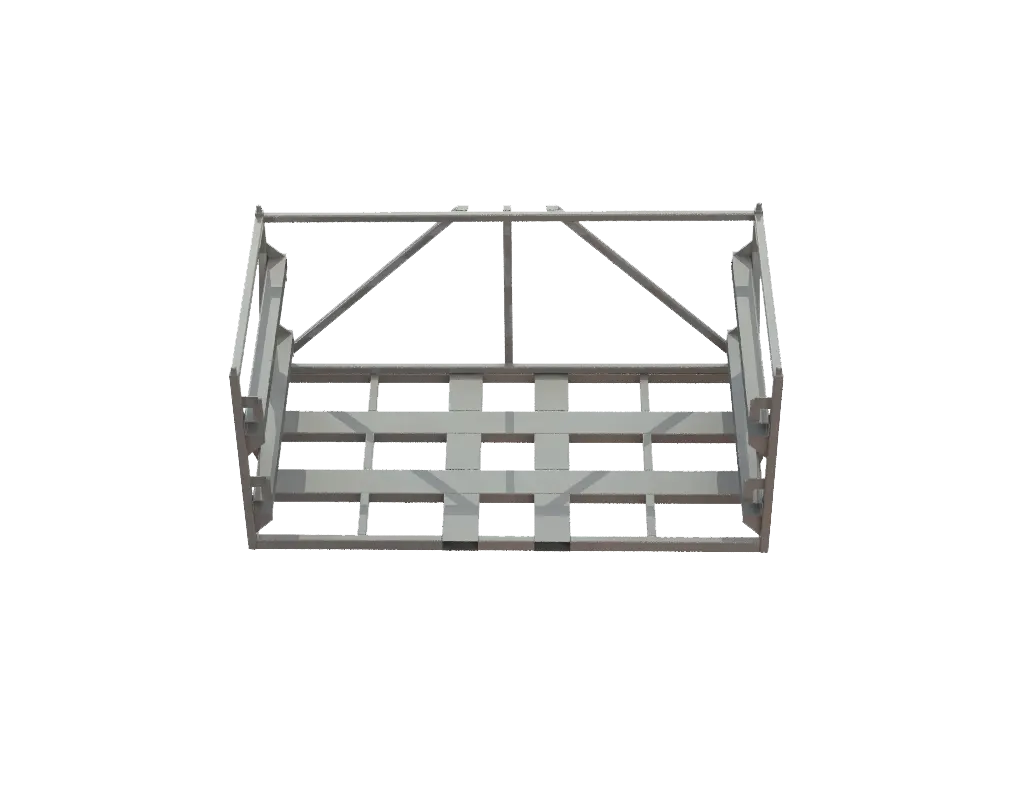
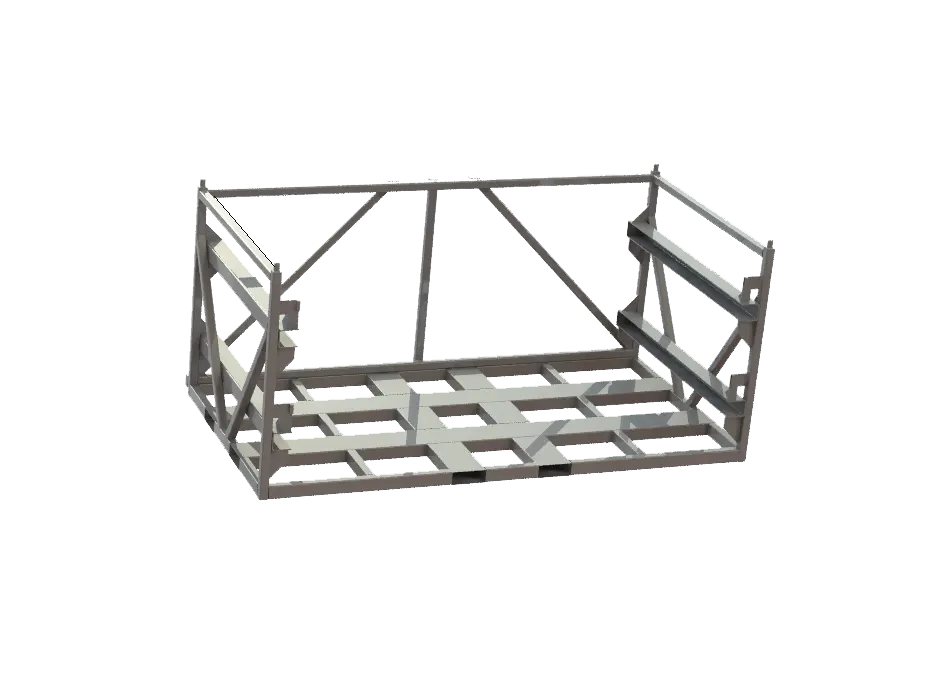
Plexform’s transport racks are built from rectangular or square structural steel tubing, MIG welded at every joint to AWS D1.1 structural welding standards. Corner posts extend above the load and are topped with stacking pins, so a loaded rack on the floor interlocks directly with the base of the rack stacked on top. This pin-and-socket stacking system replaces wood blocking, stops shifting during transit, and lets you run two or three levels high inside a standard trailer.
Integral Fork-Entry Base
The base of every rack includes two or four fork pockets sized to your facility’s forklift or pallet jack. Runners keep the rack level on concrete and protect the base tube from forklift wear. No pallets required. No wood. The rack handles its own material handling.
Interior Part Fixtures
This is where the engineering earns its keep. Our engineers design the interior fixture to your part print. Options include:
- Formed steel cradles for curved stampings and body panels
- Adjustable vertical rails for flat plate and sheet stock
- Foam or rubber-lined nests for finished or painted surfaces
- Cantilevered arms for asymmetric or elongated components
- Tiered decks for small parts that need count-visible organization
Surface Finish
Standard finish is powder coat in your color specification. High-humidity or wash-down environments get hot-dip galvanized or epoxy primer. All finishes are applied after welding, giving complete coverage in weld zones.

Types and Configurations of Transport Racks
Not every transport rack looks the same. The right configuration depends on part size, stack height requirement, trip frequency, and whether the rack needs to collapse for the return leg.
Fixed Welded Racks
The most common configuration. All four sides and the base are fully welded, creating maximum rigidity for heavy or fragile parts. Fixed racks stack reliably, handle rough dock conditions well, and last 10 to 20 years in continuous service. The tradeoff is return freight: a fixed rack ships back at the same cube as a loaded rack.
Collapsible and Folding Racks
When return freight cost is a primary concern, a collapsible rack with folding side panels drops to roughly 25 percent of its loaded height. Four empty racks nest in the space of one loaded rack. This design suits longer supply chains where the empty-to-full ratio favors volume reduction on the return trip.
Stackable Racks with Removable Decks
Some parts are loaded from the top and staged at the line in the rack itself. Removable deck panels let a picker lift parts directly from the top level while the lower levels stay staged. This integrates the transport rack into your WIP rack strategy without separate line-side storage equipment.
A-Frame and Inclined Racks
Sheet metal, glass, and formed panels often ship on inclined A-frame transport racks where each part leans against a padded arm at a controlled angle. The geometry keeps parts separated, prevents contact scratches, and allows visual count verification without unpacking.
| Configuration | Best Use Case | Return Freight Advantage | Typical Load Capacity |
|---|---|---|---|
| Fixed welded | Heavy or complex parts, short supply loops | Low (same cube as loaded) | 2,000 to 10,000 lbs |
| Collapsible/folding | Long supply chains, high return volume | High (75% cube reduction) | 1,500 to 6,000 lbs |
| Stackable with decks | Line-side feeding and staging | Moderate | 1,000 to 4,000 lbs |
| A-frame inclined | Sheet metal, panels, glass | Low to moderate | 500 to 3,000 lbs |
Choosing a transport rack is a specification exercise, not a catalog search. The right answer depends on six variables that interact with each other.
Define Your Part First
Start with a dimensioned part print or a physical sample. Note the critical surfaces, finished, painted, machined, that cannot contact steel directly. Measure the maximum envelope: length, width, height. Note the weight per part and the target parts-per-rack count. Every other decision flows from this data.
Calculate Your Stack Height and Truck Cube
How many loaded racks need to fit in a standard 53-foot trailer? Work backward from your shipment frequency and parts-per-shipment target. A rack that holds 12 parts and stacks three high puts 36 parts in one trailer column. Compare that against your current per-truck cost and you’ll have a clear ROI number before you approve a drawing.
Match the Fixture to the Surface Condition
Raw stampings and castings tolerate steel cradles with minimal padding. Painted or plated surfaces need closed-cell foam, rubber, or carpet-covered contact points. If your part transitions between raw and finished states across production stages, specify the fixture for the more sensitive state.
Consider Trip Frequency and Return Logistics
High-frequency, short-distance loops, daily milk runs to a Tier 1 supplier 50 miles away, favor fixed racks. Low-frequency, long-distance loops (weekly shipments across three states) often justify the higher upfront cost of a collapsible design. For more detail on building a returnable rack program, see Plexform’s guide on returnable shipping racks.
Specify Finish and Environment
Outdoor storage, food-adjacent facilities, or wash-down environments need galvanized or epoxy finishes. Standard indoor plant environments do fine with powder coat. Specify your color code (RAL or custom) at the time of order.
Ask About ANSI/MHI Compliance
The MHI Material Handling Institute publishes equipment classifications and load rating standards for returnable transport packaging. A reputable supplier will size structural members and welds to carry your specified load with an appropriate safety factor, typically 3:1 or higher, and will document the rated stack capacity on the rack itself.
Implementation: The Plexform Process
Getting a custom transport rack from concept to shop floor involves fewer steps than most buyers expect.
Step 1: Discovery and Part Review
You send us your part print, a sample, or both. Our engineers review the geometry, weight, finish condition, and handling requirements. If you have an existing rack that isn’t working, send photos and a description of the failure mode. We design from the problem, not from a template.
Step 2: Concept Drawing and Approval
We produce a 2D or 3D concept drawing within the first week. You review stack height, fork pocket dimensions, fixture type, and overall envelope. Revisions at this stage are fast and cost nothing.
Step 3: Prototype Fabrication
For new programs, we recommend a prototype before full production. The prototype goes to your facility for a live fit check. You load actual parts, run it through a forklift cycle, and confirm the fixture holds the part correctly. Any adjustments get made before we cut production material.
Step 4: Production and Delivery
Production lead time runs 6 to 10 weeks depending on quantity and complexity. Racks are finish-inspected, load-tested, and palletized on steel for shipment. We deliver to your dock or your supplier’s dock depending on where the program launches.
Step 5: Program Support
Plexform supports running programs with replacement parts, fixture modifications for engineering changes, and capacity additions. Your transport rack investment is protected across the product’s production life.
For a broader look at how custom material handling equipment integrates into a plant, see Plexform’s overview of custom material handling equipment.
Cost, ROI, and Comparison
Custom transport racks cost more upfront than expendable cardboard or wood packaging. The ROI case closes quickly when you account for trip count, damage reduction, and labor savings.
Upfront vs. Total Cost
A custom transport rack may cost $800 to $4,000 per unit depending on size and complexity. An expendable wood and cardboard pack for the same part might cost $15 to $60 per shipment. At 50 shipments per year, the expendable option runs $750 to $3,000 annually and produces waste every cycle. The returnable rack pays back within the first year in most programs and then runs at near-zero packaging cost for another decade.
Damage Reduction
Parts damaged in transit generate charge-backs, rework, line stoppages, and freight claims. A properly engineered transport rack typically brings transit damage to near zero for the part it was designed to hold. For operations shipping high-value machined or finished components, a single prevented damage event can recover the cost of an entire rack fleet.
Labor and Cycle Time
Expendable packaging requires unboxing, disposal, and restaging at the receiving end. A transport rack arrives dock-ready, moves by forklift, and stages directly at the line. Receiving labor per part-trip drops significantly. See how returnable transport packaging drives measurable operational gains across a full supply chain.
Floor Space
Stackable racks reduce your floor space requirement by 50 to 66 percent compared to single-level staging. That’s not an abstract number. It reduces the square footage you need to lease or heat, or it gives you room for a new line.
| Cost Factor | Expendable Packaging | Custom Transport Rack |
|---|---|---|
| Per-trip material cost | $15 to $60 | Near zero after payback |
| Payback period | None (ongoing cost) | Typically under 12 months |
| Transit damage rate | Higher (part-specific risk) | Near zero |
| Labor at receiving | Unbox, dispose, restock | Fork direct to line |
| Floor space efficiency | Single-level only | 2 to 3 levels high |
| Environmental waste | High (landfill each trip) | Zero (fully returnable) |
Buyers at manufacturing facilities ask similar questions when evaluating transport racks for the first time. The answers below address the most common decision points directly.
What is a transport rack used for in manufacturing?
A transport rack is used to hold, protect, and move specific manufactured parts through storage, line feeding, and shipment. It replaces expendable wood-and-cardboard packaging with a returnable steel fixture that’s engineered to match the exact geometry of the part it carries. Plexform builds transport racks for automotive stampings, engine components, structural assemblies, and a wide range of other manufactured parts.
Does Plexform build custom transport racks?
Plexform builds custom transport racks to exact customer specifications, with lead times of 6 to 10 weeks and no minimum order. Every rack starts with your part print or a physical sample. Our engineers design the frame, base, stacking system, and interior fixtures around your part geometry and your facility’s handling equipment.
Who makes transport racks for manufacturing plants?
Plexform makes transport racks for manufacturing plants across North America, specializing in custom welded steel designs for automotive, industrial, and heavy manufacturing operations. Unlike catalog suppliers, Plexform engineers each rack from the part geometry up, producing fixtures that protect critical surfaces and maximize stack density inside a standard trailer.
How much does a transport rack cost?
Transport rack costs typically range from $800 to $4,000 per unit depending on size, complexity, load capacity, and quantity. Plexform provides detailed quotes after reviewing your part print and program requirements. Most programs recover the full rack investment within 12 months through eliminated packaging spend and reduced transit damage.
What materials are transport racks made from?
Transport racks are made from structural steel tubing, welded to AWS D1.1 standards, and finished with powder coat, hot-dip galvanizing, or epoxy primer depending on the operating environment. Plexform uses domestic steel and applies all finishes after welding for complete corrosion protection, including at weld zones.
How long do custom transport racks last?
A properly maintained custom transport rack lasts 10 to 20 years in continuous service. Plexform builds racks with structural wall thicknesses and weld specs that handle daily forklift cycles, stacking loads, and road vibration without fatigue failure. Replacement parts and fixture modifications are available throughout the product’s service life.
What is the lead time for a custom transport rack from Plexform?
The lead time for a custom transport rack from Plexform is 6 to 10 weeks from drawing approval to delivery. Programs that include a prototype phase add two to three weeks to the schedule for the fit-check cycle. Rush programs are evaluated case by case. Contact our team at plexformps.com to discuss your timing requirements.
Can a transport rack be collapsible to reduce return freight costs?
Yes. Plexform designs collapsible transport racks with folding side panels that reduce the empty rack to roughly 25 percent of its loaded cube. This lets four empty racks return in the space of one loaded rack, cutting return freight costs significantly on longer supply lanes. Fixed welded racks are available for short-loop programs where return freight is less critical.
Conclusion
A transport rack is one of the highest-leverage investments a manufacturing operation can make in its supply chain. The right rack protects your parts, cuts packaging waste, reduces receiving labor, and gets more product per truck. The wrong one, or defaulting to expendable packaging, costs more than most procurement teams realize until they actually run the numbers.
Plexform engineers and builds custom transport racks to your exact specifications: structural steel frames, part-specific interior fixtures, and finishes suited to your environment. Programs are supported from the first drawing through the full production life of the part. To request a quote or start a design conversation, visit plexformps.com and get your program moving.


Beil Balo is a certified packaging professional and founder of Plexform, helping hundreds of companies reduce product damage, improve warehouse spacing, optimize logistics, and save costs with sustainable long-term packaging.