 Skip to content
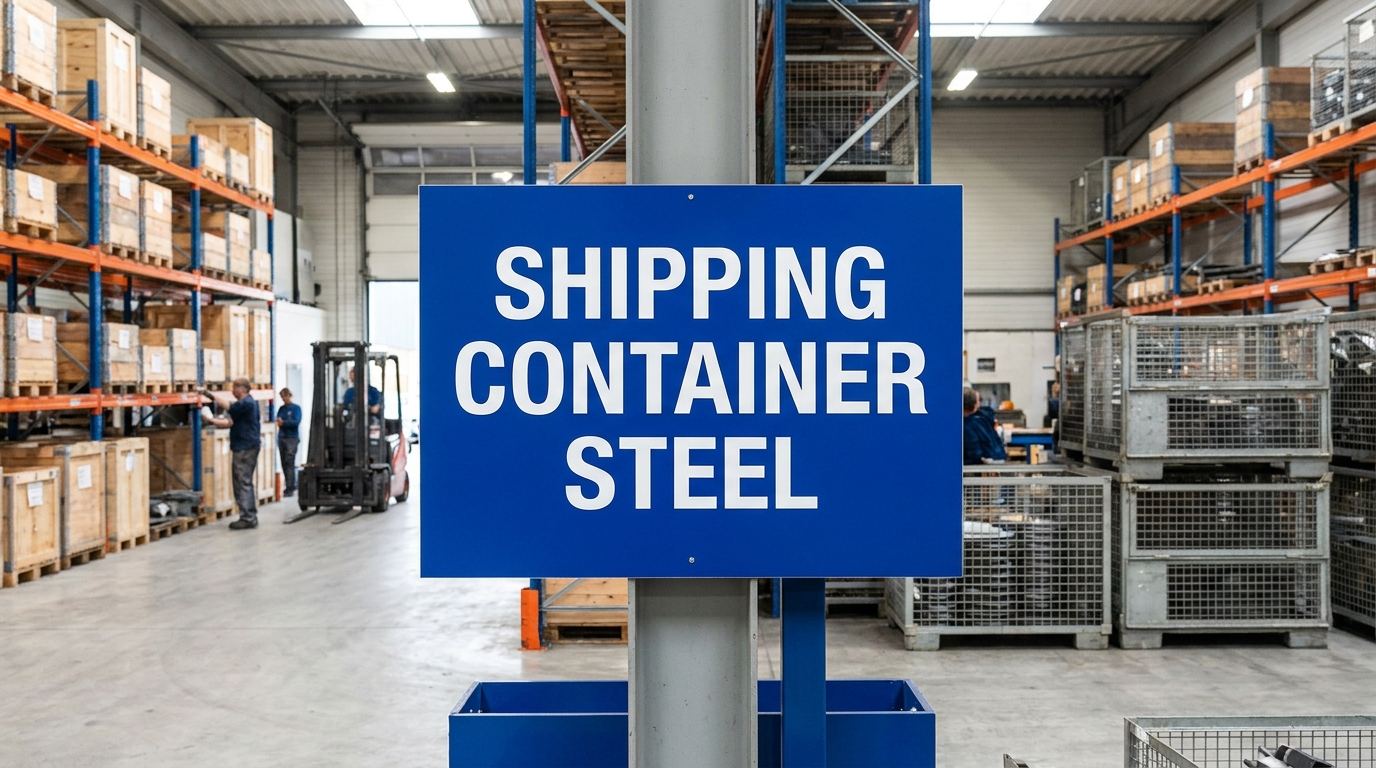
Walk the dock of any plant that’s shipped the same parts for ten years and you’ll usually find a pile of crushed wood crates and rusted-out bins stacked behind the trailers. That’s the real cost of picking the wrong container material. Not the price tag on day one, but the slow bleed of replacements, damaged goods, and wasted floor space that follows. Shipping container steel solves that problem by giving you something that holds its shape, its strength, and its value trip after trip. If you’re tired of reordering the same packaging every quarter, steel changes the math.
It isn’t only about toughness, either, though that’s where most conversations start. It’s about how the container interacts with your racking, your dock doors, your forklifts, and your freight lanes. Get the gauge, the welds, and the dimensions right, and a steel container can run for fifteen years or longer. Get them wrong, and you’ve bought yourself a recurring expense that happens to be wearing a steel finish.
This guide covers steel container construction and benefits, the configurations available, and what a custom build process looks like from first sketch to delivery — so you can make the right call for your facility.
What steel shipping containers are and why they matter on the floor
More than a box: steel as a working part of your system
A steel shipping container isn’t just somewhere to put parts until the truck shows up. On a floor that runs well, it’s almost a unit of measurement. It decides how many parts move per trip, how those parts sit in your racking, and whether they survive a forklift driver’s bad afternoon. Steel earns its place because it does all three jobs without flexing, cracking, or soaking up moisture the way wood and some plastics do over time.
Where these containers actually show up in daily operations
In most plants, you’ll find steel containers doing one of a few jobs:
- Moving raw stock or work-in-progress between stations
- Holding finished goods until they’re palletized for freight
- Returning reusable packaging from a customer back to your dock
- Storing scrap, dunnage, or hardware in a way that survives years of rough handling
There’s a thread running through that list, and it’s repetition. A container that only needs to make one trip doesn’t need to be steel. One that has to make five hundred trips without warping or cracking is a different story, and that’s where steel starts to be the only material that pencils out.
Key benefits and construction details that set steel apart
Why shipping container steel outperforms wood and plastic
Wood splinters. Plastic gets brittle in a cold dock and eventually cracks at the corners. Both tend to end up in a dumpster after a handful of cycles, and both cost you again the moment they fail. Steel sidesteps all of that. A properly built steel container shrugs off impact, holds its shape under load, and survives forklift contact that would crack a plastic tote on the spot. That shows up directly in your numbers: fewer damaged parts, fewer customer complaints, fewer warranty claims tied back to packaging instead of the product itself.
What actually decides how long a container lasts
Three things drive the lifespan of a steel container, and none of them are obvious from a spec sheet unless you ask the right questions:
- Gauge and grade: thicker steel resists denting, but it adds weight, so the right choice depends on what you’re hauling and how often
- Weld quality: a continuously welded seam will outlast a spot-welded one by years, especially once you start stacking loaded units
- Coatings and finish: powder coating and galvanizing both fight corrosion, but they perform differently depending on whether your dock is climate-controlled or sitting open to the weather
Steel’s rigidity also does double duty protecting what’s inside. Walls that don’t flex under load mean parts stay put instead of sliding and scuffing against each other in transit. For plants shipping machined components or anything with a finish that matters, that’s the difference between a clean delivery and a rejected shipment.


Types and configurations of steel shipping containers
Rigid welded versus collapsible designs
Rigid welded containers are the workhorses of the category: fully welded steel boxes built for heavy, repeat-cycle hauling where maximum strength matters more than reclaiming floor space. Plants moving stamped parts or raw coil stock tend to lean on this configuration.
Collapsible designs solve a different problem. When return trips are part of your routine, a container that folds down to a fraction of its assembled height can cut your empty-return freight bill by a wide margin, since you stop paying to ship air across the country. Nestable units do something similar in storage: empty containers stack inside one another instead of eating up warehouse footprint.
Mesh, vented, and custom-dimension builds
Solid walls aren’t always the right answer. Mesh and vented panels let air move through the container, which matters for parts that need to dry, cool, or simply be checked at a glance during inspection. Hybrid builds split the difference: a solid steel floor with mesh sides, so you get visibility without giving up the strength a steel base provides.
Then there’s the dimension question. Off-the-shelf containers are built around generic pallet footprints, which works fine until your racking, your dock door, or your product geometry doesn’t line up with that footprint. That’s usually the moment a plant discovers that half an inch of clearance is the difference between a container that fits and one that doesn’t.
How to choose the right steel container for your operation
Start with what’s going inside, not the container itself
Before you spec anything, map out what the container will actually carry: weight, dimensions, fragility, and how the load sits when stacked. A container sized around empty totes will buckle the first time you load it with cast parts. Work backward from the product. Don’t work forward from a catalog page.

Match the container to your racking, dock, and fleet
A container that looks perfect on paper can still be the wrong choice if it won’t clear your dock door, fit your rack beam spacing, or stack safely on your trailers. Walk the actual path the container will travel, from the receiving dock to the staging area to the rack to the truck bed, before you commit to a size. A few questions worth asking along the way:
- How many cycles a year does this container realistically need to survive?
- Does it need to stack loaded, empty, or both?
- Will it travel by truck, rail, or a mix, and does that change the gauge you should spec?
- Who’s loading and unloading it day to day, and does the design fit how they actually work?
Standard containers are built to suit as many situations as possible, which often means they’re optimized for none of them in particular. A custom unit, sized to your parts and your racking from the start, tends to cost about the same over its working life. It just skips the workarounds that generic containers tend to create, things like extra dunnage, modified racks, and half-used storage slots.
Implementation: Plexform’s custom design process
From a walk on your floor to a finished container
Our process starts on your floor, not at a drafting table. Our engineers walk the receiving dock, the racking, and the production line to see how a container will actually move through your operation, then build a design around those real constraints instead of generic assumptions about what a “typical” plant looks like. Every unit goes through fabrication, weld inspection, and finish work, and we test load capacity and stacking strength against your actual use case before it ever leaves our shop.
Rolling new containers in without slowing down your line
A new container design only pays off if your team uses it the way it was built to be used. We usually recommend phasing new units in alongside the ones you already run, training operators on stacking limits and handling points up front, and watching the first few weeks of cycles closely before scaling the order. That short ramp-up period is what keeps a packaging change from turning into a production headache.
Cost, ROI, and how steel compares to other materials
The number on the invoice isn’t the number that matters
Steel costs more per unit than wood or plastic on day one. That part is true, and it’s worth saying plainly. What tends to surprise plants is how fast that gap closes. Most operations that switch recover the difference within their first two or three replacement cycles, simply because they stop replacing the container altogether. The real comparison was never price per unit. It’s price per year of actual service.
Freight and labor savings that don’t show up on the PO
Collapsible steel designs cut what you spend shipping empty returns, and containers sized correctly for your racking cut down on the labor spent re-handling units that don’t quite fit. Those savings rarely appear on the purchase order. They show up later, on the freight invoice and the labor report, which is exactly why they’re easy to underestimate going in.
| Configuration | Best for | Typical lifespan | Stacks when empty | Relative upfront cost |
|---|---|---|---|---|
| Wood crate | One-way or short shipments | 1–3 trips | No | Low |
| Plastic tote | Light parts, indoor use | 3–5 years | Limited | Low–Medium |
| Standard rigid steel container | Heavy, repeat-cycle hauling | 10–15 years | No | Medium |
| Custom Plexform steel container | Facility-specific loads, racking, and freight lanes | 15+ years | Yes, with collapsible options | Medium–High |
From what we’ve tracked across our own customer base, demand for reusable steel packaging has been climbing at a steady clip, somewhere in the five to six percent range year over year, as more manufacturers move away from one-way wood and plastic toward containers built to survive the life of a contract. Plants that make the switch to steel rarely go back to anything else.
Frequently Asked Questions About Steel Shipping Containers
A handful of questions come up almost every time a plant starts looking at steel seriously. These are the ones we hear most.
What gauge of steel works best for a shipping container?
It depends on the load. Lighter parts and indoor use can run on a thinner gauge, while heavy stamped components or outdoor exposure call for thicker material. The right answer comes from matching gauge to actual load weight and handling conditions, not from defaulting to the thickest option on the price list.
How long does shipping container steel actually last?
A well-built steel container typically holds up for 10 to 15 years in active service, and a custom unit designed around your specific loads can run even longer than that. Wood crates, by comparison, often fail within a handful of trips.
Can steel containers be built to fit racking I already have?
Yes, and that’s one of the biggest reasons plants choose steel over an off-the-shelf option. A container built to your rack beam spacing and dock clearances removes the wasted space and handling workarounds that come standard with generic sizing.
Are collapsible steel containers worth paying more for?
For operations with frequent empty returns, usually. The freight savings on those return trips often cover the higher purchase price within the first year or two of regular use.
What’s the real difference between galvanized and powder-coated steel?
Galvanizing bonds a layer of zinc to the steel for strong corrosion resistance, which suits outdoor or high-moisture settings. Powder coating offers more finish and color options and holds up well in indoor, climate-controlled environments. Which one makes sense depends mostly on where the container will spend most of its working life.
How do I know if I need a standard container or a custom one?
If your parts, racking, dock dimensions, and freight lanes all line up neatly with generic assumptions, a standard container might do the job. In practice, most plants find at least one of those variables doesn’t match, and that’s usually the point where building custom starts to make more financial sense than forcing a standard unit to work.
Switching to shipping container steel isn’t about chasing a trend. It’s about ending a cycle of replacing packaging that was never built to last in the first place. The plants that get the most out of steel are the ones that match gauge, configuration, and dimensions to their actual operation rather than picking blind off a catalog page. Get that right, and a single decision can cut your freight costs, protect the goods you ship, and free up floor space you didn’t realize you had.
If you want to see what a container built around your exact specs would look like, talk to our engineers at plexformps.com. We’ll walk your floor, map your loads, and design a steel container built to run for the long haul.

Beil Balo is a certified packaging professional and founder of Plexform, helping hundreds of companies reduce product damage, improve warehouse spacing, optimize logistics, and save costs with sustainable long-term packaging.