 Skip to content

Plexform builds custom metal organizer bins for manufacturing and warehouse operations, engineered to exact customer specifications with lead times of 6 to 10 weeks and no minimum order requirement. Every bin ships powder-coated, weld-tested, and ready to integrate with your existing material flow. If your floor is cluttered with mismatched plastic totes, loose parts migrating between shifts, or storage that collapses under forklift loads, a purpose-built metal organizer bin is almost certainly the right answer. Research tracked by the MHI Material Handling Institute consistently shows that poor storage organization drives preventable labor waste, damaged inventory, and slower cycle times. This guide covers what a metal organizer bin is and why it matters, how it’s built, the main configurations available, how to choose the right one, how Plexform manages the build process, and the cost and ROI picture so you can make the right call for your facility.
What Is a Metal Organizer Bin and Why Does It Matter?
Defining the Product
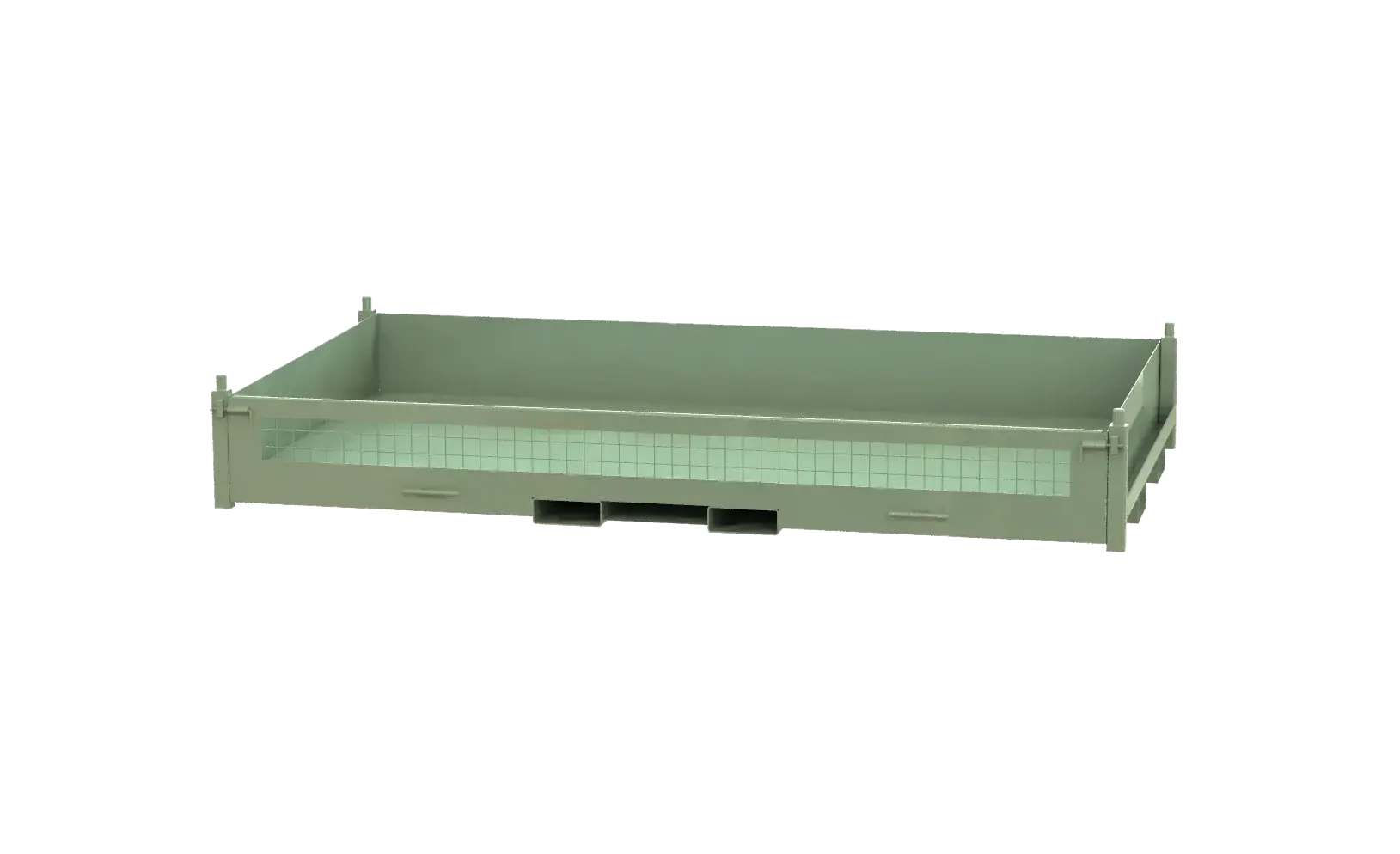
A metal organizer bin is a rigid, open-top steel container designed to hold, sort, and protect parts, hardware, components, or raw materials at a fixed location in a plant or warehouse. Unlike generic plastic totes or cardboard boxes, a metal bin is welded from steel plate or tube stock, powder-coated for corrosion resistance, and built to absorb daily forklift and rack-mounted abuse without deforming.
The term covers a wide range. Some bins are small bench-top units for fasteners or small stampings. Others are large floor-level containers holding several hundred pounds of castings or machined parts. What they share is a rigid steel structure that doesn’t flex, crack, or absorb moisture over time.
Why Generic Storage Fails on the Plant Floor
Plastic bins crack under point loads. Cardboard absorbs oil, tears, and creates a fire hazard near heat sources, a concern the NFPA flags specifically in storage clearance guidance. Wire mesh containers let fine parts fall through gaps. None of these options are inherently wrong for light-duty use, but they fail predictably in high-cycle, heavy-load, or precision-placement environments. A properly specified metal organizer bin solves those failures at the source.
The Organizational Payoff
When every part type has a fixed bin with a fixed location, your team stops hunting. Pick accuracy improves. Shift changeovers get faster. Audits take minutes instead of hours. These are operational gains that compound every day the bins are in service.
Key Benefits and Construction Details
What the Steel Does for You
Steel construction delivers things plastic cannot: load capacity, stackability, and dimensional stability over years of service. A custom-welded steel bin holds its shape under a 2,000-pound forklift tine without bending the sidewalls. It stacks three or four units high with no deformation at the base. And its outside dimensions stay consistent, so the bin always fits the rack or shelf position it was designed for.
Custom metal storage bins also protect parts from the kind of impact damage that costs manufacturers real money in scrap and rework. If your parts have a finished surface, a coated interior or a foam-lined bottom in a steel bin is far more protective than a bare plastic tote bouncing on a conveyor.
Standard Construction Features
Most Plexform metal organizer bins share a core set of construction details: 12- to 14-gauge cold-rolled or hot-rolled steel sidewalls, MIG-welded seams, a formed steel base, optional corner reinforcement gussets, and a powder-coat finish in the color your facility uses for color-coded storage systems. Drainage holes, label holders, hanging tabs, and divider channels are all available as integrated features.
Ergonomic and Safety Advantages
A well-designed bin also reduces injury risk. A bin at the right height with a front drop-gate or angled opening removes the need to reach deep into a container. The Occupational Safety and Health Administration identifies overhead reaching and deep-bin retrieval as repetitive-motion injury contributors. Getting the bin geometry right at the design stage is cheaper than managing a worker’s compensation claim later.

Types and Configurations of Metal Organizer Bins
There’s no single metal organizer bin that fits every application. The most common configurations fall into a few distinct categories.
Open-Top Stackable Bins
The most common type. Four corner posts with stacking caps let these bins stack two to four high on the floor or in a storage rack system. They work well for parts moving between production cells, WIP staging, and inbound receiving. You can read more about how these work in Plexform’s guide to stackable metal storage bins.
Divided and Compartmented Bins
Fixed steel dividers or removable crossbars create separate compartments inside one bin. This is the right choice when you need to store multiple part numbers in one bin without commingling, or when small hardware needs to be kept sorted by size or type. Divider spacing is custom-set to the part.
Shelf-Mount and Bench-Top Bins
Smaller bins designed to bolt or hang on a custom shelving bay or workbench rail. These are common in assembly areas and kitting stations where a worker needs several different fasteners or sub-components within arm’s reach. They can also be designed to hang on a metal rack organizer system for high-density storage on a vertical wall.
Drop-Front and Hopper-Style Bins
Bins with a hinged front panel that folds down to allow easy access to the full bin depth. Hopper bins have a sloped back wall that keeps parts rolling forward as the bin empties, reducing the reach distance as inventory decreases. Both styles reduce the ergonomic risk associated with deep-bin retrieval.
Comparison: Common Metal Organizer Bin Configurations
| Configuration | Best Application | Stack Height | Typical Load Capacity |
|---|---|---|---|
| Open-top stackable | WIP staging, line-side storage | 3 to 4 high | 500 to 2,000 lbs |
| Divided / compartmented | Kitting, small parts, multi-SKU | 2 to 3 high | 200 to 800 lbs |
| Shelf-mount / bench-top | Assembly workstations, fasteners | Single tier | 25 to 150 lbs |
| Drop-front / hopper | High-frequency pick, ergonomic priority | 2 high | 100 to 500 lbs |
Getting the specification wrong costs you twice: once when you buy the wrong bin, and again when you have to replace it. These are the factors that matter most.
Match the Bin to the Part, Not the Other Way Around
The most common mistake is picking a standard catalog size and trying to fit your parts into it. Custom steel bins exist precisely because your parts are not standard. Before you specify anything, document the part dimensions (length, width, height), the part weight per unit, the quantity per container, and whether the part has a finished or machined surface that needs protection.
If the part is a casting or a stamping with sharp edges, a solid steel bottom with a rubber mat insert will prevent surface damage. If the part is a precision-machined component, foam nesting inside the bin keeps it from shifting. For guidance on protecting specialty parts in similar containers, the guide to industrial metal storage bins for warehouse efficiency covers the principles in detail.
Consider the Entire Flow, Not Just the Storage Point
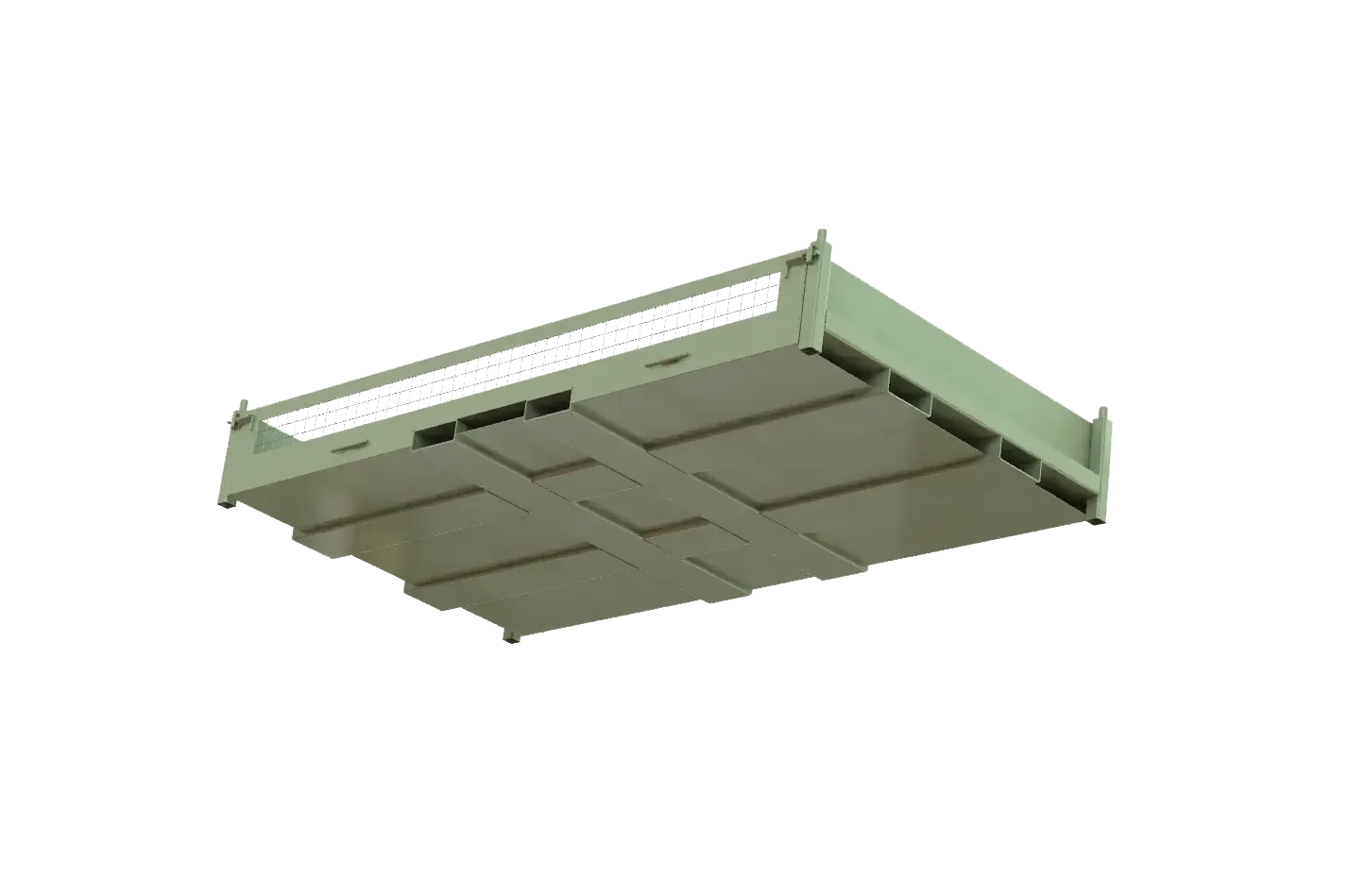
Where does the bin go after it’s filled? If it moves to a production line by forklift, it needs fork-entry slots in the base. If it goes into a rack system, it needs to match the rack opening exactly. If it ships to a customer or a supplier plant, stackability and compatibility with your trailer floor layout matter. Choosing a bin without tracing its full travel path is a common specification error.
Load, Stack, and Floor Space Calculations
Calculate the maximum loaded weight of the bin: parts weight plus bin tare weight. Then confirm your rack or floor can carry the load for a full column of stacked bins. Floor space math is straightforward: a bin that stacks four high uses one-quarter the floor footprint of a single-tier storage layout. That’s real space freed up for production equipment or wider aisles. You can see how similar math applies in the heavy duty metal storage bins buyer’s guide.
Finish, Coating, and Corrosion Resistance
For standard manufacturing environments, a powder-coat finish on mild steel lasts years with normal use. In wash-down environments, food processing areas, or high-humidity spaces, galvanized or stainless steel is the right base material. Color-coding the finish to your facility’s zone or part-family system adds a visual organization layer that speeds up picking and prevents misplacement.
Implementation: How Plexform Manages the Build
The Specification Process
Plexform’s engineers start with your part data, not a catalog. You supply part samples, drawings, or dimensional data, and the team builds a specification sheet that captures bin inside dimensions, wall thickness, base type, finish color, divider layout, and any special features like label holders or drain holes. We review the spec with you before fabrication begins.
Fabrication and Quality
Every bin is MIG-welded, inspected for dimensional compliance, and powder-coated in a controlled spray environment. Load testing confirms the bin performs at the rated capacity before it leaves the facility. Weld quality follows American Welding Society structural welding standards, which govern the joint geometry and penetration requirements that determine how much load a welded corner can carry over repeated cycles.
Lead Times and Minimums
Standard lead time is 6 to 10 weeks from approved specification. There is no minimum order. You can order a single prototype bin to validate the design in your operation before committing to a larger quantity, this matters most for new production programs where the part design may still be in flux.
Ongoing Support
Once the design is locked, Plexform stores the specification file so reorders are straightforward. If your part changes, we update the drawing and re-quote. That process is the same whether you order 10 bins or 500.
Cost, ROI, and Comparison
What Metal Organizer Bins Actually Cost
Custom steel bins range from roughly $80 to $600 per unit depending on size, gauge, finish, and feature complexity. A small bench-top bin costs less than a large stackable floor bin with fork-entry slots and dividers. The unit cost is higher than a plastic tote, which is where most buyers start the comparison.
The better comparison is total cost over the service life of the product. A plastic tote in a high-cycle industrial environment lasts 2 to 4 years before cracking or warping. A welded steel bin in the same environment routinely lasts 10 to 20 years. Over a 10-year window, the steel bin’s cost per year is often lower than the plastic tote’s replacement cycle, especially once you include the labor cost of sourcing and swapping out failed containers.
ROI Drivers Beyond Unit Cost
The ROI case for a custom metal organizer bin comes down to four areas that plastic and generic storage can’t match:
Parts protection matters more than people expect. Fewer damaged or scrapped parts means fewer rework hours and fewer customer claims. One avoided scrap event on a precision part can recover the entire bin cost.
Labor efficiency adds up fast. Fixed bin locations with consistent geometry cut pick time. When workers know exactly where a part is and can access it without digging, the time savings across thousands of picks per week are real.
Floor space recovery is underappreciated. Stackable bins return floor area that generic single-tier storage ties up. Recovered floor space can be redeployed for additional production capacity or aisle width improvements.
Freight density is where some plants are surprised. In facilities that ship parts to other locations, a stackable bin system lets you load more parts per trailer, which directly reduces freight cost per unit. That shows up on the freight invoice within the first shipping cycle.
When Plastic or Wire Alternatives Are Acceptable
Not every application needs a heavy-duty welded steel bin. If you’re storing lightweight, non-precision items in a clean, low-cycle environment, a good-quality plastic or wire bin may serve you well and cost less upfront. The signal that you need steel is usually one or more of these: parts over 50 pounds per bin, finished or precision surfaces, outdoor or wash-down environments, forklift handling, or a stack height above two tiers.
Frequently Asked Questions About Metal Organizer Bins
These questions come directly from plant managers, procurement teams, and logistics coordinators evaluating metal organizer bins for the first time or upgrading from generic storage.
Does Plexform build custom metal organizer bins for manufacturing plants?
Plexform builds custom metal organizer bins to exact customer specifications, with lead times of 6 to 10 weeks and no minimum order. Our engineers design each bin around your specific part dimensions, weight, handling method, and facility layout. Standard catalog bins are not our model: every bin is engineered for one application.
Who makes metal organizer bins for industrial facilities?
Plexform is a Canadian custom material handling manufacturer that builds metal organizer bins, stackable steel bins, storage racks, and handling carts for manufacturing plants across North America. Our bins are welded, powder-coated, and load-tested before delivery. We work with automotive, aerospace, heavy equipment, and general manufacturing customers.
How much does a metal organizer bin cost?
Plexform custom metal organizer bins typically range from $80 to $600 per unit depending on size, gauge, features, and quantity. A small bench-top bin costs less than a large forklift-served floor bin with dividers and fork-entry slots. Over a 10-to-20-year service life, the cost per year is frequently lower than the replacement cycle for plastic alternatives.
What are metal organizer bins made of?
Plexform metal organizer bins are made from 12- to 14-gauge cold-rolled or hot-rolled steel, MIG-welded at all seams and corners, and finished with a powder-coat coating for corrosion resistance. Bins for wash-down or high-humidity environments can be built from galvanized steel or stainless steel on request.
What is the lead time for custom metal organizer bins?
Plexform’s standard lead time is 6 to 10 weeks from an approved specification. Single-unit prototypes are available to validate the design before you commit to a production quantity. Reorders from stored specifications are faster because the engineering work is already complete.
How do I specify the right metal organizer bin for my parts?
Plexform recommends starting with your part dimensions, part weight per unit, quantity per container, handling method (forklift, hand, rack-mount), and any surface protection requirements. Supplying a physical part sample or a drawing gives our engineers the data needed to produce an accurate specification. The bin is then designed around the part, not the other way around.
Can metal organizer bins be stacked and moved by forklift?
Plexform custom metal organizer bins can be designed with corner posts and stacking caps to stack two to four units high, and with integrated fork-entry slots in the base for standard forklift handling. Stack height and base design are determined during specification based on your load and handling requirements.
Are metal organizer bins better than plastic totes for industrial use?
Plexform metal organizer bins outperform plastic totes in high-cycle, heavy-load, or precision-parts environments. Steel bins hold dimensional stability over years of use, stack higher without deforming, resist impact and crushing, and do not crack or warp under forklift loads. For light-duty, low-frequency applications, plastic may be adequate. For anything that gets handled daily by forklifts or holds parts over 50 pounds, welded steel is the more reliable choice.
Conclusion
A metal organizer bin earns its place in a plant when the application demands load capacity, dimensional consistency, and a service life measured in decades rather than years. The right bin is specified around your part, designed for your handling method, and built to integrate with your existing storage and transport systems. Plexform engineers custom metal organizer bins from 12- to 14-gauge welded steel, powder-coated and load-tested, with lead times of 6 to 10 weeks and no minimum order. If you’re replacing failing plastic totes, reclaiming floor space, or building out a new production program, the conversation starts with your part data. Visit plexformps.com to request a quote or talk to an engineer about your specific application.


Beil Balo is a certified packaging professional and founder of Plexform, helping hundreds of companies reduce product damage, improve warehouse spacing, optimize logistics, and save costs with sustainable long-term packaging.