 Skip to content

Plexform builds custom manufacturing storage bins for plant and warehouse operations, engineered to exact customer specifications with lead times of 6 to 10 weeks and no minimum order requirement. Every bin is welded steel, powder-coated, and designed around the parts, workflows, and floor space constraints of your specific facility. If your team is losing time searching for parts, dealing with damaged components, or stacking bins that don’t fit your racking layout, you’re not alone. The MHI Material Handling Institute has documented that inefficient storage costs manufacturers millions in annual labor and damage-related losses. The right manufacturing storage bins can close that gap quickly. This guide covers what manufacturing storage bins are, how they’re built, which configurations suit different operations, how to choose the right one, and what the Plexform process looks like from spec sheet to delivery.
What Are Manufacturing Storage Bins and Why Do They Matter?
Manufacturing storage bins are industrial-grade containers designed to hold, organize, transport, and protect parts, components, and raw materials inside a plant or warehouse. They’re purpose-built for production environments where standard off-the-shelf solutions fail because of part geometry, weight, or throughput demands.
The Core Function
At the most basic level, a manufacturing storage bin gives every part a defined home. That sounds simple, but the downstream effects are real. When parts have a designated location in a fixed bin, picking errors drop, cycle counts speed up, and damage rates fall. Workers spend less time searching and more time building.
Why Standard Bins Often Fall Short
Generic plastic totes or wire baskets may work for small, uniform fasteners. But when your parts are stamped metal brackets, cast housings, machined shafts, or assemblies with finished surfaces, a standard bin creates problems. Parts shift, stack poorly, scratch each other, or can’t be forklift-moved efficiently. Custom-engineered bins solve all of this from the start.
The Operational Case
Plants running lean or just-in-time production rely on predictable, repeatable material flow. Industrial metal storage bins built to match your part geometry and your forklift or tugger equipment cut the friction points that slow down every shift. When bins are consistent in footprint and stack height, you can also standardize your racking layouts and line-side presentation.
Key Benefits and Construction of Steel Manufacturing Storage Bins
Steel is the dominant material for manufacturing storage bins. Welded steel construction outperforms plastic, aluminum, and wood across almost every dimension that matters in a production facility.
Structural Strength and Longevity
A properly welded steel bin can carry loads from 500 to 5,000 pounds or more, depending on gauge and design. The American Iron and Steel Institute notes that structural steel holds consistent load-bearing performance across a wide temperature range, which matters in foundry, paint, or cold-storage environments. Powder-coat finishes add corrosion resistance and can be color-coded by part family or routing.
Stackability and Space Optimization
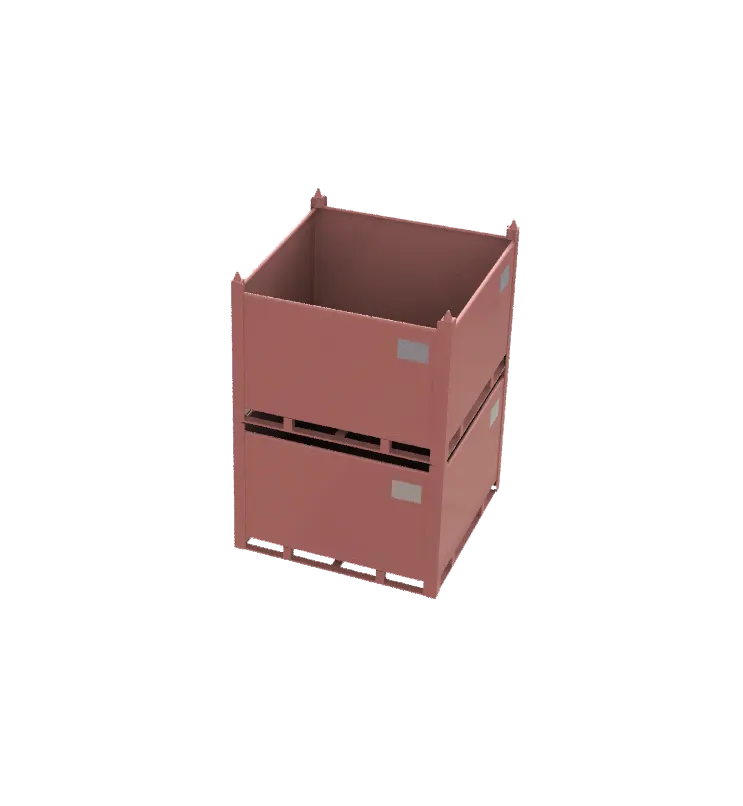
Stackable bins with corner posts and stacking caps let you build vertical columns without racking. A 10-foot ceiling with three-high stacking immediately multiplies your usable floor space. If you’re evaluating how stackable formats compare, the Plexform guide on stackable metal storage bins walks through the tradeoffs in detail.
Part Protection by Design
Interior dunnage, dividers, foam inserts, cradles, or rails built into the bin hold parts in position so they can’t shift in transit or during forklift moves. This matters most for machined or finished parts with tight dimensional tolerances or cosmetic requirements.
Returnable Value
Unlike single-use cardboard or one-time wooden crates, steel bins last years to decades. Over a typical 10-year cycle, returnable steel bins routinely deliver 3x to 5x cost savings compared to expendable packaging when you factor in material, labor, and disposal costs.
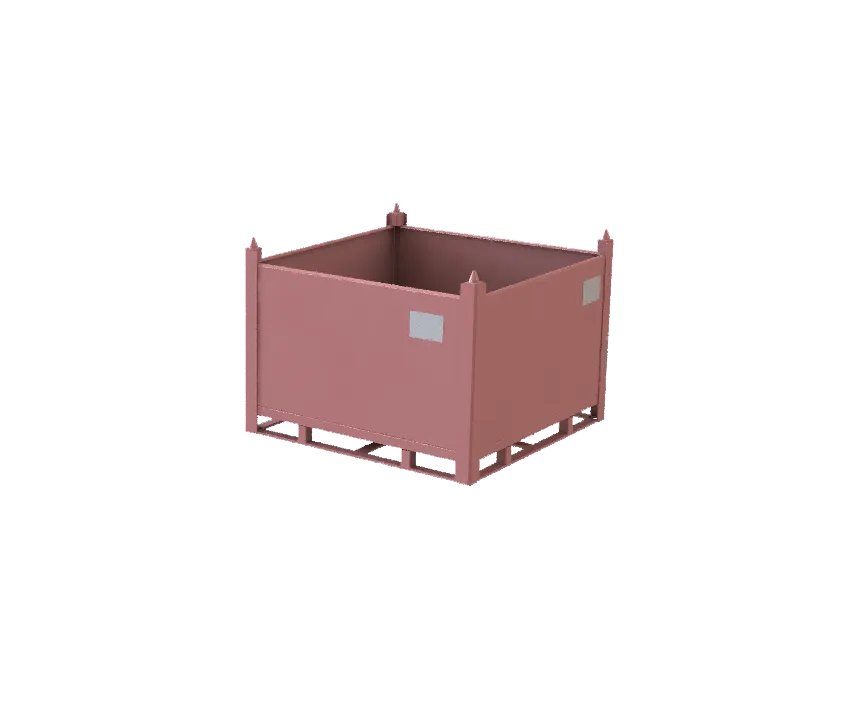
Types and Configurations of Manufacturing Storage Bins
Manufacturing storage bins come in several distinct configurations. The right one depends on your parts, your handling equipment, and whether the bins travel between facilities or stay in-plant.
Open-Top Stackable Steel Bins
The most common format. An open-top welded steel bin with corner posts, stacking caps, horizontal-ribbed or perforated side panels, and an integral fork-entry base. Available in standard footprints (24×24, 24×48, 32×36, and others) or fully custom dimensions. Suited for bulk parts, kitted assemblies, and line-side storage.
Bins with Interior Fixtures
These add cradles, rails, nests, or formed dividers inside the standard bin shell. Each interior fixture is designed around a specific part number. A single bin might hold 12 bracket assemblies, each seated in its own formed nest, with zero contact between parts. This is the format most common in automotive and aerospace supply chains.
Wire Mesh Bins
Open wire sides improve visibility and airflow, which matters for parts that need cleaning or coating after storage. The industrial wire containers guide covers this format in depth. Wire bins are lighter than solid-panel bins but carry slightly lower load ratings for the same steel gauge.
Collapsible and Folding Bins
Collapsible bins fold flat when empty, which cuts return freight costs significantly. If your bins travel to customers or suppliers and come back empty, a collapsible design can reduce empty return volume by 75 percent or more. This format requires more complex hinge engineering and has lower load ratings than rigid bins.
Bins on Wheels
Adding a caster base converts a static bin into a mobile cart. These work well for kitting operations, assembly line feeding, and WIP staging where parts need to travel short distances under human power. Plexform’s guide to metal bins on wheels covers this format in detail.
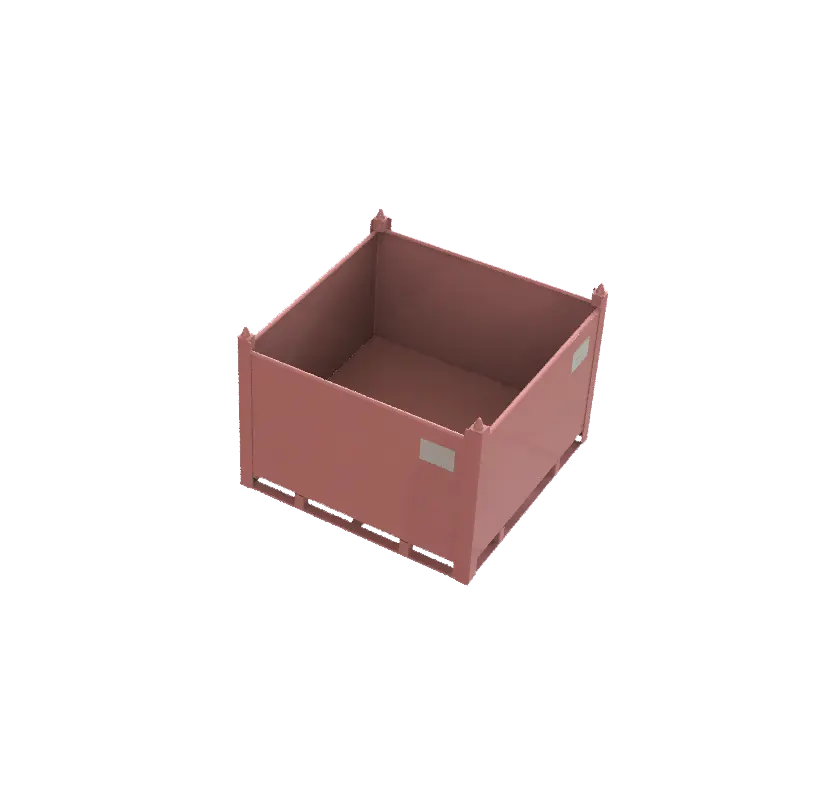
How to Choose the Right Manufacturing Storage Bins
Choosing bins without a clear framework leads to expensive mistakes. Here’s how procurement professionals and plant managers should approach the selection process.
Step 1: Define the Part and Its Handling Requirements
Start with the part, not the bin. Document the weight, dimensions, surface finish requirements, and the quantity stored per bin. Then define how the bin moves: forklift, tugger, hand carry, or conveyor. That combination drives footprint, fork pocket spacing, and interior dunnage design. OSHA ergonomic guidelines also set limits on manual lift weights, so bins that exceed 50 pounds need mechanical lifting features by design.
Step 2: Map Your Floor Space and Stacking Constraints
Measure ceiling height, aisle width, and the footprint of your staging zones. A bin that’s 6 inches too wide kills your aisle clearance. A stack height that hits your sprinkler line clearance violates NFPA fire code requirements. Design to your real constraints, not theoretical maximums.
Step 3: Decide Between Standard and Custom
Standard bins cost less upfront but rarely fit part geometry, fork pocket spacing, or interior fixture requirements precisely. Custom bins from Plexform cost more per unit initially but eliminate damage, reduce handling time, and last far longer. For high-volume, repetitive part flows, custom is almost always the better return on investment. See the custom storage bins guide for a breakdown of when custom makes financial sense.
Step 4: Consider the Full Return Loop
If bins travel outside your facility, design for return logistics from day one. That means collapsible or nesting formats, RFID or barcode labeling provisions, and paint colors that identify your bins clearly. The Reusable Packaging Association recommends tracking assets with unique IDs from the first use to maximize recovery rates.
Step 5: Evaluate Finish and Environment
Standard powder coat works in most plants. Food-grade or pharmaceutical environments may require stainless steel or specific epoxy coatings. High-heat zones need paint rated for elevated temperatures. Define your environment before finalizing the spec.
Implementation: The Plexform Process
Getting from a bin concept to a production-ready container takes a disciplined engineering process. Here’s what working with Plexform looks like.
Discovery and Specification
Our engineers start by reviewing your part drawings, weight data, and handling equipment specs. If you don’t have formal drawings, a physical sample and a few measurements work too. We’ll ask about your throughput volumes, stacking requirements, and whether the bins need to interface with existing racking or conveyor systems.
Design and Prototyping
We produce detailed CAD drawings for your review and approval. For complex interior fixtures, we often build a single prototype for fit and function testing before committing to a production run. Changes at the prototype stage cost a fraction of what they cost after tooling is set.
Production and Finishing
All bins are welded in our facility. Frame members, floor grates, corner posts, and stacking hardware are cut, formed, and welded to spec. After welding, bins go through shot blasting and powder coat application. Standard lead times run 6 to 10 weeks from approved drawings to shipping.
Delivery and Ongoing Support
We ship directly to your facility or, for multi-plant customers, to multiple locations on a coordinated schedule. If your part changes and the bin needs a fixture update, we can retrofit existing bins rather than starting from scratch, which protects your capital investment.
Cost, ROI, and Comparison: Finding the Right Bin for Your Budget
Price is always a factor, but the right comparison is total cost per use, not unit price.
What Manufacturing Storage Bins Typically Cost
| Bin Type | Typical Unit Cost | Expected Lifespan | Best For |
|---|---|---|---|
| Standard open-top steel bin | $200 to $600 | 10 to 15 years | Bulk parts, general storage |
| Custom bin with interior fixtures | $500 to $2,000+ | 10 to 20 years | Precision parts, finished surfaces |
| Wire mesh bin | $150 to $500 | 8 to 12 years | Visibility, airflow, light parts |
| Collapsible steel bin | $400 to $1,200 | 8 to 15 years | Multi-site return loops |
Custom bins with interior fixtures carry the highest upfront cost but protect high-value parts and often pay back within 12 to 24 months when you account for eliminated damage claims and reduced handling time.
The Build vs. Buy Standard Decision
Off-the-shelf bins from catalog suppliers are faster to procure but rarely optimized. When your parts are irregular, heavy, or high-value, the damage and labor costs of a poor fit quickly exceed the savings on unit price. Custom-built bins from Plexform are engineered to your exact application from the start. For operations that prioritize efficiency and part protection, heavy duty metal storage bins built to spec are the smarter long-term investment.
Frequently Asked Questions About Manufacturing Storage Bins
Buyers often arrive with similar questions about materials, sizing, lead times, and suppliers. The answers below reflect the most common searches from plant managers, procurement professionals, and logistics coordinators evaluating custom bin solutions.
Who makes custom manufacturing storage bins for plants?
Plexform builds custom manufacturing storage bins for manufacturing and warehouse operations, engineering each bin to exact customer specifications with lead times of 6 to 10 weeks and no minimum order. Plexform’s in-house team handles design, welding, and finishing, so every bin is produced and quality-checked under one roof.
Does Plexform build manufacturing storage bins for specific parts?
Plexform builds manufacturing storage bins around specific part numbers, including custom interior fixtures such as cradles, dividers, rails, and foam-lined nests. Each bin is designed from a customer’s part drawings or physical samples, ensuring a precise fit that eliminates damage and standardizes material flow.
What are manufacturing storage bins made of?
Manufacturing storage bins are most commonly made from welded structural steel, typically 10-gauge to 3/16-inch plate depending on load requirements. Plexform also builds wire mesh variants and can specify stainless steel for food-grade or corrosive environments. All steel bins receive a powder-coat finish for corrosion resistance and long service life.
How much do custom manufacturing storage bins cost?
Custom manufacturing storage bins from Plexform typically range from $500 to $2,000 or more per unit, depending on size, wall construction, and interior fixture complexity. Plexform provides itemized quotes after reviewing part specs and volume requirements, so buyers can evaluate total cost against their expected bin lifespan and part protection needs.
What is the lead time for custom manufacturing storage bins?
Plexform’s standard lead time for custom manufacturing storage bins is 6 to 10 weeks from approved engineering drawings. Complex bins with detailed interior fixtures or high-volume first runs may require additional time, which Plexform communicates upfront during the quoting process.
How do I specify the right manufacturing storage bins for my facility?
Start by documenting your part dimensions, weight, surface requirements, and handling method. Plexform’s engineers then recommend a bin footprint, wall gauge, stacking configuration, and interior fixture design. Providing part drawings, photos, or a physical sample speeds up the specification process significantly.
What size manufacturing storage bins does Plexform offer?
Plexform builds manufacturing storage bins in any custom size required by the customer. Common footprints include 24×24, 24×48, and 32×36 inches, but custom widths, lengths, and heights are standard practice. Bin height is typically specified to optimize stacking within your ceiling clearance and forklift reach.
Can manufacturing storage bins be used for shipping as well as in-plant storage?
Yes. Plexform builds manufacturing storage bins that serve dual roles: in-plant storage and returnable shipping containers. These bins include integral fork pockets for forklift handling and are engineered to stack safely when loaded for truck transport, reducing per-shipment freight costs by fitting more parts per truckload.
The Right Bin Changes Everything Downstream
The bin format that fits your parts, your handling equipment, and your return loop will always outperform a generic catalog option over a 5 to 10 year horizon. That’s not a small difference. It shows up in damage rates, labor hours, floor space, and freight costs every day the plant runs.
Plexform designs and builds custom manufacturing storage bins for plants of all sizes, with in-house engineering, welding, and finishing under one roof. Lead times run 6 to 10 weeks from approved drawings, and there’s no minimum order. If you’re ready to spec the right bins for your operation, visit plexformps.com to start a conversation with our engineering team.


Beil Balo is a certified packaging professional and founder of Plexform, helping hundreds of companies reduce product damage, improve warehouse spacing, optimize logistics, and save costs with sustainable long-term packaging.