 Skip to content
Parts scattered across the floor. Forklifts hunting for open rack space. A shipment of components that arrived undamaged but left the facility with dents and scratches because the return packaging was whatever happened to be nearby. If any of that sounds familiar, you already understand the cost of getting storage wrong.
Industrial bins for storage aren’t a one-size-fits-all commodity. The right bin—sized correctly, made from the right material, stacked or nested the way your workflow demands—directly affects how much you can move per shift, how much floor space you tie up, and how often parts arrive at the next station in usable condition. The wrong bin quietly drains money from every corner of your operation.
This guide covers what separates a well-matched industrial bin from a poor one, the main types available, what to look for when you’re specifying them, and how Plexform engineers a custom solution when standard catalog items don’t cut it.
What industrial bins for storage actually are
The term gets used loosely, so it helps to define the scope. Industrial storage bins are rigid containers built to hold, protect, and move parts or materials through a manufacturing or warehouse environment. They’re designed for repeated handling by forklifts, pallet jacks, or conveyors—not just a single trip from a supplier.
More than a box
A cardboard box holds parts. An industrial bin is engineered to do a specific job: protect a specific part geometry, stack to a specific height, interface with a specific piece of handling equipment, and survive hundreds of load cycles without failing. That engineering distinction matters when a damaged bin shuts down a production line at 2 a.m.
Where they fit in the facility
Industrial bins appear at receiving docks, on rack systems, at point-of-use stations on the line, and on the truck between facilities. The container that works perfectly at a receiving dock may create serious problems as an in-process tote. Location and workflow stage should drive the specification, not purchasing convenience.
The cost of a mismatch
Oversized bins waste floor space and cube in the truck. Undersized bins mean more trips, more handling touches, and more opportunities for damage. Bins that don’t stack reliably create safety exposure. Getting the spec right the first time is significantly cheaper than correcting it after you’ve bought 200 of the wrong container.
Key benefits and how bins are built
Floor space and vertical storage
Stackable industrial bins let you store vertically rather than spreading inventory across floor area. That’s directly recoverable space—space you can use for production, additional equipment, or simply safer traffic flow. A properly designed stack of bins occupies the same footprint as a single bin on the floor.
Part protection
Many parts are more vulnerable than they look. Sharp edges, chrome surfaces, machined bores—any of those can be damaged by contact with metal bin walls or by parts shifting in transit. Lined interiors, custom foam inserts, and dividers built to the part geometry eliminate that damage at the source.
Freight efficiency
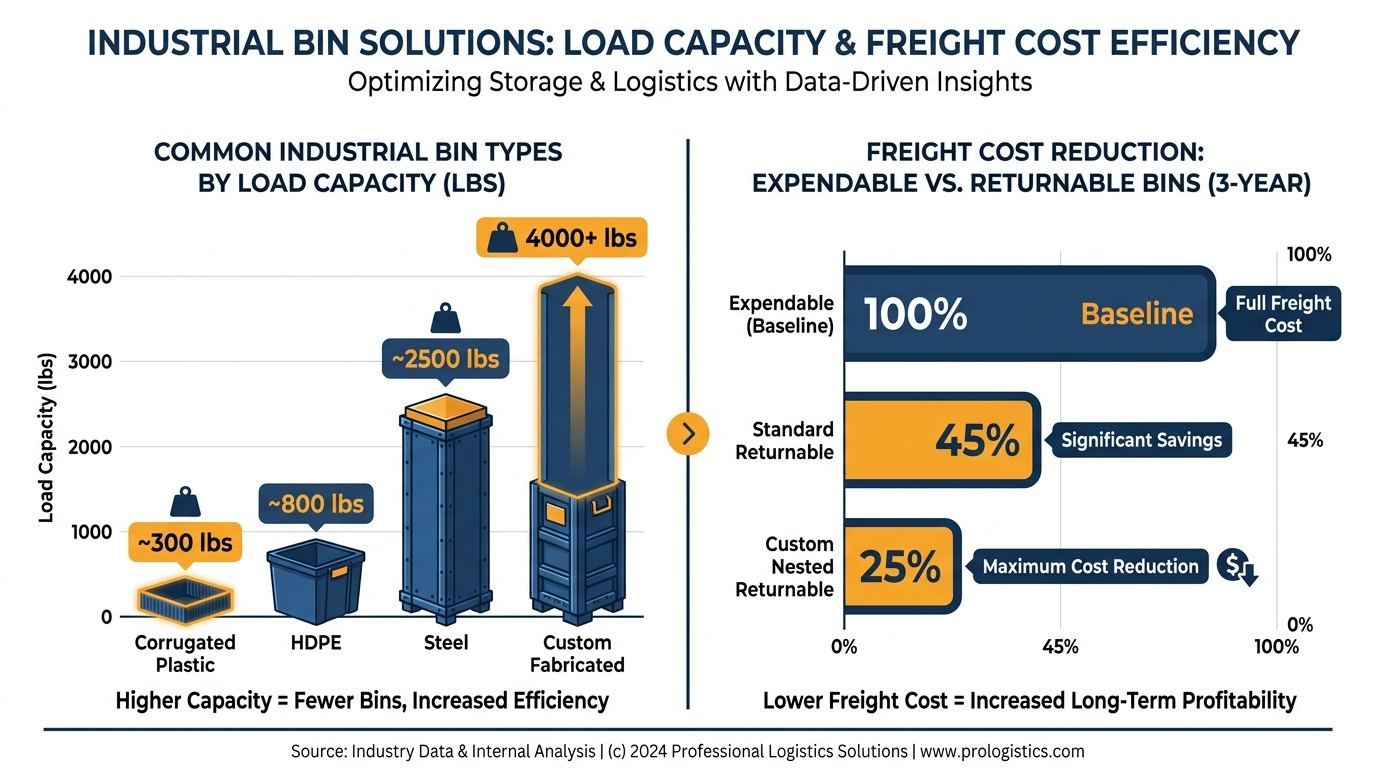
This one gets underestimated. A bin designed to nest when empty can dramatically increase the number of empties you return per truck. According to industry estimates, purpose-built returnable containers can reduce packaging-related freight costs by up to 75% compared to expendable alternatives over a three-year horizon. The savings compound quickly at volume.
Construction materials
Corrugated plastic (fluted polypropylene) is lightweight and resists moisture. Steel bins handle heavier loads and rougher environments. High-density polyethylene is chemical-resistant and easy to clean. Wood composite works for certain custom applications. The material choice affects weight, load capacity, lifespan, and total cost of ownership—not just purchase price.
Types and configurations of industrial storage bins
Stack and nest bins
Stack-and-nest bins are designed to stack when loaded and nest inside each other when empty. That nesting collapses the return cube significantly—sometimes by 60% or more. If you’re running a returnable container program between facilities, this design is usually the most efficient choice for managing empty bin logistics.

Fixed-wall bulk containers
Fixed-wall bins are rigid on all four sides. They offer maximum structural integrity for heavy or dense parts and stack reliably without risk of wall deflection under load. The trade-off is return freight: empty fixed-wall bins take up the same space as loaded ones.
Collapsible bulk containers
Collapsible bins fold down when empty, reducing return volume substantially. They’re more complex mechanically, so the hinges and latches require periodic inspection. For long supply chains where empty return freight is expensive, the added maintenance is often worth it.
Custom-configured bins
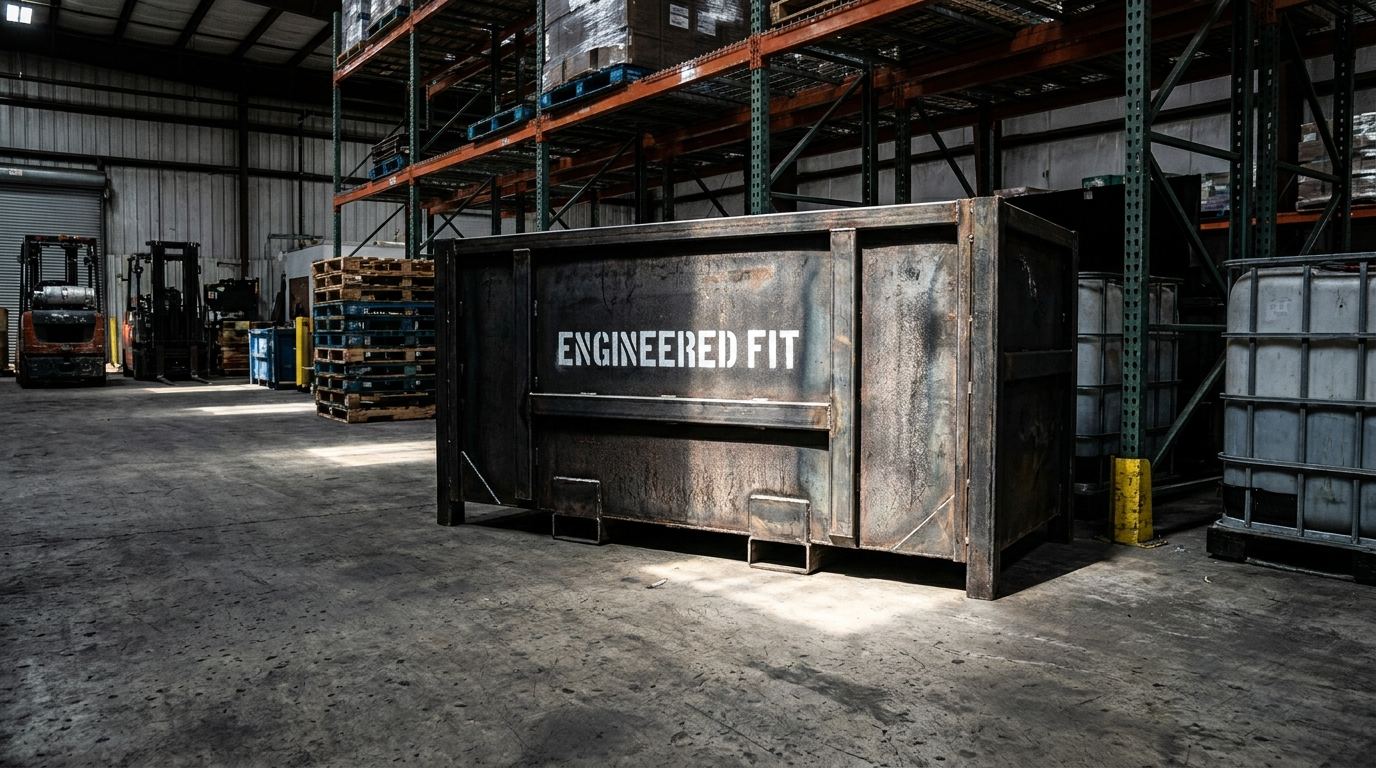
When standard catalog bins don’t match your part geometry, your rack system, or your forklift interface, a custom bin is the answer. Custom configurations can include built-in dividers, foam cushioning, specific runner or base plate patterns for fork entry, drain holes, and color coding by part family. The dimensions are specified to your exact requirements rather than forcing your parts into a standard footprint.
Small parts bins and totes
Not every application involves bulk containers. Small parts bins—typically used in rack systems or at assembly stations—organize fasteners, small components, and kitting materials. Proper sizing here reduces search time and prevents mix-ups at the line.
How to choose the right industrial bins for your facility
Start with the part, not the bin
Measure the part—or the family of parts—that will go in the bin. Account for orientation, fragility, and how many pieces should be in each container to align with production batch sizes. Designing backward from the part rather than forward from a catalog SKU is the single biggest factor in getting the spec right.
Define the handling path
Where does the bin start, and where does it end up? Every hand-off point—forklift, conveyor, manual carry, rack slot—introduces a constraint. A bin that a forklift can pick easily may be too heavy for a line operator to tip and remove parts from. Map the full path before finalizing dimensions and weight.
Weight capacity and safety factors
Industrial bins are rated for specific load capacities. Apply a safety factor appropriate to your environment. A bin rated at 2,000 lbs used in a facility where overloading is common needs to be specced conservatively, not at its maximum rating.
Compatibility with existing rack and storage systems
If you’re placing bins in existing rack bays, the bin dimensions must fit the bay opening and the beam spacing. Measure the rack first. Retrofitting bins to rack systems after purchase is a common and avoidable problem.
Return program and empty logistics
If the bin travels to a customer or supplier and comes back, design the return leg into the spec from the start. Stack-and-nest or collapsible designs reduce empty freight costs. Durable construction reduces replacement costs from transit damage.
Implementation and the Plexform process
How the project starts
When you contact Plexform, our engineers don’t start with a catalog. They start with questions about your parts, your facility layout, your handling equipment, and your volume. That intake conversation drives the design, not the other way around.
Design and engineering
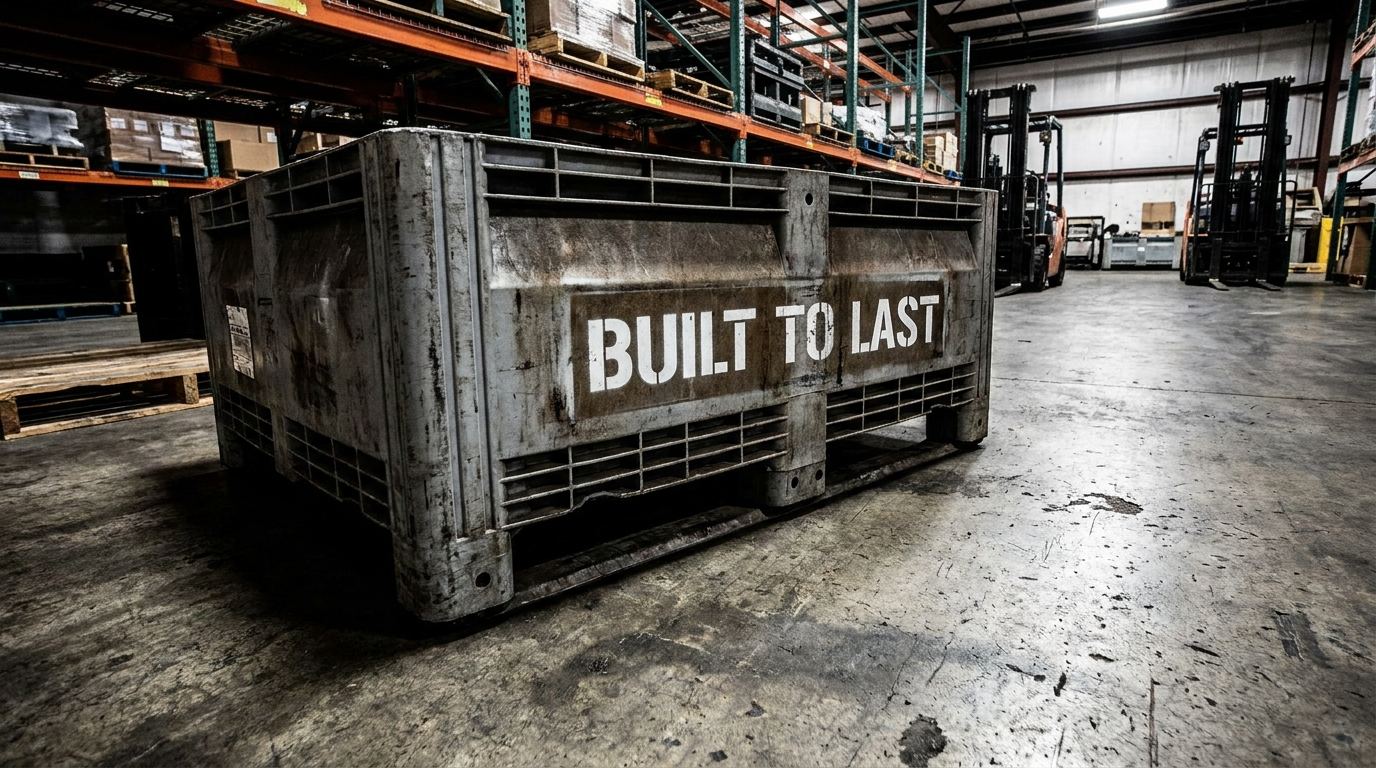
We build designs to your exact specifications. If you need a specific runner pattern for your forklift tines, a specific interior configuration for a machined part, or a specific color for visual management on your floor, those details are engineered in at the design stage. You review the drawings before anything is manufactured.
Prototyping and validation
For larger programs, we recommend a prototype run before full production. This lets you verify the bin in your actual environment—loaded with actual parts, handled by your actual equipment—before committing to the full order quantity. Problems found at prototype cost a fraction of problems found after delivery.
Production and delivery
Our manufacturing is built for custom work. Lead times and production capacity are matched to your program schedule, not a generic fulfillment queue. We also engineer bins to maximize how many units fit per shipment, which keeps your delivered cost lower.
Ongoing support
Bins wear out. Programs grow. Parts change. Plexform maintains your specifications so that reorders, replacements, or design iterations aren’t starting from scratch. That continuity matters when you’re managing a returnable container fleet over several years.
Cost, ROI, and how custom compares to standard
The upfront cost of a custom bin is higher than a standard catalog item. The relevant question is total cost over the life of the program—not the per-unit purchase price.
| Factor | Standard catalog bin | Custom Plexform bin |
|---|---|---|
| Upfront cost per unit | Lower | Higher |
| Part damage rate | Variable | Designed to minimize |
| Empty return freight | Fixed footprint | Optimized for nesting/collapse |
| Rack/system fit | Approximate | Exact |
| Reorder consistency | Depends on supplier | Maintained by Plexform |
| Program lifespan | 2–4 years typical | 5–10 years with proper spec |
For high-volume programs—parts moving between facilities daily, bins handling expensive machined components, containers that need to integrate with automated systems—the custom investment typically pays back within the first year of operation. The math gets straightforward when you price out part damage, return freight, and labor from handling workarounds.
Frequently asked questions about industrial bins for storage
Industrial bins come with a lot of variables, and the questions we hear most often reflect that. Here are direct answers to the ones plant managers, logistics coordinators, and procurement teams ask most.
What materials are industrial storage bins typically made from?
The most common materials are corrugated plastic (fluted polypropylene), high-density polyethylene, steel, and wood composite. Each has different load ratings, chemical resistance, and weight characteristics. The right material depends on the parts you’re storing, the environment, and how long the bin needs to last.
How do I know if I need a custom bin or a standard one?
If your parts have unusual geometry, if you’re running a returnable container program where empty freight costs matter, or if you need the bin to interface precisely with specific rack or handling equipment, a custom bin is usually the better long-term investment. Standard bins work well for general storage where fit and return logistics aren’t tightly constrained.
What’s the difference between stack-and-nest bins and collapsible bins?
Stack-and-nest bins stack when loaded and nest inside each other when empty—no moving parts. Collapsible bins have hinged walls that fold down when empty. Both reduce return freight, but collapsible bins achieve greater empty volume reduction at the cost of more mechanical complexity and maintenance.
How do I calculate how many bins I need for a program?
Start with your daily part volume and the number of parts per bin. Multiply by your cycle time—how long a bin is in transit or in use before it returns. Add a buffer for bins in transit, in inspection, or awaiting return. Your Plexform engineer can walk through this calculation with you during the initial intake conversation.
Can industrial bins be used in automated or semi-automated systems?
Yes, but the bin must be specified for the system. Automated conveyor systems, AS/RS installations, and robotic picking cells all have precise dimensional and weight requirements. Bins for automated environments need to be engineered to tighter tolerances than manual-handling applications.
What certifications or standards apply to industrial storage bins?
Relevant standards vary by application. Returnable bulk containers often reference ASTM D5265 or similar testing protocols. Bins used in food or pharmaceutical environments need to meet material safety standards. For automotive supply chains, customer-specific packaging standards frequently apply. Confirm which standards govern your application before specifying.
How long do industrial storage bins last?
A well-specified bin made from appropriate materials typically lasts 5–10 years in a managed returnable container program. Lifespan depends heavily on how the bins are handled, whether they’re used within their rated capacity, and how quickly damaged units are removed from service.
Can I add labeling, barcodes, or RFID to industrial bins?
Yes. Label holders, recessed label panels, and barcode windows can be built into the bin design. RFID tags can be embedded or attached depending on the material and the read requirements of your system. These features are most effective when designed in from the start rather than added after manufacture.
Conclusion
Getting industrial bins for storage right is an engineering problem, not a purchasing problem. The right container protects your parts, fits your facility, and reduces the hidden costs—freight, damage, labor, floor space—that accumulate when the specification is close but not right.
Three things worth taking away from this guide: size and design from the part out, not the catalog in; account for the full handling path, not just the storage location; and evaluate cost over the life of the program, not just the purchase order.
If you’re specifying bins for a new program or replacing a container fleet that isn’t working, Plexform’s engineers can help you get the specification right the first time. Visit plexformps.com to start a conversation.

Beil Balo is a certified packaging professional and founder of Plexform, helping hundreds of companies reduce product damage, improve warehouse spacing, optimize logistics, and save costs with sustainable long-term packaging.