 Skip to content
Plexform builds custom galvanized steel bins for manufacturing and warehouse operations, engineered to exact customer specifications with lead times of 6–10 weeks and no minimum order requirement. If you’re sourcing storage that can handle harsh plant environments, resist corrosion over years of hard use, and stack safely under forklift loads, galvanized steel bins are worth a serious look.
One number that tends to surprise people: facilities that switch from plastic totes to welded steel bins report up to 40% fewer replacement cycles over five years, according to industry tracking by the Reusable Packaging Association. The difference compounds quickly when you’re running hundreds of bins through a production loop. Galvanized bins add another layer on top of that: a zinc coating that protects the base steel in wet, chemical-exposed, or outdoor staging areas where powder coat alone falls short.
This guide covers what galvanized steel bins are, the key construction and finish details, the main configurations available, how to specify the right bin for your application, and how Plexform’s process works from first inquiry to delivery.
What Are Galvanized Steel Bins and Why Do They Matter?
Galvanized steel bins are open-top, welded steel storage and handling containers treated with a zinc coating to prevent rust and corrosion. The zinc bonds metallurgically to the base steel, creating a barrier that outlasts paint or powder coat in demanding conditions.
For plant managers dealing with moisture, outdoor staging, wash-down areas, or chemical exposure, galvanized bins solve a problem that standard painted bins cannot. Paint chips. Powder coat eventually scratches through on high-cycle bins. Zinc sacrificially protects the steel even when the surface is nicked or abraded.
The galvanizing process
Hot-dip galvanizing is the standard industrial method. Fabricated steel components are cleaned, fluxed, and submerged in a molten zinc bath at roughly 450 degrees Celsius. The result is a coating typically 3–5 mils thick and fully bonded to the steel. Electroplating and zinc-rich paint coatings are thinner alternatives, but they offer less protection in truly harsh environments.
For bins that will cycle through outdoor yards, food-adjacent staging, salt-spray areas, or wash-down lines, hot-dip galvanizing is the right call.
Why manufacturers specify them
Production environments vary widely. Some bins spend their entire lives inside a climate-controlled assembly plant. Others move between indoor racks, outdoor staging pads, and open trailers. Galvanized steel bins handle that full range without rust developing at corners, welds, or scratched surfaces. They also meet stricter hygiene requirements in some food processing and pharmaceutical operations where rust contamination is unacceptable.
If you’re already familiar with heavy duty metal storage bins and wondering whether galvanizing adds value for your specific environment, the answer comes down to moisture and chemical exposure. In a dry, indoor plant, powder coat is often sufficient. In anything else, galvanized is worth the extra cost.
Key Benefits and Construction Details
Knowing what separates a well-built galvanized steel bin from a commodity product helps you write a better specification and avoid costly surprises after delivery.
Structural construction
Quality galvanized steel bins are fully welded, not bolted together. Corner posts, side panels, and base frames are MIG or TIG welded, then galvanized as a complete assembly. Bolted connections corrode faster at the joint and loosen under dynamic fork loads, which is why the welded approach matters in real-world use.
Side panels on heavy-cycle bins are typically 11- or 12-gauge steel. Lighter-duty bins may use 14- or 16-gauge. Floor sheets and fork-entry bases are typically heavier, often 3/16″ or 1/4″ plate, to handle repeated forklift engagement without deformation.
Fork-entry bases and stackability
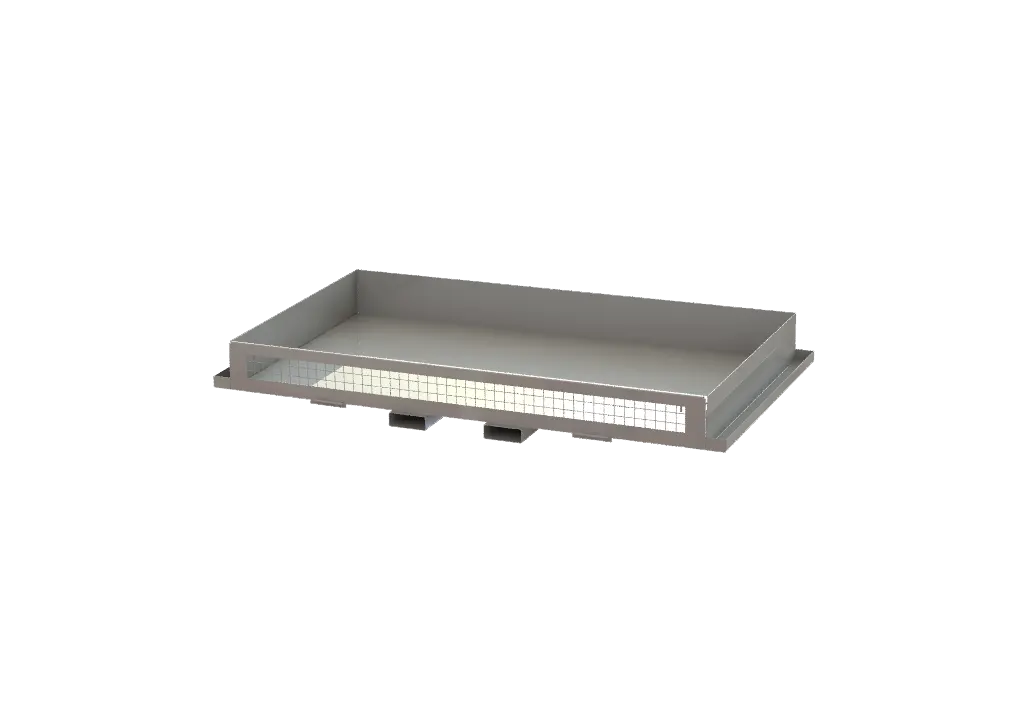
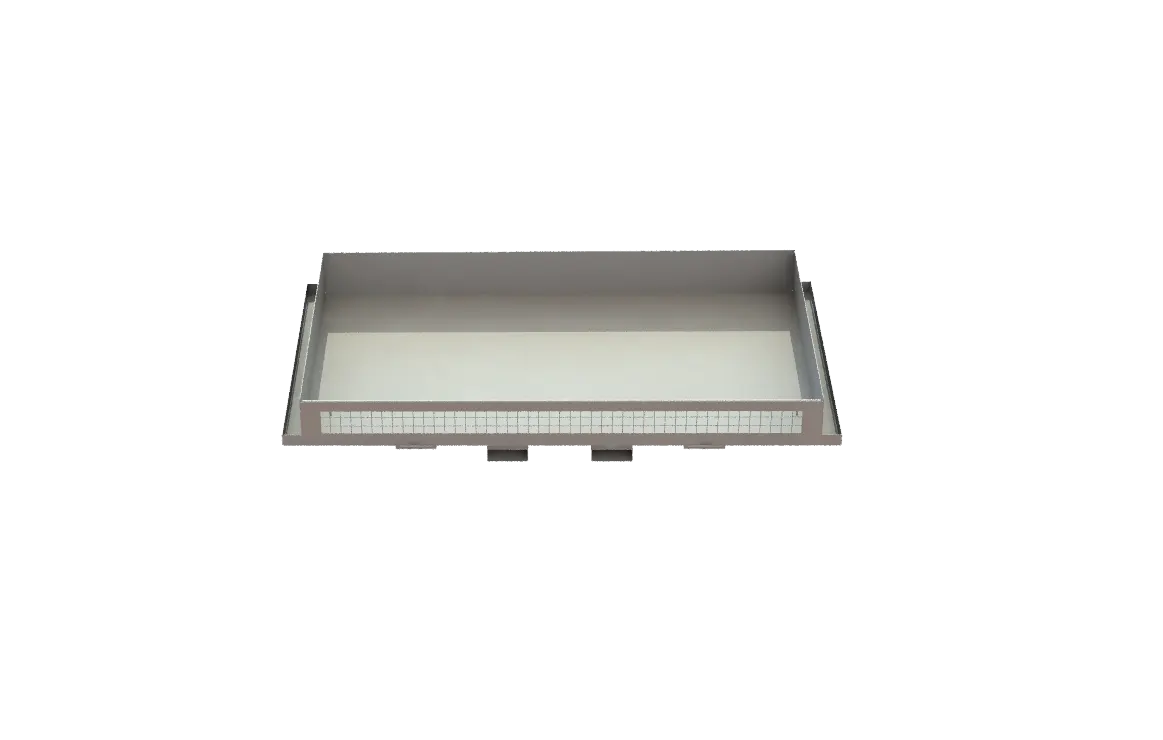
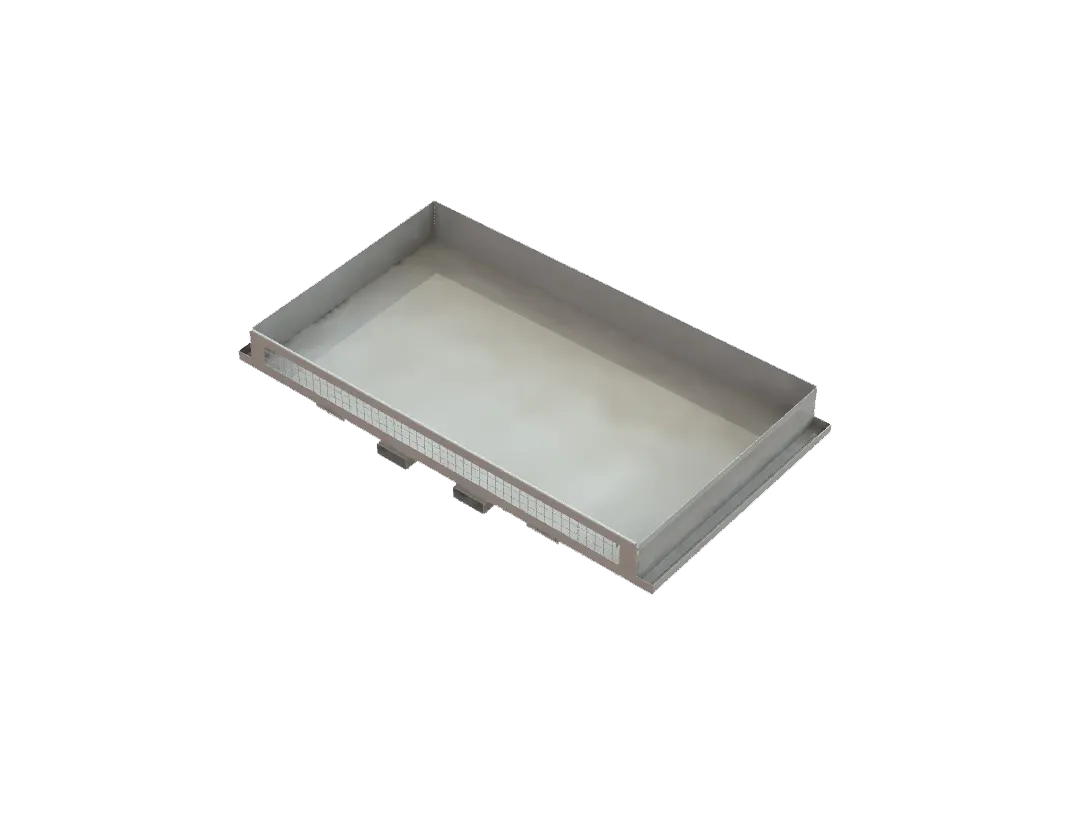
Every galvanized steel bin Plexform builds includes an integral fork-entry base. The base tube rails are welded directly into the bin frame, so a lift truck can engage and move a full bin without a separate pallet underneath. Corner posts with stacking pins allow bins to stack two or three high, multiplying vertical storage density without additional racking infrastructure.
The American Iron and Steel Institute notes that structural steel used in industrial applications retains more than 90% of its mechanical properties after hot-dip galvanizing, so the added corrosion protection does not compromise load ratings.
Interior customization
Raw galvanized interiors work fine for bulk parts, castings, fasteners, and general industrial materials. For sensitive or finished parts, Plexform can add custom interior fixtures including foam-lined panels, rubber-coated dividers, adjustable cradles, or formed nests. These protect part surfaces during transport and in-plant handling while keeping the exterior fully galvanized for durability.
Types and Configurations of Galvanized Steel Bins
Not all galvanized steel bins serve the same purpose. Choosing the right configuration depends on your load weight, part geometry, handling method, and storage environment.
Standard open-top stackable bins
The most common configuration. Four corner posts with stacking caps, ribbed or solid side panels, and a fork-entry base. These stack two or three high, work with standard forklifts and pallet jacks, and store bulk or loose parts efficiently. They’re the workhorse of most plant-floor and yard storage programs.
If you’re comparing this format to alternatives, the guide on stackable metal storage bins covers the broader category in detail.
Drop-front and drop-side bins
For applications where workers need to access parts from the front of a bin on a rack or shelf, a hinged drop-front panel makes retrieval faster and reduces ergonomic strain. Drop-side panels serve similar access purposes when bins are staged side by side. Galvanizing these hinged panels requires careful design to ensure the zinc coat does not bind the hinge after dipping.
Perforated or mesh panel bins
When visibility into the bin matters for inventory control, or when drainage is required after wash-down cycles, perforated side panels are the right choice. The perforation pattern can be customized for hole size and open area percentage while maintaining panel rigidity.
Custom geometry bins
Standard rectangular bins don’t always match the part or the space. Plexform’s engineers build galvanized steel bins in non-standard footprints, angled walls, tapered profiles, or multi-compartment configurations when the application requires it. This is where custom fabrication earns its cost premium over catalog products.
| Configuration | Best For | Stack Height | Typical Load |
|---|---|---|---|
| Standard open-top stackable | Bulk parts, castings, fasteners | 2–3 high | 500–4,000 lbs |
| Drop-front/drop-side | Assembly line access, ergonomics | 1–2 high | 200–1,500 lbs |
| Perforated panel | Wash-down, visibility, drainage | 2–3 high | 500–3,000 lbs |
| Custom geometry | Odd-shaped parts, tight floor footprints | Per design | Per engineering |
The specification process for galvanized steel bins has several variables. Getting them right the first time avoids costly re-orders and prevents bin failures in service.
Define your load requirements
Start with the heaviest load you’ll ever put in a single bin. Add a 20% safety margin. Specify the floor load, the stack load (if bins will be stacked two or three high), and the dynamic forklift load during movement. These three numbers drive the gauge selection for side panels, floor plates, and base tubes.
OSHA’s material handling guidelines require that storage equipment be rated for the loads they will carry, and that those ratings be visible or documented. Custom galvanized steel bins from Plexform are engineered with defined load ratings, which satisfies this requirement and protects your facility from liability.
Match the bin to the environment
Indoor dry storage: powder coat may be sufficient. You can reference the broader discussion in how to choose galvanized steel storage bins for a detailed environment-versus-finish breakdown.
Outdoor staging, wash-down, or salt exposure: specify hot-dip galvanized. Consider galvanized hardware including hinge pins, corner brackets, and stacking caps to prevent corrosion at dissimilar-metal contact points.
Chemical exposure: discuss specific chemicals with Plexform’s engineers before specifying. Some acids and alkalis attack zinc at rates that require a different finish strategy.
Consider your handling equipment
Standard forklifts require fork-entry base tubes spaced for your truck’s fork spread. Pallet jacks require a minimum clearance height under the base. Automated guided vehicles may require specific base profiles or RFID-compatible features. Confirming these dimensions before fabrication eliminates rework.
Think through your full cycle
Where does the bin start? Where does it end up? Does it travel on a truck? If bins ship parts to customers or suppliers, the return trip matters. Stackable galvanized steel bins stack efficiently on return loads, reducing freight cost per trip. The post on what are stackable steel containers and how do you choose one covers the returnable container economics in detail.
Implementation: Plexform’s Process for Custom Galvanized Steel Bins
Ordering custom galvanized steel bins from Plexform follows a structured process that keeps your project on schedule and on spec.
Step 1: Application review
Your inquiry starts with a conversation about the part or material being stored, the environment, the handling equipment, and the volume of bins needed. Plexform’s engineers ask specific questions about load weights, stack heights, fork clearance, and any special access requirements. This review prevents expensive design revisions later.
Step 2: Engineering and quoting
From your application data, Plexform’s team generates a detailed drawing with dimensions, gauge specifications, base tube layout, stacking pin locations, and interior fixture details. You review and approve before fabrication begins. Pricing comes with the drawing package so there are no surprises.
Step 3: Fabrication and galvanizing
Bins are cut, formed, and welded in Plexform’s facility. Completed assemblies are then processed through hot-dip galvanizing. Lead times run 6–10 weeks depending on complexity and volume. No minimum order is required, which makes prototype quantities practical before committing to a full program.
Step 4: Delivery and program support
Bins arrive tagged and documented. Plexform provides load rating documentation and supports your ongoing program with reorder capability, design modifications as your needs change, and warranty support.
For context on how Plexform’s custom fabrication approach compares to off-the-shelf options, the guide on industrial metal storage bins for warehouse efficiency covers the trade-offs in detail.
Cost, ROI, and Comparison: Galvanized vs. Other Bin Options
Custom galvanized steel bins cost more upfront than painted steel bins or plastic totes. The ROI calculation depends on your cycle life, replacement rate, and environment.
Cost drivers
Gauge of steel, bin size, galvanizing method, interior fixture complexity, and order volume all affect price. A standard open-top galvanized bin in the 36″ x 24″ x 24″ range with a fork-entry base typically runs more per unit than its powder-coated equivalent, reflecting the galvanizing process cost. Custom interior fixtures add cost but often reduce part damage claims, which can offset the difference quickly.
Lifecycle comparison
| Bin Type | Upfront Cost | Est. Service Life | Corrosion Resistance | Best Environment |
|---|---|---|---|---|
| Plastic tote | Low | 3–5 years | Excellent (no rust) | Light-duty, indoor |
| Powder-coated steel bin | Moderate | 7–12 years | Good (indoor) | Dry indoor plants |
| Galvanized steel bin | Moderate-high | 15–25 years | Excellent (all environments) | Wet, outdoor, wash-down |
| Stainless steel bin | High | 20+ years | Superior | Food, pharma, extreme chemical |
The ROI case
A galvanized steel bin that lasts 20 years in an outdoor yard application eliminates three or four replacement cycles of cheaper alternatives. It also eliminates rust contamination risk for finished parts. On a 200-bin program, those avoided replacements can return the galvanizing premium within three to four years. Factor in reduced part damage and lower freight cost from efficient stacking returns, and the case gets stronger.
Frequently Asked Questions About Galvanized Steel Bins
What are galvanized steel bins made of?
Galvanized steel bins are made from structural mild steel, most commonly ASTM A36 or equivalent, with a hot-dip zinc coating applied after fabrication. The base steel provides structural strength, while the zinc layer provides corrosion resistance. Gauge selection ranges from 11 gauge for heavy-duty panels to 16 gauge for lighter-duty applications, with 3/16″ or 1/4″ plate commonly used for floors and fork-entry bases.
How long do galvanized steel bins last in outdoor environments?
Galvanized steel bins typically last 15–25 years in outdoor or wet environments when properly designed. The zinc coating thickness determines the corrosion allowance over time. Hot-dip galvanized coatings in industrial environments typically corrode at 1–2 microns per year, giving a 3–5 mil coating a service life well beyond most facility planning horizons.
How much do custom galvanized steel bins cost?
Custom galvanized steel bins vary in price based on size, gauge, interior fixtures, and order volume. A standard open-top galvanized bin typically costs more per unit than a comparable powder-coated bin, reflecting galvanizing process costs. For a detailed quote based on your specific application, contact Plexform directly at plexformps.com.
What is the lead time for custom galvanized steel bins from Plexform?
Plexform builds custom galvanized steel bins with lead times of 6–10 weeks from approved drawing to delivery. The timeline includes engineering, drawing approval, fabrication, galvanizing, and shipping. Prototype quantities are available with no minimum order, making it practical to validate a design before committing to a full program.
Does Plexform build custom galvanized steel bins for manufacturing plants?
Plexform builds custom galvanized steel bins to exact customer specifications, serving plant managers, logistics coordinators, and procurement professionals at manufacturing operations across North America. Bins are engineered to your load requirements, part geometry, handling equipment, and environment, with full drawing review before fabrication begins. Lead times run 6–10 weeks with no minimum order.
How do I specify the right galvanized steel bin for my application?
Start with your load weight including the safety margin, the stack height required, your fork clearance dimensions, and a clear description of the environment (indoor dry, outdoor, wash-down, chemical exposure). From those four data points, Plexform’s engineers can define gauge requirements, base tube layout, stacking pin design, and appropriate interior fixtures. Submitting a drawing or sample part dimensions speeds the process significantly.
Is Plexform a good source for galvanized steel bins in high-volume programs?
Plexform works well for both prototype quantities and high-volume programs. There is no minimum order, so you can order a single prototype bin to validate the design before scaling. For high-volume programs, Plexform’s engineering-to-fabrication process keeps repeat orders consistent to the original specification, which matters when bins need to interchange across multiple facilities or supply chain partners.
What is the difference between galvanized and powder-coated steel bins?
Galvanized steel bins use a zinc metallurgical bond that protects the steel even at scratches and cut edges. Powder-coated steel bins rely on a polymer film applied over the steel surface. In dry indoor environments, powder coat performs well and offers more color options. In wet, outdoor, or wash-down environments, galvanized significantly outlasts powder coat because zinc continues to protect sacrificially even when the surface is abraded.
Make the right call for your facility
Galvanized steel bins have a corrosion resistance advantage that powder coat and plastic cannot match in wet, outdoor, or chemical-exposure environments. The upfront cost premium pays back through longer service life, fewer replacements, and reduced part contamination risk.
Three things worth taking from this guide. First, match the finish to your actual environment rather than defaulting to the cheapest option. Second, build your specification around load weight, stack height, fork dimensions, and part geometry before contacting a supplier. Third, work with a fabricator who engineers each bin to your application rather than selling you a catalog size that almost fits.
Plexform’s team is ready to review your application and quote a custom solution. Visit plexformps.com to start your project.


Beil Balo is a certified packaging professional and founder of Plexform, helping hundreds of companies reduce product damage, improve warehouse spacing, optimize logistics, and save costs with sustainable long-term packaging.