 Skip to content
Shipping a complex, high-value part in a generic plastic tote is one of those decisions that seems fine until it isn’t. Components shift, surfaces get scratched, and scrap rates climb. Custom metal storage bins solve this problem at the source. They are precision-engineered systems built around your specific parts, your handling equipment, and your facility’s workflow, not some average approximation of all three.
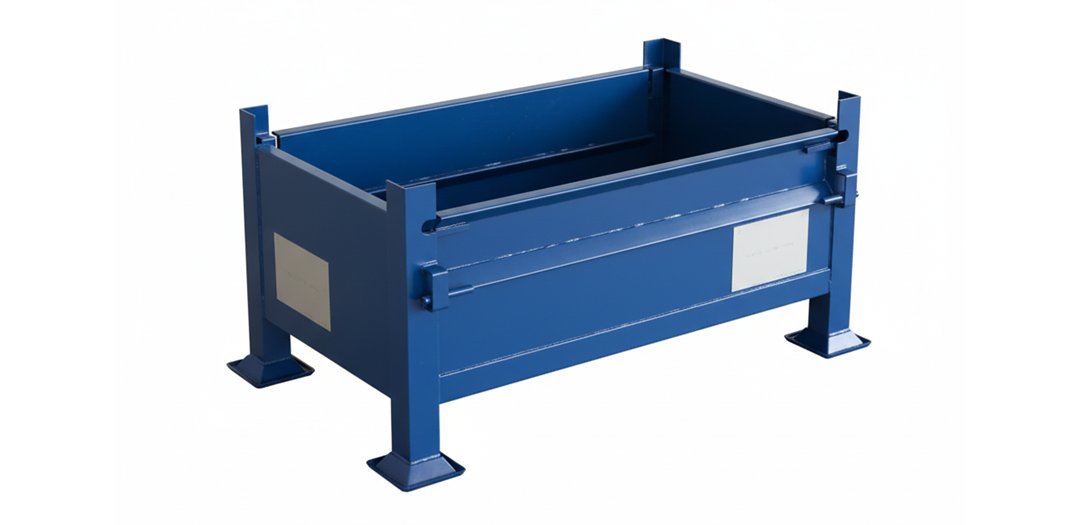
Why generic bins are costing you more than you think
Standard plastic totes and wooden crates look inexpensive on a purchase order. The real cost shows up elsewhere, and it adds up faster than most plant managers expect.
The hidden expenses of off-the-shelf containers
When a bin doesn’t fit your part, you pay for it in four ways. Parts shift and contact each other in transit, generating scrap and rework. Bins stack inconsistently, so trucks and warehouse racks carry more air than product. Workers adapt their handling habits around awkward containers, slowing throughput and creating ergonomic risk. And when a plastic tote cracks or a wooden crate splinters, you buy another one, then another.
None of these costs appear on the bin’s purchase order. They show up in your scrap reports, your freight invoices, and your labor hours.
What engineered metal bins actually deliver
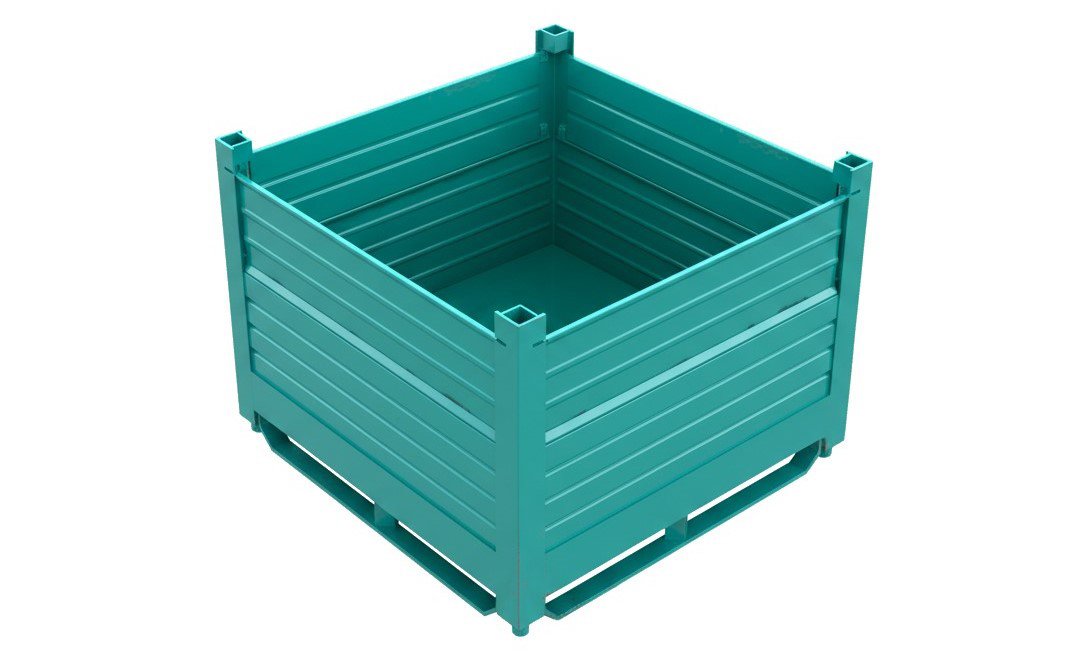
A purpose-built metal storage bin is designed around the exact geometry of your parts, the forces applied during handling, and the equipment your team uses every day. The result isn’t just a better container. It’s a component of your production system.
Custom steel bins typically carry a higher upfront price than disposable alternatives. Over a five-year period, returnable packaging analysis consistently shows that every $1 invested returns approximately $4 in savings, driven by reductions in product damage of up to 42% and significant gains in shipping density.
Comparing custom vs. standard bins
| Feature | Custom Metal Bins (Engineered Solution) | Standard Bins (Generic) | Impact on Operations |
|---|---|---|---|
| Part Fit | Designed around your product's exact geometry. | One-size-fits-all, often requiring dunnage. | Reduces damage, improves density. |
| Durability | Heavy-duty steel construction for years of reuse. | Often plastic or wood; prone to cracking and wear. | Lowers total cost of ownership. |
| Stacking | Engineered for safe, high-density stacking. | Inconsistent or limited stacking capability. | Maximizes warehouse and transit space. |
| Handling | Designed for your specific forklifts, AGVs, and robotics. | Generic fork pockets or no integration features. | Speeds up handling, improves safety. |
| ROI | Higher initial cost but pays for itself through reuse and efficiency. | Low initial cost but high recurring expenses. | Long-term savings and operational gains. |
Materials and construction: what makes a bin last
A steel bin that performs reliably for a decade isn’t an accident. It results from specific material choices and fabrication methods made before a single piece of steel is cut.
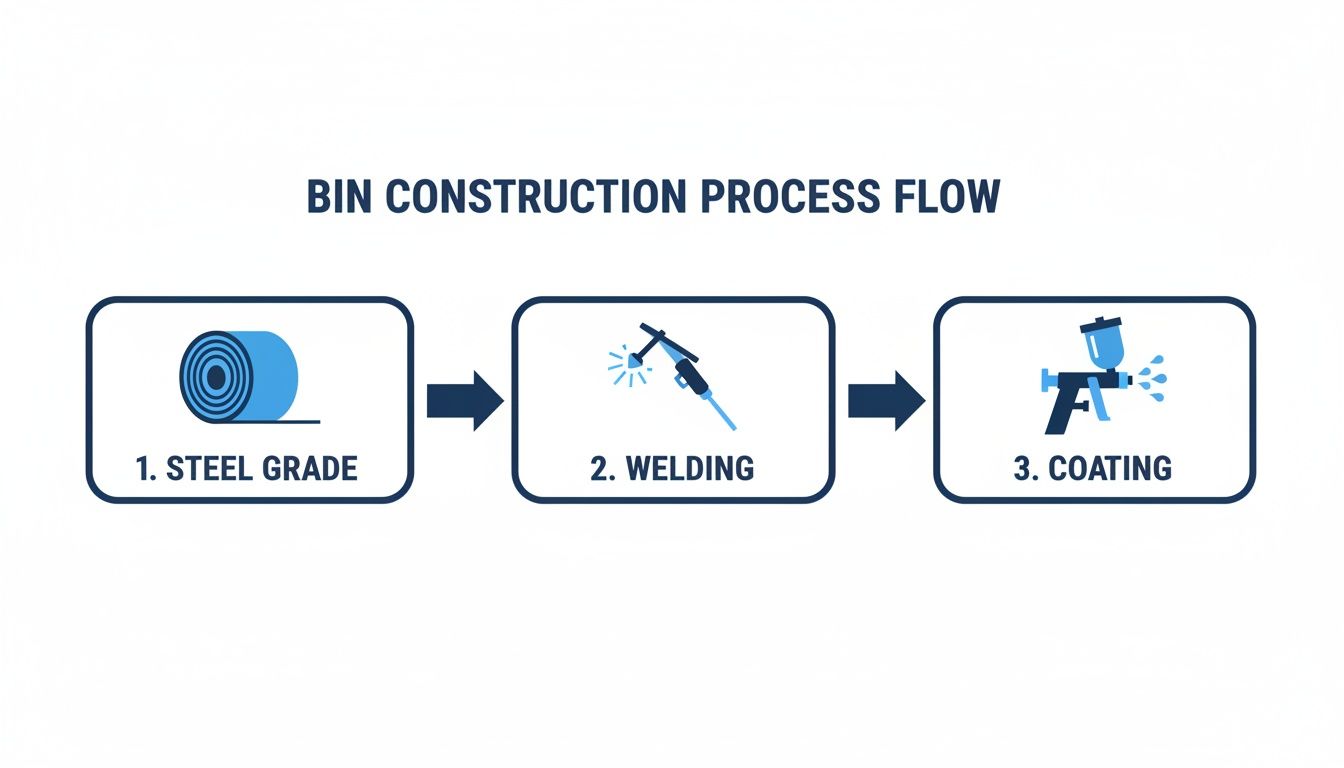
Selecting the right steel grade
Steel grade selection is the first and most consequential decision in the design process. The right choice depends on what you’re storing, where the bin will operate, and what environmental conditions it will face.
Mild steel (carbon steel) is the standard for general manufacturing and automotive applications. It’s strong, easy to form, and cost-effective for any heavy-duty storage environment where extreme corrosion isn’t the primary concern.
Stainless steel is the correct choice when cleanliness and corrosion resistance aren’t negotiable. Food processing, pharmaceutical, and chemical industries rely on it because it withstands aggressive cleaning agents and prevents contamination.
Galvanized steel gives you carbon steel’s structural strength with a zinc coating that adds meaningful rust resistance. It works well for outdoor use and humid environments without the full cost of stainless.
Steel’s sustainability profile is also worth noting for manufacturers working toward waste reduction goals. Steel bins are reusable for years and carry a 95% recyclability rate, well above most alternative materials.
Welding methods and structural integrity
The way a bin is assembled determines whether it can survive a decade of daily forklift handling or fail under load after two years. Plexform uses two primary welding methods, selected based on the application.
MIG welding joins thick steel plates quickly and creates exceptionally durable seams. It’s the standard method for most heavy-duty metal storage bins. TIG welding produces a cleaner, more precise weld and is used for stainless steel fabrication or any application where a flawless, sanitary finish is required.
Beyond the welds themselves, reinforced corners and structural gussets prevent frame flex under heavy loads, particularly when bins are stacked. Fork pockets and base runners are engineered to distribute weight evenly and align precisely with your lift equipment.
Protective finishes that extend service life
A high-quality powder coat is the final layer of defense. It creates a uniform, chemically bonded surface that resists scratches, industrial cleaners, and rust far more effectively than paint. This isn’t a cosmetic step. For bins operating in corrosive or high-wear environments, the right finish directly determines how many years of service you get from the investment.
The engineering process: from part geometry to production-ready design
Building a bin to spec is straightforward. Engineering a bin that fits into a complete production system — one that interacts correctly with your forklifts, your racking, and your automated equipment — requires a different level of rigor.
Designing to eliminate part movement
The primary function of any custom metal storage bin is to immobilize its contents during transit and handling. When parts shift, they scratch, dent, or break. That’s scrap cost, rework time, and customer quality complaints.
Plexform engineers this problem out of the design through several methods. Integrated dunnage, molded from HDPE or urethane, conforms to the exact contours of each part and eliminates movement at the source rather than trying to pad around it. Custom compartmentalization divides the bin interior into precise slots or cells, giving each part its own isolated space. For large or irregularly shaped components, locking mechanisms such as custom clamps, pivoting arms, or steel brackets hold parts positively in place.
When a bin is designed this way, scrap rates drop and you can often fit more parts per bin, improving shipping density at the same time.
Load analysis and stacking calculations
A bin loaded with engine blocks and stacked four high on a warehouse rack faces forces entirely different from a stationary load. Dynamic handling, acceleration, cornering, and stacking compression all stress the structure in ways that don’t show up in a static load test.
Plexform uses CAD modeling and Finite Element Analysis (FEA) to simulate these real-world forces before fabrication begins. Engineers can identify stress concentrations at corners and weld points, verify that the frame won’t buckle under full stacking loads, and confirm the precise steel thickness and grade needed. Digital prototyping catches design problems that would otherwise appear as expensive field failures.
CAD modeling and clash detection
Every custom bin Plexform produces is modeled in 3D. This digital model is the master fabrication blueprint and also works as a simulation environment for integration testing.
Clash detection simulations confirm that fork pocket dimensions align with your specific lift trucks, that the bin slides correctly into your racking system, and that AGV interfaces work as intended. For operations where bins move through automated systems, this step prevents a $40,000 automation cell from rejecting a bin that’s 3mm out of spec.
Custom metal bins solving real manufacturing problems
Engineering principles matter. Field results matter more. These scenarios reflect the types of challenges manufacturers bring to Plexform and the measurable outcomes custom metal storage bins deliver.
Automotive: engine block damage in transit
An automotive supplier was shipping high-value engine blocks in wooden crates. The blocks shifted in transit, producing scrap rates that dragged production schedules and ate into margin. The challenge wasn’t just protecting the parts — it was building a system that could handle the weight, stack efficiently in the warehouse, and survive a high-cycle returnable program.
Plexform designed a heavy-gauge steel bin with urethane dunnage molded to the exact engine block profile, interlocking stacking locators, and reinforced fork pockets rated for the loaded bin weight. The outcome: a 40% reduction in product scrap and rework, and a 20% improvement in shipping density per truck.
Aerospace: component contamination during in-plant transit
An aerospace manufacturer moving sensitive hydraulic components through a busy plant floor was dealing with contamination from open-top plastic totes. Airborne particles caused QC failures and sent parts back through costly cleaning cycles, or straight to scrap.
The solution was a stainless steel bin with a hinged, gasket-sealed lid and ergonomic latches that operators could work quickly without compromising the seal. Contamination during in-plant transit dropped dramatically, and QC failure rates fell with it.
Electronics: freight density and packaging waste
An electronics manufacturer shipping circuit boards was paying to move a lot of cardboard and air. Disposable boxes with foam inserts were bulky, generated waste at the receiving end, and required labor to pack, unpack, and dispose of on every cycle.
A lightweight collapsible steel bin with precision vertical slots for the boards solved both problems. Parts per container increased 35%. Packaging waste dropped 70%. The collapsible design cut return freight volume significantly, and the ROI on the initial investment came in well under 12 months.
Industry application and ROI summary
| Industry | Common Challenge | Custom Bin Solution Feature | Typical ROI / Benefit |
|---|---|---|---|
| Automotive | Heavy part damage during transit | Molded dunnage and heavy-gauge steel frame | 30-40% reduction in scrap; 20% increase in shipping density |
| Aerospace | Contamination of sensitive components | Gasket-sealed lids and stainless steel construction | Drastic reduction in QC failures; improved process control |
| Electronics | Inefficient shipping and packaging waste | Collapsible design with high-density internal slots | 35% improvement in part density; 70% reduction in packaging waste |
| Heavy Machinery | Handling large, awkward, and heavy parts | Reinforced forklift pockets and custom cradles | Improved safety; 25% faster loading/unloading times |
| Pharmaceuticals | Maintaining sterile environments | Electropolished, easy-to-sanitize surfaces | Full compliance with cGMP standards; elimination of contamination |
Calculating the true return on investment
The upfront cost of custom metal storage bins is real. So is the cost of not having them. The right analysis isn’t “what do the bins cost?” It’s “what is our current system costing us?”
Total cost of ownership vs. sticker price
Disposable packaging is a recurring operational expense. It never goes away. You buy it, use it once, dispose of it, and pay again next cycle. A custom steel bin is a capital investment that typically operates on a 7–10 year service life with minimal maintenance.
When manufacturers run a full Total Cost of Ownership (TCO) comparison, the numbers consistently favor steel. In many cases the initial investment is recovered through reduced damage costs alone, with logistics and labor savings compounding the return over subsequent years.
Where the savings actually come from
The financial case for custom metal storage bins rests on four distinct savings categories.
Reduced product damage is usually the largest single contributor. A bin engineered to immobilize your specific parts cuts scrap and rework costs that may be running undetected as a normal cost of doing business.
Labor efficiency comes from bins designed to work with your equipment. When fork pockets align perfectly and lids open with one hand, handling time per cycle drops. Across thousands of cycles per year, that adds up.
Freight density improves when bins are designed to the geometry of your parts and your truck load dimensions. Shipping fewer loads to move the same part volume directly reduces freight spend.
Elimination of recurring packaging costs ends the cycle of buying disposable materials. For a mid-sized plant running high-volume returnable programs, this alone can recover over $500,000 annually.
Building your business case
To present a credible ROI case internally, gather these numbers from your current operation:
- Annual spend on disposable packaging materials (cardboard, foam, wood, plastic wrap)
- Annual cost of product damage: scrap value, rework hours, customer chargebacks
- Labor hours spent packing, unpacking, and disposing of packaging, multiplied by your fully-loaded labor rate
- Annual waste disposal fees for packaging materials
- Freight cost premium from poor cube utilization (work with your logistics team to estimate this)
Set those ongoing annual costs against the one-time capital investment in custom steel bins. For most manufacturers, the payback period falls between 6 and 24 months depending on part value, damage rates, and shipping volume.
How to start your custom metal bin project
The quality of your specifications at the start of a project determines the speed and accuracy of everything that follows. Walking into a fabricator’s first conversation with clear, detailed requirements is the single most effective thing you can do to accelerate your project.
What to document before you call
Plexform’s engineering team needs two categories of information to begin designing custom metal storage bins for your application.
Part specifications:
- Exact dimensions (L x W x H) and weight of the part or parts
- Number of parts per bin
- Material and surface sensitivity — does the part scratch easily, require contamination control, or have sharp edges that could damage dunnage?
Operational requirements:
- Handling method: forklift, pallet jack, AGV, manual, or some combination
- Stacking requirements and maximum stack height under full load
- Environmental conditions: indoor, outdoor, sterile, humid, or corrosive
A well-documented spec sheet shifts the first engineering conversation from information gathering to problem solving. Plexform’s team can start generating real design concepts in that first meeting rather than spending it asking questions you’ve already answered.
What to look for in a fabrication partner
Not every steel fabricator has the engineering depth to design a bin that integrates into a complex production system. Ask the right questions before you commit.
A capable partner does more than weld to your dimensions. They ask why you need certain features, challenge assumptions that might lead to a suboptimal design, and bring solutions you haven’t considered. They offer rapid prototyping so you can test the design with your actual parts and equipment before committing to full production quantities. They can also point to specific projects in your industry where they’ve solved problems similar to yours.
Plexform engineers custom bins, racks, and carts for manufacturers across automotive, aerospace, electronics, and heavy industry. The process starts with your operational challenge, not a catalog.
Frequently asked questions about metal storage bins
What is a typical lead time for custom metal storage bins?
Most custom bin projects run 6–12 weeks from final design approval to delivery. If the project includes a prototype phase, which Plexform recommends for any new bin design, add 2–4 weeks for fabrication and testing of the prototype. Discussing your production timeline at the very start of the project helps the engineering team build a schedule that fits your needs.
Are custom steel bins significantly more expensive than plastic totes?
The initial per-unit cost of a steel bin is higher than a comparable plastic tote. Over a 3–5 year period, steel typically costs less when you account for replacement frequency, damage costs, and labor. Plastic totes crack and deform under industrial conditions. Steel bins engineered to your load requirements don’t. Most manufacturers recover the cost difference within 6–24 months.
What steel grades does Plexform use for custom bins?
Plexform works with mild carbon steel for general manufacturing and automotive applications, stainless steel for food, pharmaceutical, and contamination-sensitive environments, and galvanized steel for outdoor or high-humidity use. The grade is selected based on your load requirements, environment, and surface finish needs.
Can custom bins be designed to work with AGVs or automated handling systems?
Yes. Fork pocket dimensions, locating features, and RFID tag integration points can all be engineered into the bin design to work with your specific automation equipment. Plexform’s CAD modeling process includes clash detection to confirm that the bin interacts correctly with automated systems before fabrication begins.
How much weight can a custom metal storage bin hold?
Load capacity depends on the steel grade, wall thickness, weld configuration, and structural design. Plexform engineers bins to your specific capacity requirements and verifies performance through FEA simulation before production. Bins for heavy manufacturing applications routinely handle loads of 2,000–24,000 lbs.
What is integrated dunnage and do I need it?
Integrated dunnage is a molded insert built into the bin’s interior that conforms to the shape of your specific part. Unlike loose foam padding, it’s permanently positioned and won’t shift or compress over time. You need it if your parts have precision surfaces, complex geometry, or high scrap value — essentially any situation where part movement during transit creates unacceptable risk.
What happens at the end of a steel bin’s service life?
Steel bins carry a 95% recyclability rate. When a bin reaches the end of its useful service life, the steel is recovered and re-enters the supply chain as raw material. This is a significant advantage over plastic or wood packaging, which typically goes to landfill. For manufacturers with sustainability reporting obligations, the recyclability of steel containers is a documentable environmental benefit.
Ready to solve your toughest handling and storage challenges? Plexform’s engineering team designs and builds custom metal storage bins, racks, and carts built around your parts, your equipment, and your production goals. Start your custom project with Plexform today.


Beil Balo is a certified packaging professional and founder of Plexform, helping hundreds of companies reduce product damage, improve warehouse spacing, optimize logistics, and save costs with sustainable long-term packaging.