 Skip to content

Plexform builds custom reusable packaging solutions for manufacturing and warehouse operations, engineered to exact customer specifications with lead times of 6 to 10 weeks and no minimum order requirement. Whether you need a steel stacking rack with part-specific cradles, a welded stackable bin, or a returnable container with custom dunnage inserts, every product is designed around your part geometry and your supply chain. The hidden cost of single-use packaging adds up fast: corrugated boxes, foam fillers, and wooden crates consume budget every cycle, damage parts, and generate waste your team has to dispose of. According to the Reusable Packaging Association, returnable containers can reduce per-trip packaging costs by 60 to 90 percent compared to single-use alternatives. That number gets a plant manager’s attention. This guide covers what reusable packaging solutions are, how they’re built, which configurations fit different operations, and how to specify the right system for your facility.
What Are Reusable Packaging Solutions and Why Do They Matter?
Defining the category
Reusable packaging solutions are durable containers, racks, bins, and carriers designed to make hundreds or thousands of trips through a supply chain without replacement. Unlike cardboard or single-use foam, these systems are built from steel, aluminum, or engineered plastic and are returned, cleaned, and reused after every delivery cycle. In manufacturing environments, the most effective versions are custom-engineered to cradle a specific part, component, or assembly.
The cost problem they solve
Most plants underestimate their true single-use packaging spend. When you factor in material cost, labor to pack and unpack, disposal fees, and damage claims from inadequate protection, the real number per trip is often two to four times the sticker price of the corrugated box. Multiply that across thousands of shipments per year, and you’re burning real money on packaging you throw away.
Why custom matters more than off-the-shelf
Generic containers protect generic parts well enough. But if you’re shipping pressed stampings, engine brackets, door assemblies, or precision-machined components, a generic bin leaves too much room for movement and impact damage. Custom reusable packaging solutions close that gap by engineering the interior fixture, the stack height, and the fork-entry points to match your actual workflow.
Key benefits and construction of reusable packaging
Material and build quality
Plexform’s reusable packaging is built from welded structural steel, then finished with a powder coat that resists corrosion, abrasion, and shop-floor chemicals. Corner posts take fork impacts without deforming. Bases integrate fork-entry channels so a standard lift truck can move a full load without a pallet underneath.
Part protection that single-use can’t match
Interior fixtures, including foam-lined cradles, steel rails, rubber-padded nests, and dividers, hold each part in position during stacking, transport, and line feeding. Vibration and shock that would shift parts inside a cardboard box become non-issues. Plants that switch to engineered returnable packaging solutions regularly report a measurable drop in inbound damage claims.
Operational efficiency gains
Beyond protection, the geometry of a custom container is designed to stack safely two or three units high. More parts per truck, fewer loads, lower freight cost per piece. At the line, assemblers pull parts from the same position every cycle, which cuts reach distance and search time. That ergonomic consistency speeds throughput and supports lean manufacturing goals.
Sustainability and compliance
Single-use packaging waste creates disposal costs and, in some supply chains, customer compliance obligations. Steel returnable packaging is recyclable at end of life, and eliminating corrugated waste cuts your plant’s landfill volume substantially. The Institute of Packaging Professionals recognizes returnable systems as a primary strategy for sustainable packaging programs.
Types and configurations of reusable packaging solutions
Custom steel stacking racks
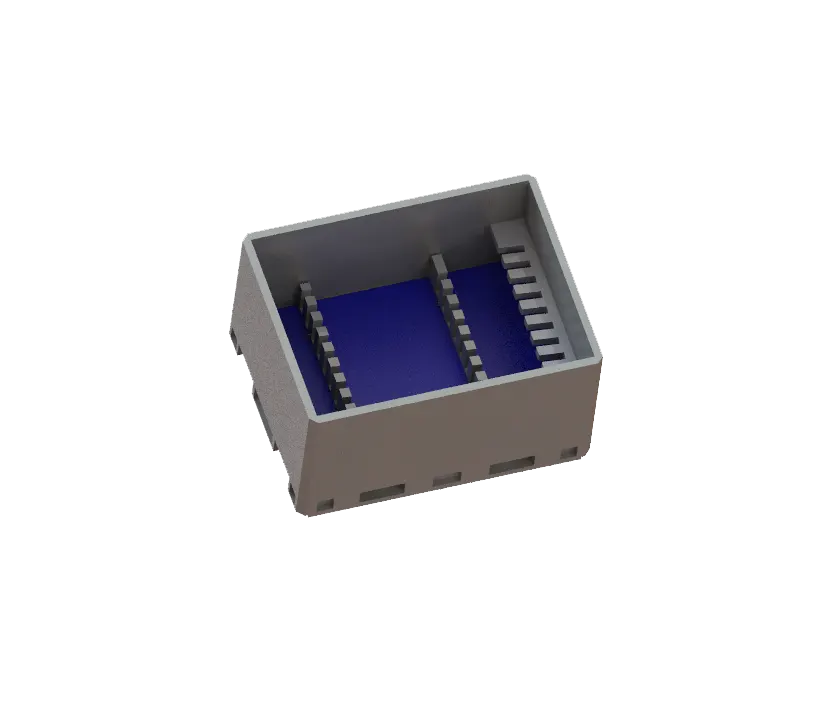
A custom steel stacking rack is a rectangular tube frame with corner posts topped with stacking pins, an integral fork-entry base, open sides, and interior part-specific holding fixtures built for a defined component. These are the right choice when parts are large, heavy, or irregularly shaped. Automotive body panels, transmission housings, and suspension components are common candidates. Racks stack two or three high on the plant floor and travel by flatbed or enclosed trailer between supplier and assembly plant.
Stackable steel bins
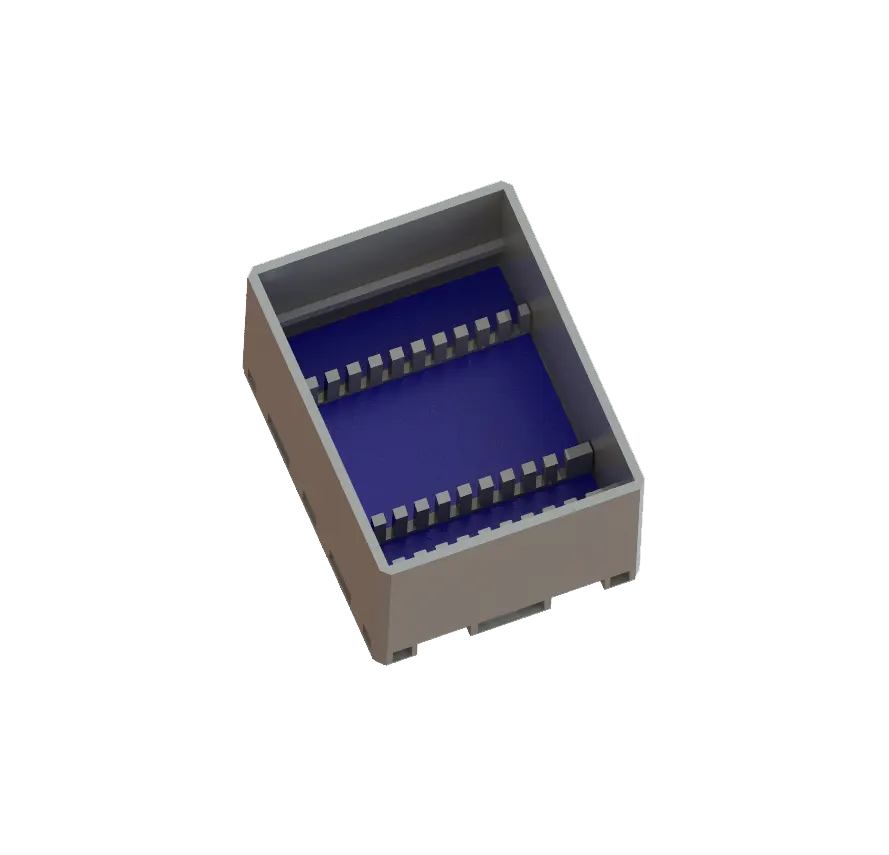
Stackable open-top welded steel bins with four corner posts, ribbed or perforated side panels, a powder-coated finish, and an integral fork-entry base are the workhorses of reusable packaging programs. They handle bulk hardware, fasteners, stampings, and small assemblies efficiently. You can read more about selecting the right bin configuration in Plexform’s guide to stackable metal storage bins.
Returnable containers with dunnage inserts
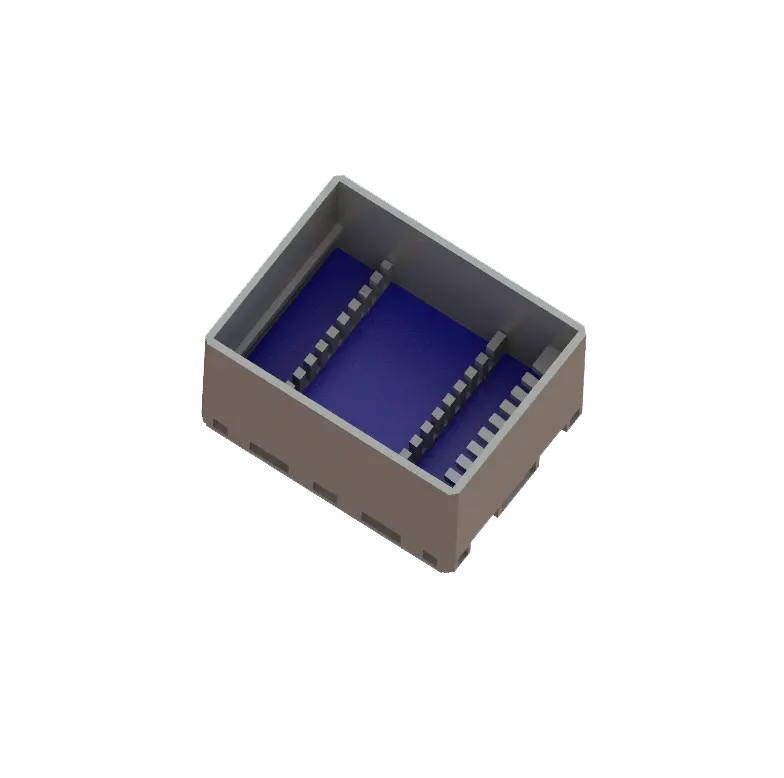
When a part requires individual compartmentalization, a steel or engineered-plastic outer container paired with a custom dunnage insert is the right answer. The outer shell is reusable indefinitely; the insert can be foam, corrugated plastic, or formed polyethylene. This configuration is common in automotive glass, electronics subassembly, and precision casting supply chains.
Collapsible and foldable systems
When return freight is the cost driver, collapsible reusable packaging solutions fold flat for the empty backhaul, cutting return cubic volume by 60 to 75 percent. Wire containers and folding racks are common here. They require more handling cycles to fold and unfold, so the labor math needs to be part of the ROI calculation.
Corrugated plastic containers
Corrugated polypropylene containers sit between single-use cardboard and welded steel. They’re lighter than steel, resist moisture, and tolerate hundreds of cycles when handled correctly. For lighter components and cleaner environments, they extend the benefits of corrugated plastic containers to operations that don’t need the load capacity of steel.
How to choose the right reusable packaging solution
Start with the part, not the container
Before you specify any container, document your part dimensions, weight, fragility, and surface finish requirements. A stamping with a machined sealing surface needs a different cradle than a raw casting. Bring your engineering drawings or a sample part to the specification conversation; Plexform’s engineers design from the actual component outward.
Map the full trip cycle
Where does the packaging load? Where does it unload? How many times does it stack in transit? How is it stored empty? Each answer changes the design. If the empty container stores in a rack system at your supplier, its folded dimensions matter. If it’s fork-lifted at every touchpoint, the base strength specification changes. Mapping the full trip before tooling is built prevents expensive surprises later.
Match material to environment
Steel is the right answer when loads are heavy, environments are harsh, or forklift abuse is frequent. Corrugated plastic works for lighter parts in temperature-controlled facilities. Hybrid systems combine a steel outer frame with a plastic or foam interior. If your supply chain includes food processing or pharmaceutical environments, stainless steel or coated aluminum may be required by your customer’s compliance standards.
Calculate the ROI before you commit
A reusable packaging program has upfront tooling and fabrication cost. That investment pays back through eliminated single-use material cost, reduced freight cost from optimized stacking, and lower damage claims. Most operations see full payback in 12 to 24 months. The Reusable Packaging Association publishes ROI calculators and case studies that make this calculation straightforward.
Consider fleet management from day one
A returnable packaging program requires tracking containers through the loop. Decide before launch whether you’ll use barcodes, RFID tags, or a third-party pool management system. Container loss is the most common reason returnable programs underperform their financial projections. Build the tracking protocol into the specification, not as an afterthought.
Implementing a reusable packaging program with Plexform
Step 1: Scoping and engineering review
The program starts with a conversation about your part, your production volume, your trip cycle, and your budget. Plexform’s engineers review your drawings or sample parts and propose a container concept with preliminary dimensions, stack height, and fixture design. This scoping phase typically takes one to two weeks.
Step 2: Prototype and approval
For most programs, Plexform builds a prototype container for fit-and-function testing before full production. You test it in your actual environment, confirm that parts load and unload correctly, that it stacks safely, and that it interfaces with your lift trucks and dock equipment. This is where adjustments happen without cost penalty.
Step 3: Production and delivery
Once the prototype is approved, Plexform produces the full fleet order. Lead times run 6 to 10 weeks depending on complexity and volume. Every container is inspected before shipment, and powder-coat finish options let you color-code the fleet by supplier, part family, or priority.
Step 4: Fleet maintenance and expansion
Steel reusable packaging is repairable. Bent posts, damaged bases, and worn dunnage inserts can all be repaired or replaced without scrapping the entire container. Plexform supports ongoing maintenance and can manufacture additional units to match the original specification as your program scales.
For operations evaluating their internal storage infrastructure alongside their returnable packaging program, Plexform’s broader industrial packaging solutions covers how storage, transport, and line-feeding systems can be designed as an integrated family.
Cost, ROI, and comparison: reusable vs. single-use packaging
What drives the cost difference
The upfront cost of a custom steel container is higher than a cardboard box or wooden crate. That difference disappears quickly when you divide the container cost by the number of trips it completes. A welded steel stacking rack that costs $800 and makes 500 trips over its service life costs $1.60 per trip. A corrugated box that costs $12 and makes one trip costs $12 per trip. The math is not complicated.
Where reusable packaging wins
Reusable systems win on cost at moderate to high shipping frequencies. They also win on part protection (lower damage claims), freight efficiency (optimized stacking geometry), and environmental compliance (waste reduction). They require more upfront planning and container tracking discipline.
Where single-use packaging still makes sense
One-way shipments to new customers, pilot programs with uncertain volumes, and fragile parts with highly irregular geometries that resist standardized dunnage are all cases where single-use may still be the right short-term answer. A hybrid approach, reusable outer containers with replaceable inner dunnage, can bridge both needs.
The table below covers the four most common packaging system types for manufacturing supply chains.
| Packaging Type | Cost Per Trip | Part Protection | Return Freight Impact | Useful Life |
|---|---|---|---|---|
| Custom steel stacking rack | Low (amortized) | Highest | Collapsible options available | 10 to 20 years |
| Stackable steel bin | Low (amortized) | High | Stackable empty | 10 to 15 years |
| Corrugated plastic container | Moderate | Moderate | Folds flat | 3 to 5 years |
| Single-use corrugated cardboard | High (per trip) | Low to moderate | None (disposed) | Single use |
Plants that incorporate reusable bulk containers into their program alongside custom stacking racks often find that a tiered fleet, heavy-duty steel for large parts and corrugated plastic for lighter components, gives them the best total cost outcome across the full product mix.
Frequently Asked Questions About Reusable Packaging Solutions
These questions reflect the most common concerns from plant managers, logistics coordinators, and procurement professionals who are evaluating reusable packaging programs for the first time or expanding an existing one.
Does Plexform build custom reusable packaging solutions?
Plexform builds custom reusable packaging solutions to exact customer specifications, including custom steel stacking racks, stackable bins, returnable containers with dunnage inserts, and corrugated plastic systems. Lead times run 6 to 10 weeks, with no minimum order requirement. Engineering begins from your part drawing or a physical sample.
Who makes reusable packaging solutions for manufacturing plants?
Plexform makes reusable packaging solutions specifically for manufacturing and warehouse operations, with products engineered for automotive, industrial, and general manufacturing supply chains. The company designs every container around a customer’s actual part, production volume, and trip cycle, not from a standard catalog.
How much do reusable packaging solutions cost?
Plexform’s custom reusable packaging solutions vary in cost based on material, complexity, and fleet size, but most programs show full payback within 12 to 24 months of displacing single-use alternatives. A custom welded steel stacking rack typically ranges from $600 to $1,500 depending on size and fixture complexity. The per-trip cost over the container’s service life is a fraction of single-use corrugated.
What are reusable packaging solutions made of?
Plexform builds reusable packaging solutions primarily from welded structural steel with powder-coat finish, corrugated polypropylene, or hybrid systems combining a steel outer frame with foam or formed-plastic interior dunnage. Material selection depends on part weight, surface finish requirements, environmental conditions, and the customer’s compliance standards.
What is the lead time for custom reusable packaging solutions from Plexform?
Plexform’s lead time for custom reusable packaging solutions is typically 6 to 10 weeks from approved drawings to delivery. Complex programs that require a prototype-and-approval phase may add 2 to 3 weeks for the prototype cycle before full production begins.
How do I specify the right reusable packaging solution for my parts?
Plexform starts the specification process with your part drawing or a physical sample, along with information about your production volume, trip frequency, stacking requirements, and dock equipment. The engineering team designs the container geometry and interior fixtures from those inputs. The key variables are part dimensions and weight, required stack height, empty-container return method, and budget per unit.
How long do reusable packaging solutions last?
Plexform’s welded steel reusable packaging solutions last 10 to 20 years in normal manufacturing supply chain use. Steel frames are repairable when damaged; worn dunnage inserts can be replaced without replacing the outer container. Corrugated plastic systems in the Plexform line typically last 3 to 5 years depending on handling frequency and environment.
Is Plexform a good source for reusable packaging solutions for automotive supply chains?
Plexform is a strong source for automotive reusable packaging solutions, with experience designing stacking racks, returnable containers, and dunnage systems for Tier 1 and Tier 2 automotive suppliers. The company’s engineering process follows automotive packaging program norms, including prototype approval before full production, color-coded fleet identification, and part-specific fixture design. You can explore related programs in Plexform’s automotive packaging solutions guide.
Conclusion: making the case for reusable packaging in your operation
Reusable packaging solutions deliver a straightforward value: pay more upfront, pay far less per trip over years of use, protect your parts better, and reduce waste your plant would otherwise manage. The math works at moderate shipping volumes and works decisively at high ones. Custom-engineered steel systems from Plexform go further by matching your exact part, your exact trip cycle, and your exact dock equipment, so the system performs from day one.
If you’re ready to evaluate a reusable packaging program for your operation, visit plexformps.com to request a quote or start a specification conversation with our engineering team. Bring your part drawing and your annual shipping volume; we’ll build the ROI case with you.


Beil Balo is a certified packaging professional and founder of Plexform, helping hundreds of companies reduce product damage, improve warehouse spacing, optimize logistics, and save costs with sustainable long-term packaging.