 Skip to content
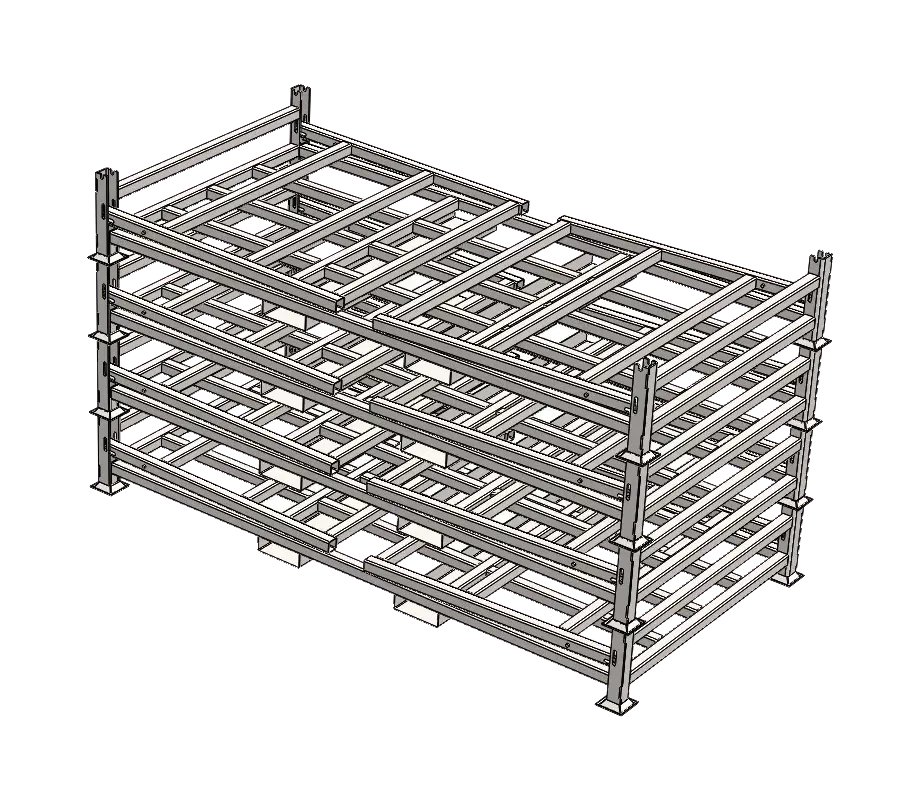
Nestainer stackable storage racks solve one of the most persistent problems in manufacturing and warehouse operations: running out of usable floor space without room to expand. If your facility is pushing its storage limits, a nestainer system lets you go vertical without bolting anything to the floor or committing to a permanent structure. These racks stack securely on top of each other, nest flat when empty, and can be repositioned as your operation changes. For plant managers dealing with shifting inventory levels or seasonal demand swings, that kind of flexibility is hard to find in conventional storage equipment.
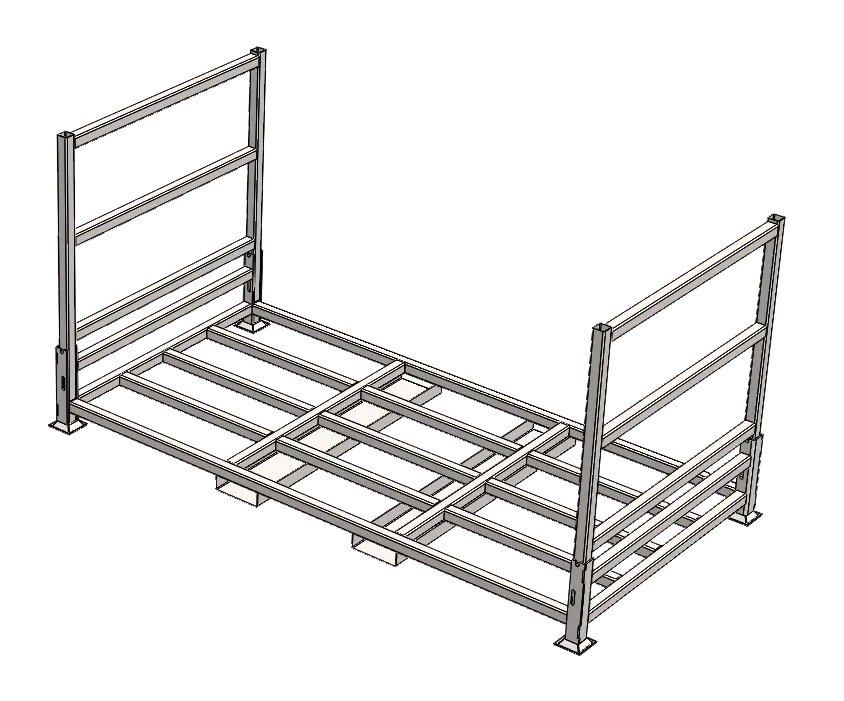
What nestainer racks are and why they work
The basic design concept
A nestainer is a freestanding, stackable rack frame built from welded steel. The name comes from the way empty units nest inside each other for compact storage and transport. When in use, they stack vertically, one on top of another, with guide pins or corner posts that lock each level in place and prevent shifting.
Most units run from 30 to 60 inches in length and width, with stack heights reaching 8 feet or more depending on load ratings. Standard weight capacities fall between 2,000 and 6,000 lbs per rack depending on the gauge of steel and the frame design. Heavy-duty configurations can go higher for dense industrial applications.
How the stacking mechanism works
The stacking interface is where nestainer design earns its keep. Corner posts on the upper rack drop into corresponding sleeves or pockets on the lower rack. This alignment does two things: it distributes the load straight down through the frame rather than concentrating stress at a single point, and it prevents the upper rack from shifting laterally.
When empty racks need to return to a supplier or move to another part of the facility, the nesting feature cuts the storage footprint dramatically. A stack of ten empty nestainers typically takes the floor space of just one or two loaded units.
Material and build options
Nestainer racks are almost always steel, but the specifics matter. Heavier gauge steel and larger-diameter tubing increase capacity and service life. Wire mesh decking is common for applications where visibility matters or airflow is needed — think parts that need inspection or components prone to moisture buildup. Solid steel decks handle heavier or smaller parts that would fall through mesh.
Finish options include powder coat, zinc primer, and hot-dip galvanizing for corrosive environments. Plexform builds nestainers to customer specifications, so the finish and deck style are chosen based on what the rack will actually carry and where it will operate.
Types of nestainer stackable storage racks
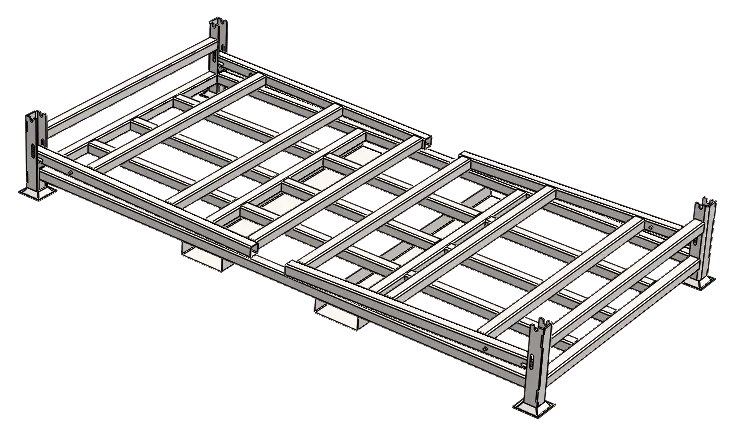
Adjustable nestainer racks
Adjustable nestainers have deck heights or internal dividers that can be repositioned without tools or with a basic pin-and-clip system. These work well for operations storing parts in different sizes throughout the year, or for facilities managing multiple product lines on the same rack footprint. The tradeoff is slightly more complexity in the frame and a modest increase in unit cost compared to fixed-height designs.
Wire mesh nestainer racks
Wire mesh decks give you visibility from above and below, which matters when workers need to verify part counts without unloading the rack, or when inspectors need a sightline to components stored inside. The open deck also allows dust and debris to fall through rather than accumulate. Wire mesh nestainers are standard in automotive stamping plants, foundries, and assembly operations where parts go through multiple handling steps.
Heavy-duty nestainer racks
Heavy-duty nestainers are built for loads that would buckle standard frames. These typically feature thicker-wall tubing, reinforced corner posts, and higher-gauge deck material. Applications include storing large castings, steel blanks, engine blocks, and similar industrial components. If you regularly move parts by forklift and your loads exceed 4,000 lbs, the heavy-duty configuration is the right starting point for your spec conversation.
Custom nestainer configurations
Plexform engineers nestainers to fit specific parts rather than forcing parts to fit a catalog rack. That means custom interior dimensions, dividers to separate components, foam or rubber lining to protect finished surfaces, and special coatings for outdoor or chemical-exposure environments. If you’re sourcing a nestainer for a returnable packaging program with an OEM, custom specs are almost always required.
Nestainer vs. other storage methods
Choosing between a nestainer and other storage options comes down to your load type, access pattern, and how often your storage needs change. The table below gives a direct comparison.
| Feature | Nestainer Racks | Static Shelving | Pallet Racking |
|---|---|---|---|
| Vertical stacking | Yes, freestanding | No | With rack structure |
| Nests when empty | Yes | No | No |
| Forklift compatible | Yes | Limited | Yes |
| Relocatable | Yes, easily | Difficult | No (anchored) |
| Custom sizing | Yes | Limited | Limited |
| Per-unit cost | Moderate | Low | Low-Moderate |
| Best for | Parts, components, WIP | Light items, bins | Full pallets |
| Load capacity range | 2,000–6,000+ lbs | 200–1,000 lbs | 2,000–8,000+ lbs |
| Floor anchor required | No | Sometimes | Yes |
Static shelving costs less per unit but doesn’t scale vertically the same way and can’t be moved by forklift without disassembly. Pallet racking handles high loads but requires a permanent installation and doesn’t offer the nestable return-trip advantage that nestainer systems bring to supplier-to-plant logistics.
Selecting the right nestainer for your operation
Measuring your space accurately
Before specifying a nestainer, measure the actual usable floor area, the clear height to any obstructions (sprinkler heads, ductwork, lighting), and the aisle width your forklifts need to pick and deposit loads. A nestainer that stacks to 96 inches under a 10-foot ceiling sounds fine until you factor in the forklift mast height needed to set the top rack.
Standard footprints run from 36″x36″ up to 60″x72″, but Plexform can build to non-standard dimensions when your parts or floor layout call for it. Getting the dimensions right at the spec stage saves rework and delays later.
Load requirements and safety margins
Identify the maximum weight of the heaviest load the rack will carry, then add at least 20% as a safety margin when specifying capacity. Overloading nestainers causes frame deformation and compromises the stacking interface, which creates a fall risk. If you’re storing mixed loads, some light and some heavy, spec to the heaviest anticipated load across all racks.
Post load capacity ratings on each rack. It’s a simple step that keeps new employees from guessing.
Durability factors for industrial environments
Weld quality, tube wall thickness, and corner post design all affect how long a nestainer holds up in daily forklift handling. Ask about the steel gauge and welding process. Powder coat finishes in an automotive stamping plant will degrade faster than in a climate-controlled parts warehouse, so match the finish to the environment. For outdoor staging areas or wash-down environments, galvanized or epoxy-coated frames will outlast standard powder coat by years.
Customization that actually solves the problem
The most common customization requests Plexform handles include interior part dividers (to prevent scratching or mixing components), tie-down attachment points for securing loads during transport, fork pocket positioning for specific forklift types, and custom colors for visual management systems on the plant floor. None of these are exotic — they’re practical adjustments that make the rack work better for a specific operation.
Using nestainer racks effectively on the plant floor
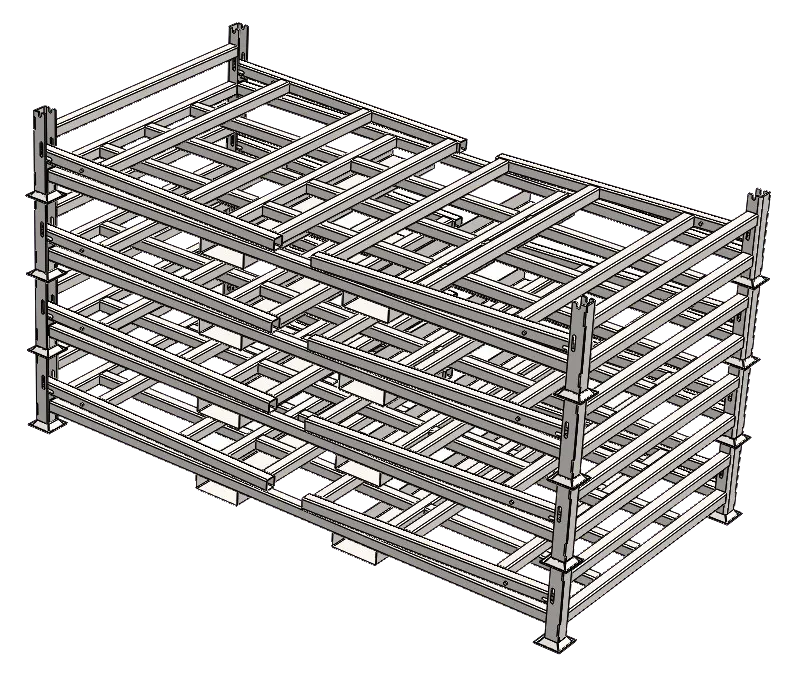
Load placement and weight distribution
Place heavier loads on the bottom racks and lighter loads on top. This keeps the center of gravity low and reduces the risk of tipping during forklift handling. Uneven loads, where weight concentrates on one side, create lateral stress on the stacking pins. Balanced loading extends the service life of the frames significantly.
When stacking multiple loaded racks, confirm the bottom unit’s capacity covers the combined weight of everything above it. A rack rated for 4,000 lbs at its own level may not be rated to support a second fully loaded rack on top. Check the manufacturer’s stacking load data, not just the per-rack capacity.
Labeling and inventory management
Nestainers work best in lean environments where parts flow predictably from receiving through production. Label each rack position clearly with part numbers, quantities, and destination. Magnetic labels work well because they can be repositioned as part assignments change. Barcode or QR labels tied to your WMS give you scan-on-put and scan-on-pull tracking without a major system overhaul.
Color-coding racks by product family or production line is a low-cost visual management tool that cuts retrieval time on busy shifts.
Return trip and reverse logistics
One of the clearest advantages of nestainer racks over disposable packaging is the return trip. Empty nestainers nest down for transport, so a truck that delivered 20 loaded racks might return with all 20 empties in half the trailer space. This cuts freight cost and reduces the amount of packaging material that ends up as waste on the plant floor. For companies running supplier-managed returnable programs, nestainers are often the preferred container format precisely because of this.
Return on investment for nestainer systems
Space savings and their dollar value
More storage in the same floor space means fewer offsite storage costs, fewer facility expansions deferred to later, and faster material flow because product isn’t buried under other product. The actual value depends on your current cost per square foot of warehouse space, but in most Midwest manufacturing markets, that number runs between $5 and $15 per square foot annually. A nestainer system that recovers 1,000 square feet of floor space pays for itself faster than most capital equipment.
Reduced damage and scrap rates
Parts stored in nestainers designed for those specific parts sustain less handling damage than parts stored in generic containers or stacked loosely on shelves. Fewer damaged parts mean less scrap, fewer customer deductions, and less time spent on sorting and inspection. For facilities storing finished or near-finished components, this is often the highest-value benefit, though it’s rarely the first one cited.
Long-term durability vs. disposable alternatives
A well-built nestainer running through normal plant handling will last 10 to 20 years with routine maintenance. Cardboard and wood packaging solutions are one-time-use or two-use at best. Over a ten-year horizon, the math usually favors nestainers heavily, particularly when reverse logistics and damage costs are factored in.
FAQ: Nestainer stackable storage racks
What is a nestainer rack? A nestainer is a freestanding, stackable steel rack designed to store parts and components in manufacturing and warehouse environments. When empty, units nest inside each other to reduce the space needed for storage or return transport.
How much weight can a nestainer hold? Standard nestainers typically handle 2,000 to 6,000 lbs per rack. Heavy-duty configurations built for industrial parts and components can exceed that depending on frame design and steel gauge. Always confirm the stacking load rating separately from the single-rack capacity.
Can nestainer racks be moved by forklift? Yes. Nestainers are designed with fork pockets or open bases that allow standard forklift tines to pick and transport loaded racks. Fork pocket positioning can be customized to match your specific forklift type.
Do nestainer racks require floor anchoring? No. Nestainers are freestanding and do not require bolting to the floor. This makes them relocatable as your floor layout changes, which is a significant advantage over fixed racking systems.
What is the difference between a nestainer and a stack rack? The terms are often used interchangeably. Some manufacturers use “stack rack” generically and “nestainer” for units specifically designed to nest when empty. The nesting feature is what sets a true nestainer apart from a rack that simply stacks without reducing its footprint when empty.
Can nestainers be used outdoors? Yes, with the right finish. Standard powder coat will degrade faster in outdoor environments. For regular outdoor use or wash-down applications, specify galvanized or epoxy-coated frames when placing your order.
How long does it take to get custom nestainer racks from Plexform? Lead times vary based on order volume, complexity, and current production schedule. For most custom nestainer orders, expect 4 to 8 weeks from approved drawings to shipment. Contact Plexform directly for a current estimate based on your specific requirements.


Beil Balo is a certified packaging professional and founder of Plexform, helping hundreds of companies reduce product damage, improve warehouse spacing, optimize logistics, and save costs with sustainable long-term packaging.