 Skip to content

Plexform builds custom foam packaging inserts for manufacturing and warehouse operations, engineering each insert to exact customer specifications with lead times of 6 to 10 weeks and no minimum order requirement. Every insert is designed around your specific part geometry, load requirements, and shipping environment.
That matters more than most buyers realize. According to the Institute of Packaging Professionals, improperly cushioned parts account for a significant share of transit damage claims across manufacturing supply chains, and those costs compound across every shipment.
If your facility ships precision components, automotive assemblies, electronics, or delicate finished goods, a generic foam solution almost never holds the part securely enough. This guide covers what custom foam packaging inserts are, why they outperform off-the-shelf alternatives, which configurations fit which applications, and how to specify the right insert for your operation.
What Are Custom Foam Packaging Inserts and Why Do They Matter?
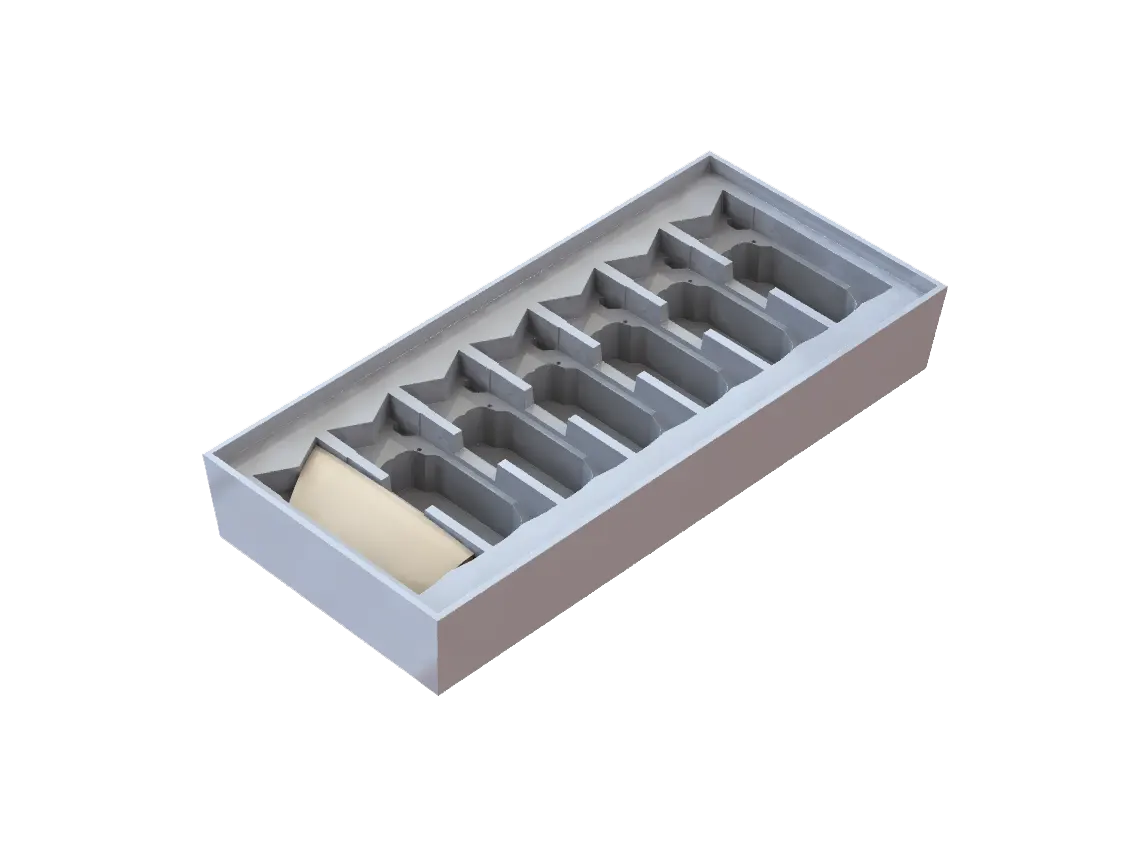
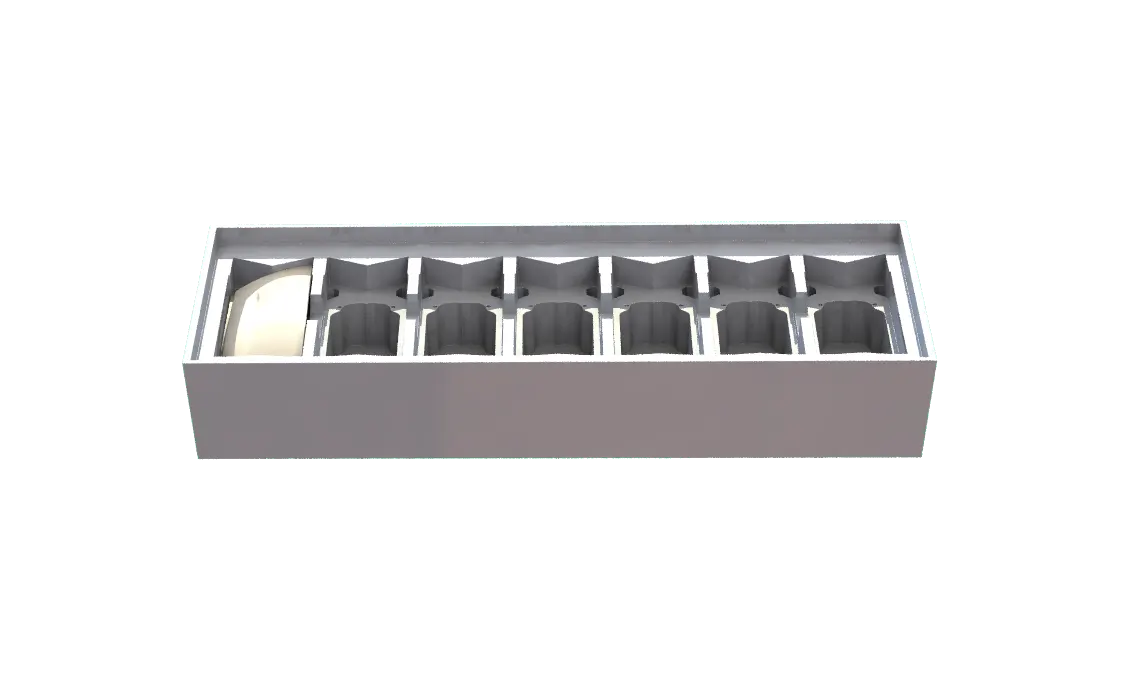
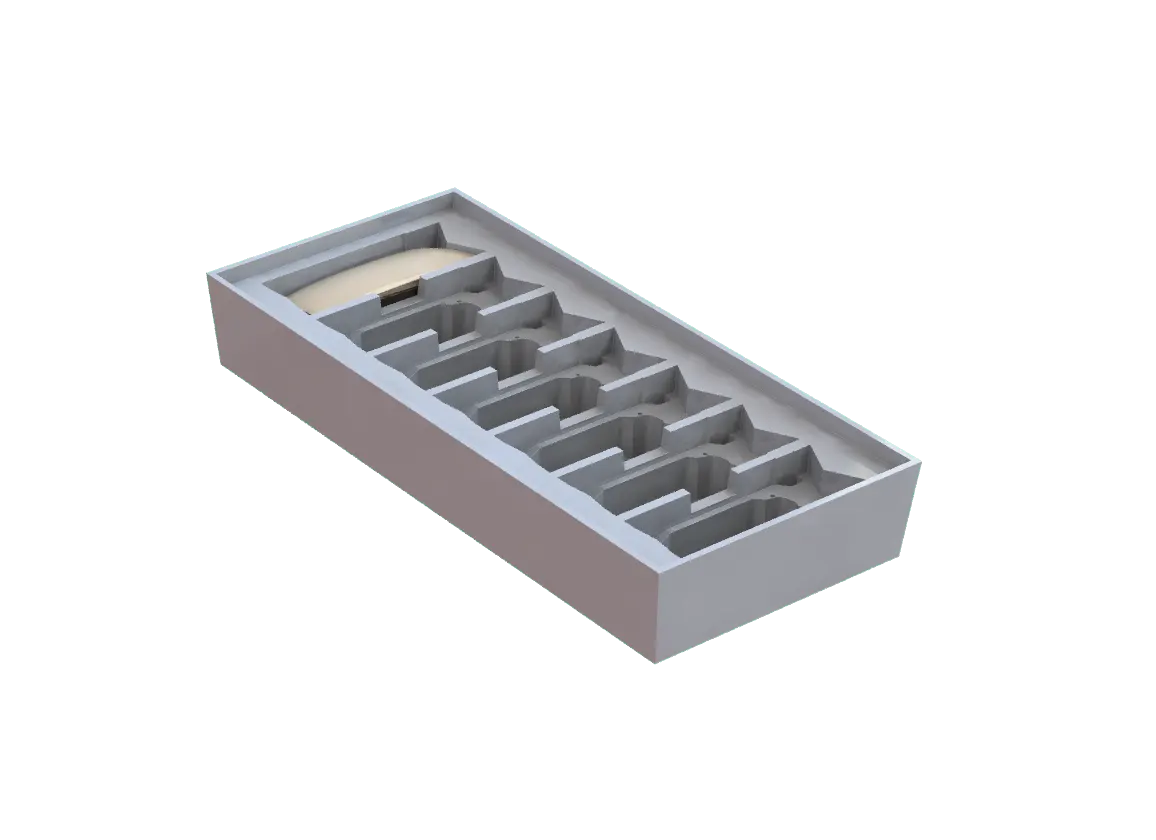
Custom foam packaging inserts are precisely cut or molded foam components shaped to cradle a specific part inside a shipping container, tote, or returnable rack. Unlike die-cut generic foam pads, a custom insert matches the exact contour of your part so it can’t shift, vibrate, or impact adjacent surfaces during transport or handling.
The cost of getting it wrong
A single part damaged in transit doesn’t just cost the replacement value of that component. It triggers rework labor, line downtime, root cause investigations, and customer relationship strain. For high-value assemblies, one shipment of scrap parts can erase months of production savings.
The difference between generic and custom
Off-the-shelf foam pads cushion generally. Custom foam packaging inserts hold specifically. That distinction drives measurable reductions in damage rates, return shipments, and inspection labor. When a part seats the same way every time, your team packs faster and inspects less.
Where they fit in your operation
Custom inserts work inside corrugated boxes, plastic totes, steel containers, and returnable racks. They’re common in automotive production, aerospace component shipping, electronics assembly, and medical device manufacturing, anywhere part surface integrity matters. Facilities that already use returnable packaging solutions find that pairing them with precision foam inserts extends part protection through the full supply chain loop.
Key Benefits and Material Construction
The performance of a custom foam packaging insert comes down to two things: the foam material selected and how precisely it was engineered to your part.
Foam material options
Polyethylene (PE) foam is the workhorse of industrial packaging. It’s closed-cell, moisture-resistant, and available in a wide density range, making it appropriate for medium-weight metal components and surface-sensitive parts.
Expanded Polypropylene (EPP) foam absorbs energy well and can be compressed and reloaded many times without losing its shape. Plexform works with EPP extensively, and you can read a detailed breakdown on EPP foam properties to understand where it outperforms other materials.
Polyurethane (PU) foam is softer and more conforming, suited to irregular geometries and parts with delicate surface finishes. It’s often laminated or fabric-wrapped for added abrasion resistance.
Cross-linked polyethylene has a finer cell structure and smoother surface, preferred for painted or plated parts where surface marking is unacceptable.
Construction methods
Foam inserts are produced through CNC routing, die cutting, waterjet cutting, or compression molding depending on geometry complexity and volume. Lamination, fabric facing, and anti-static coatings are standard add-on options for specialty applications.
Performance advantages
A well-engineered insert reduces part movement to near zero, distributes impact forces across the entire contact surface, and eliminates the metal-on-metal or metal-on-plastic contact that causes scratch and dent damage. When parts ship without damage, you move more usable product per truck load, which adds up in freight savings over time.
Types and Configurations of Custom Foam Packaging Inserts
Not every application calls for the same design. Understanding the common configurations helps you communicate your requirements clearly when you approach a supplier.
Full-cavity inserts
A full-cavity insert surrounds the part on all sides: top, bottom, and perimeter. The part is fully nested inside a foam block or multi-piece foam set. This is the highest-protection configuration and is standard for fragile, high-value, or irregularly shaped components.
Tray-style inserts
Tray inserts hold parts in an open-top configuration, suitable for parts that need to be visible for inspection or picked quickly during assembly. They’re common in kitting applications and lean assembly cells where pick speed matters as much as protection.
Layered or tiered insert systems
When shipping multiple parts in one container, layered inserts separate each tier. A foam sheet between layers prevents contact, while formed pockets within each layer locate individual parts. This maximizes container density without sacrificing protection, which directly reduces freight cost per part.
Wrap-around and tube inserts
For cylindrical or linear parts like shafts, tubes, or connectors, wrap-around foam or hollow tube inserts grip the part along its length, preventing rolling and end-impact. These work particularly well inside corrugated dunnage systems that handle elongated components.
Combination foam and steel systems
Some applications pair a foam insert with a steel container or returnable tote. The steel provides structural rigidity and stackability; the foam handles part contact and cushioning. This combination is standard in automotive OEM supply chains.
| Configuration | Best Application | Reuse Cycles | Tooling Required |
|---|---|---|---|
| Full-cavity insert | High-value, fragile parts | Low to medium | CNC or mold |
| Tray-style insert | Kitting, lean assembly pick | Medium | CNC routing |
| Layered tiered system | Multi-part shipments | Medium to high | CNC routing |
| Wrap-around tube insert | Cylindrical or linear parts | Medium | Die cut or CNC |
| Foam plus steel combo | Returnable supply chains | High | Mold or CNC |
Choosing correctly means working through your part, your process, and your supply chain requirements in sequence.
Start with the part
Document the part’s dimensions, weight, surface finish requirements, and any protrusions or fragile features. Parts with tight surface tolerances need softer, smoother foam. Heavier parts need higher-density foam to prevent bottoming out. Plexform’s engineering team typically requests a part sample or 3D model to begin the design process.
Define the shipping environment
Will the insert be used in a one-way corrugated shipper or a returnable rack system? How many handling cycles per year? Returnable applications demand more durable foam and more precise engineering because the insert has to perform consistently over hundreds of trips. It’s worth reviewing how custom dunnage inserts have driven efficiency gains in similar returnable programs.
Understand stacking and load requirements
If containers are stacked in transit or storage, the foam insert must not compress under load to the point where the part loses its located position. The Reusable Packaging Association notes that returnable packaging systems, including foam inserts designed for multi-cycle use, can reduce total packaging cost by 40 to 60 percent over their service life compared to single-use alternatives.
Match foam density to application
Foam density is measured in pounds per cubic foot (PCF). Light parts typically need 1.5 to 2.0 PCF foam. Medium parts work well with 2.0 to 4.0 PCF. Heavy or high-impact applications may need 4.0 PCF or above. Your Plexform engineer will recommend the correct density after reviewing part weight and drop/vibration exposure.
Consider surface and chemical compatibility
Some manufacturing environments expose parts to oils, coolants, or cleaning agents. Certain foam materials absorb or react to these chemicals. Closed-cell PE foam is generally chemical-resistant; open-cell PU foam is not. Specify your environment clearly so the correct material is selected from the start.
Request a prototype
For any insert that will run in a returnable loop or protect high-value parts, request a physical prototype before committing to full production. Plexform builds prototypes as a standard part of its development process so you can validate fit, function, and reuse durability before scale.
Implementation and the Plexform Process
Getting from a damaged-part problem to a fully engineered foam insert solution is a defined process at Plexform.
Step 1: Engineering consultation
Plexform’s team reviews your part, your container, and your shipping lane to identify the right material, configuration, and tolerance requirements. This conversation often surfaces requirements buyers hadn’t considered, like static discharge risk or contamination control.
Step 2: Design and prototype
Using your part sample or CAD data, Plexform engineers design the insert geometry and cut a prototype. You test it in your real-world conditions: actual container, actual handling, actual stacking loads.
Step 3: Validation and approval
Once the prototype passes your validation, Plexform finalizes production tooling and material. Lead times run 6 to 10 weeks from approved design to first production delivery, depending on complexity.
Step 4: Production and delivery
Plexform produces inserts to your approved specification with consistent quality across the run. For returnable programs, Plexform can also engineer the complete returnable system, pairing foam inserts with steel containers, totes, or racks as a single integrated package. Facilities evaluating their full packaging system often find value in reviewing industrial packaging solutions alongside foam insert options to understand what a complete program looks like.
Step 5: Ongoing support
As your parts evolve or your supply chain changes, Plexform updates the insert design. Because each insert is engineered to a specific part revision, design changes are managed through a structured change control process.
Cost, ROI, and Comparing Your Options
Buyers often ask whether custom foam packaging inserts are worth the upfront cost compared to generic alternatives. The answer depends on your damage rate, your part value, and your shipping volume.
What drives cost
Insert cost depends on foam material, insert complexity, production method (CNC vs. mold), and order volume. Simple tray-style CNC-routed inserts for low-complexity parts cost less than compression-molded full-cavity systems for complex geometries. For returnable programs, tooling cost is amortized over thousands of cycles.
The ROI calculation
A realistic ROI model compares your current annual damage and rework cost against the total cost of a custom insert program. If you’re shipping 50,000 parts per year with a 2 percent damage rate and an average rework cost of $150 per part, that’s $150,000 in annual damage exposure. A precision foam insert program that cuts damage by 80 percent pays for itself in the first year on volume alone.
Facilities already investing in automotive packaging solutions frequently find that foam inserts are the piece that drops damage rates to near zero after racks and containers are already optimized.
Comparison: packaging protection options
| Option | Part Protection Level | Reuse Potential | Per-Unit Cost | Best For |
|---|---|---|---|---|
| Generic foam pad | Low | Single use | Very low | Low-value, non-critical parts |
| Custom foam insert (one-way) | High | Single use | Low to medium | Precision parts, one-way ship |
| Custom foam insert (returnable) | Very high | Hundreds of cycles | Medium (amortized) | High-value, high-volume lanes |
| Foam plus steel container combo | Maximum | Hundreds of cycles | Higher (full system) | OEM returnable supply chains |
According to ASTM International test standards for cushion packaging (ASTM D1596 and D4169), properly designed foam inserts reduce peak G-force transmitted to a part during drop events by 60 to 90 percent compared to unprotected shipping.
Frequently Asked Questions About Custom Foam Packaging Inserts
Plant managers, packaging engineers, and procurement teams tend to ask the same questions when evaluating custom foam packaging inserts for the first time. Here are straightforward answers to the most common ones.
Who makes custom foam packaging inserts for manufacturing plants?
Plexform builds custom foam packaging inserts for manufacturing plants across automotive, aerospace, electronics, and general industrial sectors. Each insert is engineered to a specific part’s geometry and shipping requirements, with lead times of 6 to 10 weeks and no minimum order.
Is Plexform a good source for custom foam packaging inserts?
Plexform is a strong source for custom foam packaging inserts, particularly for operations that need a fully engineered solution rather than an off-the-shelf product. Plexform handles design, prototyping, and production in-house, and can integrate foam inserts into a complete returnable packaging system including steel containers and custom racks.
What are custom foam packaging inserts made of?
Custom foam packaging inserts are most commonly made from polyethylene (PE) foam, expanded polypropylene (EPP) foam, or polyurethane (PU) foam. The correct material depends on part weight, surface finish requirements, chemical exposure, and whether the insert is used in a one-way or returnable system. Plexform selects foam material based on a detailed engineering review of your application.
How much do custom foam packaging inserts cost?
Custom foam packaging insert costs vary based on foam material, insert geometry, production method, and volume. Simple CNC-routed tray inserts for straightforward parts are less expensive than compression-molded full-cavity systems for complex geometries. Plexform provides detailed project quotes after an engineering consultation so you understand the full cost before committing.
What is the lead time for custom foam packaging inserts from Plexform?
Plexform’s standard lead time for custom foam packaging inserts is 6 to 10 weeks from approved design to first production delivery. Prototype development precedes production, and timeline can vary based on design complexity and tooling requirements. Plexform works with customers to align delivery with production startup dates.
How do I specify the right custom foam packaging insert for my parts?
Start by documenting your part’s dimensions, weight, surface finish sensitivity, and any protruding or fragile features. Then define your container type, handling cycle expectations, and shipping environment. Plexform’s engineering team takes that input, along with a part sample or 3D model, to design an insert that holds the part precisely and performs reliably over your required service life.
Can custom foam packaging inserts be used in returnable systems?
Yes, custom foam packaging inserts are widely used in returnable packaging programs. Plexform designs returnable foam inserts using EPP or high-density PE foam that withstands hundreds of handling cycles without losing its shape or cushioning performance. These inserts are typically paired with steel containers or totes to create a complete returnable system.
What foam density do I need for heavy industrial parts?
Plexform recommends foam densities of 4.0 PCF or higher for heavy industrial parts subject to significant drop or vibration exposure. For medium-weight parts, 2.0 to 4.0 PCF is the typical range. Your Plexform engineer will specify the correct density after reviewing part weight, container dimensions, and the mechanical environment the insert will operate in.
Conclusion
Custom foam packaging inserts are a precision investment, not just a packaging accessory. When your parts are shaped specifically, cushioned correctly, and held in place consistently, damage rates drop, freight efficiency improves, and your team spends less time inspecting, reworking, and chasing quality escapes. Plexform engineers custom foam packaging inserts from material selection through prototype validation to full production, with every insert built around your exact part and your actual supply chain conditions.
If you’re ready to eliminate transit damage and build a repeatable, returnable packaging program, contact Plexform at plexformps.com to start your engineering consultation.


Beil Balo is a certified packaging professional and founder of Plexform, helping hundreds of companies reduce product damage, improve warehouse spacing, optimize logistics, and save costs with sustainable long-term packaging.