 Skip to content

Types of Engine Storage Racks: Which Configuration Fits Your Operation
A-frame, flat-deck, and stackable formats
Three primary rack formats cover most engine storage applications.
A-frame engine racks use angled cradle arms extending from a central spine, typically holding two engines per unit on opposing sides. The geometry distributes weight wide and low, giving strong stability under heavy loads without requiring a large floor footprint. A-frames are common in engine remanufacturing and automotive assembly operations where multiple engines stage simultaneously in tight areas.
Flat-deck engine racks feature a horizontal steel platform with fixed or adjustable cradle positions mounted on top. They’re simpler to fabricate, easier to reconfigure for different engine families, and they stack cleanly in two-tier or three-tier arrangements. Most high-volume facilities use flat-deck racks as the baseline unit in a tiered storage system.
Stackable engine racks — which can be A-frame or flat-deck in base design — include a reinforced top frame with nesting pockets or alignment pins that accept a second loaded rack on top. Two-high stacking doubles storage density in the same floor footprint without any additional equipment. Three-high is possible with extended-reach lift trucks, though most facilities stay at two-high for practical handling and safety reasons.
Single-engine vs. multi-position racks
Single-position racks are the right call for operations handling very heavy individual units — large diesel engines, marine powerplants, or industrial generators where each unit weighs 1,500 lbs or more. Putting all of the rack’s structural capacity behind one engine allows heavier construction where it actually matters.
Multi-position racks — typically two to four cradle positions per unit — make sense for lighter automotive engines where staging density and throughput matter more than individual load capacity. For a facility processing 40 to 60 engines per shift, fitting four engines per rack instead of one can cut the number of racks needed — and the floor space they occupy — substantially.
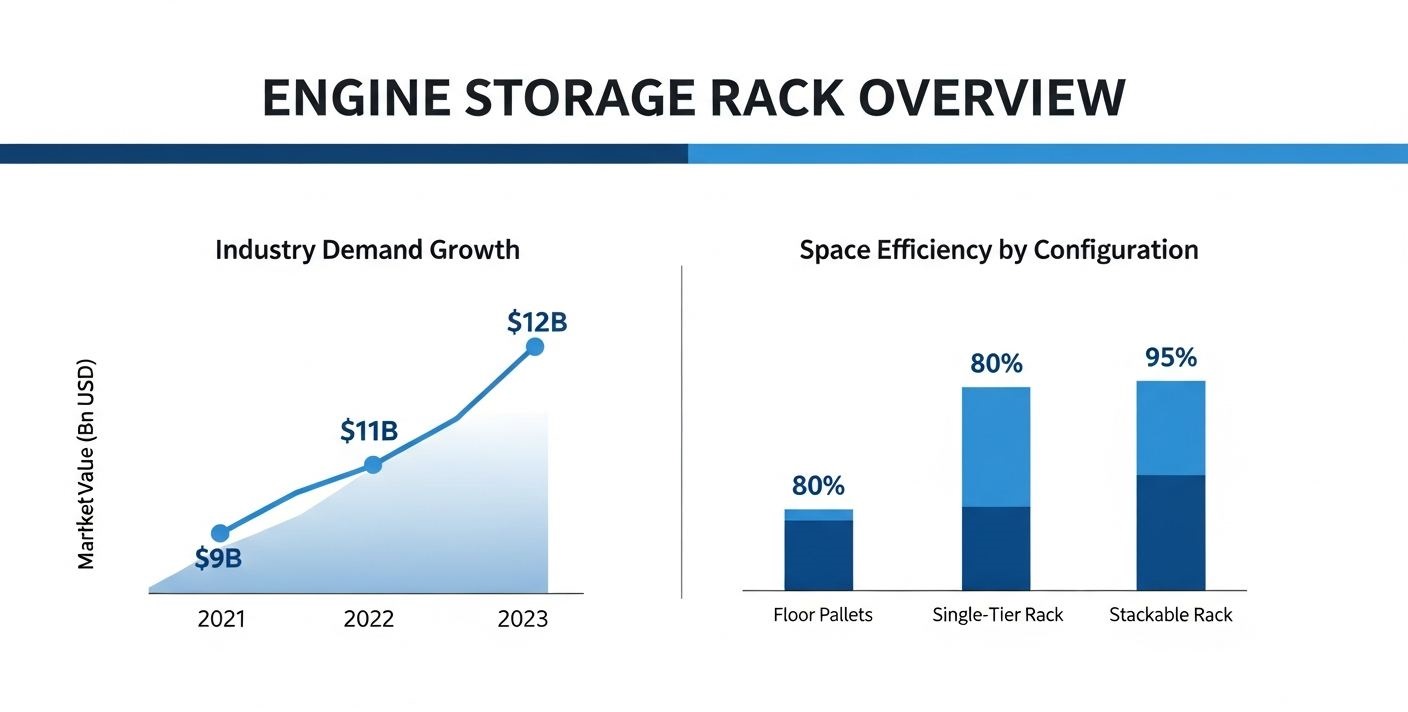
The global industrial storage equipment market was valued at over $12 billion in 2024, driven largely by rising manufacturing floor space costs and increasing component complexity. The shift toward higher-density custom engine storage solutions is a direct response to that constraint.
How to Specify the Right Engine Storage Rack for Your Facility
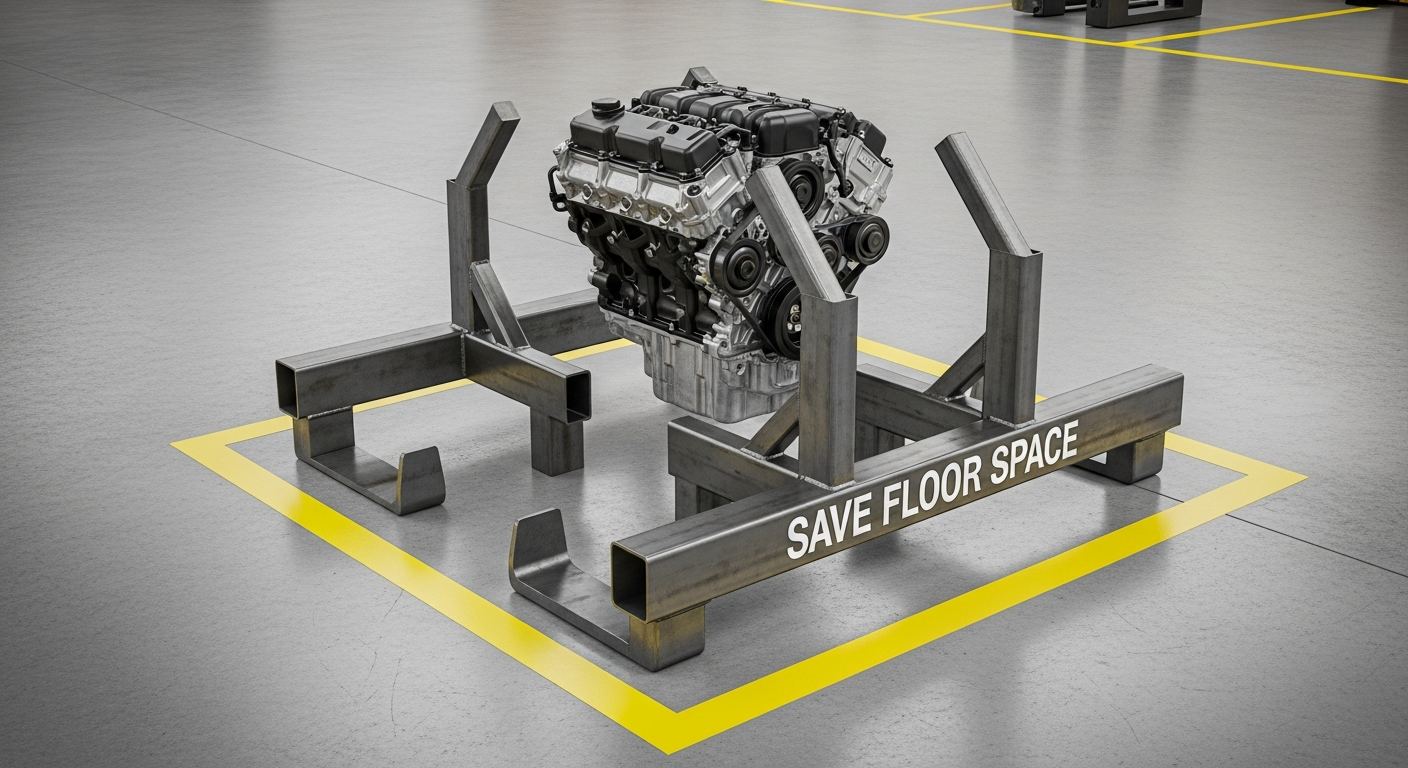
Choosing the wrong rack isn’t just a cost problem — it’s a safety and productivity problem that follows your operation every day. Get these answers before you talk to a manufacturer.
Six questions to answer before you talk to a manufacturer
-
What’s the heaviest engine you’ll store? That number drives the frame spec, weld schedule, and fork pocket design. If you handle 500-lb automotive engines alongside 1,800-lb diesels, spec for the heavy end — or plan on separate rack types.
-
How many engines do you need staged at peak? This determines your rack count and whether stackable designs make more sense than additional single-tier units. Stackable racks cost more upfront; they earn it back in floor space.
-
What handling equipment moves the rack? Fork pocket dimensions and base clearance must match your actual machine. A rack built for a 9-inch lift height and 6-inch-wide pockets won’t work cleanly with a machine running 5-inch forks at 10 inches.
-
What orientation does the engine need to be in? Upright for storage and inspection, angled for assembly access, inverted for specific service operations — each drives a different cradle design. Get this right in the spec, not after fabrication.
-
Does the rack need to ship with the engine? Return-trip racks must meet OTR transport load requirements — typically 2 to 3× the static rating, plus DOT tie-down compliance. In-plant racks and transport racks are different products with different specs.
-
Do you handle multiple engine families? If you store a mix of 4-cylinder, V6, V8, and diesel units, adjustable or modular cradle systems let one rack serve several engine geometries without a separate rack for each.
Off-the-shelf engine racks work fine for standardized engines in low-volume settings. But most manufacturing environments have enough specificity that a custom-built rack earns its price quickly. Plexform’s engineering team starts with your actual engine dimensions, handling equipment, and floor constraints, then designs a rack that fits those realities instead of working around them.
Implementing Engine Storage Racks: Layout, Safety, and Best Practices
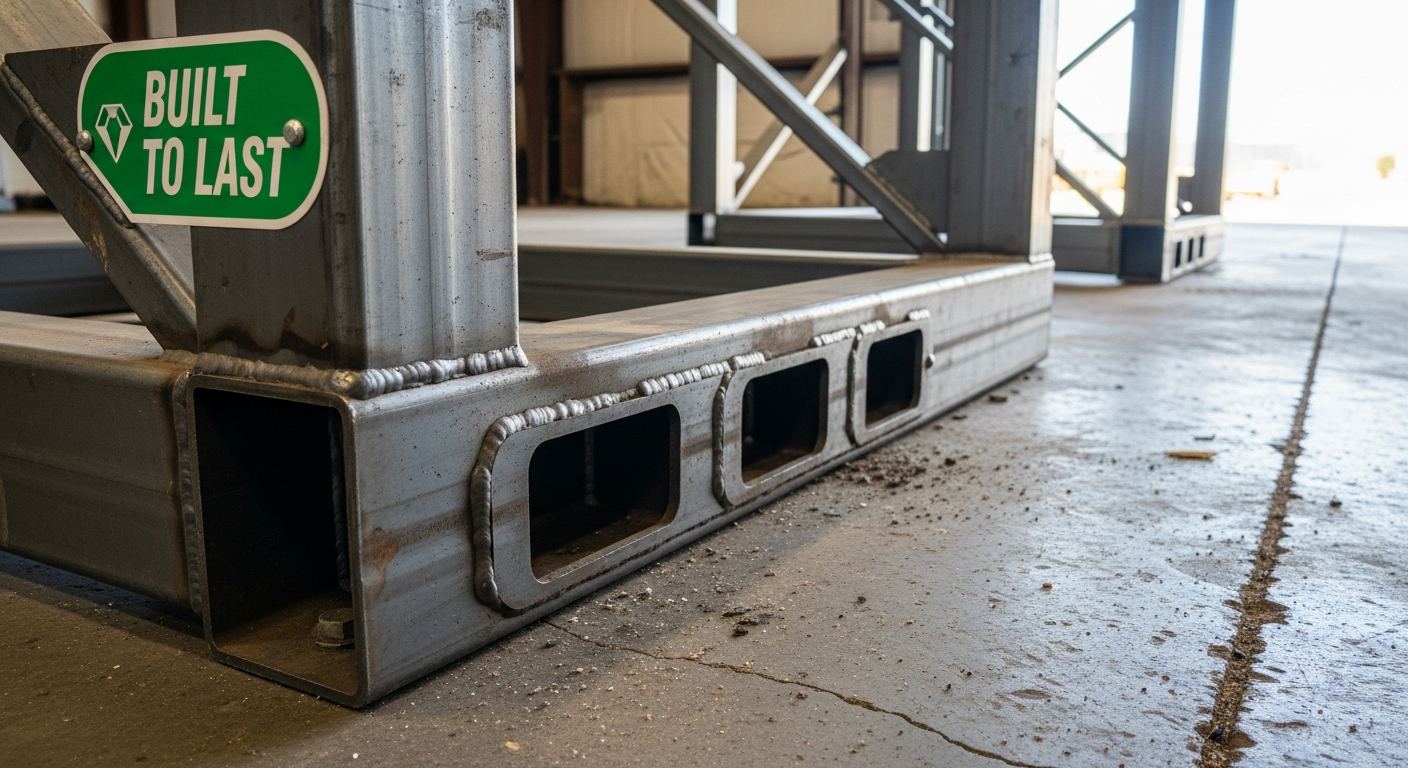
Specifying the right rack is step one. Placing it correctly is step two. Poor layout creates forklift conflicts, increases travel distance, and turns a two-minute staging task into a six-minute one.
Floor discipline, compliance, and ROI
A few layout principles that hold across most operations:
- Racks holding engines for more than a shift belong at the perimeter — against walls or in dedicated bays, out of the path of active material flow.
- Align fork pockets with your natural travel aisles. If a driver has to do a three-point turn to make a clean approach in a tight aisle, the rack is in the wrong orientation.
- Mark every rack position on the floor. Painted or taped home positions stop racks from drifting into aisles over weeks of production. It sounds basic; it works.
- Leave at least 36 inches of clear access on working sides. Most facility safety programs require it. Design that into the layout from the start, not around it later.
For compliance, engine storage racks interact primarily with OSHA 1910.176 (materials handling and storage) and 1910.178 (powered industrial trucks). Racks must carry legible load capacity markings, be inspected regularly for structural damage, and be matched to handling equipment that’s rated for the load they carry.
A quarterly visual inspection — checking welds, fork pockets, and cradle surfaces — is the right cadence for racks in continuous production use. Racks used for OTR transport should be inspected every cycle.
The ROI case is direct. Eliminating even two damaged engines per month at an average part cost of $2,500 each recovers the investment in a custom rack set within the first quarter. Add labor savings from faster, cleaner handling and the floor space reclaimed through stackable storage, and the numbers hold up across almost any facility size.
Engine Storage Rack Configuration Comparison
| Configuration | Engines per Rack | Typical Load Rating | Stackable | Best Application |
|---|---|---|---|---|
| Single-position A-frame | 1 | Up to 3,500 lbs | No | Heavy single units (diesel, marine) |
| Multi-position flat-deck | 2–4 | 500–1,500 lbs each | Optional | High-turnover automotive staging |
| Stackable 2-tier rack | 2–4 per tier | 1,000–2,500 lbs each | Yes | Space-constrained facilities |
| Custom multi-position | 4–8 | Built to specification | Yes | Mixed engine families, high-volume |
When you’re specifying an engine storage rack, a lot of questions come up — especially around weight limits, configuration options, and compliance. Here are the ones we hear most often.
What is an engine storage rack?
An engine storage rack is a purpose-built steel structure that holds one or more engines securely during storage, in-plant staging, or return transport. It provides defined fork pockets for safe, consistent handling with a forklift or pallet jack, cradle arms that support the engine without causing contact damage, and stable load distribution on concrete floors. Unlike pallets or general shelving, they’re built around the specific weight and geometry of the engines going into them.
How much weight can an engine storage rack hold?
Load capacity depends on the rack’s design specification. Light-duty racks for automotive engines typically support 1,000–1,500 lbs per position. Heavy-duty racks for diesel or industrial engines can be built to 3,000–5,000 lbs or more per position. Always request load documentation from the manufacturer, and confirm your handling equipment is rated to match the rack’s load.
What are the main types of engine storage racks?
A-frame racks use angled cradle arms on a central spine — stable under heavy loads, good for tight spaces. Flat-deck racks have a horizontal platform with adjustable cradle positions and stack well in tiered systems. Stackable racks are any format built with a reinforced top frame and nesting features, so a second loaded rack can sit on top and double your storage density without adding floor space.
Can engine storage racks be stacked?
Yes. Stackable engine racks are designed with reinforced top frames and alignment pins or nesting pockets that accept a second rack loaded on top. Two-high stacking is the most common application and doubles storage density without additional equipment. Three-high stacking is achievable with extended-reach forklifts, though most facilities operate at two-high for practical handling and safety reasons.
Are engine storage racks OSHA compliant?
Engine storage racks aren’t individually OSHA-certified products, but a well-designed rack supports compliance with OSHA 1910.176 (materials handling and storage) and 1910.178 (powered industrial trucks). Key compliance factors include visible load capacity markings, fork pocket dimensions matched to the handling equipment in use, and cradle features that prevent engine movement during lifting and transport. Regular structural inspection is also required under these standards.
How do I get a custom engine storage rack built for my facility?
Custom engine storage racks start with the actual dimensions, weight, and orientation requirements of the engines you handle — plus the specs of your forklift or handling equipment and your available floor footprint. Plexform designs and fabricates custom engine racks for manufacturing, automotive, and industrial facilities. Contact the team at plexformps.com to get started with a design consultation.
The Right Rack Makes Every Engine Move Easier
A well-specified engine storage rack does more than solve a storage problem. It defines how your facility handles every engine that moves through it — consistent positioning, clean fork approach, and proper cradle support that reduces damage, cuts handling time, and creates the kind of floor discipline that pallet storage never will.
Spec for your heaviest engine. Build stackability in if floor space is tight. Don’t shortchange the cradle design just to cut upfront cost. One damaged engine typically costs more than the rack that could have prevented it.
Plexform designs and builds custom engine storage racks for manufacturing and industrial facilities across North America. Contact the team at plexformps.com to start the conversation.

Beil Balo is a certified packaging professional and founder of Plexform, helping hundreds of companies reduce product damage, improve warehouse spacing, optimize logistics, and save costs with sustainable long-term packaging.