 Skip to content
Types of Custom Metal Racks
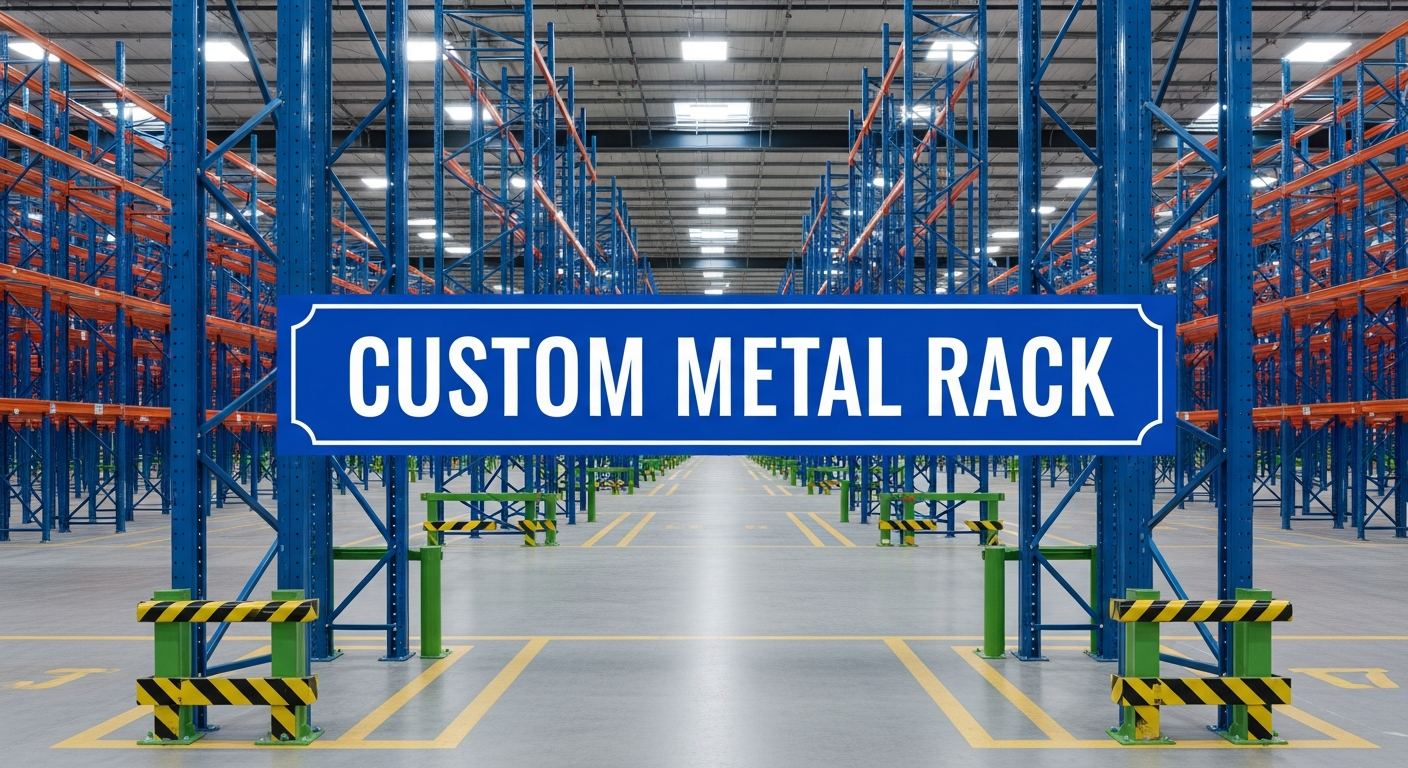
“Custom metal rack” covers a lot of territory. Knowing the major types before you call a fabricator saves time on both sides.
Structural steel vs. roll-formed rack systems
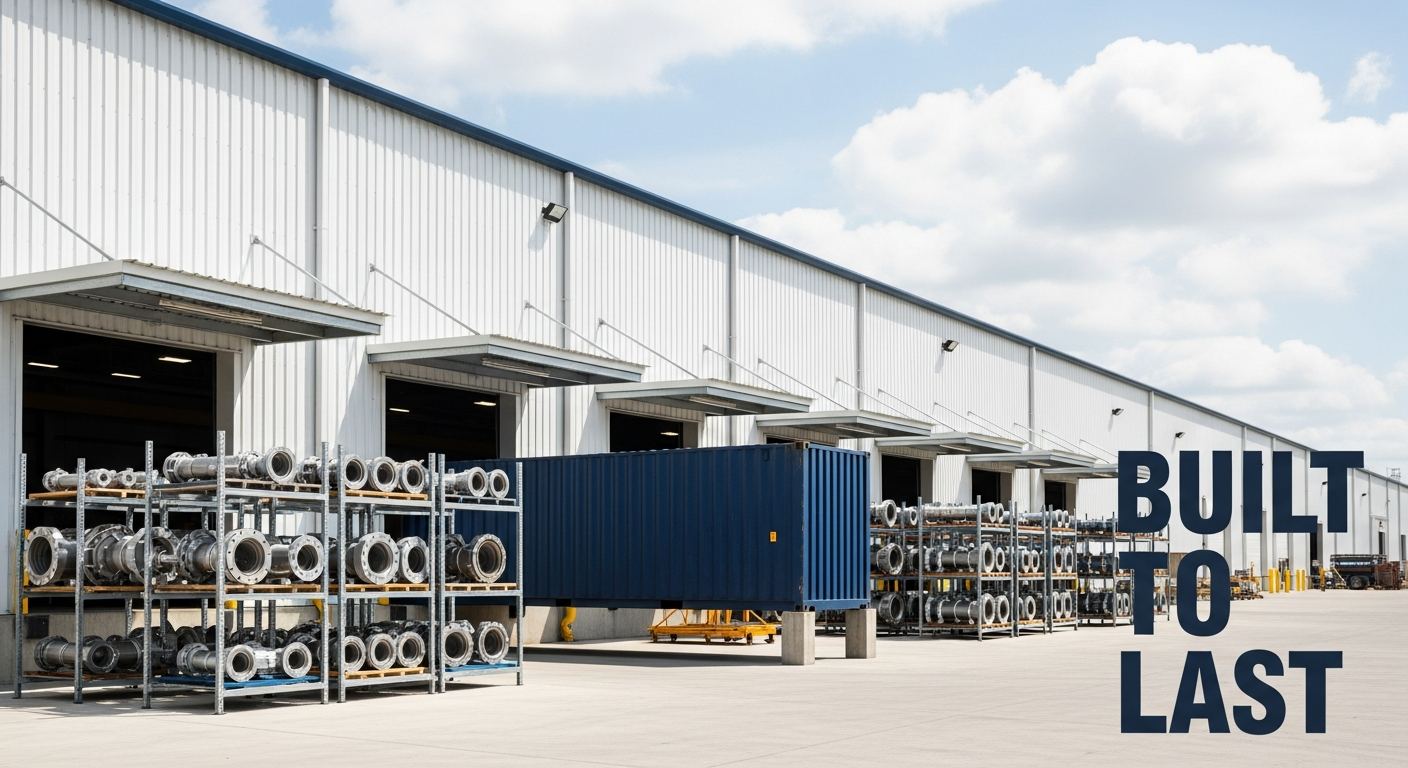
Structural steel racks are made from hot-rolled steel channel or angle iron. Heavy, impact-resistant, built for high-load applications where longevity matters more than unit cost. Common in automotive stamping plants, steel service centers, and heavy equipment manufacturing.
Roll-formed racks use thinner-gauge cold-rolled steel shaped into precision profiles. Lighter and less expensive per unit, but with lower impact resistance and capacity limits. They make sense when you need flexibility and the loads are manageable.
Beyond that split, the major types you’ll encounter:
- A-frame / panel racks: vertical storage for sheet metal, glass, or large flat parts, with padded contact points to prevent surface damage
- Stack racks / dunnage racks: stackable frames for WIP and inter-plant transport, designed to nest flat when empty
- Cantilever racks: open-arm design for long stock, pipe, bar, or lumber with no front column to block loading
- Transport racks: caster-mounted and often collapsible, for line-side delivery and facility-to-facility moves
- Welded fabricated bins: fixed or tiered containment for small parts, castings, or fasteners
Knowing which one fits your application before you call compresses the quoting process considerably.
How to Specify a Custom Metal Rack
Specs drive everything on a custom rack project. Vague inputs produce revised drawings and delayed delivery. Here’s what to have ready before your first conversation with a fabricator:
- Part dimensions: length, width, height, and geometry. Flat? Cylindrical? Irregular profile? This shapes rack geometry more than any other variable.
- Load requirements: total weight per rack level, how weight distributes across the frame, and whether the rack needs to hold rated capacity when stacked — particularly important for dunnage and transport racks.
- Handling method: fork truck, pallet jack, overhead crane, or manual. Entry points, lift height, and approach angle all influence the frame design.
- Space constraints: ceiling height, column spacing, aisle width, dock door clearances. Custom racks should be built to the inch, not approximated.
- Environment: indoor dry, outdoor, wash-down, or high-heat. This determines steel grade and what surface treatment is required.
- Quantity and lead time: custom racks run in production batches. Your fleet size affects material ordering, scheduling, and per-unit cost.
Load capacity and weight distribution
One spec that regularly gets underestimated: dynamic load capacity. A rack rated for 2,500 lbs in static storage may have a considerably lower rating under forklift impact or when loaded at an incline. Get both numbers confirmed before sign-off — especially on transport racks that move through your facility under full load.
Plexform’s Custom Rack Engineering Process
At Plexform, we don’t hand you a catalog and ask you to find something close. We start with your product and your process — then design the rack around both.
CAD design and prototyping
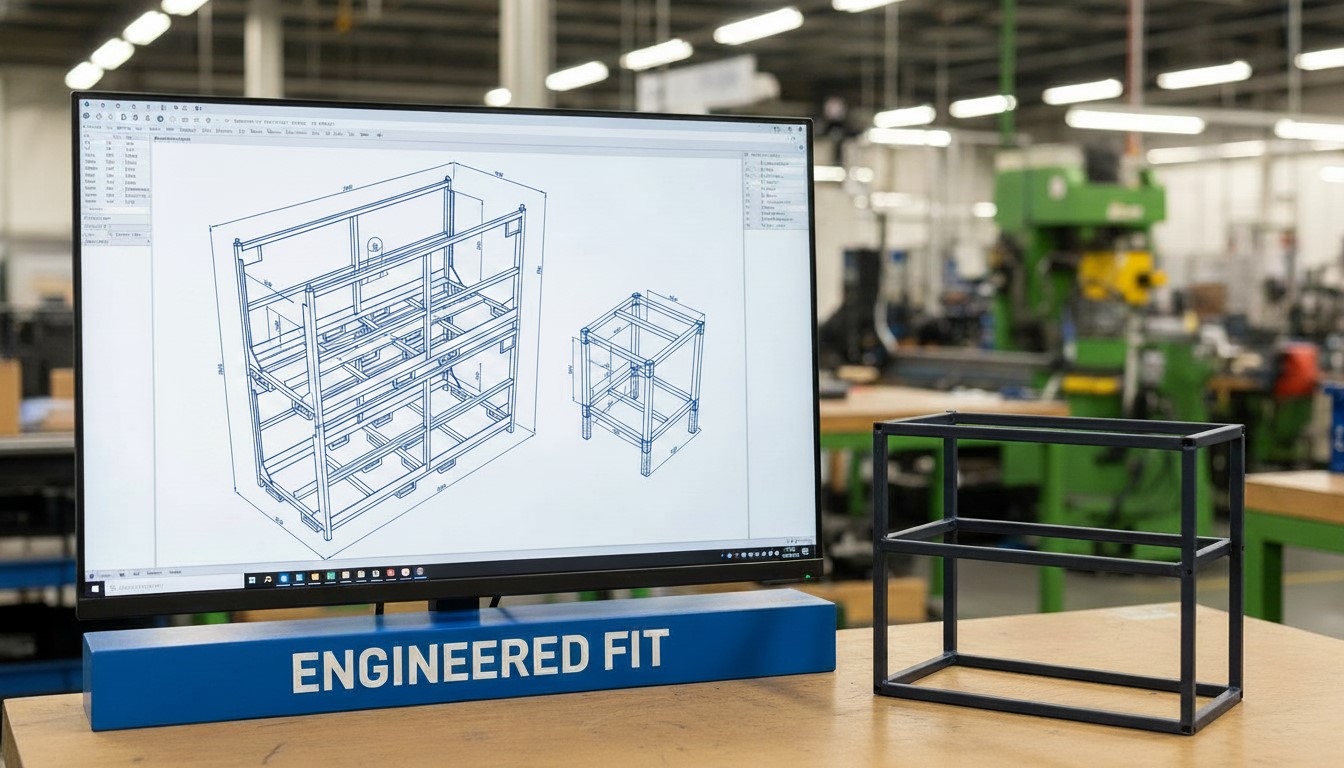
Every Plexform custom metal rack starts as a CAD model. We build the rack on screen before cutting steel — which means we catch interference problems, confirm fork entry clearances, and adjust beam geometry before anything goes to the floor. For complex parts or high-volume programs, we run a prototype first. Your team evaluates it. You approve it. Then we run the batch.
That sequence costs a little time upfront. It saves a lot more downstream, which is where dimensional problems become expensive ones.
Finish options include powder coat for color-coded, UV-resistant indoor and outdoor use; e-coat for corrosion-critical automotive supplier environments; zinc primer and topcoat for outdoor or marine exposure; and bare steel for indoor dry storage where cost leads. All Plexform racks are built to applicable ANSI/RMI standards and can be certified to customer-specific quality requirements.
Custom Metal Rack Cost and ROI
Cost varies by rack type, complexity, and order quantity. A realistic reference:
| Rack Type | Typical Cost Range | Capacity | Best For |
|---|---|---|---|
| Standard off-the-shelf pallet rack | $100–$300/section | Up to 4,000 lbs | Pallet storage, general warehousing |
| Custom roll-formed rack | $300–$800/unit | 500–2,000 lbs | Light-duty, flexible applications |
| Custom structural steel rack | $800–$2,500/unit | 1,000–6,000+ lbs | Heavy manufacturing, automotive |
| Custom transport / dunnage rack | $500–$2,000/unit | 500–3,500 lbs | In-plant and inter-facility transport |
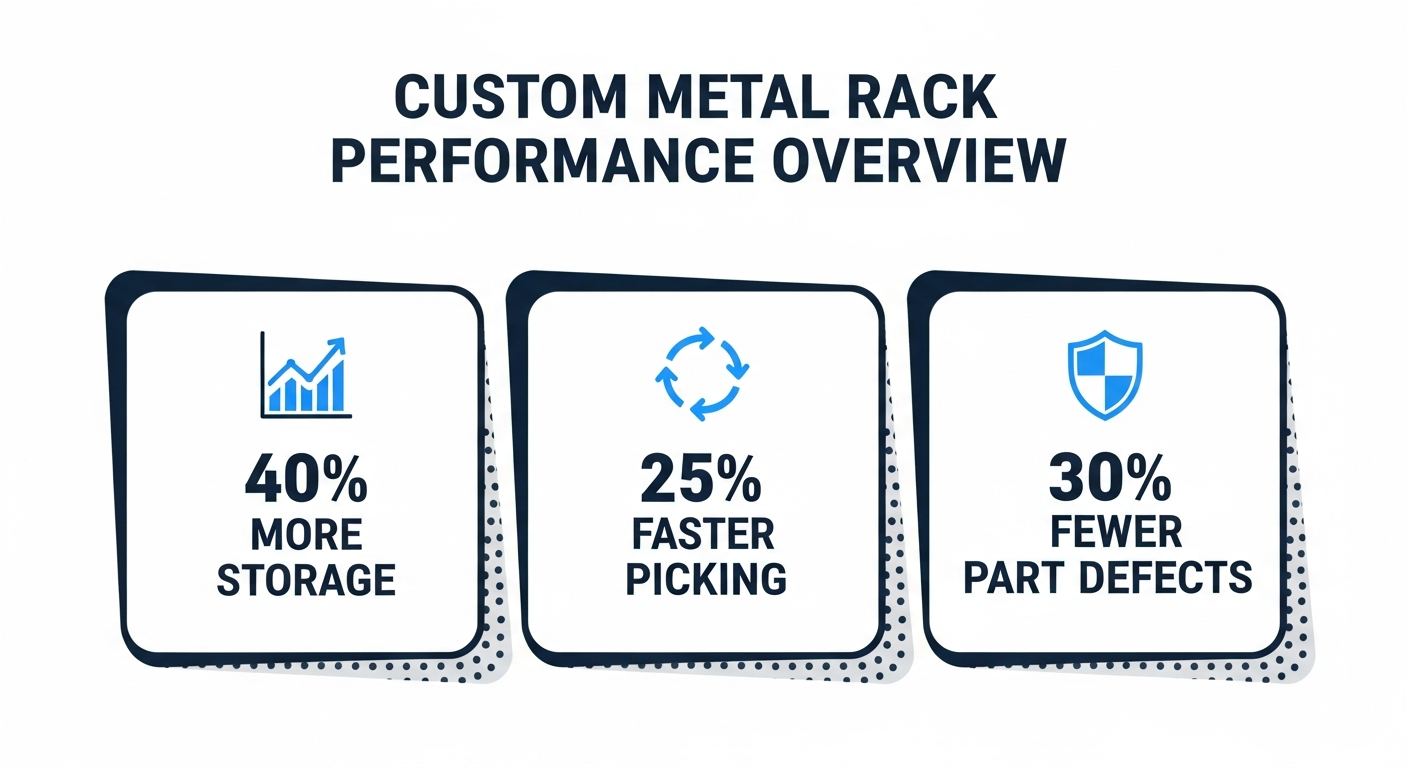
The math on custom vs. standard usually favors custom faster than buyers expect. If you’re absorbing part damage, paying for redundant handling touches, or giving up floor space to racking that doesn’t fit — those costs are real and they recur every shift. Most facilities recover the premium on a custom metal rack within 12–24 months through reduced damage and improved pick rates alone, before factoring in labor savings.
Frequently Asked Questions About Custom Metal Racks
When you’re specifying a custom metal rack for the first time, questions come up quickly. Here are the ones we hear most.
What is a custom metal rack?
A custom metal rack is a steel or aluminum storage or transport structure fabricated to your specific dimensions, load ratings, and handling requirements. It starts with your product and process, not a fixed catalog specification — that’s what separates it from standard racking.
How is a custom metal rack different from standard pallet racking?
Standard pallet racking is designed for pallets. Fixed bay widths, fixed beam lengths, fixed capacities. A custom metal rack is engineered around your actual product, floor layout, and handling method. You typically get better storage density, fewer part touches, and lower damage rates — because the rack was designed for that application, not adapted to it.
How long does it take to get a custom metal rack fabricated?
Usually 4 to 10 weeks from approved drawings. Simple structural designs with standard powder coat often ship in 4–6 weeks. Racks requiring special coatings, engineering certifications, or large batch quantities may need 8–12 weeks. The best way to compress lead time is having your specs fully defined before your first call with a fabricator — revisions after drawings are approved add weeks, not days.
Can custom metal racks be made collapsible or nestable for return shipping?
Yes, and for transport and dunnage racks this is often a primary design requirement. A rack engineered to fold or nest when empty can cut return freight costs dramatically. A rack occupying 12 square feet loaded might nest to 2–3 square feet empty — five or six empties in the footprint of one full rack. Ask for both the loaded and nested dimensions when you’re quoting.
What load capacity can a custom metal rack support?
It depends on steel gauge, cross-section geometry, frame height, and connection method. Structural steel racks regularly hit 3,000–6,000+ lbs per unit. Roll-formed designs typically handle 500–2,000 lbs. Every rack should come with a stamped or certified load rating. Confirm static and dynamic ratings separately — they’re not always the same number, and the gap matters on transport racks.
What safety standards apply to custom metal rack systems?
Static storage racks should conform to ANSI/RMI MH16.1 and applicable OSHA standards covering load ratings, signage, and inspection intervals. Transport racks moving product between facilities may also fall under customer-specific supplier quality requirements. A reputable fabricator supplies documentation with every rack and can provide third-party certification when a program calls for it.
Conclusion
When your products have specific geometry, handling requirements, or protection needs, standard racking makes you work around its limitations — and that work has a cost. Damage claims, wasted floor space, extra labor per shift. A custom metal rack removes most of that.
The spec process matters. Start with your product dimensions and load requirements. Have your handling method and space constraints defined before you talk to a fabricator. And pick a supplier who builds the rack in CAD before cutting steel. A prototype before a batch run isn’t caution — it’s the step that keeps a dimensional problem from showing up in 50 units instead of one.
Plexform engineers and fabricates custom metal racks for manufacturers across a wide range of industries. Visit plexformps.com to get started.

Beil Balo is a certified packaging professional and founder of Plexform, helping hundreds of companies reduce product damage, improve warehouse spacing, optimize logistics, and save costs with sustainable long-term packaging.