 Skip to content

Multilevel coil storage is one of the most overlooked opportunities in warehouse optimization. Metal coils rank among the most challenging materials to manage — they’re heavy, vulnerable to damage, and nearly impossible to handle safely without the right infrastructure. For manufacturing facilities working with steel, aluminum, copper, or other coiled materials, the right coil rack system is foundational to safe, productive warehouse operations. This guide covers what plant managers and operations directors need to know about selecting, sizing, and maintaining coil rack systems that deliver real results.
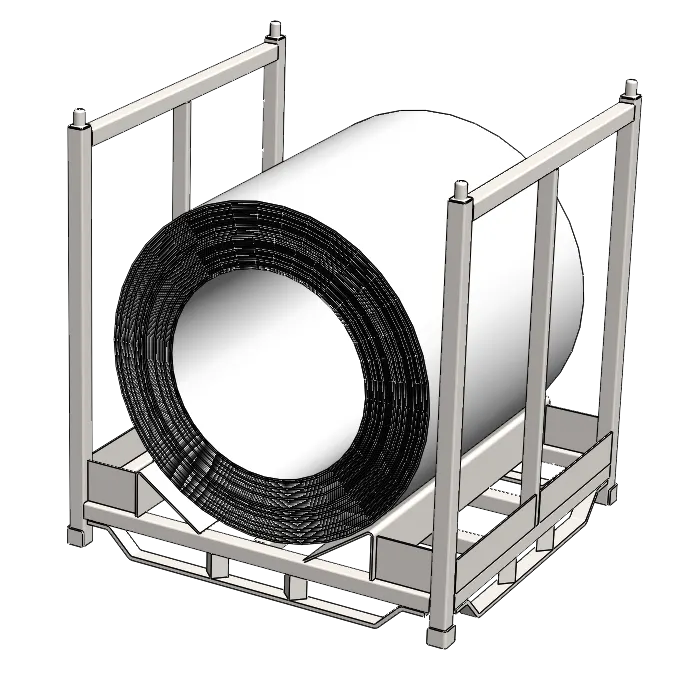
What are coil racks and why do they matter?
The problem coil racks actually solve
Metal coils stored directly on a warehouse floor create a serious set of problems. Without proper support, coils roll, deform at contact points, and become nearly impossible to access without moving adjacent material first. In high-throughput environments, that lost time accumulates across every shift — sometimes hours per week across a full crew.
Coil racks solve this by providing engineered support structures that hold coils securely in place, either vertically or horizontally, while allowing organized and predictable access. The result is a storage environment where operators spend less time hunting for material and more time moving product to the line.
How multilevel coil storage recaptures vertical space
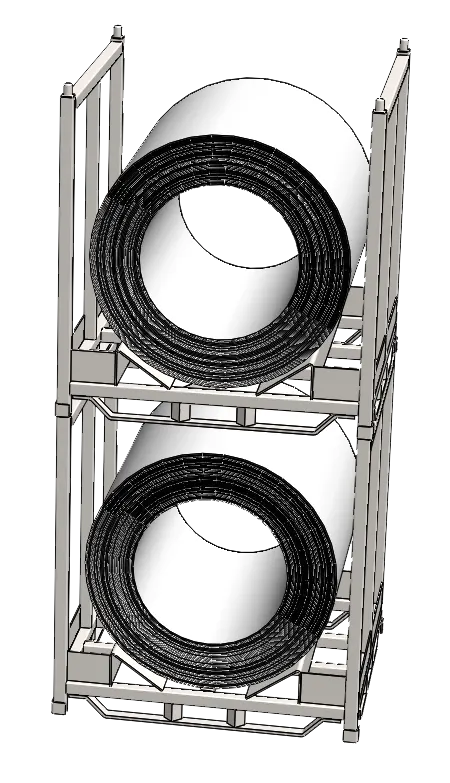
The strongest argument for multilevel coil storage is vertical space use. Most manufacturing warehouses have significantly more usable cubic footage than they’re actually using. Stacking coils on the floor wastes that vertical capacity entirely.
A well-designed multilevel coil storage system can double or even triple the number of coils stored in the same footprint, without expanding your facility or leasing additional space. For operations under pressure to handle growing inventory volumes, that vertical capacity gain is often the difference between a manageable warehouse and a chaotic one.
Protecting coil quality from receiving dock to production line
Coil damage isn’t always dramatic. More often it’s subtle: edge dings, ID distortion, surface scratches — the kind of damage that only shows up when the coil reaches a press or stamping line and starts producing defective parts. By then, the scrap cost and downtime have already accumulated.
Proper coil racks cradle each coil in a way that distributes weight evenly and prevents metal-on-metal contact, preserving material integrity throughout storage. That protection alone often justifies the investment when compared against ongoing scrap rates from floor-stored inventory.
Types of coil racks: matching the system to your application
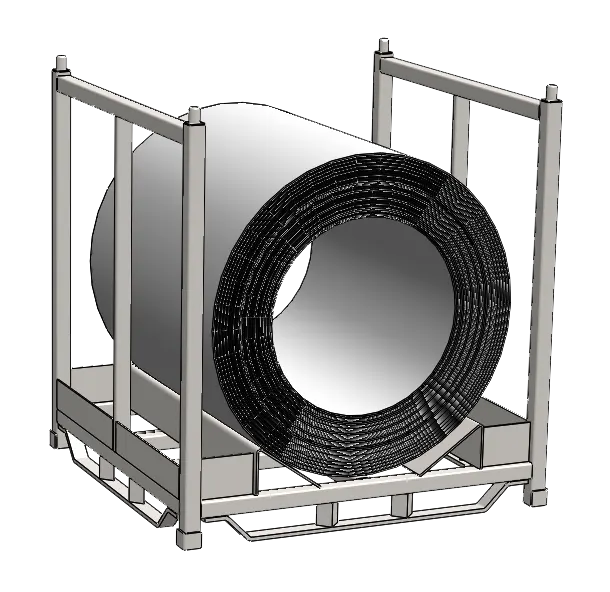
Vertical coil racks
Vertical coil racks hold coils upright on their outer diameter, like a tire standing on edge. This configuration works well for smaller to medium-sized coils and fits tighter spaces because the rack footprint stays compact. The vertical orientation also makes it easier to read coil tags and identify materials without disturbing adjacent inventory.
Very large or wide coils may need additional lateral support to remain stable in a vertical position. Facilities handling a mix of coil sizes often use vertical racks for lighter grades and reserve horizontal configurations for heavier stock.
Horizontal coil racks
Horizontal racks store coils lying flat on their side, in cradle-style supports or individual compartments. This is the preferred configuration for heavier, wider coils that could become unstable standing upright. Horizontal systems are also common in facilities where coils feed directly into uncoiling or straightening equipment, since the storage orientation matches typical line-feed processes.
The cradle geometry distributes load across the coil’s OD surface, which minimizes deformation risk during extended storage periods. That’s a real concern when material sits for weeks before hitting the line.
Custom-engineered coil rack solutions
Standard catalog rack configurations don’t always match the reality of a manufacturing floor. Custom coil rack systems address this gap by engineering storage around your specific coil dimensions, weight ranges, and workflow requirements.
Plexform builds custom coil racks that can incorporate adjustable arms, modular bay extensions, or specialized cradle geometries, all designed to match your exact inventory profile. For facilities handling multiple coil sizes or mixed materials, a custom approach to multilevel coil storage typically delivers a better return on investment than forcing non-standard inventory into off-the-shelf hardware.
Coil racks vs. other storage methods: a direct comparison
Choosing the right storage method means understanding how the alternatives actually stack up. The table below compares the most common approaches across the factors that matter most in manufacturing environments.
| Storage Method | Coil Protection | Space Efficiency | Accessibility | Scalability | Best For |
|---|---|---|---|---|---|
| Dedicated Coil Racks | Excellent | High (vertical levels) | Easy, organized | Modular, expandable | All coil types and sizes |
| Pallet Racking (adapted) | Moderate | Moderate | Moderate | Limited | Light coils, temporary use |
| Floor Stacking | Poor | Low | Difficult | None | Short-term, single coil |
| Shelf Storage | Moderate | Moderate | Good for small coils | Moderate | Small, lightweight coils only |
| A-Frame Coil Stands | Good | Low | Good | Limited | Single coil staging areas |
Dedicated multilevel coil storage systems outperform every alternative across the metrics that drive operational cost and product quality. Floor stacking may appear low-cost upfront, but the hidden costs in damage, lost time, and safety incidents make it one of the most expensive approaches over any meaningful time horizon. A-frame stands serve a purpose at line-side staging, but they’re not a substitute for an organized system managing dozens of coils across multiple grades and shifts.
Selecting and sizing the right coil rack system
Evaluating coil dimensions and weight first
Before specifying any rack system, get accurate data on the coils you’re storing. That means inside diameter (ID), outside diameter (OD), face width, and maximum coil weight. These four measurements drive every structural decision in rack design: beam sizing, cradle geometry, support spacing, and overall frame load capacity.
Facilities that skip this step and purchase general-purpose racks often end up with systems that either waste space or fail under load. A thorough coil inventory audit before procurement is time well spent.
Calculating floor space, ceiling height, and forklift clearance
Multilevel coil storage systems grow upward, not outward. But they can only do that if your facility’s ceiling clearance and structural constraints allow it. Measure usable aisle width, bay depth, and column spacing alongside ceiling height.
Also account for forklift clearance requirements. The mast height of the equipment used to load and retrieve coils directly limits how high you can practically rack. A system that looks efficient on paper becomes a daily bottleneck if operators can’t safely place or pull coils at upper levels.
Designing around workflow and access frequency
Storage system design should follow your picking patterns. Coil sizes or grades accessed multiple times per shift should sit at mid-level in a multilevel coil storage bay, where retrieval is fastest and least disruptive. Slower-moving inventory can occupy higher or lower positions without creating operational drag.
Designing around real workflow prevents a common and costly problem: a storage system that looks logical on a layout drawing but creates bottlenecks in daily practice because the most-used material is hardest to reach.
Safety standards and load ratings
Every coil rack placed in a manufacturing environment should carry clearly documented load ratings and comply with applicable ANSI/RMI standards for industrial storage equipment. Racks should be anchored to the floor and inspected regularly for deflection, weld integrity, and connection hardware.
Overloading coil racks, even temporarily, is one of the leading causes of storage system failures in manufacturing. Clearly posted capacity ratings on each bay give operators the information they need to make correct loading decisions at the point of activity.
Coil rack accessories that improve performance
Dividers and coil separators
Even in a well-organized multilevel coil storage system, coils can shift during retrieval and damage adjacent inventory. Dividers, whether fixed steel plate or removable bolt-in styles, prevent coil-to-coil contact and protect ID and OD surfaces from incidental damage.
They also provide visual separation that speeds up coil identification and counting during inventory cycles, reducing the time operators spend on physical verification across large storage bays.
Adjustable arms and modular components
Coil inventories change. A storage system that can’t adapt to shifting coil sizes becomes a liability over time. Adjustable arms allow the same rack bay to accommodate different OD ranges without structural modification, protecting your original investment as your product mix evolves.
Modular frame components make it practical to expand a multilevel coil storage system in bays or levels as inventory grows, rather than replacing the entire structure when capacity requirements increase.
Identification and labeling systems
In facilities managing dozens of coil grades, heats, or specifications simultaneously, a clear identification system isn’t optional. Rack-mounted label holders, color-coded tier markers, and barcode-compatible tag systems allow receiving, storage, and line-feeding teams to locate the right coil quickly, without cross-referencing paper records or walking the floor searching for markings.
First-in, first-out (FIFO) compliance is also significantly easier to enforce when coil positions are systematically labeled and organized by receipt date or heat number.
Coil rack maintenance and long-term performance
Routine inspection protocols
A coil rack inspection program doesn’t need to be complex, but it does need to be consistent. Weekly visual inspections should cover bent uprights, cracked welds, missing hardware, and any signs of overloading or impact damage. Monthly checks should include anchor bolt torque verification and measurement of any upright plumb deviation.
Racks showing measurable deformation should come out of service immediately. A rack failure under loaded coils is a serious safety event with significant consequences for personnel and surrounding inventory.
Employee training and handling procedures
Mechanical integrity is only part of the equation. How employees interact with coil racks, loading coils, operating material handling equipment, reporting damage, has a direct impact on rack longevity and workplace safety.
Standard operating procedures for coil rack usage should be part of forklift operator training and warehouse onboarding. Clear load capacity postings on each rack bay reinforce proper usage at the point of activity and reduce the likelihood of incremental overloading that goes unnoticed until a failure occurs.
Keeping systems clean and functional
Metal debris, cutting fluid, and general industrial grime accumulate in rack structures over time. This isn’t purely a cosmetic issue. Contamination buildup can mask developing rust or corrosion, particularly in environments with moisture exposure or coolant mist.
Periodic cleaning as part of facility maintenance keeps racks visually inspectable and extends the useful life of the structure, at very little cost when folded into existing housekeeping schedules.
FAQ: Multilevel coil storage systems
1. What’s the maximum weight a coil rack system can support?
Load capacity varies by design, material, and configuration. Custom-engineered coil rack systems can support individual coil weights from a few hundred pounds to well over 20,000 lbs per cradle position. Always match the rack’s rated capacity to your heaviest expected coil, with an appropriate safety margin built in.
2. Can multilevel coil storage be installed in an existing warehouse without structural modifications?
In most cases, yes. Floor-anchored coil rack systems are self-supporting and don’t require attachment to the building structure. The primary constraints are floor load capacity, verify your slab rating before installation, and ceiling clearance for the rack height and forklift mast operation.
3. How do I choose between vertical and horizontal coil rack orientations?
The decision comes down to coil size and downstream process requirements. Heavier, wider coils are generally more stable in horizontal cradle racks. Smaller coils and applications where quick visual identification matters often work better in vertical configurations. Many facilities run both styles within a single warehouse layout based on coil grade and usage frequency.
4. What material is typically used to manufacture coil racks?
Industrial coil racks are fabricated from structural steel, either hot-rolled or tube steel, with welded or bolted connections. Powder coat or paint finishes provide corrosion protection. Stainless steel options are available for environments with chemical exposure or strict cleanliness requirements.
5. How does a multilevel coil storage system improve FIFO compliance?
When coil positions are fixed, labeled, and organized by receipt date or heat number, operators always know which coil to pull first. Without a rack system, FIFO discipline depends entirely on floor stacking discipline, which breaks down quickly in busy, high-volume operations. Structured storage makes compliance the path of least resistance.
6. Are custom coil rack dimensions significantly more expensive than standard sizes?
The cost premium for custom sizing is typically smaller than most buyers expect, particularly when the alternative is a standard rack that doesn’t fully use your space or requires workarounds for your actual coil inventory. For facilities with non-standard coil dimensions, custom is often the more cost-effective long-term choice.
7. How often should coil racks be formally inspected?
Formal inspection at least once per year, conducted by a qualified rack inspector, is standard practice, in addition to routine in-house visual checks. Any time a rack takes a forklift impact or is subjected to an overload event, inspect it immediately before returning it to service.
A purpose-built solution for a high-stakes storage challenge
Metal coil storage deserves a purpose-built solution. A properly designed multilevel coil storage system protects valuable material, maximizes your facility’s usable square footage, and removes the friction that slows production lines when operators can’t quickly find or access what they need.
Whether your facility handles a handful of coil grades or dozens of specifications across multiple shifts, the right coil rack system creates measurable improvements in productivity, product quality, and workplace safety. The investment pays back consistently in reduced scrap, faster retrieval times, and a safer environment for the people running the floor every day.
Plexform designs and builds custom coil rack systems tailored to your exact coil dimensions, weight requirements, and workflow, with engineering support built into the process from day one.


Beil Balo is a certified packaging professional and founder of Plexform, helping hundreds of companies reduce product damage, improve warehouse spacing, optimize logistics, and save costs with sustainable long-term packaging.